Constructing Excellence Social Media Forum: Unlocking potential
1 Reply

The Guardian Sustainable Business web pages are proving a great resource for information, articles, debates and inspiration for sustainability as a strategic rather than just an operational level issue.
To reinforce the importance of the built environment sector, the way we plan, design, construct and use buildings that is present in most aspects of business sustainability, the site now has a built environment specific ‘hub’ (and a Green ICT and Communications hub)
In addition following on my my article at CSRWire, (a low carb diet for construction boards) there is much the construction sector can learn here in moving sustainability to the board and to a strategic level.
This weeks round up from GSBi includes:
Why carbon reporting makes sense
It helps the environment, adds value to the business and brings long term benefits, says Paul Pritchard We reduced our UK carbon footprint to 31,600 tonnes in 2009 from 43,200 in 2006 – over 25%, and approximately saved over £1m. The savings have been helpful in getting the business to regard sustainability as something that could add value. Procurement is another important area of consideration and our recent contract with Kyocera for print management units is a prime example. Sustainability requirements were incorporated into the tender process from the start (beyond the “do you have an environmental policy” type questions) including quantifying energy and paper savings that formed a fundamental part in awarding the contract More …
Energy efficient buildings are vital to sustainability In the coming decades, our planet will be a very different place. By 2050, there will be an additional 3 billion people on Earth and 70% of the world’s population will be living in cities. While many things about the future remain unclear, one thing is certain: more people in urban areas means an increased demand for new buildings. And unless we change the incredibly inefficient nature of today’s buildings, it means an unprecedented increase in energy use. It’s a ticking time bomb. More …
The business case for valuing natural resources James Griffiths explores how a new ecosystems guide enables companies to make better business decisions Every company values its core business resources: its products, customers, and employees. But until now business has not been able to fully consider the value of a vital aspect for success – natural resources.That is why the World Business Council for Sustainable Development (WBCSD) created the Guide to Corporate Ecosystem Valuation (CEV), an innovative framework designed to enhance understanding of ecosystem services like freshwater, food, fibre and natural hazard protection. More …
Carbon Trust launches green guide for SMEs The Carbon Trust has launched a green guide to help small and medium-sized enterprises (SMEs) take advantage of the green goods and services industry The free ‘Green Your Business for Growth’ guide includes information on how businesses can find opportunities for green growth within their organisation and sector and how to develop a strategy to implement the changes. It also provides advice on how to reduce an SME’s environmental impact, including templates for energy and environment policies and a checklist to assess current sustainability. “We want to help Britain’s small firms to seize the opportunities presented by green growth through cutting costs or developing greener products and services,” said Ian Gibson, Carbon Trust director of delivery programmes. More …


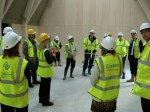


Last night the Lancashire Wildlife Trust and Mansell Construction hosted an event and tour of the new, soon to be opened ‘floating’ Brockholes Visitor Center in Preston for members of the Lancashire Construction Best Practice Club and local CIOB
Friend and colleague David Inman at DIEM Ltd has published this very useful Environmental Management update focusing on SWMP. Download this file

The UK’s Department of Energy and Climate Change (DECC) yesterday published its Carbon Plan, outlining the anticipated steps to reaching the country’s 2020 emissions targets. The document has been released in draft format, with a full version expected this autumn.
Aiming to encourage the UK to cut its carbon footprint while at the same time promoting green jobs and investment in the country, a revised version of the Carbon Plan will be released each year.
Prime Minister David Cameron, Deputy Prime Minister Nick Clegg and Energy and Climate Change Secretary Chris Huhne said, “This Carbon Plan sets out a vision of a changed Britain, powered by cleaner energy used more efficiently in our homes and businesses, with more secure energy supply and more stable energy prices, and benefiting from the jobs and growth that a low-carbon economy will bring.
Built Environment Issues:
Although in draft form the Carbon Plan indicates the direction it will take and the impact on the built environment through procurement, energy, transport etc. These are issues that should be addressed by organisations in the built environment from suppliers to designers, constructors and facilities management, and importantly addressed and championed by board members.
On Procurement
8.5 With an annual public sector spend in excess of £236 billion, procurement is a powerful lever that can reduce emissions and drive innovation. The establishment of minimum and best practice product specifications for government purchasing (Government Buying Standards) has improved the environmental performance of priority products, such as construction, transport, and information and communication technology.
On Transport
Transport is a major contributor to the UK’s energy demand and greenhouse gas emissions, as well as other polluting emissions, with the majority of those emissions coming from the oil-based fuels we rely on for road transport. We can all play a part in changing this by taking advantage of public transport and looking at innovative alternatives to travel such as video conferencing for some business meetings.
The Carbon plan cites the London 2012 Olympic and Paralympic Games approach to minimise emissions through construction material transport
Note that constructco2 indicates the biggest emitter of CO2 in the construction process is transport
On Homes and Eco Developments
Almost half of the UK’s greenhouse gas emissions are from the energy used to generate heat,4 with the vast majority of our homes still relying on fossil fuel powered gas boilers and with much of our building stock still poorly insulated and inefficient. There is a huge opportunity here, not only to cut greenhouse gas emissions and emissions of harmful pollutants, but also for households and businesses to save money, with the most significant and cost effective opportunities likely to come from better insulation and from replacing inefficient heating systems.
We need to ensure that the homes and buildings being built now and in the future are as energy efficient as possible, and the Government is committed to introducing ambitious energy efficiency standards for new homes and buildings. In the short term, this means ensuring that all fossil fuel boilers are as efficient as possible, but we also need to move towards lower carbon alternatives such as air and ground source heat pumps and consider decentralised options like Combined Heat and Power and district heating.
The Government wants to support and enable communities in their wish to adopt higher environmental standards for new homes including through:
• ensuring that there are robust sustainability standards for local authorities to use if they want to set higher standards than those in the national regulations in their local plans. For example, the Code for Sustainable Homes provides standards for the sustainable design and construction of new homes (including water efficiency) that meet or exceed those set out in The Building Regulations 2010; and supporting eco-towns and eco-developments where there is local support and a wish to adopt higher standards of sustainability and design.
More comments to follow
ConstructCO2 currently measuring construction carbon emissions on over 50 projects, ranging in value from £100k to £23m, is indicating a CO2 benchmark of
The split of this data, as below, indicates that the ‘culprits’ are travel and transportation, making the move to low carbon construction one of procurement and selection based on location, rather than costly technical and eco-bling solutions.

However, we have a very poor concept of what this level of emissions means and could look like. Fortunately, Willmott Dixons, in conjunction with Loughborugh University recently erected a temporary ONE TONNE CO2 cube
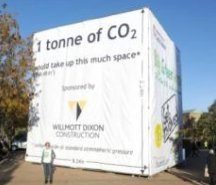
So for each small construction project of £100,000, the bread and butter of micro and SME contractors across the UK, we could be emitting:
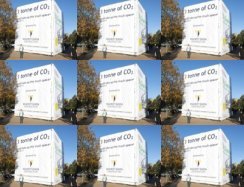
And, (and this is where it starts to get a little scary) for each Million pound spend of construction we could be pumping this into the environment:

CO2 is colourless, and this may be a mixed blessing, for if it was coloured purple then we would be living in a 60’s imaged purple haze, or rather we wouldn’t as we would have taken action long ago

So, time for action, for construction and contracting organisations to commence monitoring, understanding and reducing their carbon emissions. And really its a no brainer, for each kg or tonne saved, we save the equivalent energy costs.
To explore ConstructCO2 use the login details of eyesonly@evolution-ip.com and pass word of eyesonly.

Whilst working on a number of PAS 91:2010 submissions, I am becoming acutely aware of the omission of many current and critical construction improvement themes, a quick word search through the document shows:
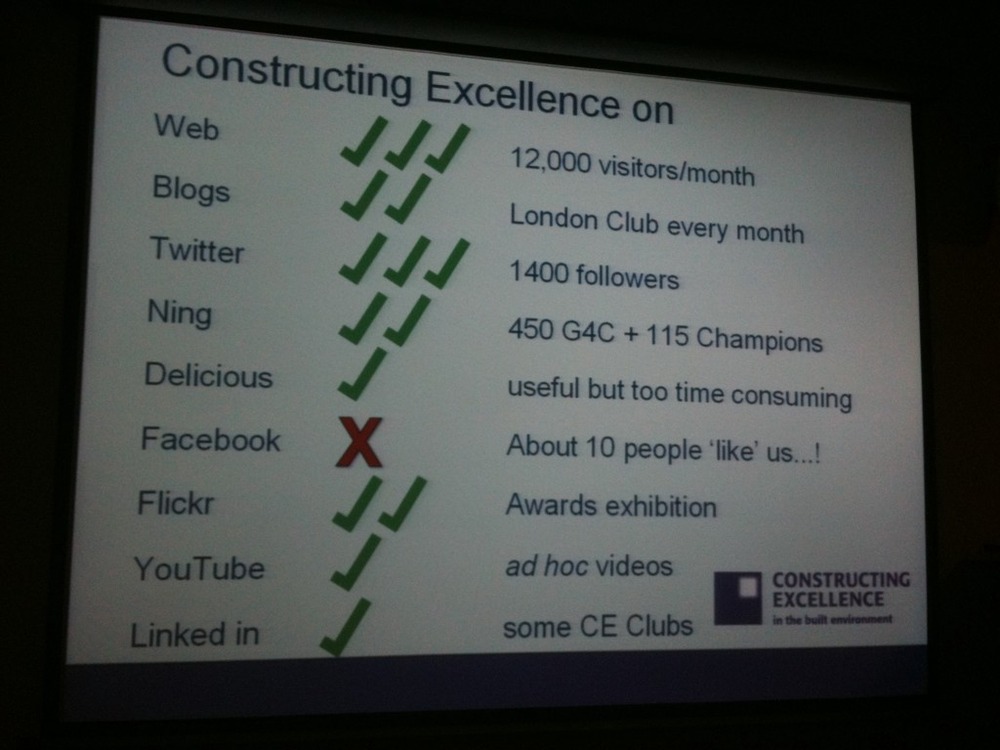
In response to recent questions on twitter: will biodiversity emerge from its environmental protection guise to become the new carbon, the driver for sustainability? New standards for the built environment are being discussed that will, I guess roll up sustainability thinking, environmental management with ethical sourcing, taking impact assessments to local, national and international levels, and possibly redefining ‘resilience’.
To be meaningful though we need to re-gain that connection with nature, with our environment, to understand we are part of the earth system, not apart from it.
(the following appeared on the Guardian Sustainable Business site recently)
Biodiversity is the new carbon in environmental circles, but can you really measure, manage or cost it as easily as you can carbon?
It was October 2006 when Nicholas Stern published his review on the economics of climate changefor the government. At the time, top climate change economist professor Michael Grubb hailed the report, suggesting that it “finally closes a chasm that has existed for 15 years between the precautionary concerns of scientists, and the cost-benefit views of many economists”. Four years on and many are pinning their hopes on the TEEBreport having the same impact on biodiversity.
Dubbed the new carbon, biodiversity just had its own international year of recognition with the UN, culminating in the Convention on Biodiversity in Nagoya, Japan. The summit placed the issues in the spotlight but there remains a feeling that an obsession with carbon emissions has distracted businesses and policy makers from equally important environmental challenges, such as the health of the world’s ecosystems.
It’s easy to see why awareness, acceptance and action on climate change have eased their way into the boardroom more readily than biodiversity. Global policy may be stalling, but businesses understand the concept of carbon measurement and footprinting; there’s also evidence emerging that cutting carbon brings financial benefits. A recent UK government report found some companies were investing £50k in carbon measurements and reporting, but saving £200k as a result. Not a bad return.
Carbon is relatively easy to measure, of course. Thanks to Lord Stern’s report, policy makers were also able to put a price on not dealing with the issue. Regulation is now snowballing, at least on a regional and national scale, and the pressure on businesses to cut emissions continues to increase.
However, attention is now turning to biodiversity. Research and reports have emerged showing the grave state of the world’s biodiversity. http://www.guardian.co.uk/sustainable-business/biodiversity-footprint-new-carbon-measurement-management
 Fairsnape