Monthly Archives: February 2019

Free Photo Book: NASA Celebrates Earth’s Incredible Natural Beauty

We chose these images because they inspire. They tell a story of a 4.5-billion-year-old planet where there is always something new to see. They tell a story of land, wind, water, ice, and air as they can only be viewed from above. They show us that no matter what the human mind can imagine, no matter what the artist can conceive, there are few things more fantastic and inspiring than the world as it already is. The truth of our planet is just as compelling as any fiction.

Earth,  a free photo book from NASA features stunning imagery captured over the years by various NASA satellites. There is a hardcover version for sale, but you can also download a free pdf, or e-version 

But, better than the free book is the online version that also offers interactive elements and image of the day for the four categories: atmosphere, water, land, and ice and snow.

Moose River, Ontario

Sixty years ago, with the launch of Explorer 1, NASA made its first observations of Earth from space. Fifty years ago, astronauts left Earth orbit for the first time and looked back at our “blue marble.” All of these years later, as we send spacecraft and point our telescopes past the outer edges of the solar system, as we study our planetary neighbors and our Sun in exquisite detail, there remains much to see and explore at home.

Every one of the images in this book is publicly available through the Internet, truly making science accessible to every citizen

Source: Digital Trends

Bringing wellbeing to construction with Red List compliant, biophilic net-zero site accommodation.

pexels-photo-985287

… making sure our employees in the field have the same wellbeing …

Readers of this blog, attendees at my presentations, and those I consult and audit with, will recognise my advocacy for implementing wellbeing aspects (that we increasingly build into our projects), for those who are constructing the projects – and into the site accommodation.

It is extremely encouraging to catch up with news from Chicago-based Pepper Construction who unveiled its Net Zero Jobsite Trailer in November at Greenbuild show at the end of last year.

The Net Zero Jobsite Traile is a 12×60-foot structure ‘designed to focus on the human experience, productivity, and quality from every aspect to make sure employees in the field have the same wellness features as those in a traditional office setting.

“Most people spend about 90% of their time indoors, and that environment has a significant impact on our health,” says Susan Heinking, AIA, LEED Fellow, Pepper’s VP of High Performance and Sustainable Construction, who led the project. “That philosophy also applies to the men and women working on our jobsites. We want our trailer to match our values.”

The ‘trailer’ is fitted out with RedList compliant furniture and materials, with recycled felt over the conference room providing sound absorption incorporating biophilic patterns through organic patterns.

Read more here.

If we in the construction sector are serious in delivering healthy buildings, then surely this approach must become commonplace on all projects – certainly those delivering to Well Build Standard, The Living Building Challenge or platinum LEED or BREEAM projects?  And of course should form a part of these standards itself, as a socially just approach.

I will be visiting Future Build in London in March, and look forward to seeing similar innovative approaches from construction organisations  (and by the way I am talking on the 5th)

What can international standards teach us? FutureBuild

Delighted to be joining a Buildings Hub session at FutureBuild in March, along with Living Building colleagues and Elementa Consulting discussing international building standards and sharing insights from Cuerden Valley.

Buildings Hub, FutureBuild
5th March, London Excel.
13.30-14.40

This session with will draw on approaches taken from international standards, such as RELI, SITEs, Ecodistricts, EDGE, Powerhouse and, above all,  the Living Building Challenge. It will examine the framework tools used and discuss their relevance to the UK. The Living Building Challenge (LBC) describes itself as the world’s most rigorous proven performance standard for buildings. It is a framework to create spaces that, like a flower, give more than they take. Through its seven petals or performance areas – water, energy, materials, place, equity, beauty, health and happiness – the LBC tackles this ambitious goal: what if every single act of design and construction could make the world a better place? LBC focuses on regenerative design to restore our environment and rethinking buildings as biological organisms integrated into our ecosystem.

EDGE (Excellence in Design for Greater Efficiencies) provides a quantitative, achievable and affordable standard with a path to net zero carbon. An innovation of IFC, a member of the World Bank Group, EDGE makes it faster, easier and more affordable than ever before to build and brand green in 144 countries.  Through the free online EDGE App, builders, owners, and financiers can identify the systems and solutions that work best in the local climate and context, and can calculate the return on investment from energy and water savings.

Chair: Nathan Millar, Associate Principal Sustainability, Elementa Consulting

Overview of international standards
Nathan Millar, Associate Principal Sustainability,Elementa Consulting

The Cuerden Valley Park Visitor Centre – the first building in the UK pursuing Living Building Challenge certification
Martin Brown, Sustainability Provocateur, Fairsnape, Living Building Ambassador, Strategic Advisor, Living Future Europe

Living Buildings exemplars from Seattle
Louise Hamot, Living Building Ambassador
Alkyoni Papasifaki, Living Building Ambassadors

EDGE Showcase: Case studies from around the world
Tom Saunders, EDGE Program Director, thinkstep-SGS

The conference and seminar programmes are now live on the FutureBuild website (https://www.futurebuild.co.uk/).

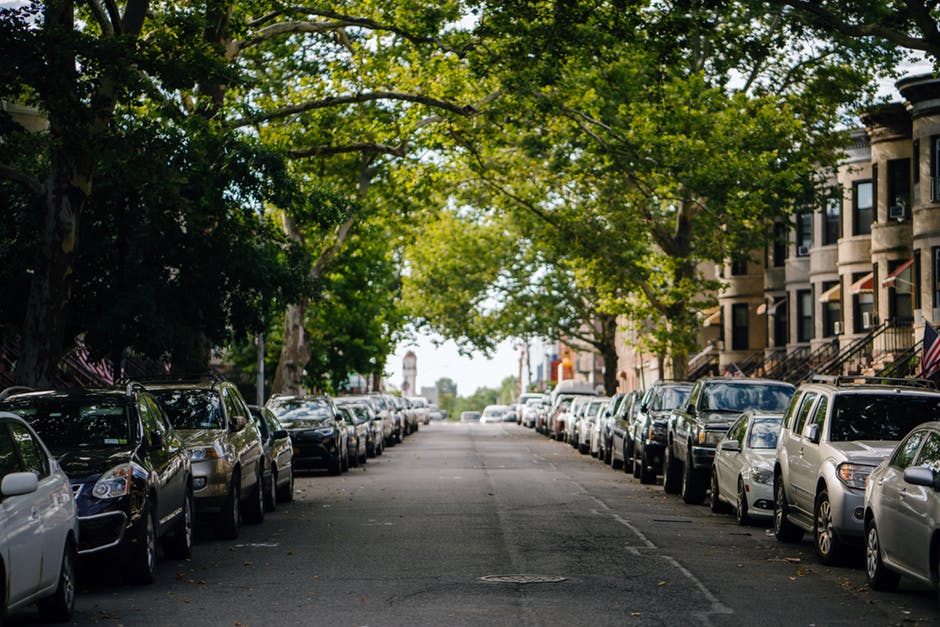
Consultation on Protecting and Enhancing England’s Street Trees and Woodlands

DEFRA currently have an open consultation that seeks views on the UK government’s proposals to introduce four new measures designed to increase transparency and accountability in the process of felling street trees and to strengthen the Forestry Commission’s power to tackle illegal tree felling.  

Two of the measures introduce new duties on local authorities: a duty to consult on the felling of street trees; a duty to report on tree felling and replanting; while the third suggests the production of best practice guidance to support local authorities in drawing up, consulting on and publishing a Tree and Woodland Strategy. 

The duty to consult is intended to ensure that members of the public are appropriately consulted on the felling of street trees, which can contribute positively to the quality of life for people in urban areas. 

The duty to report would require local authorities to collate and report information on the felling and replanting of trees in a uniform way. This would increase transparency and allow the government to monitor tree felling at a national level, helping to make sure we maintain and enhance the natural capital benefits of trees. 

Tree and Woodland strategies would help local authorities to set out the principles that support their tree management activities, thus both increasing transparency and accountability and improving stakeholder and public engagement.  

The fourth measure is intended to give the Forestry Commission more powers to tackle illegal tree felling and strengthen protection of wooded landscapes. 

All of these proposals could contribute to the protection and enhancement of the natural environment, and help deliver the government’s ambitious 25 Year Environment Plan. This consultation seeks views on these measures and their implementation. 

The consultation (closes 28th Feb) can be found here: https://gov.smartwebportal.co.uk/defra/public/webform.asp?id=108&id2=1D06F7