Category Archives: comment

Biomimetics and Biophilia – the new sustainable construction?

There is a new language and lexicon emerging within the world of built environment sustainability, from circular economy to biophilia,  indicating a maturing of construction’s approach, moving from better waste management to circular economy thinking, from biodiversity management to biophilia.

I participated in a brilliant tweetchat yesterday evening, under the hashtag of #CityofLife, hosted by Melissa Sterry (http://melissasterry.com) and others with some very knowledgeable contributors from Northern Europe and elsewhere, exploring the concepts of Biomimetics in buildings and cities. There will be a transcript soon and more debates, so watch this #CityofLife space.

It did strike me though, whilst being comfortable with these new terms in sustainability, many readers and subscribers to this blog may not be, so here is a quick primer.

Biomimetics –  learning from nature as models for building design and construction. See Building a Bionic City (Intriguingly George Mokhtar (@GeorgeMokhtar) tweeted  yesterday before the chat “biomimetics, basically the reason I started using 3D models” proving, maybe, a foundation link with BIM?)

Biomimcry, imitation of nature for the purpose of solving complex problems. Perhaps the best source of information can be found at Biomimicry38  and the Janine Benyus  Biomimicry TED talk

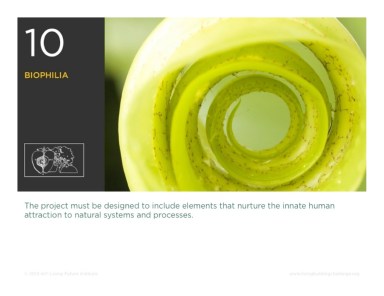
Biophillia, exploring the intrinsic bond between humans and nature, most commonly from a health and well being perspective of building users and occupants.

lbc biophillia

Biophllic thinking is core philosophy for the Living Building Challenge  and suggests the adoption of Richard Kellert’s Six Biophilic Design Elements, (roughly 70 design attributes,  from egg-shaped buildings a historical connection to place)

Suggested reading:

E.O. Wilson, Biophilia 1984 (There is a very useful primer on Ecology, based around E.O Wilson work, within the iBooks (ipad) series from the Open University, with texts, videos and workbooks)

Last Child in the Woods: Richard Louv

Building for Life: Richard Kellert

Case Study Cities: Melissa Sterry, Sustain Magazine

Suggested people to follow on twitter

@melissasterry @thefuturemakers @StefanoSerafi11

@amandasturgeon  @livingbuilding @livingbldgUK

@JanineBenyus @RichLouv @biomimicry_uk @AskNatureTweets

Other Links:

Bios – Flipboard Magazine 

Biophilia in the Real World

Biophilic Design Solutions and Effect

Sustain – my flipboard magazine 

Green Revolutionary Engineering

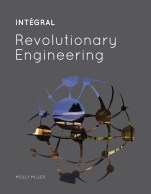
Integral_cover_9x7_FINAL_webIntegral Revolutionary Engineering – a review.

Every now and again you come across a book that is both simple and profound, full of ah ha moments, of innovative ideas and yet seemingly familiar. One such book I have mentioned often on this blog (and gifted to many) is Yvon Chouinard’s “Let my people go surfing”  to which Integral Revolutionary Engineering book published by Ecotone has a similar feel.

I had the opportunity to meet and chat with Kevin Hydes at an Inetgral reception at EcoBuild this week, and picked up a copy of Revolutionary Engineering. Kevin served as the Chair of the USGBC  2005-2006, was a founder and director of CanadaGBC and a former Chair of the WorldGBC and is Founder and CEO of the Integral Group.

Integral are a global network of design professionals collaborating under a single deep green engineering umbrella, providing building system design and energy analysis services, trading as Elementa in the UK

Revolutionary Engineering is a ‘treatise of innovation in deep green building design, featuring stories and ideas from some of the worlds leading engineers and designers’

And it does what it says on the lid, providing a portfolio of the Integral Groups experience of design on deep green buildings, an insight not only into what is possible today but what is highly achievable in the future.

That the forward is written by Jason McLellan (see bio) gives the clue that this a treatise of building services design on Living Building Challenge projects.

And there is a nice affinity here. Leeds, where we founded the UK Collaborative for Living Building Challenge is also Kevin Hydes’ home town.  Now residing in San Francisco, Kevin reminisces in his preface letter on a post industrial Leeds, with belching coal fired power plants and coal from Yorkshire burning in his very home. Times have changed, in Leeds and in sustainable construction since then.

Molly Miller (@miller_mm), author, is Integrals story teller with a background in sustainability writing at Rocky Mountain Institute and Mother Earth News. And what a great title – why doesn’t every company have someone with the story teller title, official or otherwise?.

In conversational tone, Molly includes many Kevin Hydes insights scattered and emphasised throughout, alongside quotes and comments from many other green build thinkers and project team members.

As I read Revolutionary Engineering, I was looking for hints as to how BIM would fit in, yet,  found it refreshing that BIM doesn’t feature. Although I am sure it must have been used to some degree on the large Hospital projects and Empire State Building refurbishment case studies.

… refreshing to read a book with Revolutionary in the title that doesn’t try to sell BIM as the panacea for all things design and construction, even green construction.

Revolutionary Engineering sees other drivers across its fours chapters Imagine, Perform, Sustain and Accelerate. For example, creative leadership and collaboration (there are echoes here of our collective leadership tweetchat from Tuesday evening), innovation and diversity

One of the barriers to innovative thinking and collaboration across the construction sector is acknowledged as lack of diversity – of age and gender. This is indeed something I’ve seen evident in my own work in the sustainability leadership and social media world. Revolutionary Engineering, sees that the processes and policies of an organisation need to be appropriate to women,  consciously arranging hierarchies and teams to be collaborative

The character of innovation relies on different ways of thinking and a homogenous group is just not going to provide that.

Addressing the Cost v Value issue, Revolutionary Engineering reminds me of the 1:5:200 and Be Valuable thinking of a decade ago, brought bang up to date in line with deep green buildings. What must be of interest to every client and contractor seeking sustainable buildings is how Integral brought the Living Building project at Simon Frasier University in on ‘standard budget’

Whilst an reviting read it is also challenging, for eg on the higher cost for going green issue –  to cite cost as an argument against energy efficiency or innovative practices in design is often an excuse to do something the same comfortable way it has always been done”

The book’s case study on the new Clif Bar headquarters is fascinating, illustrating the importance of putting the user first. “The occupant is the star of high performance buildings”  I must say I find Clif Bar an interesting organization for personal reasons, from a CSR and cycling perspective, so this case study added much to my understanding

A small criticism, a lack of page numbers and possibly too many images of one project in particular – the Vancouver VanDusen Botanical Gardens – it is a great Living Building Challenge project that I had the chance to visit in Vancouver a few years back – but perhaps too many images here that you get the feeling of ‘space filling’

In summary we can, as the UK construction industry learn much from the experiences and insights in Revolutionary Engineering as we start to embrace deep green and Living Building Challenge thinking it should be on the reading list of all sustainability professionals, services engineers and a text for construction and building services students … to further the ‘collaborative commitment to relentless momentum’

Integral are participating (exhibiting and talking) at the Construction21 Green Build Virtual Expo in May, prior to then, I will be in conversation with Integral as part of our EXPOC21chat tweetchat series.

Why Fairsnape?

I have been asked a lot recently on how my business name came about:

Fairsnape is a hill in the Forest of Bowland Fells, and was visible from my office window at the time I set up the business. (It hasn’t moved, we have, half a mile or so down the road). I wanted a name that wasn’t just tied to consultancy in construction, but one that could be flexible, grow with my interests in for example the outdoors and sustainability, as well as business improvement support.

And that has worked well.

photo (13)

But there is more significance in the name. Fairsnape is a minor hill at 510m with superb views, south across the Lancashire plains, north east, the Yorkshire Dales and north west to the Lake District. The later being inspirational to move on and explore greater ranges, from the Lakes to Scotland to the Alps to the Himalayas, as we did many years ago.

And so it is with sustainability. I delight in helping organisations climb that first hill, away from the flatlands of environmental management, and then on towards greater and bigger achievements. Something of Ray Andersons Mount Sustainability here I guess.

But, having discovered mindfulness of late, it is of course very fine to sit, contemplate and refresh, wherever you are on route, be it a mountain or a sustainability journey and not always to rush on to something new.  In the words of Nan Shepherd in her inspirational Living Mountain book on the Cairngorms  ‘I sat and listened to the waterfall until I didn’t hear it any more”  An approach we can learn from for a new sustainable construction thinking.

Construction efficiency – plus ca change?

In preparation for todays Lancashire Construction Best Practice event presentation on Building Down Barriers, I have been back tracking and hunting down material from the time of the projects. Back in the 90’s, presentations were on acetates on overhead projectors, the handouts raw photocopies of those acetates.

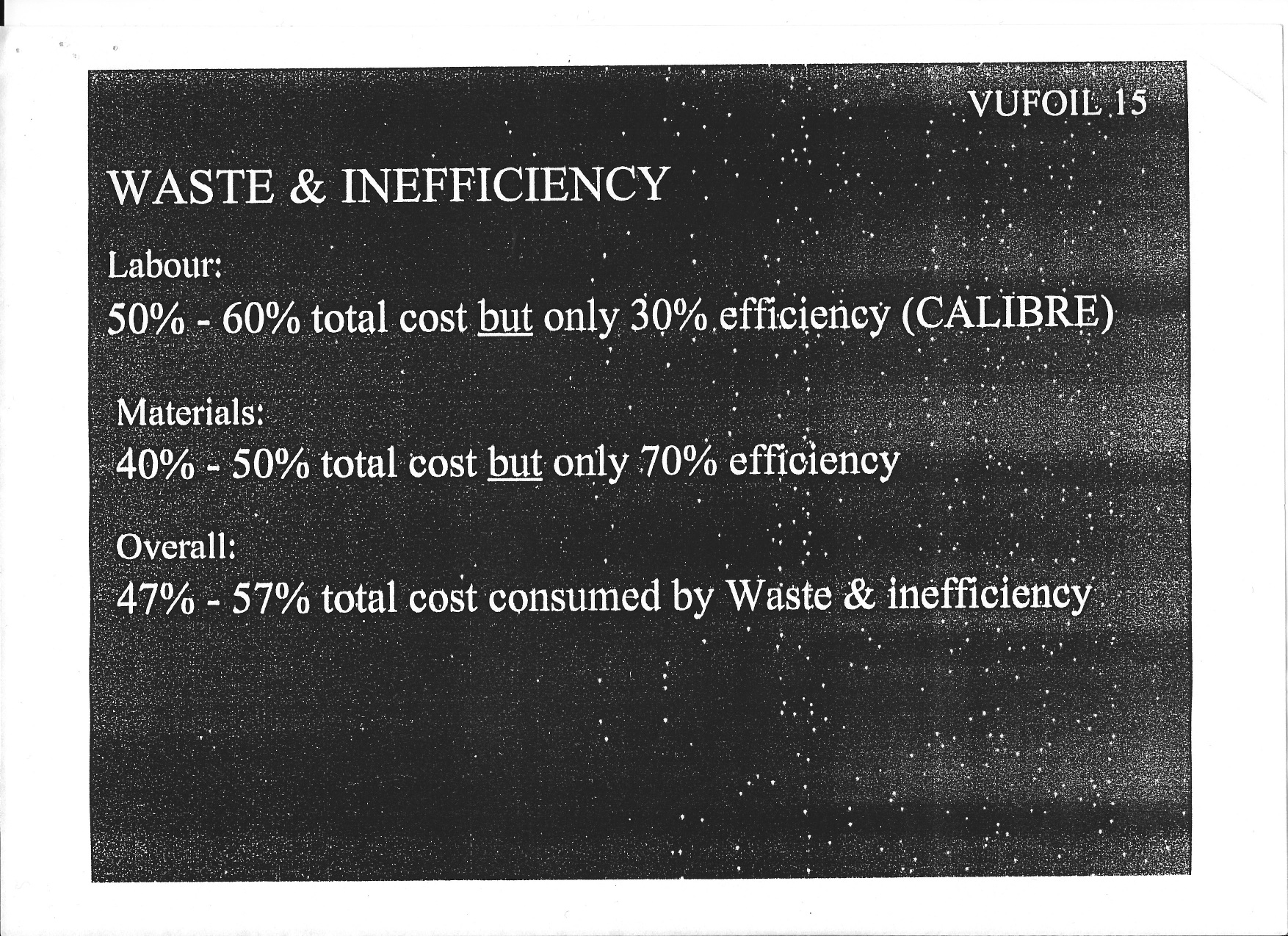
One of the slides in a presentation made to the Midlands Construction Quality Forum* by  (I think) Clive Cain in 1996 illustrates the state of the industry at that time:

Scanned Image 39

Nearly 2 decades later have we improved?

Since Building Down Barriers we have had many many strategies to improve efficiency,  a recent (2006) study of labour efficiency showed a similar 30% of non productivity:

project footprints

And today? How much of the total cost of a project is consumed by waste and inefficiency? Have we dropped below the anecdotal 40%?

Of course any inefficiency is un-sustainable from environmental, financial and social perspective. I am reminded of the Honda advert strap line that ‘everything we do goes into everything we do’. How much of what we do in construction goes into ‘making the building grow’

It is hoped that the Lancashire Construction Best Practice Club, in association with UCLAN will undertake facilitated research to address inefficiency  and provide supported solutions. A local, Lancashire Building Down barriers, working with complete supply chains applying all the good approaches we advocate. Approaches that could include BIM, lean , cluster supply chains, collaborative working, carbon management, facilitated continuous improvement and importantly circular economy thinking.

Watch this space!

* a 1990’s innovative community of practice, comprising quality managers from construction companies with a passion to share and learn across companies.

Tweetchat Week: w/c 4th Feb 2014

images (1)Next week is shaping up to be a brilliant week of tweetchats and twitter based conversations.

Checkout:

European Green Build

First up on Tuesday 4th Feb I will be interviewing  Building the Future (based in Catalonia, Romania and Brazil) with @C21EXPO_Europe as part of the Construction21 Euro Green Build virtual Expo tweetchat series. We will be discussing sustainability communities in the built environment.

>>> Join this conversation on this chat at 11am UK, 12 CET using the hashtag #ExpoC21Chat

Sustainability Stakeholder Engagement

Later the same day at 7 pmUK (11am PT and 2pm ET)  I am delighted to be in conversation with Peggy Ward, sustainability officer at Kimberley Clark. Peggy, based in Appleton WI, USA will be explaining how Kimberly Clark engage with and learn from their stakeholder groups. This conversation is part of the monthly Sustainable Leadership Conversations series created by Andrea Learned and Martin Brown (see our Google+ community pages)

>>> Join with this conversation on the 4th Feb at 11am PST, 2pm ET and 7pm UK using the #sustldrconv hashtag

Living Building Challenge with the UKGBC PinPoint

And then, on the 6th February, as part of the UKGBC’s Pinpoint programme taking place 3-7 Feb to increase awareness of The Living Building Challenge in the UK with UKGBC members, we will be hosting, with @UKGBC Pinpoint, a conversation with Amanda Sturgeon, VP of the Living Building Challenge at the International Living Futures Institute in Seattle.

>>> Join this conversation at 11am PST, 2pm ET and 7pm UK using the #GVischat hashtag.

All of the above tweetchats will run for 60mins and provide ample opportunity to post questions to guests, share your experiences and comment on the subject matter.

We look forward to seeing you there, and if you would like to discuss how tweetchats can promote your organisation or sustainability initiatives please do get in touch.

Also of note next week is the #CSRChat with Susan McPherson on 6th Feb at 5pm UK

iSite Links:

Records of tweetchats and conversations

Are Tweetchats: the new digital benchmarking?

#tweetchats … observations + how to

Understanding the Living Building Challenge

UK_collaborative_logoDiscover why we think that the restorative sustainability thinking of the Living Building Challenge, as a philosophy, advocacy platform and a certification tool is vital to the UK sustainable construction.

This spring we are holding two Understanding the Living Building Challenge workshops that provide a 6-hour in-depth introduction, in Leeds on the 5th Feb and in London on the 28th Feb 2014

The first, held in Leeds generated lots of debate on the principles and application of Living Building Challenge within the UK. Feedback from the course included:  ” great overview of LBC” – “clarified the US language” – “A comprehensive presentation with highly informed discussion with participants” and  “informative and educational”

Our next course is in London on 28th Feb: at the UKGBC Offices in the Building Centre (Registration details here)

See A Living Building Challenge Conversation (with @UKBC and @AmandaSturgeon @LivingBuilding)

The Living Building Challenge™ is the built environment’s most rigorous performance standard. It calls for the creation of building projects at all scales that operate as cleanly, beautifully and efficiently as nature’s architecture. To be certified under the Challenge, projects must meet a series of ambitious performance requirements, including net zero energy, waste and water, over a minimum of 12 months of continuous occupancy.

A Full Day Course: Understanding the Living Building Challenge provides a 6-hour in-depth introduction to the Living Building Challenge. Attendees are green building leaders in their community: design professionals, contractors, developers, owners, government officials and employees of public agencies. In short, anyone and everyone who can impact the development of the built environment. This course will be in English without translation available. Participants who successfully complete the course will receive a certificate of course completion.

Living Building Challenge related post here on iSite

BIM: Gaming Down Barriers

I had the opportunity to experience the gamers device, the Oculus Rift, at a recent Lancashire Construction Best Practice Club event on BIM, courtesy of Vin Sumners from Clicks and Links, taking a virtual tour through the Manchester Town Hall linked to the BIM model for that project.

Interesting to see then that Second Life friend, Jon Brouchoud at Arch Virtual is pushing commercial boundaries of BIM and Oculus Rift in his article BIM Goes Virtual: Oculus Rift and virtual reality are taking architectural visualization to the next level 

“The first thing people do when they put on the Rift is to reach out trying to touch the walls or furniture they see in the virtual model, even it doesn’t really exist,” said Jon Brouchoud, “It’s an almost involuntary reaction, which I think that says a lot about how immersed they are. They really do feel as if they’re occupying a completely different place.”

Rift-side-by-1024x306

(Jon presented live from the USA / Second Life at the first Be2Camp event way back in 2008, there is a link to Jon’s Be2camp presentation on slideshare here)

At the time I tried the Oculus Rift I commented that we can add much more data, augmented reality, into the virtual experience, for example when touching walls, if we could see for example the sustainability data of components, health data, manufacturing data, time to replacement and cost data.

But more importantly such gaming devices can make construction and BIM exciting for all generations, fostering greater collaboration across disciplines in both a virtual and real environment – Gaming Down Barriers.

Gaming Down Barriers is the title of a Innovation Voucher funded report produced by Martin Brown and Paul Wilkinson for Clicks and Links which should be publicly available in the near future. The report makes the argument that BIM through gaming could break down collaborative working barriers as did the original Building Down Barriers programme.

Improving key elements in SME sustainability practices

Environmental Leader reports on a new guide from the Chartered Institute of Management Accountants that sets out 10 best practices to help SME’s use sustainability to benefit the environment, their bottom line, customers and society.

Each tip is backed up with case studies and links for further information. Built Environment case studies include the likes of Billington Structures.

The tips are very apt and useful for construction SME’s moving beyond environmental issues and a sustainability approach that still rests within the health and safety arrangements.

  1. Take a broad view of sustainability.  SME’s should look beyond environmental issues.
  2. Define in detail what sustainability means to your company. This will help your company focus on the right goals.
  3. Engage all stakeholders. Include customers, suppliers, investors and employees in the discussion.
  4. Remember that you are not alone. National, international and industry-wide initiatives exist that help businesses become more sustainable.
  5. Establish responsibility and communicate widely. Make sure senior management drives the policy, appoints sustainability champions and communicates the importance of sustainability to every level of the company.
  6. Take it step by step. This is an evolution.
  7. Walk the talk. Back up your company’s intent with meaningful actions. Never make the mistake of seeing sustainability as a marketing exercise.
  8. Tie sustainability to profit. Make the link between consuming less water and electricity or producing less waste and improving profits clear within your business.
  9. Measure, monitor and review. Develop clear metrics to track your progress and review them regularly.
  10. Invest in the future. Many SMEs say the biggest investment is management time.

Sustainable Construction 10 years on – plus ca change?

Sorting through old papers over the holiday break, I came across this call to action from 2004

So why is the construction industry so slow in adopting sustainability principles?  There is more than enough sustainability knowledge in the marketplace to help organisations become more innovative, save costs and deliver a better product for their customers.

Business leaders and individuals are just not sufficiently engaged or enthused.

New entrants to our industry are beginning to expect high levels of ethical environmental and social performance. Clients are also beginning to expect higher standards and suppliers too are waking up to a better way of working. Organisations that do not adopt a sustainable approach will find it increasingly difficult to attract employees, clients and suppliers.

Now is the time to make the change and become more sustainable in everything we do.

The 2004 drivers for sustainability were based on risk management, driven in the main from client requirements (recall for example the influential MaSC – Managing Sustainable Construction programme launched that year) and we still ask the question if Business leaders and individuals are sufficiently engaged or enthused.

We have seen many strategies, targets and new drivers in the world of sustainable construction, the significance and danger of carbon wasn’t on the agenda back in 2004, the climate change wasn’t the issue as it is now, we barely understood CSR and social sustainability and we didn’t have social media as the powerful communication, learning and sharing tool.

And yet the approach to sustainable construction from contracting organisations remains the same. All too often I hear that “we only do it when the client or project demands it” And I notice increasingly that BREEAM (Very Good) projects seem to be losing the drive to change the way we sustainably construct – its business as usual for many working on such projects.

Going into 2014  we need to remain optimistic. Over the holiday period I have also been browsing some of the works of Richard Buckminster Fuller and struck by his quote

“You never change things by fighting the existing reality.To change something, build a new model that makes the existing model obsolete.”

we need that new model now in construction, not one that challenges the existing – but makes a new way of doing things far more attractive and compelling on all counts. We can see a hint of this new model within the Living Building Challenge, Circular Economy and Restorative Sustainability thinking. For many reasons the built environment is known as the 40% sector, consuming 40% raw materials, producing 40% of total waste, contributing 40% traffic on roads, using 40% energy generated and so on.

Untitled

Lets flip these negatives into positives and heal the future.

We can only describe what we do as sustainable when we take less from the environment and when we contribute more to society than we take.

(We will be discussing this theme in our monthly Sustainable Leadership Conversation tweetchat on Tuesday 7th Jan at 7pm UK / 11am PST – follow the #sustldrconv hashtag on twitter)

Seasons Greetings …

Each year we use images taken locally for our Christmas cards, below are the images we have used this year, hope you enjoy.

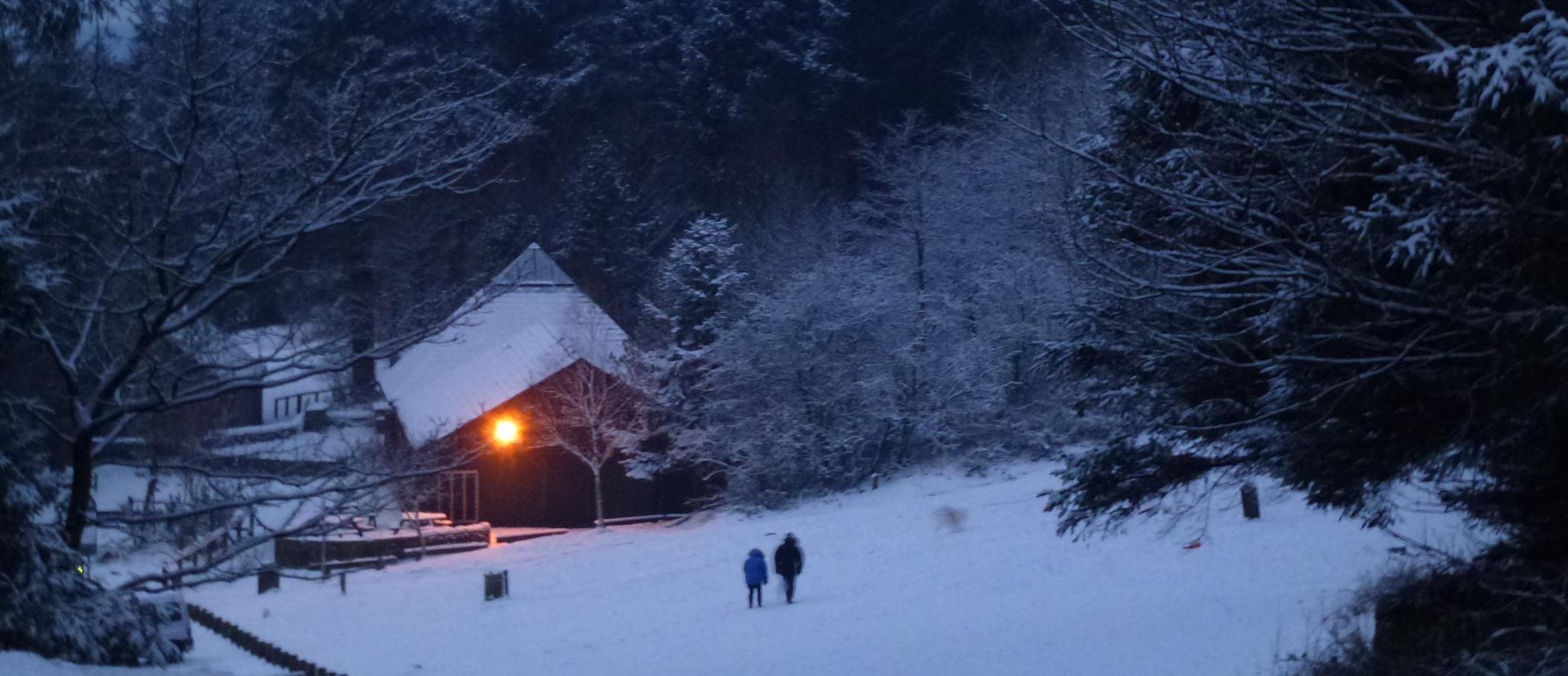
Winter weather at the beginning of the year gave an almost alpine feel to our local fell …

Beacon Fell

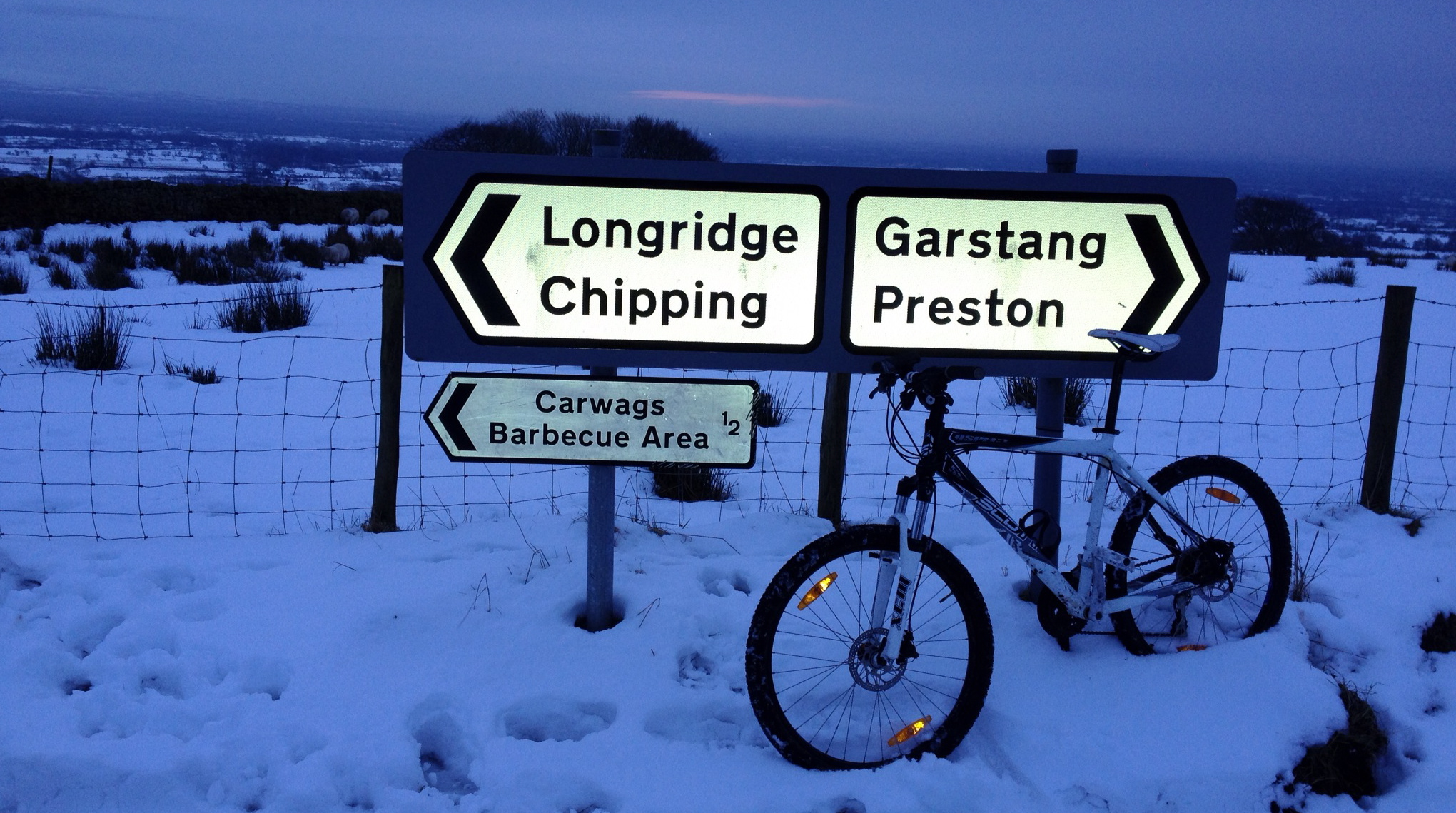
… and opportunity for some fun snow rides …

Winter Ride - Beacon Fell

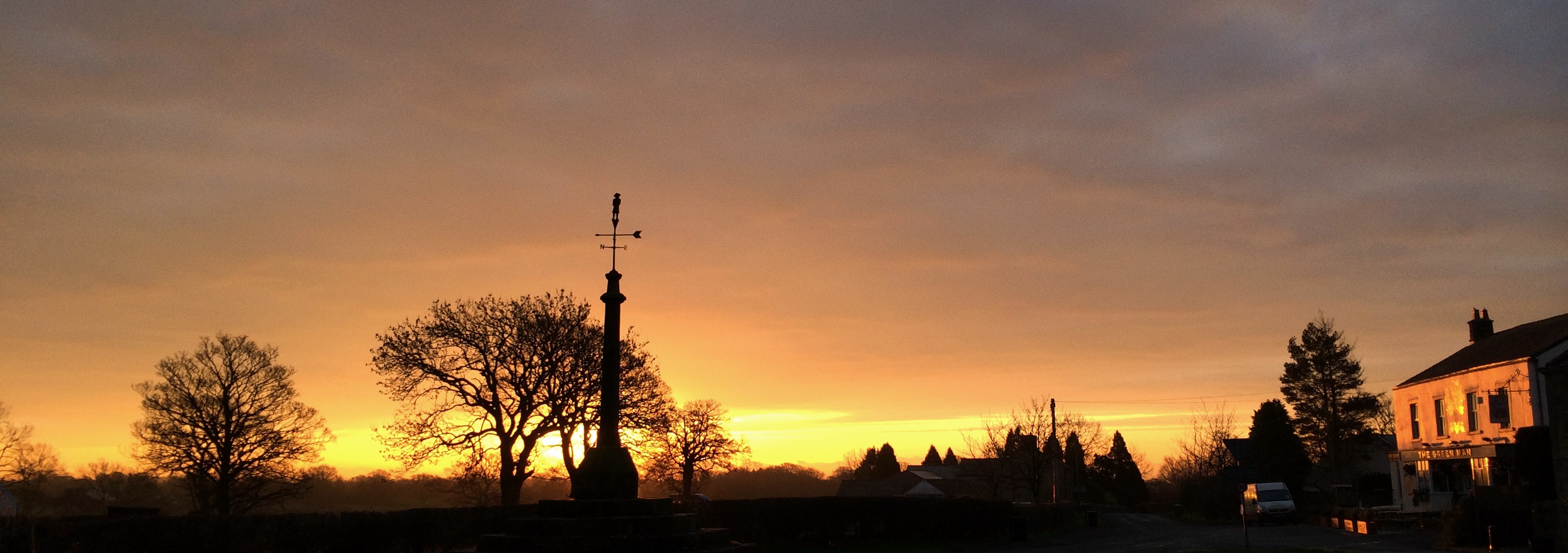
… and we are very fortunate to witness this sunrise on most mornings – well on cloud free days that is! …

Inglewhite Sunrise

Have a great and peaceful seasonal break.