Tag Archives: sustainability

Advocacy and Activism: Patagonia ‘Tools’ Book Review

Patagonia Tools for Grassroots Activists.Edited by Nora Gallagher and Lisa Myers; introduction by Yvon Chouinard. Book Review

ToolsAdvocacy or activism. Advocacy has become a common descriptor for many sustainability folk, and one I’ve used for many years. Maybe now is the time for the activist description to become as popular as the advocate, moving from advocating for change to doing and driving change.

Advocate: a person who publicly supports or recommends a particular cause or policy.

Activist: a person who campaigns for some kind of social change.

Patagonia Tools for Grassroots Activists, the latest from Patagonia Books, captures the best wisdom and advice of 20 years of the Patagonia Tools Conference, ‘where experts provide practical training to help activists be more effective in their fight” 

Whether its scaling damns, (Damnation) protecting wildness (see the stunning Jumbo trailer)), circular economy thinking, (Wornwear), using clothing catalogues and promoting environment awareness through social media (dirt bag diaries and the Cleanest Line blog) or promoting family business, Patagonia continue to follow their mission – ‘using business to inspire and implement solutions to the environmental crisis’

Tools, has created a resource “for any organisation hoping to hone core skills like campaign and communication strategy, grassroots organising, and lobbying as well as working with business, fundraising in uncertain times and using new technologies

Each chapter, written by a respected expert in the field, covers essential principles as well as best practices is accompanied by a hands-on case study that demonstrates the principles in action.

And in the world of sustainability, including built environment sustainability we can learn a lot here. Within Tools, there are many stories to inspire strategic thinking, tools to adopt and employ, and tips to help, for example;

  • Using social media within organisations and externally
  • Leadership to insure that every decision made on a project or within an organisation contributes to the overall mission

There are many contributors those in sustainability will be very familiar with for example Bill McKibben (350.org) and Annie Leonard (Story of Stuff) and those in the built environment sustainability space will recognise Denis Hayes, the driver behind the Bullitt Centre, the worlds greenest commercial building. I was particular interested to see Wade Davis, author of Into the Silence, a 2012 Boardman Tasker award shortlist, included here.

Patagonia hopes the book will be dog-eared and scribbled in and always at hand, an insightful resource and reliable companion to the environmental movement, I am sure it will be.

Brexit is moving UK from client status into the supply chain

There have been many, and there will be many ‘what Brexit means for …’ articles, blogs and opinions. Here is my take on how I see the impact for the built  environment and sustainability. It is a blog post that I started on June 24th, but with each passing day, hour, a new twist has emerged …

flag_yellow_lowFar from dust settling after the EU Referendum that saw ‘Leave’ gain a slender majority, we are seeing more dust being kicked up from the daily political, financial and environmental developments. What all this means for the built environment, as many organisations are telling me in emails, tweets and statements is unclear and remains to be seen. It is still unbelievable that political and industry organisations and companies did not and still do not really have a plan in the case of an out vote, and what the implications of triggering Article 50 would entail.

What we see however is the UK on the brink of a self inflicted move from client, or framework prime contractor status to supply chain status and all the implications that would bring. No longer would we be setting the trading and governance conditions but having to negotiate, and ultimately comply.

And with the mature supply chain conditions that most in the built environment are now familiar with, this entails, fair, ethical , equitable and environmentally sound practices and governance across an organisation. Practices that are not only limited to the goods or services provided to a client (in this case the EU) but across all operations.

And the pandora’s box of potential implications, a few good but mostly disastrous in the short term, we now face in the built environment include …

A continuation of OJEU – the EU tendering and procurement process. (an Housing Association pre-referendum article foresaw this as a possibility , to ensure open access to contracts as a good ethical and fair trading practice)

Compliance with EU environmental standards, such as air quality and the Near Zero Buildings directive. Although many of the EU environmental issues have, over time been incorporated into e.g. Building Regs, as a government we have fought most EU environmental legislation, particularly air quality regulations. Boris Johnson, described as Trump-Lite in his approach to the environment, has been accused of withholding failing air quality statistics in London schools, hampering any real improvement. Now, to trade with EU it is highly likely that air quality thresholds will be an imposed condition in light of the recent statements from EU officials that they remain committed to protecting health and wellbeing of all European citizens.

Uncertainty and worry questions the free movement of skills, talent and people on which the built environment has thrived. Free movement of skills has been vital for construction on site, in Architectural practices, Environmental consultancies, Universities and other research organisations. Even BIM, which through free movement of IT talent, many of whom based in London and created the innovative IT hub, that has helped us become a BIM world leader. Not surprisingly there are warnings that IT and multi-i organisations will seek more EU centric locations, for example Berlin, relocating away from London and the UK.

Indications are that we will see short and long term price increases in construction materials. 60% of all imported construction materials come from the EU. Exported services will be expected at a lower cost which may prove to be unviable.  Imported timber, increasingly the structural material of choice – will be subject to trade and cost implications This should of course bolster Grown in Britain timber, but that itself may well be subject to wider EU trading implications – as a supply chain would be expected to do so to demonstrate good governance and ecological considerations.

The construction industry is often the barometer for the health of the economy – and hence a prelude for a recession. It requires amongst other factors, strong confidence in a pipeline of work flow. That pipeline had slowed pre referendum, with a number of contracts having Brexit clauses, and now, post referendum in some cases (e.g. infrastructure projects) come to (a temporary) stop. With the value of construction organisations being reduced, so will funds available for innovation, investments in new technologies (digital and BIM) and crucial for the industry, education, training and development.

On a wider macro sustainability level, leaving the EU risks weakening efforts to protect human rights, tackle corruption, environmental destruction and climate change, all which require a collaborative effort with our neighbours. I have already heard “that as FSC is a EU Legislation requirement we can now use unsustainably sourced timber?”

Facing all of these potential implications, never before in the sector have we needed our modern day, mature approaches to improving the built environment. These include lean construction, a diverse and ethical sector, collaboration not silo’d isolation, sound training and development, BIM, and a restorative sustainability approach that is not weakened to doing even less just to reduce the built environments sustainability impact.  

At the same time we need to speed up the incorporation of the UN Sustainable Development Goals as the sectors sustainability mission.Chart_of_UN_Sustainable_Development_Goals

Far from taking back control, we may be handing over what control we had as we take a new position within the supply chain. But then … who knows what will occur, if and when and by whom article 50 is ever triggered.

So what now? The Brexit debate has moved from the binary referendum to a complex cocktail of political issues. It is possible we will see a snap election, less likely the called for 2nd referendum, but we will have new leaders of our main parliamentary parties and debates that focus not only the future of the EU but the UK itself. All will have huge impacts for the built environment.

As individuals we have avenues to register our concerns, through social media advocacy, through our institutions and membership organisations, through the call for a 2nd referendum, and as this is now a political issue through MP lobbying.

We should also see a step up in appropriate lobbying from built environment groups – now is not the time to wait and see, now is the time for groups such as RIBA, CIOB, CE, UKGBC, CIBSE, ICE, IEMA etc etc … to mobilise, be proactive and lobby government, potential party leaders and MP’s with responsibilities within the built environment spectrum, to protect our industry and all the wonderful progress made through union with the EU.

This blog is my view of the post referendum uncertainty, an interpretation from experience and knowledge of the sector, but undoubtedly also informed through reading many many articles, blogs and tweets, too many to reference here at the moment, but also worth reading are:

For a US perspective, Lloyd Alter: What impact will Brexit have on green building in Britain?

Understanding Article 50: David Allen Green  This is what sovereignty looks like

Living Building volunteer opportunities …

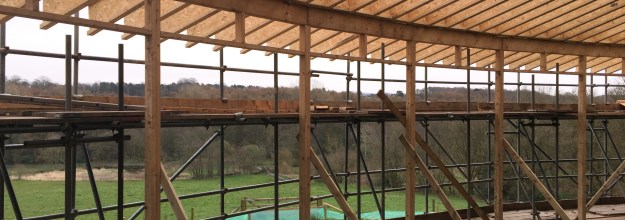
The project team at Cuerdon Valley Park Visitor Centre have three offers out for summer volunteer / interns to support the Trust in pursuit of the Living Building Challenge standard.

IMG_1488

UK 1st Living Building Challenge project at Cuerdon Valley Park, Lancashire

These are unique opportunities for sustainability and environment students:

  • Participation with potentially the greenest building in the UK, the 1st UK Living Building Challenge project.
  • Working with the UK foremost advocates who are pushing the boundaries of green build towards a restorative, just and healthy sustainable future.
  • Discover, first hand, more about the Living Building Challenge, related programmes and topics such as biophilic design.

Role details and contact information are in the following outlines:

Carbon Tracking

Communications Support

Materials Tracking

Biophilic Design & Rewilding- the secret sauce of sustainability?

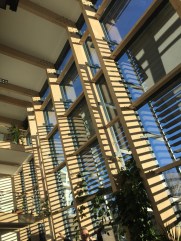
Biophilia is emerging as the secret sauce of sustainability. It is not just about being able to see trees and fields from our windows, or having green plants within rooms, but something deeper and more profound.

The Cuerdon Valley Park Visitor Centre in Lancashire, the first UK project to be registered for and working towards Living Building Challenge certification, recently staged a project team biophilic design workshop (1), led by Joe Clancy using the Terrapin Bright Green guide ’14 Patterns of Biophilic Design’ (Joe, as an intern with Terrapin Bright Green was part of the guide team and co-author)

The workshop reviewed the design, construction and operation of the building from a new perspective, through each of the 14 patterns, covering aspects from light through to the layout of chairs and food to be served in the cafe.


Biophilia translates as love of nature and in design terms the consideration of how our innate relationship with nature can be addressed within buildings. We have evolved as part of nature, and as such the human mind and body function with greater efficiency and performance when natural elements are present. Biophilic design is ensuring that these elements and patterns are present.

Biophilic elements enhance wellbeing, foster the feel good factor, reduce building related illness and even improve health. For example light as in daylight, circadian lighting, differing light spectrums is being considered as a form of medicine, not only to reduce illness, but to improve and maintain health.

ReWilding
There is much talk of rewilding at present, and as rewilding nature and environments is not just about reintroducing wolf, lynx or other top of the chain predators but more about restoring or regenerating the natural environment ‘creating conditions that allow the emergence of natural responsiveness and development’(2)

We should learn from and apply rewilding thinking to our built environment,and in doing so rewild people, those who inhabit buildings, creating the conditions, through for eg biomimicry and biophilic applications, that allow (new and existing) buildings to breathe and to respond to natural and bioclimatic cycles. We are losing or removing our natural barometers from buildings, increasingly replacing them with SMART technologies, to satisfy a blinked focus on energy performance. In turn, this has weakened our intrinsic relationship with nature.(3)

It is recognised that a lack of connection with nature reduces our tolerance to respect the environment. However, enabling biophilic conditions that ‘rewild’ our built environment will improve user behaviour and increase respect for the sustainable function of buildings.

Biophilia could, therefore be a root cause solution to addressing our buildings sustainability performance, closing performance gaps, providing salutogenetic improvement on the health & well-being of those using the building, and providing business benefits relating to people costs and productivity

And, biophilic workshops are not just for green building design, but should be part of the start-up activities for any project, considering in addition to the building in use, the biophilic aspects of the construction process. Biophilic thinking applied to construction environment can address the stress, mental health and safety, productivity, enthusiasm and wellbeing of those working on our construction projects. Therefore, biophilic thinking could be a key to improving construction quality, environmental and safety compliance, productivity and hence costs.

On two, very recent, project sustainability review/audits, it has been encouraging to hear of construction organisations increasing awareness of biophilia through training related to health, sustainability and design.

(1) Report available soon.

(2) George Monbiot in Feral

(2) extract from FutuREstorative

Lynx Kitten Image:   www.conservationjobs.co.uk

Rewilding Building Image: Cuerdon Valley Park Visitor Centre

Rewilding People image – see – Last Child in the Woods Richard Louv

Images from Sense of Urgency presentation available on Slideshare.

A Sense of Urgency

I was delighted to be invited to present in Italy (REGENERATION Edition 2 in Dro, Trentino) and Scotland (SEDA Green Drinks in Ayr) recently on insights from FutuREstorative, updates from the LBC Cuerdon Valley Park project and in the case of many at SEDA, introduce the Living Building Challenge.

The Ayr event fell on John Muir’s Birthday and on the eve of Earth Day 2016, so this made a fitting and related introduction, and I guess constituted my annual EarthDay presentation, (something I have done at numerous events annually since 2009 – 2009 presentation is on slideshare here)

Patagonia Worn Wear – UK Tour

“Let’s all become radical environmentalists” commented Patagonia chief executive Rose Marcario “As individual consumers, the single best thing we can do for the planet is to keep our stuff in use longer. This simple act of extending the life of our (stuff) through proper care and repair reduces the need to buy more over time, thereby avoiding the CO2 emissions, waste output and water usage required to build it.”

This remains in my mind, one of the more useful of circular economy thinking approaches

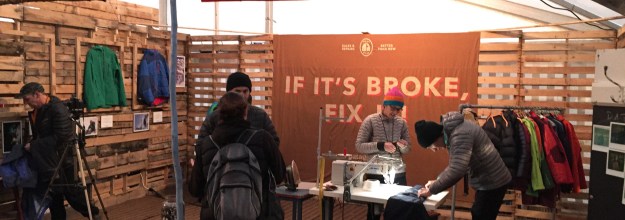
Patagonia’s Worm Well bus will be setting up temporary workstations at venues across the UK to repair garments, free of charge.

IMG_0759

Worn Wear at Kendal Film Festival 2015

The UK leg is part of a wider five-country mission across Europe to extend the life of outdoor enthusiasts’ clothing. It starts on 15 April in the UK and Germany before moving on to other European countries.

Dates and details are on the Patagonia Worn Wear website.

It would be great to see this extended into other areas, more built environment related areas, for example, FM organisations holding free equipment repair workshops in buildings they operate, construction and consultancy organisations returning to their buildings and providing free sustainability advice and repair service … The opportunities based on circular economy business models are huge.

Put simply, if it’s broke, fix it! Dont replace it

Related previous post: (2012) Construction CSR Makeover: can construction learn from Patagonia?

A different Saturday that will change your minds.

Delighted to be involved in the second edition of REGENERATION Design Competition in the Trento region of Italy next week and the Conference on Saturday 16th April.

The following is a re-blog from Carlo Battisti’s blog

2016_03_24-06 Centrale Fies

It’s time to imagine a “Living Future” made of “living buildings.” Living Building Challenge is a building certification program, advocacy tool and philosophy, suitable  for projects that want to go beyond being simply “less harmful”, to truly become “regenerative”. The Challenge defines the most advanced measure of sustainability in the built environment possible today and acts to rapidly diminish the gap between current limits and the end-game positive solutions we seek.

Connected to REGENERATION, the 64 hours non-stop design competition organized by Macro Design Studio  together with the International Living Future Institute, the Conference will return on Saturday, April 16, 2016morning at Centrale Fies – Dro (Trento). The Conference is the premier annual event of the Living Building Challenge Collaborative: Italy, a community born with the aim of sharing LBC knowledge and principles and create the local conditions for the development of “living” buildings, territories and communities.

The program (the event will be in English)
Saturday April 16th, 2016, h 10-13

  • 10:00 – 10.50: Registration
  • 10:50 – 11:00: INTRODUCTION |Macro Design Studio
  • 11.00 – 11.40: NOW IT IS THE TIME FOR A WORLD OF LIVING BUILDINGS AND COMMUNITIES |Amanda Sturgeon, The International Living Future Institute – CEO
  • 11.40 – 12:00: CHALLENGING UK CONSTRUCTION. THE UK FIRST LIVING BUILDING PROJECT |Martin Brown, Fairsnape – Founder
  • 12.00 – 12:20: THE EXPERIMENTAL UNDERSTANDING OF COMPLEX ENVIRONMENTS FOR THEIR REGENERATION | Emanuele Naboni, Royal Danish Academy Copenhagen, School of Architecture – Associate professor
  • 12.20 – 12:40: REGENERATION 2015. PROUD TO BE ZERO. |  The YELLOW Team, REGENERATION 2015
  • 12:40 – 13:00: Questions and answers

2016_03_22-02 Amanda SturgeonThe international speakers are experts who have long been working to introduce the principles of LBC in Europe, including a special guest: Amanda Sturgeon was appointed by former Secretary of State and First Lady Hillary Clinton as one of the “10 most important women in sustainability.” FAIA, LEED Fellow, Amanda is from this year President and CEO of the International Living Future Institute after having been Executive Director. She sponsored also the first edition of REGENERATION.

2016_03_22-01 Martin Brown

Martin Brown is the founder of Fairsnape, active since 2005 as a consulting company, providing a wide range of support services to organizations in the built environment. He deals with innovative sustainability, social media and business improvement, with over 40 years of experience. He is a Living Building Challenge Ambassador, with a passion for the promotion of LBC and regenerative sustainability concepts in the UK.

2016_03_22-03 Emanuele NaboniEmanuele Naboni
(BArch, Dip. Arch., MPhil, PhD in Science, LEED AP, Licensed Architect) He is since 2010 an associate professor at the Institute of Technology of the Royal Danish Academy in Copenhagen, Faculty of Architecture. He teaches and researches in the field of technology and sustainable environmental design.

2016_03_22-04 Team YellowThe YELLOW team is the winning team of the 1st edition of REGENERATION (15-18 Apr 2015) and it is composed of (from left in the picture) Emanuele Mondin (architect, Vicenza), Guido Zanzottera(energy engineer, Turin), Luigi Greco (urban planner, Agrigento), Bernardette Soust Verdaguer (architect, Sevilla) and Maija Krizmane (civil engineer, Riga).

Further information about the event:

When: Saturday April 16th, 2016, h 10-13
Where: Centrale Fies, Dro (TN) | Coordinates 45.986691, 10.926922
Contact: +39 0464 443418 | eventi@macrodesignstudio.it
Registration: partecipation is free but seats are limited. Deadline for registration: Thursday April 15th, 2016. Registration through Eventbrite here.
Language: the conference will be in English (with simultaneous translation).
Educational credits: 3 educational credits for architects will be provided in agreement with Ordine degli Architetti Pianificatori Paesaggisti e Conservatori di Trento. This conference has been approved for 3 LFA (Living Future Accredited professional) CEU hours.

We are waiting for you:-)

FutuREstorative: Working Towards a New Sustainability

FR_Visuals_FINAL

Publishing July 2016

Publication of FutuREstorative (set for Jul 2016) edges closer with the books product page going live on the RIBA Bookshop.

FutuREstorative: Working Towards a New Sustainability

Description

This book aims to further the debate on new sustainability thinking in the built environment, by bringing together a selection of short contributions from thought leaders in the UK and the rest of the world with an overarching narrative from Martin Brown.

Although progress in sustainable solutions has been made over the past decade, the trend is still one of a woefully wasteful construction industry. This book aims to show that being ‘less bad’ is no longer good enough.

The book also spotlights digital sharing and collaboration through social media and BIM as new tools in the ‘sustainability toolbox’ which provide unique and powerful opportunities to rapidly advance sustainability thinking, development and action.

  • Author: Martin Brown
  • Format: Book
  • Pages: 128
  • Publisher: RIBA Publishing
  • Date Published: Jul 2016
  • Stock Code: 85971
  • ISBN: 9781859466308
  • Binding: Paperback

Every Breath We Take

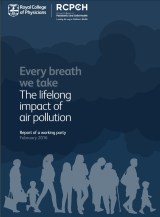
The 2016 Every Breath We Take report from the Royal College of Physicians is a sobering update on human and cost consequences of poor air quality. And not only outdoor air quality, notoriously poor within many of our cities, but also consequences arising from indoor air quality, significantly triggered through the design, construction and operation of the buildings we live, work and play in.

RCPCH-1“Each year in the UK, around 40,000 deaths are attributable to exposure to outdoor air pollution, with more linked also to exposure to indoor pollutants”
The report estimates that the cost to society, business and health services in the UK adds up to more than £20 billion every year.

This is a prime example of how, in the built environment we externalise the real cost of low cost construction.

The report focuses on pollutants from buildings that occur during operation, but also touches on pollutants during construction. The high volume of construction transport, predominantly diesel in addition to the pollutants known to be asthmatics, organic & mineral dust, or carcinogenic (asbestos fibres in older buildings, formaldehyde and VOCs in newer builds)

The built environment is responsible for an increasingly complex cocktail of air quality issues:

“Looking to the future, newer ‘green’ workplaces will be constructed, and newer technologies will be developed for use within them. The latter include significant developments in, for example, the use of advanced materials and three-dimensional printing. The construction, occupancy and exposure profiles of newer workplaces will lead to the potential for novel inhaled hazards and risks, and vigilance will be required in order to identify the occupational lung problems attributed to the workplaces of tomorrow”

Every Breath We Take makes a number of recommendations:

Lead by example in the NHS. Is it acceptable to design, build and maintain health facilities that themselves are not net health positive.

Quantify the relationship between indoor air pollution and health. Pressures for ever more energy efficient buildings with lower carbon footprints raise the potential of reducing air quality in homes, offices and schools. An holistic and collaborative effort is required across built environment organisations, research and health organisations to develop policies and standards.

Lessons:

Following the findings of the Every Breath We Take report, there really should be no air quality performance gap, even a small gap will result in human health issues and externalised health costs.

Adopting the increasingly popular Living Building Challenge and Well Build Standard, air quality must become a key element of performance gap analysis. Design stage set the required air quality threshold that is validated post construction, with a fully occupied facility over a 12 month proofing period, and the on a regular on going basis. Established standards such as BREEAM and LEED must make award of certification dependent on proven air quality.

This is a CSR (Corporate Social Responsibility) issue of high magnitude for those who commission buildings, those who design and construction and those who manage buildings, anything less can not be acceptable to a responsible built environment sector.

Based on extract from FutuREstorative


Ready for a Circular Economy?

IMG_1100My recent talk at Green Vision Circular Economy event held at the Re:Center, University of Bradford, focused on Design for DeConstruction principles and raised a number of questions, for example;

  • The Circular Economy is not just simply new generation waste recycling – are we rethinking design and construction systems and processes. (slide 2)
  • How can we convert Site Waste Management Plans to Material Conservation Management Plans? (slide 3)
  • Is BIM ready to embrace design for (secondary) reuse, after the first design purpose?How well do we understand the difference between Material Passports and Product Data Sheets? (slide 5)
  • How can we remove toxic materials from buildings so that we do not build in more health problems for future use, future buildings and future generations? (slide 7)
  • Are we limiting circular economy potential through greater integrated Mechanical, Electrical and Plumbing systems? (slide 15)
  • Is there really a place in construction 2016 for Substances that are Hazardous to Health? (slide 24)

Related Post: Circular Economy and the Built Environment