Author Archives: martin brown

Vote: Fairsnape Best Green Blogger Nominee

The Fairsnape iSite blog now in its 10th year with just under 1000 posts has been providing news, comment and challenges to the built environment sector and beyond.  It is always great to get recognition, and am delighted that this blog is a Green category Best Blogger nominee for the 7th Annual 2016 JDR Industry Blogger Awards!JDRBadges_2016_Green

Voting is now open on the JDR website (from Monday, February 29th and closes April 15th)

Please take a few moments to vote for this blog here

The blog with the most votes in each category (Architecture, Interior Design, Remodelling, Construction Business, Green, and Microblog) will win that category.


Martin_0010a

thank you, and best wishes to other nominees


Every Breath We Take

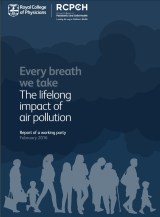
The 2016 Every Breath We Take report from the Royal College of Physicians is a sobering update on human and cost consequences of poor air quality. And not only outdoor air quality, notoriously poor within many of our cities, but also consequences arising from indoor air quality, significantly triggered through the design, construction and operation of the buildings we live, work and play in.

RCPCH-1“Each year in the UK, around 40,000 deaths are attributable to exposure to outdoor air pollution, with more linked also to exposure to indoor pollutants”

The report estimates that the cost to society, business and health services in the UK adds up to more than £20 billion every year.

This is a prime example of how, in the built environment we externalise the real cost of low cost construction.

The report focuses on pollutants from buildings that occur during operation, but also touches on pollutants during construction. The high volume of construction transport, predominantly diesel in addition to the pollutants known to be asthmatics, organic & mineral dust, or carcinogenic (asbestos fibres in older buildings, formaldehyde and VOCs in newer builds)

The built environment is responsible for an increasingly complex cocktail of air quality issues:

“Looking to the future, newer ‘green’ workplaces will be constructed, and newer technologies will be developed for use within them. The latter include significant developments in, for example, the use of advanced materials and three-dimensional printing. The construction, occupancy and exposure profiles of newer workplaces will lead to the potential for novel inhaled hazards and risks, and vigilance will be required in order to identify the occupational lung problems attributed to the workplaces of tomorrow”

Every Breath We Take makes a number of recommendations:

Lead by example in the NHS. Is it acceptable to design, build and maintain health facilities that themselves are not net health positive.

Quantify the relationship between indoor air pollution and health. Pressures for ever more energy efficient buildings with lower carbon footprints raise the potential of reducing air quality in homes, offices and schools. An holistic and collaborative effort is required across built environment organisations, research and health organisations to develop policies and standards.

Lessons:

Following the findings of the Every Breath We Take report, there really should be no air quality performance gap, even a small gap will result in human health issues and externalised health costs.

Adopting the increasingly popular Living Building Challenge and Well Build Standard, air quality must become a key element of performance gap analysis. Design stage set the required air quality threshold that is validated post construction, with a fully occupied facility over a 12 month proofing period, and the on a regular on going basis. Established standards such as BREEAM and LEED must make award of certification dependent on proven air quality.

This is a CSR (Corporate Social Responsibility) issue of high magnitude for those who commission buildings, those who design and construction and those who manage buildings, anything less can not be acceptable to a responsible built environment sector.

Based on extract from FutuREstorative


Ready for a Circular Economy?

IMG_1100My recent talk at Green Vision Circular Economy event held at the Re:Center, University of Bradford, focused on Design for DeConstruction principles and raised a number of questions, for example;

  • The Circular Economy is not just simply new generation waste recycling – are we rethinking design and construction systems and processes. (slide 2)
  • How can we convert Site Waste Management Plans to Material Conservation Management Plans? (slide 3)
  • Is BIM ready to embrace design for (secondary) reuse, after the first design purpose?How well do we understand the difference between Material Passports and Product Data Sheets? (slide 5)
  • How can we remove toxic materials from buildings so that we do not build in more health problems for future use, future buildings and future generations? (slide 7)
  • Are we limiting circular economy potential through greater integrated Mechanical, Electrical and Plumbing systems? (slide 15)
  • Is there really a place in construction 2016 for Substances that are Hazardous to Health? (slide 24)

Related Post: Circular Economy and the Built Environment

BioClimatic Design: Book Review

Sustainability and eco design are now common place in todays built environment, yet how appropriate is our level of understanding and relationship with natural and bioclimatic conditions necessary to address climate change?

9780691169736-us-300Design for Climate, Bioclimatic Approach to Architecture Regionalism by Victor Olgyay originally published in 1962/3 has been recently updated with new essays and insights on climate change and design.

Today, even though we may have far greater understanding of climatology and potential solutions, we still strive to understand how built environment design will influence the drive to cap global warming to 1.5 deg c. The core teachings and messages in Design for Climate remain just as relevant, and indeed perhaps far more so.

The original book is populated with wonderful pen-drawn climatic and bioclimatic charts and illustrations that pull the reader in to discover more. Sadly, much of the data, charts and methodologies included within the book would now be included within BIM environmental modules, even on smart phones, based on algorithms, and possibly applied without in-depth knowledge of for example sun path diagrams and insolation affects.

I say sadly, as we have perhaps lost that connection and innate understanding of the natural climatic conditions pertaining to the individual places in which we build.

Considering that the original edition would have been conceived, researched and produced without the use of computers and the internet, the meteorology, climatology and biological data incorporated into Design for Climate are outstanding.

There are a number of areas in the book, both within the original text and in the new prefaces that resonate with where I am in my sustainability research, practice and thinking for FutuREstorative.

For example there is a resonance with the Living Building Challenge philosophy, and of the flower metaphor for buildings rooted in place, harvesting all energy and water whilst being adapted to climate and site. Words which would not have been out of place within Olgyays text and charts.

Within the new preface, Victor W Olgyay describes how the very local bioclimatic conditions at Limone, Lake Garda, have given rise to very specific architecture, something that Living Building Challenge students on the annual Regeneration design competition, held nearby in Dro, take into account as they prepare designs for local municipal buildings along Living Building Challenge principles.

1962 also saw the publication of Silent Spring, in an era of environmental awakening, of pollution awareness and of the impact or relationship of buildings with the climate, which ushered in the modern environmental protest movement.

picture-13

Earth Day Catalogue

Through the text and the images, even the paper quality, I was reminded of another near-contemporary text, towards the end of that decade, the Earth Day Catalogue and its mantra of that time, still relevant today, to Stay Hungry Stay Foolish.

Further there is a striking continuity which caught my eye, Victor Olygay passed away on the first earth day in 1970. Part of the organisation team on that day was Denis Hayes, who, 40 years later would apply the essence of Design with Climate, translated through the Place and the other Living Building Challenge imperatives on the built environments green flagship at the Bullitt Centre.

Design for Climate includes a number of concepts that now seem way ahead of its time (or rather concepts not fully understood or adopted by practice) re-emphasised in the new Scannable Documentessays. For example, the concept of interlocking fields for climate balance – suggesting that architecture design should be in balance with biology, technology and climatology. Something which is very close to the current thinking of integrating digital technologies (BIM) with bio-data, nature and climatology within todays restorative sustainable design and build.

Core to Design for Climate text is the concept of comfort, again a concept central to todays sustainable building design, for example within passive house thinking. Olgyay quotes a Dr Cannon “the development of a nearly thermostable state in our buildings should be regarded as one of the most valuable advances in the evolution of buildings” An outcome we have lost sight of perhaps in our search for ever more energy efficient buildings under the label of sustainability, but now being addressed through a balancing wellbeing and healthy building agenda

I was somewhat surprised to note that demand for Design for Climate has outstripped supply, most likely as being an AIA recommended text for architect studies. Indeed if that is the case then why are we not seeing more buildings fully bioclimatic focused? Maybe this new and updated version will correct that, bringing understanding of bioclimatic design principles to a new generation.

In one of the new essays, (The Roots of BioClimatic Design) John Reynolds comments “while the teachings of these are still rippling out there are many corners of our built environment that cry for their application”


I am grateful toMolly Miller via Princeton Press. to forwarding a copy of Design For Climate for review here and within FutuREstorative


Circular Economy and the Built Environment

KONICA MINOLTA DIGITAL CAMERA

Updated: Ready for a Circular Economy?

This coming week sees a number of circular economy events, for example Green Vision 10th Feb  (#GVis2016) in Bradford and ConstructCE 12 Feb (#cethinking) in London. Also see the Build Well 2016 Feb 10/11 event in the USA.  If you are at all interested in learning more about Circular Economy and its current popularity in construction, get along to at least one for these, and, engage via their twitter streams

This blog has mentioned and covered concepts of Circular Economy, Cradle to Cradle and related themes on many occasions, including the 2008 Constructing Excellence Lancashire Waste is Stupid event and presentation for that asked the question when did the construction Take Make Dump become acceptable, and why it remains so.

Whilst we see an increase in interest and a hunger to understand, an occasional interface with mainstream sustainability (as represented by BREEAM) and with BIM (GreenBIM), circular economy thinking struggles to gain any real traction within the built environment.

Research shows that the circular economy could be worth up to £29billion to the UK economy. It remains unclear how much of this would be construction related, but is this another area we can apply the rule of thumb 40% factor to, making a significant impact on the sector?

The Living Building Challenge provides a great framework for circular economy thinking, requiring for example, Conservation Plans not just Site Waste Management Plans, and pulls on the DfD (Design for Disassembly or Design for Deconstruction) principles as a guide for material selection and management within Living Building Challenge projects.

And it is DfD principles that will form the core of my talk at the Green Vision circular economy with examples from recent visits in the UK, Europe, Canada and the US.

Circular Economy and DfD principles present great opportunities and challenges for todays design and construction within the world of BIM. Can we for example design buildings with materials and components that have a secondary designed life after the first? and, how can we incorporate materials and components that are already insitu within existing buildings? The Alliander company ‘new’ HQ building in the Netherlands demonstrates it is possible, using concepts such as Material Passports to incorporate 80% raw materials from existing buildings and have designed re-use potential for 80% of the new building.

However, if we are serious in designing and constructing buildings with circular economy thinking, with a planned lifetimes reaching to 250 years, as for example in the case of Bullitt Centre, is it acceptable or responsible to specify or include unhealthy or toxic chemicals or materials?  We would be potentially locking risks into many years of use and potentially many future buildings. A good place to start is to ensure the buildings are LBC Red List compliant. The Bullitt Centre has demonstrated toxic material free buildings are possible in six-storey, city centre commercial buildings.

The era of just harm reduction should really be history, and, in an age of responsible construction, the Precautionary Principle (to do no harm where evidence of health or ecological risk exists), should be forefront in design. And if unhealthy or toxic materials are really unavoidable, then project Deconstruction Plan’s must detail the designed replacement rationale and methodology as soon as healthy alternatives become available.

FR_Visuals_FINAL

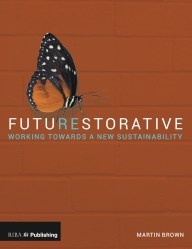
Circular thinking and DFD are explored within my upcoming RIBA publication FutuRestorative as inspirations and challenges for a new sustainability in the built environment.

Event Links:

Green Vision 10th Feb   Hashtag #GVIs2016 @lsigreenvision

CE Thinking 12 Feb  Hashtag #CEthinking @constructCE 

Build Well 2016 Feb 10/11 @BuildWELL_EBNet

Introduction to the Living Building Challenge + Project Workshop

UK_collaborative_logoWe are pleased to announce an Introduction to the Living Building Challenge (LBC) on Tuesday 9th Feb 2016 at the Cuerden Valley Park Visitor Centre, Berkeley Drive, Bamber Bridge, Preston PR5 6BY at 1pm.

The event will be led by Martin Brown of Fairsnape, the LBC UK Ambassador and supported by Barbara Jones and Hannah Hunt of the Straw Works Design team.

The event is free but we will accept donations of £5 or more towards costs.

Programme:

13.00 Introduction to the Living Building Challenge

including associated programmes: JUST, DECLARE, Living Product Challenge and Administration of LBC: Handbooks, Dialogue, Documentation, Certification

14:00 Understanding/Confirming LBC Requirements for CVP and the Seven Petals:

  • Place
  • Water
  • Energy
  • Health and Happiness
  • Materials
  • Equity
  • Beauty and Inspiration

16:30 Summary of Actions

17:00 Close

Background to the Event

Straw Works have designed and successfully achieved Planning approval for a new Visitor Centre at Cuerden Valley Park (CVP), with the support of Chorley Borough Council. It is currently under construction by volunteers of the CVP, with Straw Works providing support and running training courses where necessary. The project is registered with the LBC, the first UK project to be registered, with funding from Veolia, who are part funding the whole project. http://www.strawworks.co.uk

The Living Building Challenge™ is the built environment’s most rigorous performance standard. It calls for the creation of building projects at all scales that operate as cleanly, beautifully and efficiently as nature’s architecture. To be certified under the Challenge, projects must meet a series of ambitious performance requirements over a minimum of 12 months of continuous occupancy. https://living-future.org/lbc

Martin Brown, Fairsnape, is a sustainability consultant, LBC Ambassador and UK Collaborative Facilitator. His new book, published by RIBA, FutuREstorative, exploring Inspirations + Challenges for a New Sustainability, publishes in summer 2016.

FR_Visuals_FINAL

2016 Built Environment Challenges

KONICA MINOLTA DIGITAL CAMERA

One: 2016 is the year Building Information Management in the UK becomes mandated for public sector projects. Our ongoing challenge is increasing the scope and application, across all the built environment sectors and organisations, moving us towards a digital and data driven industry.

Two: The 2015 Paris Agreement sets ambitious intent to cap global warming to 1.5deg C. Current built environment sustainability strategies and approaches are based around a 2deg cap, with targets too low or too slow. Our challenge is to enable the built environment to play it part, for which we will need all the restorative sustainability tools we have at our disposal. We need to flip our 40% negative impact, but can no longer seek to be near zero or net positive but need to push towards being demonstrably ‘very positive’.

ThreeHealth is the new GreenBuild. We have seen a big increase in health and wellbeing awareness with biophilia now firmly within the sector’s lexicon. Our challenge is to ensure health and wellbeing is a key driver in design, in materials, in the construction process and within building operations.

Four: our biggest opportunity is to now create the conditions that allow for leadership in integrated and collaborative thinking, combining the innovative approaches and development from the BIM, Restorative Sustainability and Healthy Buildings agendas.

FR_Visuals_FINAL


These challenges are explored in depth in forthcoming RIBA Book:
FutuREstorative

Something Remarkable Happened at COP21 (update)

We now know the outcome from COP21 and the Paris Agreement on climate change.

cop21 article 2 draft


The Paris Agreement will be highly significant for the built environment, signalling one of its most exciting and challenging eras, one of innovation and reward;

  • The climate change and sustainability language is changing, from 2degC to 1.5degC based on science, rather than economic targets.
  • The Paris COP21 discussions, negotiations and events were played out in a social, open, collaborative and transparent environment. During the summit we turned to social media feeds and the #COP21 hashtags rather than traditional newsprint or news media.  This sets a future for transparency and collaboration for the climate change  agenda, at global, national, the built environment sector, company and project level.
  • Construction and the built environment has now be recognised as a climate change problem and a key part of the solution. We now have to flip our 40% negative impact into a 40% positive impact.
  • With existing construction sustainability strategies, building certification standard and reduction targets based on 2 Deg, there is now the urgent need to rethink and to address  a 1.5Deg future with faster, tougher reduction targets and more focused approaches.
  • To achieve 1.5degC caps, we cannot continue with a sustainable construction as usual approach of being incrementally less bad, but would need to make the flip to restorative and regenerative approaches, such as the Living Building Challenge.
  • The Paris Agreement is recognised as signalling the end of the fossil fuel era, and the signal for a low carbon future. This presents a huge opportunity and challenge for construction, utlilising all the tools and approaches we have at our disposal – for example
    • BIM to design and model low carbon buildings and construction methods,
    • circular economy to reduce impact from construction resources
    • lean construction to reduce all forms of waste along with
    • education and advocacy to inform and inspire both the next generation and those in the industry.

As I write this I am reviewing an 2015 updated copy of Olgyay’s Design with Climate, A BioClimatic Approach to Architectural Regionalism. Originally published in 1963 – over 50 years ago – was a groundbreaking book for students of sustainable architecture. One of the core concepts, (the Interlocking Fields of Climatology, Biology, Architecture and Technology) would unfortunately still appear new and radical to many today, but is profoundly relevant to the new climate change agenda.  We cannot wait any longer to learn or relearn basics of sustainability.

Related previous blog post

Presentation to Brightest Greenest Buildings event on 10/12/15:


How significant was the first Buildings Day at COP21?

banner-nama-cop21_800-percent

In coming years, hopefully very significant. This was the first time that the built environment has been recognised as important in any global, United Nation climate change summit.

We now have the recognition that buildings and construction have a major impact and influence on climate changes, being part of the problem but also key to climate change solutions

My thoughts from following inspiring feeds from Paris and elsewhere, through the twitter hashtags of #COP21, #BuildingsDay #BuildBetterGreen #BackClimateAction and others:

I felt ashamed by the approach of our government in weakening and dismantling sustainability strategies for homes and buildings whilst others around the world are deepening their green building strategies

That the built environment players (leaders, companies, advocates, agencies, academics) all need to collaborate to ensure a sub 2 degrees warming path is central to sustainability strategies

Not once did I see BIM mentioned or cited as part of the building environment solution. BIM needs to engage with the leaders and decision makers who are shaping the design, construction and operation of buildings.

Encouraged to hear of net positive approaches, being restorative and regenerative in built environment sustainability approaches. Not only for carbon reduction but for social and health strategies to be ‘net-positive’

Encouragingly there have been many great pledges from GBC members around the world – including the UK.

Whilst major contractors and manufacturers were visible in making commitments or presenting the built environment world of contracting, of SME’s and supply chains right across the sector still needs to engage, and understand that business as usual may not be that usual in the coming year.

Finally – with the built environments impact on climate change, often quoted as 40% of the problem, making the real change to get on a sub 2 degree global warming path may seem impossible. Globally, through design and construction we need to reduce emissions by 84 GtCO2 by 2050 – thats taking over 22.000 coal fired power stations out of service.

Yet impossible is only a challenge – and as Steve Jobs said – its kind of fun to do the impossible.

What Is COP21?

Understand COP21 in these 7 graphics (via Green Biz)

France is chairing and hosting the 21 th Conference of Parties to the Framework UN Convention on Climate Change (COP21 / CMP11) from 30 November to 11 December 2015. This is a crucial conference since it must lead to a new international climate agreement, applicable to all, to keep global warming below 2 ° C.

18 countries (Austria, Brazil, Cameroon, Canada, Finland, France, Germany, Indonesia, Japan, Mexico, Morocco, Norway, Senegal, Singapore, Sweden, Tunisia, Ukraine, United Arab Emirates, United States of America), and over 60 organisations launched an unprecedented Global Alliance for Buildings and Construction to speed up and scale up the sector’s huge potential to reduce its emissions and literally build greater climate resilience into future cities and infrastructure.

Global Alliance for Buildings and Construction to Combat Climate Change

Lendlease: Accelerating Wellbeing in Built Environment

In November 2015, Lendlease, one of the world’s leading integrated infrastructure and real estate groups, announced a global alliance with Delos, aiming to accelerate the integration of human health and wellness outcomes in the built environment. This alliance will include identifying pioneering projects in Australia, Asia, the United Kingdom and the United States, which will pursue WELL Certification and provide ‘WELL ready’ workplaces for tenants.

Untitled 5Geoff Dutaillis, group head of sustainability at Lendlease said, “Supporting the next generation of buildings and places that get it right for people, as well as the environment is very important….The built environment has a critical role to play in helping cities and governments transition towards a low carbon future; however, it’s the direct impact on human capital and productivity through increased focus on supporting human health and wellbeing which is the untapped potential.”*

The WELL Building Standard is the first protocol of its kind to focus on “improving human wellness within the built environment by identifying specific conditions that, when holistically integrated into building interiors, enhance the health and wellbeing of the occupants.” The WELL Building Standard is a performance-focused system for measuring, certifying and monitoring features of the built environment that impact human health and wellbeing including air, water, nourishment, light, fitness, comfort and importantly mind.

Wellness and Happiness: The Next Built Environment / CSR Frontier 

WELL Building Institute launches pilot programs for new sectors.

Designing Buildings Wiki: Well Building Standard