Category Archives: comment

Going Wild for 30 Days

From 1st – 30th June 2016. The UK WildLife Trusts are running a month-long nature challenge.

Reconnecting with nature through campaigns such as #30DaysWild can be seen as part of the secret sauce for sustainability behaviour. We spend 90% of our time inside buildings, and as our relationship with nature disconnects, then our tolerance for respecting the environment and behaving sustainably will diminish.

Rewilding Nature, Rewilding Buildings and Rewilding People is a key aspect in addressing sustainability, health and building performance gaps.


Here, then are my #30DaysWild plans …

  1. Stop to appreciate nature, birds and wildlife when cycling
  2. Spread the word about biophilia and rewilding within construction circles
  3. Sleep out under stars
  4. Climb a tree
  5. Re Read Feral
  6. List all the trees in our garden
  7. Visit Brockholes Nature Reserve
  8. Garden with bare hands
  9. Plant trees
  10. Turn off technology for a day
  11. Identify 10 ‘weeds’
  12. Support Curedon Valley Park visitor centre project
  13. Present at least once on Living Building Challenge
  14. Walk in the rain
  15. Bivy or Bothy by Bike
  16. Create log pile
  17. Take time to identify dawn chorus birds by birdsong
  18. Capture nature, wildlife, birds,  with GoPro
  19. Catch a sunset from a Bowland Fell
  20. Add a twibbon to twitter account
  21. Brew coffee on a hill, mountain top
  22. Share extracts from FutuREstorative
  23. Capture nature in images for future presentations
  24. Reinvigorate our compost heap
  25. Take time to site and tune into nature
  26. Stargazing – become familiar with a new constellation or cluster
  27. Read Wild – An Elemental Journey’ has been on reading list too long!
  28. Shop by bike, not car
  29. Bring pond back to life
  30. Watch sunrise from Bleasdale Woodhenge

Join in & do something wild every day for a month and share with #30DaysWild


Biophilic Design & Rewilding- the secret sauce of sustainability?

Biophilia is emerging as the secret sauce of sustainability. It is not just about being able to see trees and fields from our windows, or having green plants within rooms, but something deeper and more profound.

The Cuerdon Valley Park Visitor Centre in Lancashire, the first UK project to be registered for and working towards Living Building Challenge certification, recently staged a project team biophilic design workshop (1), led by Joe Clancy using the Terrapin Bright Green guide ’14 Patterns of Biophilic Design’ (Joe, as an intern with Terrapin Bright Green was part of the guide team and co-author)

The workshop reviewed the design, construction and operation of the building from a new perspective, through each of the 14 patterns, covering aspects from light through to the layout of chairs and food to be served in the cafe.


Biophilia translates as love of nature and in design terms the consideration of how our innate relationship with nature can be addressed within buildings. We have evolved as part of nature, and as such the human mind and body function with greater efficiency and performance when natural elements are present. Biophilic design is ensuring that these elements and patterns are present.

Biophilic elements enhance wellbeing, foster the feel good factor, reduce building related illness and even improve health. For example light as in daylight, circadian lighting, differing light spectrums is being considered as a form of medicine, not only to reduce illness, but to improve and maintain health.

ReWilding
There is much talk of rewilding at present, and as rewilding nature and environments is not just about reintroducing wolf, lynx or other top of the chain predators but more about restoring or regenerating the natural environment ‘creating conditions that allow the emergence of natural responsiveness and development’(2)

We should learn from and apply rewilding thinking to our built environment,and in doing so rewild people, those who inhabit buildings, creating the conditions, through for eg biomimicry and biophilic applications, that allow (new and existing) buildings to breathe and to respond to natural and bioclimatic cycles. We are losing or removing our natural barometers from buildings, increasingly replacing them with SMART technologies, to satisfy a blinked focus on energy performance. In turn, this has weakened our intrinsic relationship with nature.(3)

It is recognised that a lack of connection with nature reduces our tolerance to respect the environment. However, enabling biophilic conditions that ‘rewild’ our built environment will improve user behaviour and increase respect for the sustainable function of buildings.

Biophilia could, therefore be a root cause solution to addressing our buildings sustainability performance, closing performance gaps, providing salutogenetic improvement on the health & well-being of those using the building, and providing business benefits relating to people costs and productivity

And, biophilic workshops are not just for green building design, but should be part of the start-up activities for any project, considering in addition to the building in use, the biophilic aspects of the construction process. Biophilic thinking applied to construction environment can address the stress, mental health and safety, productivity, enthusiasm and wellbeing of those working on our construction projects. Therefore, biophilic thinking could be a key to improving construction quality, environmental and safety compliance, productivity and hence costs.

On two, very recent, project sustainability review/audits, it has been encouraging to hear of construction organisations increasing awareness of biophilia through training related to health, sustainability and design.

(1) Report available soon.

(2) George Monbiot in Feral

(2) extract from FutuREstorative

Lynx Kitten Image:   www.conservationjobs.co.uk

Rewilding Building Image: Cuerdon Valley Park Visitor Centre

Rewilding People image – see – Last Child in the Woods Richard Louv

Images from Sense of Urgency presentation available on Slideshare.

Are we Building Schools for the Future???

Dangerous and dilapidated, poorly built and wasteful. Too many school buildings are failing our children + teachers wellbeing and educational attainment reports the RIBA in a comprehensive POE research based paper that calls for a Government review.

Since the early 2000’s Building Schools for the Future programme, through to the current EFA and Academy programmes it is concerning to read our schools still do not have civilised environments, foster health, wellbeing and happiness, delight and inspire children and teachers*

The RIBA report focuses on how design impacts on wellbeing but sadly omits the body of research and knowledge on biophilia and importance of connectivity with nature.

schoolsbanner-Cropped-660x424cropped

RIBA’s new report into the state of school buildings, Better Spaces for Learning reveals:

  • 1 in 5 teachers have considered quitting because of the wretched condition of the school buildings they have to teach in
  • The Government’s Education Funding Agency’s new school building programme is too rigid and is leading to waste and poor value for tax payers
  • Over 90% of teachers believe well-built and designed schools improve educational outcomes and pupil behaviour
  • Over-engineered schools, with Government-specified equipment that only costly consultants know how to operate, is costing £150 million per year which could have been avoided if schools were designed better

A new report on the state of school buildings in the UK has been published today (Wednesday 11 May) by the Royal Institute of British Architects (RIBA). Using the largest ever analysis of primary and secondary school buildings in the UK, a nation-wide poll of teachers, and extensive engagement with school buildings experts, RIBA’sBetter Spaces for Learning report makes the case for an urgent review of the Government’s Education Funding Agency’s current school building programme.

The report emphasises the importance of well-designed school buildings on young people’s wellbeing, behaviour engagement and crucially, attainment.

RIBA has identified that good school design can reduce running and maintenance costs, in some cases by more than several times a teacher’s average salary a year; it could have prevented the English school estate from spending upwards of £150m annually on unnecessary operation and maintenance costs.

The new report is further insight into the Government’s own assertion that just 5% of the nearly 60,000 school buildings across the UK are performing as intended and operating efficiently.* The prevalence of damp, leaky classrooms and asbestos-ridden buildings in British schools means too many pupils and teachers are struggling to learn and teach in conditions damaging to their health and education.

Better Spaces for Learning reveals that the Government’s current programme of building new schools is inefficient – with a lack of flexibility to make the best possible use of resources, and little opportunity for school staff to input into the design of their own new buildings. RIBA believes that the Government programme must be improved to guarantee better outcomes for our public money.

RIBA President Jane Duncan said:

“This country is in the grip of the worst shortage of school places in living memory. Our report highlights the vital importance of school design and how it affects the general health and wellbeing of their users, our children and their teachers. As limited funding is available to deal with the growing problem, every penny spent on schools must deliver maximum value for money. Award winning well-designed, successful schools with happy pupils and productive staff like Burntwood School in London shouldn’t be the exception, they should be the standard.

“How can we expect our children to compete with the world’s best when too many of our school buildings are substandard? Educational improvements resulting from the current programme of school building are not reaching the basic standards that British taxpayers and our economy expects. We need to do better for all of our children and their hardworking teachers. We urge the Government to review its programme of building new schools.”

(*to use Living Building Challenge parlance).

A Sense of Urgency

I was delighted to be invited to present in Italy (REGENERATION Edition 2 in Dro, Trentino) and Scotland (SEDA Green Drinks in Ayr) recently on insights from FutuREstorative, updates from the LBC Cuerdon Valley Park project and in the case of many at SEDA, introduce the Living Building Challenge.

The Ayr event fell on John Muir’s Birthday and on the eve of Earth Day 2016, so this made a fitting and related introduction, and I guess constituted my annual EarthDay presentation, (something I have done at numerous events annually since 2009 – 2009 presentation is on slideshare here)

Vote: Fairsnape Best Green Blogger Nominee

The Fairsnape iSite blog now in its 10th year with just under 1000 posts has been providing news, comment and challenges to the built environment sector and beyond.  It is always great to get recognition, and am delighted that this blog is a Green category Best Blogger nominee for the 7th Annual 2016 JDR Industry Blogger Awards!JDRBadges_2016_Green

Voting is now open on the JDR website (from Monday, February 29th and closes April 15th)

Please take a few moments to vote for this blog here

The blog with the most votes in each category (Architecture, Interior Design, Remodelling, Construction Business, Green, and Microblog) will win that category.


Martin_0010a

thank you, and best wishes to other nominees


Every Breath We Take

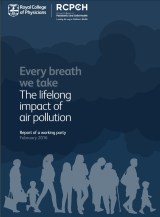
The 2016 Every Breath We Take report from the Royal College of Physicians is a sobering update on human and cost consequences of poor air quality. And not only outdoor air quality, notoriously poor within many of our cities, but also consequences arising from indoor air quality, significantly triggered through the design, construction and operation of the buildings we live, work and play in.

RCPCH-1“Each year in the UK, around 40,000 deaths are attributable to exposure to outdoor air pollution, with more linked also to exposure to indoor pollutants”
The report estimates that the cost to society, business and health services in the UK adds up to more than £20 billion every year.

This is a prime example of how, in the built environment we externalise the real cost of low cost construction.

The report focuses on pollutants from buildings that occur during operation, but also touches on pollutants during construction. The high volume of construction transport, predominantly diesel in addition to the pollutants known to be asthmatics, organic & mineral dust, or carcinogenic (asbestos fibres in older buildings, formaldehyde and VOCs in newer builds)

The built environment is responsible for an increasingly complex cocktail of air quality issues:

“Looking to the future, newer ‘green’ workplaces will be constructed, and newer technologies will be developed for use within them. The latter include significant developments in, for example, the use of advanced materials and three-dimensional printing. The construction, occupancy and exposure profiles of newer workplaces will lead to the potential for novel inhaled hazards and risks, and vigilance will be required in order to identify the occupational lung problems attributed to the workplaces of tomorrow”

Every Breath We Take makes a number of recommendations:

Lead by example in the NHS. Is it acceptable to design, build and maintain health facilities that themselves are not net health positive.

Quantify the relationship between indoor air pollution and health. Pressures for ever more energy efficient buildings with lower carbon footprints raise the potential of reducing air quality in homes, offices and schools. An holistic and collaborative effort is required across built environment organisations, research and health organisations to develop policies and standards.

Lessons:

Following the findings of the Every Breath We Take report, there really should be no air quality performance gap, even a small gap will result in human health issues and externalised health costs.

Adopting the increasingly popular Living Building Challenge and Well Build Standard, air quality must become a key element of performance gap analysis. Design stage set the required air quality threshold that is validated post construction, with a fully occupied facility over a 12 month proofing period, and the on a regular on going basis. Established standards such as BREEAM and LEED must make award of certification dependent on proven air quality.

This is a CSR (Corporate Social Responsibility) issue of high magnitude for those who commission buildings, those who design and construction and those who manage buildings, anything less can not be acceptable to a responsible built environment sector.

Based on extract from FutuREstorative


Ready for a Circular Economy?

IMG_1100My recent talk at Green Vision Circular Economy event held at the Re:Center, University of Bradford, focused on Design for DeConstruction principles and raised a number of questions, for example;

  • The Circular Economy is not just simply new generation waste recycling – are we rethinking design and construction systems and processes. (slide 2)
  • How can we convert Site Waste Management Plans to Material Conservation Management Plans? (slide 3)
  • Is BIM ready to embrace design for (secondary) reuse, after the first design purpose?How well do we understand the difference between Material Passports and Product Data Sheets? (slide 5)
  • How can we remove toxic materials from buildings so that we do not build in more health problems for future use, future buildings and future generations? (slide 7)
  • Are we limiting circular economy potential through greater integrated Mechanical, Electrical and Plumbing systems? (slide 15)
  • Is there really a place in construction 2016 for Substances that are Hazardous to Health? (slide 24)

Related Post: Circular Economy and the Built Environment

Introduction to the Living Building Challenge + Project Workshop

UK_collaborative_logoWe are pleased to announce an Introduction to the Living Building Challenge (LBC) on Tuesday 9th Feb 2016 at the Cuerden Valley Park Visitor Centre, Berkeley Drive, Bamber Bridge, Preston PR5 6BY at 1pm.

The event will be led by Martin Brown of Fairsnape, the LBC UK Ambassador and supported by Barbara Jones and Hannah Hunt of the Straw Works Design team.

The event is free but we will accept donations of £5 or more towards costs.

Programme:

13.00 Introduction to the Living Building Challenge

including associated programmes: JUST, DECLARE, Living Product Challenge and Administration of LBC: Handbooks, Dialogue, Documentation, Certification

14:00 Understanding/Confirming LBC Requirements for CVP and the Seven Petals:

  • Place
  • Water
  • Energy
  • Health and Happiness
  • Materials
  • Equity
  • Beauty and Inspiration

16:30 Summary of Actions

17:00 Close

Background to the Event

Straw Works have designed and successfully achieved Planning approval for a new Visitor Centre at Cuerden Valley Park (CVP), with the support of Chorley Borough Council. It is currently under construction by volunteers of the CVP, with Straw Works providing support and running training courses where necessary. The project is registered with the LBC, the first UK project to be registered, with funding from Veolia, who are part funding the whole project. http://www.strawworks.co.uk

The Living Building Challenge™ is the built environment’s most rigorous performance standard. It calls for the creation of building projects at all scales that operate as cleanly, beautifully and efficiently as nature’s architecture. To be certified under the Challenge, projects must meet a series of ambitious performance requirements over a minimum of 12 months of continuous occupancy. https://living-future.org/lbc

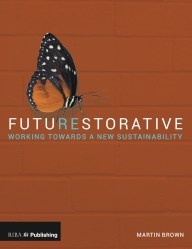
Martin Brown, Fairsnape, is a sustainability consultant, LBC Ambassador and UK Collaborative Facilitator. His new book, published by RIBA, FutuREstorative, exploring Inspirations + Challenges for a New Sustainability, publishes in summer 2016.

FR_Visuals_FINAL

2016 Built Environment Challenges

KONICA MINOLTA DIGITAL CAMERA

One: 2016 is the year Building Information Management in the UK becomes mandated for public sector projects. Our ongoing challenge is increasing the scope and application, across all the built environment sectors and organisations, moving us towards a digital and data driven industry.

Two: The 2015 Paris Agreement sets ambitious intent to cap global warming to 1.5deg C. Current built environment sustainability strategies and approaches are based around a 2deg cap, with targets too low or too slow. Our challenge is to enable the built environment to play it part, for which we will need all the restorative sustainability tools we have at our disposal. We need to flip our 40% negative impact, but can no longer seek to be near zero or net positive but need to push towards being demonstrably ‘very positive’.

ThreeHealth is the new GreenBuild. We have seen a big increase in health and wellbeing awareness with biophilia now firmly within the sector’s lexicon. Our challenge is to ensure health and wellbeing is a key driver in design, in materials, in the construction process and within building operations.

Four: our biggest opportunity is to now create the conditions that allow for leadership in integrated and collaborative thinking, combining the innovative approaches and development from the BIM, Restorative Sustainability and Healthy Buildings agendas.

FR_Visuals_FINAL


These challenges are explored in depth in forthcoming RIBA Book:
FutuREstorative

Something Remarkable Happened at COP21 (update)

We now know the outcome from COP21 and the Paris Agreement on climate change.

cop21 article 2 draft


The Paris Agreement will be highly significant for the built environment, signalling one of its most exciting and challenging eras, one of innovation and reward;

  • The climate change and sustainability language is changing, from 2degC to 1.5degC based on science, rather than economic targets.
  • The Paris COP21 discussions, negotiations and events were played out in a social, open, collaborative and transparent environment. During the summit we turned to social media feeds and the #COP21 hashtags rather than traditional newsprint or news media.  This sets a future for transparency and collaboration for the climate change  agenda, at global, national, the built environment sector, company and project level.
  • Construction and the built environment has now be recognised as a climate change problem and a key part of the solution. We now have to flip our 40% negative impact into a 40% positive impact.
  • With existing construction sustainability strategies, building certification standard and reduction targets based on 2 Deg, there is now the urgent need to rethink and to address  a 1.5Deg future with faster, tougher reduction targets and more focused approaches.
  • To achieve 1.5degC caps, we cannot continue with a sustainable construction as usual approach of being incrementally less bad, but would need to make the flip to restorative and regenerative approaches, such as the Living Building Challenge.
  • The Paris Agreement is recognised as signalling the end of the fossil fuel era, and the signal for a low carbon future. This presents a huge opportunity and challenge for construction, utlilising all the tools and approaches we have at our disposal – for example
    • BIM to design and model low carbon buildings and construction methods,
    • circular economy to reduce impact from construction resources
    • lean construction to reduce all forms of waste along with
    • education and advocacy to inform and inspire both the next generation and those in the industry.

As I write this I am reviewing an 2015 updated copy of Olgyay’s Design with Climate, A BioClimatic Approach to Architectural Regionalism. Originally published in 1963 – over 50 years ago – was a groundbreaking book for students of sustainable architecture. One of the core concepts, (the Interlocking Fields of Climatology, Biology, Architecture and Technology) would unfortunately still appear new and radical to many today, but is profoundly relevant to the new climate change agenda.  We cannot wait any longer to learn or relearn basics of sustainability.

Related previous blog post

Presentation to Brightest Greenest Buildings event on 10/12/15: