Category Archives: comment

If zero carbon is the answer then just what was the question?

If zero carbon is the answer then just what was the question

Is it ‘just because’ I am currently  seeing things from a different perspective as I re-read Cradle to Cradle, (which I feel  has more resonance with where we are now)  but a number of recent issues and events  have left me questioning our approach to zero, and that going to zero is not enough.   Indeed it may even be dangerous ‘just’ going to zero.

Lets consider the built environment in its widest sense, not just from design to FM but from wining raw materials through construction to end users, and consider the opening premise from Cradle to Cradle, and ask who today would allow a sector to :

Put billions of pounds of toxic materials in the air water and ground every year

Produces materials so dangerous they require constant vigilance by future generations

Results in gigantic volume of waste

Puts valuable materials in holes all over the planet

Requires thousands of complex regulations – not to keep people and nature safe, but to keep them from being poisoned too quickly

Measures productivity based on how few people are working?

Creates prosperity by digging up or cutting down natural resources and then burning or burying them

Erodes the diversity of species and cultural practices.

McDonough and Braunghart were referring to the industrial revolution in these ‘consequences’, but they do describe the construction sector oh so well.  OK so no-one today would allow such a sector which exhibited these ‘by- products’ a licence to trade, so why then do we allow the ‘built environment’ to continue doing so but at a reduced rate?  As McDonough and Braunghart comment – doing only a little good may well be doing no good.

Indeed Janis Birkeland comments in her argument for Positive Development – if we build all new buildings to the highest, greenest standards, then the net contribution to carbon reductions would be only 0.04%.

And with this in mind, the questions that kept forming last week included:

How much do we spend within the global built environment on waste management, (disposal, recycling, regulation, etc) in comparison to the amount spent on eliminating waste full stop, through for example cradle-to-cradle paradigm thinking?

A rule of thumb is that the built environment uses 40% materials, creates 40% waste and generates 40% emissions. Ed Mazria from Architecture 2030 puts this figure higher at 48.5%.  We need to monitor and watch these figures reduce, but at the moment the production of cement remains responsible for about 7% of all carbon dioxide emissions.  Am I the only one who feels guilty with these?

Indeed another rule of thumb puts the quarrying sector at a third contribution – but what proportion from this sector is used to derive materials for construction? If the Cradle to Cradle authors are correct then the consumer (end user) only deals with 5% of the total waste of a product, the remainder 95% is waste created in manufacture.

So why are zero carbon definitions largely ignoring embodied energy and putting them in the ‘too difficult to deal with box’ ?  Dealing only or mainly with a carbon zero definition for buildings in use?

Passivhaus is emerging as the aspirational darling or solution. But what is the true embodied energy of passivhaus, in particular the massive amounts of insulation, sheeting and duct tape?  Passivhaus will reduce energy requirements and costs. Excellent. But I would love to see the payback time on the total and higher than normal embodied energies and waste.

Why are plastic, polyurethane and uvpc now considered green (such products now abound at eco exhibitions and within green guides) based it would seem solely on their performance, not on the harm done during production.

Why doesn’t BREEAM and LEED make more of a  focus on embodied energy  in its scoring?

Oh and why isn’t responsible sourcing to BS6000 more widely known or enforced?

Are we trying to solve the built environment environmental problems with the same mode of thinking that created them in the first place? I have always accepted that within sustainability we will make mistakes, take dead ends and end up in cul de sacs, and that this is all part of the learning and moving forward. But is time running our too quickly, to be so ‘narrow’ and we are just storing another problem for future generations to deal with?

Are we looking down the telescope the wrong way?  Turn it around and we may see the scale and maybe solutions to our problems.

We are in a period of developing strategies, codes and defining zero carbon itself.  Now is the time for that debate to be wider, for a collaborative debate across the sectors that make up the built environment, from raw materials to end users. And here  is where I mention be2camp, as it is through web technologies (in both the widest and most specific aspects) that will allow and enable such debate and dialogue to take place.

And as the Cradle-to-Cradle sub heading says – its time to remake the way we make things

(This is a rewitten and shortened and hopefully bettered reasoned version of the rant I started at the end of last week)

on integrated, clustered project management …

There have been a good number of conversations on twitter recently in discussing collaborative procurement and collaborative contract management. It is amazing that such a dialogue can take place in just 140 characters at a time, reinforcing the potential of twitter and why there should be more adoption within the built environment for knowledge and improvement share.

 Su Butcher over at Just Practicing blogged on the design and build conversation, and to pick up on that (and to complete a few promises for more information to those in the twitter conversations) here is my contribution, that links together D+B, PQQ,s Clustering and Integrated Project Management


opps v costs


Early engagement in a project is essential for all parties and stakeholders, to ensure best possible outcomes for meeting client / end users needs, value, quality, time, sustainability, and community impact.  The classic chart opposite that shows opportunities for change (read improvement, or adding value) mapped against cost of doing the same demonstrates the potential of early involvement.

Typically – (I would say historically but I know it is current, and even the term historically adds some kind of respectability to poor practice) the contracting team is not appointed until the brief and design are ready for build. Even worst the project build team is not assembled until after the main contractor and then progressively throughout the construction programme. 

Design Build moves the engagement of the project design and build main players to earlier in the process, often following brief or concept design. This is good yet still leaves these parties out of the brief and out of any value management exercise, where undoubtedly they can add real value. 

Bringing the project design and build teams in on day or week zero can be achieved through mature frameworks and or relationships, along with mature cost and contract arrangements. End users and FM should likewise be part of the early engagement, or ideally there first , engaging the others as the project process drivers.


clusters

This leads to an Integrated Project Team, which looks, feels and acts very differently from a traditional project organisational structure. Issues such as co location in one office, shared and seconded staff across the project all add to an effective delivery of value.  But as has been commented in the twitter conversations this approach is rarely practiced to its full potential, and arguably not since Building Down Barriers.

(But see the Highways Agency ECI, Early Contractor Involvement approach)

In addition, whilst the contractor may be engaged at an earlier stage, to add value they really need to engage with their supply chains, ideally adopting clusters around elements of construction. This allows specialist and build-ability knowledge into design, but necessitating. again mature, supplier relationships or ready-to-go (RTG) clusters.

Appointment of the players in this collaborative and integrated model requires careful selection, and arguably cost should not feature at all. Ideally trusted players from previous contracts, ie supply chains or clusters would be assembled, as happens elsewhere in other sectors.  

Such integrated approaches are essential in achieving improvement to predictability of time and cost, adding value and meeting the project objectives.

Pre-Qualification Questions, PQQ’s, interviews, visits, collaborative workshops etc as part of the selection should focus on procuring the designers, contracting,  facilities management teams etc based on such issues as proven approaches to achieving requirements and reducing budget costs through tackling waste in the process. There is estimated to be 30% waste of time, material, effort, documentation management  etc in the overall project process – and so really tackling this can produce far greater savings than through selection on price to get lowest or best value prices.  (But the thread of Higher Costs from Lower Prices is another blog subject!, as is the poorly understood difference between cost and price) 

I guess I should point out that a far amount of my support time to clients, contracts and contractors is spent on facilitating this type of integrated working, or some of the individual components thereof.  

And the interest in this approach?  Well that would appear to be on the increase (at least on paper unfortunately), as, in current economic circumstances, contractors seek approaches that would offer improved value and reduce costs for their clients in an attempt to differentiate them from competition and win work.  

The culture of mistrust and baggage of the industry though really prevents real progress. But, as we cannot fix the problems of today’s industry with the thinking that created the problems – new thinking is required, new thinking in terms of early engagement, integrated, clustered project management.

_______________________

Twitter Conversationists in their own words (twitter profiles) included:

The_Architect : Manchester, UK. Chartered Architect, Music lover. Frank Lloyd Wright expert and a Romantic soul.

LizMale: Buckinghamshire. PR consultant specialising in UK construction and sustainability in the built environment

EEPaul: SE England, London SE3, Woking London-based blogger on IT, SaaS, construction, PR, marketing and Web 2.0 stuff (also a Crewe Alex FC fan, Wikipedian, cyclist)

Fairsnape: Forest of Bowland Lancs UK. Supporting, shaping and commenting on trends, web stuff, improvements and futures in the built environment

Melstarrs: London or Leeds, UK Green Building Design Engineer and Accreditation Professional (CIBSE, BREEAM & LEED)

ConstructingExc: London. Constructing Excellence is the single organisation charged with driving the change agenda in construction, housing and regeneration.

SuButcher: Essex, UK Practice Manager for No-nonsense Architects Barefoot & Gilles. Tweets on the UK Construction and Property Industry, blog at http://www.justpractising.com

Geoffwilkinson: UK Building Regulations Expert, Fire Engineer, Arsenal Fan, Partial to the odd Real Ale

PaulDohertyAIA: Shanghai. New York Architect, Living and Working in Shanghai, China

HotelDesignsCroydon, Surrey. we are the online magEzine for the hotel interior design industry featuring directory, news, reviews and more!

on passivhaus challenges

Su Butcher  has posted an excellent and very useful comment on PassivHaus  being about saving energy over on her blog, Just Practicing.  I did comment there in brief but here is a more detailed response.

Relationship with Code 6 and Carbon Definition  As was reported from the Zero Hub consultation Passiv Haus is the aspirational target of the UK zero carbon definition, not only for domestic but for a wider scope of building.  

Challenges  The PassivHaus challenges are not just within in design. (With all the eco-kit, materials, knowledge and lessons from PassivHaus in use out there, the ‘design’ of passivhaus is now arguably just a process to repeat)

Challenges lie, in my view, in three areas:

Construction. Construction of PassivHaus will require a far higher level of quality and fit than we are used to (at least in the UK) .  Research at Leeds Met is showing that the retro investigation and remedial work to fix or improve on failed air tightness tests can be prohibitively expensive and may well become commonplace.

I am excited and impressed that one of my clients, a Lancashire house building contractor are building /eco- refurbing one of their own properties to learn and understand the new issues involved in PassivHaus  (they are also doing the same to CSH6  + I hope to get a case study together soon)

End Users – the challenge here is to engage with the hearts and minds of potential PassivHaus dwellers. Ask anyone (esp with a family) if they would want to live in a PH and most often the response would be no.  And that is on the house ‘image’ – there is also the life style of living in a sealed box with minimal user ventilation that needs addressing.  This may apply to all modern eco-homes in what Greer refers to unforgivingly vertical houses not being designed for practical family life. (And does anyone else have the Peter Seger song Little Boxes playing in the mind when looking at / reviewing / visiting modern new eco homes?)

Existing Stock – Here the challenge is to move the PassivHaus  debate and design considerations away from new build home to PassivHaus eco renewal, and away from just homes to commercial, industrial and public buildings. 

Ada Lovelace at be2campnorth

I am delighted that Suw Charman-Anderson (Social Techology Consultant, Guardian writer and twitter-er) will be talking at be2campnorth on the 15th May in Liverpool on the inspiration of Ada Lovelace  

(Well actually Suw will be presenting from home via web and video link ups so that she can attend (as in walk to) another conference in London on the same day)

I had not heard of Ada until Suw started  her ‘campaign’ to ‘find the modern day Ada via twitter.  Suw wanted to highlight the contributions of women in technology and science so they can serve as role models for women. Reading responses and pledges to the Ada Lovelace day organised by Suw back in March, I soon recognised that Ada is still great inspiration to many women and men in computing, technology and social media.

Ada Lovelace (1815 -1852) was one of the world’s first computer programmers, and one of the first people to see computers as more than just a machine for doing sums

A number of the modern day Adas nominated (on finding Ada) are working in the construction or built environment related  sector.  It is fitting then that be2camp north will kick off with Suw talking about Ada, why she is such an inspiration, her relevance today and future plans for the finding Ada campaign.

So if you are working in or interested in finding out more about web and social technology in the built environment and looking for inspiration, both from Ada and Suw, be2camp north is for you.  And if you cant get there in person, register to attend online. 

Note: Suw spoke on ‘death to email’ at be2camp 2008 in London – the ustream video of which can still be found online at the be2camp network

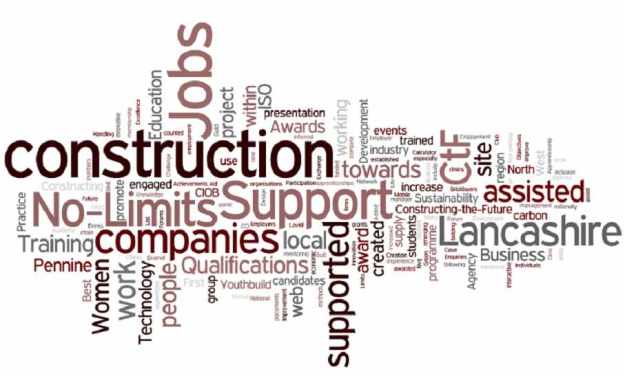
construction the future report wordle

ctf-report-wordleWordle image created for Constructing the Future Report 08/09

twittering on as @fairsnape

An explantion as to why I have taken the decision to switch to a new twitter account;

I have long suffered with @martinbrown account which has had problems in not being able to contribute to #hashtags, random hit and miss with tweets appearing in searches or RSS (or not). This has proved difficult when wanting to tweet from events etc. At some points I did wonder whether my tweets where being transmitted at all. Unfortunately requests to twitter to help didn’t bear fruit

I should mention that I am not the only one this has happened to, and grateful for Cindy FW over in Kansas (now @urbanverse ) for help and inspiration to make the change.

So after a year or so as @martinbrown as my main twitter account I have moved to @fairsnape (the name of my ‘business). This will carry the same mix of comments, information, sharing, questions, social and personal messages, within the very broad theme of built environment sustainability, improvement, futures, web2.0, virtual worlds and and and ….

@martinbrown will continue to be active, as I encourage and hope existing followers and friends will also follow me @fairsnape

It is amazing how refreshing it is to start rebuilding followers to @fairsnape and to see tweets appear in searches. I should however apologise to any followers I miss initially but bear with me as I juggle the two accounts.

(By the way I also have a fledgling twitter account for geocaching and other geo stuff @brandwoodgeo)

Facilities Information Modeling

The recent white paper BIM and Facilities Management from Autodesk, makes the case to extend Building IM to Facilities IM(or at least to include) 

Building information modeling (BIM) is changing the way buildings are designed and constructed-but is it changing how they’re operated and maintained? Do the benefits of BIM extend to facilities management? This whitepaper focuses on ways that facility managers and FM applications can take advantage of the consistent,coordinated building information that comes from a BIM design process.

And yet this paper misses the point and reinforces the need for the  FM sector to wake up and take hold of the information modelling movement (band wagon or steam roller)  The need for  facilities come first (ie those facilities needed by an organisation to function) around which can be ( but not always necessarily) will be wrapped within a building, hence Information Models should be driven by FM , with BIM a subset.

What should be a wake up call for facilities management sector is the NISP findings, reported in the white paper.

In a 2004 NIST studyi undertaken to estimate the efficiency losses in the U.S. capital facilities industry, it was reported that the annual cost (in 2002) associated with inadequate interoperability among computer-aided design, engineering, and software systems was $15.8B. 

The study went on to report that owners and operators shouldered almost two thirds of that cost as a result of their ongoing facility operation and maintenance.

Or as commented recently at a BIM seminar – buildings are becoming too complex and should be taken out of the remit of facilities management.

(Discuss!)

Related

BIM Boom

Facilities Information Modeling at Be2campnorth 15th May 

IT and FM Disconnect a barrier to green buildings?


CBI low-carbon economy roadmap to 2020

For the first time the UK’s leading business group has set out its vision for a low-carbon economy in a series of climate change roadmaps.  The roadmaps, called ‘Going the Distance’, set out a timetable of action to ensure carbon emissions targets are met, and the measures that will be needed to put the UK in pole position in the development of low-carbon technologies.

Comment: the roadmap could appear to be protecting industry (only a 6% reduction) and focuses heavily on nuclear and carbon capture (but not until 2013), sees the Severn Barrage as the way forward and wants a government led, rather than industry led  initiative.  (what happened to market led economies?)

CBI are proposing the following contributions per sector from 2006 

Industry 6%

Buildings 43%

Transport 29%

Energy 39%

(not sure how much the roadmap avoids double counting, particularly with energy reductions) 


In the buildings roadmap the CBI wants to see:
• Smart meters fitted in homes and businesses so users can see how much power they are using.
• Incentives to encourage consumers to buy more efficient washing machines, fridges and freezers.
• Loft insulation installed in three million homes.
• Agreement on a realistic definition of ‘zero-carbon’ for new homes and business premises.

  Download: Going the distance: the low-carbon buildings roadmap 

Forty percent of the UK’s carbon emissions come from energy consumed in buildings.1 To meet the UK’s 2020 CO₂ target, the CBI believes carbon savings of 43MtCO₂ should come from buildings, equivalent to a 20%reduction from 2006 levels.

Nearly two thirds of these savings can come from energy efficiency measures that will save money as well as carbon, while remaining savings will need to come from renewable and low carbon heat and micro-generation and zero-carbon new buildings. Progress made in decarbonising the UK’s electricity supply will also drive emissions reduction

Related:

Route to Zero

Modern Ada

Yesterday I pledged to post on my blog, a  recognition for my unsung heroines as part of the Ada Lovelace international day of blogging to draw attention to women excelling in technology.  

As I have been drawn into the web of second life, web2.0 and social media I have made contact and friendships with a number of women who not only excel in their professional field but also have a seemingly unlimited supply of energy and innovation.

Through barcamps, Be2camp 2008, twitter and other social apps, friends such as Pam Broviak (Second Life), Krishna De (bizgrowth),  Jodie Miners (be2camp), Su Butcher (architecture), Cindy FrewenWuellner  (futures), Mel Starrs (sustainability), Soulla Stylianou (second life) and of course Suw Charman (social media / kits and mortar) continue to impress with their use and understanding of web technology.

It was through Second Life and  the Public Works sim I met Pam Broviak (or rather her avatar Pam Renoir) and have since shared much on family, social life and all things webby across all manner of web applications. Yet it is Pam’s drive, as her twitter profile states “working to integrate engineering, Web 2.0, & virtual worlds” that continues to amaze and inspire in equal doses.

If there was a nomination for a Modern Ada, Pam would get my vote ( as I know she has the vote of others) in making virtual worlds and web technology have real impact in what is often a cynical and unforgiving industry.