Tag Archives: Living Building Challenge

REGENERATION17 – Your Invited …

“our responsibility must be to inspire the next generation to become better than us and to reach higher than we have” Martin Brown in #FutuREstorative

reach-higher

The Italy Collaborative through Macro Design Studio  is organising the third edition of REGENERATION, the European design competition entirely based on the Living Building Challenge sustainability certification standard .

IMG_2334Having supported the first two editions of REGENERATION as an LBC tutor and presenter, I can wholly recommend this event as truly enriching and inspiring,  not only in learning about the Living Building Challenge in applied detail, or being hosted in a wonderful region of the Italian Dolomites, but making a positive contribution through regenerating a local municipal facility.

The competition is open to professionals (architects, engineers, environmental sustainability and landscape experts) in Europe, under 35 years old. The deadline for the request of participation is next January 31st, 2017. We will select the best 15 on the basis of the documentation submitted.

The event (which will take place at CentIMG_2350rale Fies, Dro (Trento – Italy), on April, 26th to 29th, 2017.) is a 64 non-stop hours of integrative design in which each team, assisted by tutors expert of LBC, will compete in designing the best redevelopment project of an existing local public building. There will be side events i.e. a final conference open to the public on the issues of LBC as well as the final presentation of the projects, with the proclamation of the best project by an international jury.

One goal is to have the most various participation possible, in terms of European countries represented. 

More information about REGENERATION:

– REGENERATION web site: regenerationcompetition.eu
– The REGENERATION Facebook group

The deadline for the request of participation is next January 31st, 2017. 

Administered by The International Living Future Institute (ILFI) based in Seattle (WA), a hub for visionary programs that promotes a sustainability that is Socially Just, Culturally Rich and Ecologically Restorative SMILFI is partner and scientific advisor of Macro Design Studio and the Living Building Challenge Collaborative: Italy in organizing REGENERATION.

Living Building volunteer opportunities …

The project team at Cuerdon Valley Park Visitor Centre have three offers out for summer volunteer / interns to support the Trust in pursuit of the Living Building Challenge standard.

IMG_1488

UK 1st Living Building Challenge project at Cuerdon Valley Park, Lancashire

These are unique opportunities for sustainability and environment students:

  • Participation with potentially the greenest building in the UK, the 1st UK Living Building Challenge project.
  • Working with the UK foremost advocates who are pushing the boundaries of green build towards a restorative, just and healthy sustainable future.
  • Discover, first hand, more about the Living Building Challenge, related programmes and topics such as biophilic design.

Role details and contact information are in the following outlines:

Carbon Tracking

Communications Support

Materials Tracking

Biophilic Design & Rewilding- the secret sauce of sustainability?

Biophilia is emerging as the secret sauce of sustainability. It is not just about being able to see trees and fields from our windows, or having green plants within rooms, but something deeper and more profound.

The Cuerdon Valley Park Visitor Centre in Lancashire, the first UK project to be registered for and working towards Living Building Challenge certification, recently staged a project team biophilic design workshop (1), led by Joe Clancy using the Terrapin Bright Green guide ’14 Patterns of Biophilic Design’ (Joe, as an intern with Terrapin Bright Green was part of the guide team and co-author)

The workshop reviewed the design, construction and operation of the building from a new perspective, through each of the 14 patterns, covering aspects from light through to the layout of chairs and food to be served in the cafe.


Biophilia translates as love of nature and in design terms the consideration of how our innate relationship with nature can be addressed within buildings. We have evolved as part of nature, and as such the human mind and body function with greater efficiency and performance when natural elements are present. Biophilic design is ensuring that these elements and patterns are present.

Biophilic elements enhance wellbeing, foster the feel good factor, reduce building related illness and even improve health. For example light as in daylight, circadian lighting, differing light spectrums is being considered as a form of medicine, not only to reduce illness, but to improve and maintain health.

ReWilding
There is much talk of rewilding at present, and as rewilding nature and environments is not just about reintroducing wolf, lynx or other top of the chain predators but more about restoring or regenerating the natural environment ‘creating conditions that allow the emergence of natural responsiveness and development’(2)

We should learn from and apply rewilding thinking to our built environment,and in doing so rewild people, those who inhabit buildings, creating the conditions, through for eg biomimicry and biophilic applications, that allow (new and existing) buildings to breathe and to respond to natural and bioclimatic cycles. We are losing or removing our natural barometers from buildings, increasingly replacing them with SMART technologies, to satisfy a blinked focus on energy performance. In turn, this has weakened our intrinsic relationship with nature.(3)

It is recognised that a lack of connection with nature reduces our tolerance to respect the environment. However, enabling biophilic conditions that ‘rewild’ our built environment will improve user behaviour and increase respect for the sustainable function of buildings.

Biophilia could, therefore be a root cause solution to addressing our buildings sustainability performance, closing performance gaps, providing salutogenetic improvement on the health & well-being of those using the building, and providing business benefits relating to people costs and productivity

And, biophilic workshops are not just for green building design, but should be part of the start-up activities for any project, considering in addition to the building in use, the biophilic aspects of the construction process. Biophilic thinking applied to construction environment can address the stress, mental health and safety, productivity, enthusiasm and wellbeing of those working on our construction projects. Therefore, biophilic thinking could be a key to improving construction quality, environmental and safety compliance, productivity and hence costs.

On two, very recent, project sustainability review/audits, it has been encouraging to hear of construction organisations increasing awareness of biophilia through training related to health, sustainability and design.

(1) Report available soon.

(2) George Monbiot in Feral

(2) extract from FutuREstorative

Lynx Kitten Image:   www.conservationjobs.co.uk

Rewilding Building Image: Cuerdon Valley Park Visitor Centre

Rewilding People image – see – Last Child in the Woods Richard Louv

Images from Sense of Urgency presentation available on Slideshare.

A different Saturday that will change your minds.

Delighted to be involved in the second edition of REGENERATION Design Competition in the Trento region of Italy next week and the Conference on Saturday 16th April.

The following is a re-blog from Carlo Battisti’s blog

2016_03_24-06 Centrale Fies

It’s time to imagine a “Living Future” made of “living buildings.” Living Building Challenge is a building certification program, advocacy tool and philosophy, suitable  for projects that want to go beyond being simply “less harmful”, to truly become “regenerative”. The Challenge defines the most advanced measure of sustainability in the built environment possible today and acts to rapidly diminish the gap between current limits and the end-game positive solutions we seek.

Connected to REGENERATION, the 64 hours non-stop design competition organized by Macro Design Studio  together with the International Living Future Institute, the Conference will return on Saturday, April 16, 2016morning at Centrale Fies – Dro (Trento). The Conference is the premier annual event of the Living Building Challenge Collaborative: Italy, a community born with the aim of sharing LBC knowledge and principles and create the local conditions for the development of “living” buildings, territories and communities.

The program (the event will be in English)
Saturday April 16th, 2016, h 10-13

  • 10:00 – 10.50: Registration
  • 10:50 – 11:00: INTRODUCTION |Macro Design Studio
  • 11.00 – 11.40: NOW IT IS THE TIME FOR A WORLD OF LIVING BUILDINGS AND COMMUNITIES |Amanda Sturgeon, The International Living Future Institute – CEO
  • 11.40 – 12:00: CHALLENGING UK CONSTRUCTION. THE UK FIRST LIVING BUILDING PROJECT |Martin Brown, Fairsnape – Founder
  • 12.00 – 12:20: THE EXPERIMENTAL UNDERSTANDING OF COMPLEX ENVIRONMENTS FOR THEIR REGENERATION | Emanuele Naboni, Royal Danish Academy Copenhagen, School of Architecture – Associate professor
  • 12.20 – 12:40: REGENERATION 2015. PROUD TO BE ZERO. |  The YELLOW Team, REGENERATION 2015
  • 12:40 – 13:00: Questions and answers

2016_03_22-02 Amanda SturgeonThe international speakers are experts who have long been working to introduce the principles of LBC in Europe, including a special guest: Amanda Sturgeon was appointed by former Secretary of State and First Lady Hillary Clinton as one of the “10 most important women in sustainability.” FAIA, LEED Fellow, Amanda is from this year President and CEO of the International Living Future Institute after having been Executive Director. She sponsored also the first edition of REGENERATION.

2016_03_22-01 Martin Brown

Martin Brown is the founder of Fairsnape, active since 2005 as a consulting company, providing a wide range of support services to organizations in the built environment. He deals with innovative sustainability, social media and business improvement, with over 40 years of experience. He is a Living Building Challenge Ambassador, with a passion for the promotion of LBC and regenerative sustainability concepts in the UK.

2016_03_22-03 Emanuele NaboniEmanuele Naboni
(BArch, Dip. Arch., MPhil, PhD in Science, LEED AP, Licensed Architect) He is since 2010 an associate professor at the Institute of Technology of the Royal Danish Academy in Copenhagen, Faculty of Architecture. He teaches and researches in the field of technology and sustainable environmental design.

2016_03_22-04 Team YellowThe YELLOW team is the winning team of the 1st edition of REGENERATION (15-18 Apr 2015) and it is composed of (from left in the picture) Emanuele Mondin (architect, Vicenza), Guido Zanzottera(energy engineer, Turin), Luigi Greco (urban planner, Agrigento), Bernardette Soust Verdaguer (architect, Sevilla) and Maija Krizmane (civil engineer, Riga).

Further information about the event:

When: Saturday April 16th, 2016, h 10-13
Where: Centrale Fies, Dro (TN) | Coordinates 45.986691, 10.926922
Contact: +39 0464 443418 | eventi@macrodesignstudio.it
Registration: partecipation is free but seats are limited. Deadline for registration: Thursday April 15th, 2016. Registration through Eventbrite here.
Language: the conference will be in English (with simultaneous translation).
Educational credits: 3 educational credits for architects will be provided in agreement with Ordine degli Architetti Pianificatori Paesaggisti e Conservatori di Trento. This conference has been approved for 3 LFA (Living Future Accredited professional) CEU hours.

We are waiting for you:-)

Every Breath We Take

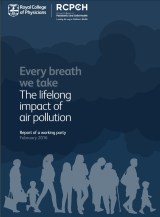
The 2016 Every Breath We Take report from the Royal College of Physicians is a sobering update on human and cost consequences of poor air quality. And not only outdoor air quality, notoriously poor within many of our cities, but also consequences arising from indoor air quality, significantly triggered through the design, construction and operation of the buildings we live, work and play in.

RCPCH-1“Each year in the UK, around 40,000 deaths are attributable to exposure to outdoor air pollution, with more linked also to exposure to indoor pollutants”

The report estimates that the cost to society, business and health services in the UK adds up to more than £20 billion every year.

This is a prime example of how, in the built environment we externalise the real cost of low cost construction.

The report focuses on pollutants from buildings that occur during operation, but also touches on pollutants during construction. The high volume of construction transport, predominantly diesel in addition to the pollutants known to be asthmatics, organic & mineral dust, or carcinogenic (asbestos fibres in older buildings, formaldehyde and VOCs in newer builds)

The built environment is responsible for an increasingly complex cocktail of air quality issues:

“Looking to the future, newer ‘green’ workplaces will be constructed, and newer technologies will be developed for use within them. The latter include significant developments in, for example, the use of advanced materials and three-dimensional printing. The construction, occupancy and exposure profiles of newer workplaces will lead to the potential for novel inhaled hazards and risks, and vigilance will be required in order to identify the occupational lung problems attributed to the workplaces of tomorrow”

Every Breath We Take makes a number of recommendations:

Lead by example in the NHS. Is it acceptable to design, build and maintain health facilities that themselves are not net health positive.

Quantify the relationship between indoor air pollution and health. Pressures for ever more energy efficient buildings with lower carbon footprints raise the potential of reducing air quality in homes, offices and schools. An holistic and collaborative effort is required across built environment organisations, research and health organisations to develop policies and standards.

Lessons:

Following the findings of the Every Breath We Take report, there really should be no air quality performance gap, even a small gap will result in human health issues and externalised health costs.

Adopting the increasingly popular Living Building Challenge and Well Build Standard, air quality must become a key element of performance gap analysis. Design stage set the required air quality threshold that is validated post construction, with a fully occupied facility over a 12 month proofing period, and the on a regular on going basis. Established standards such as BREEAM and LEED must make award of certification dependent on proven air quality.

This is a CSR (Corporate Social Responsibility) issue of high magnitude for those who commission buildings, those who design and construction and those who manage buildings, anything less can not be acceptable to a responsible built environment sector.

Based on extract from FutuREstorative


Ready for a Circular Economy?

IMG_1100My recent talk at Green Vision Circular Economy event held at the Re:Center, University of Bradford, focused on Design for DeConstruction principles and raised a number of questions, for example;

  • The Circular Economy is not just simply new generation waste recycling – are we rethinking design and construction systems and processes. (slide 2)
  • How can we convert Site Waste Management Plans to Material Conservation Management Plans? (slide 3)
  • Is BIM ready to embrace design for (secondary) reuse, after the first design purpose?How well do we understand the difference between Material Passports and Product Data Sheets? (slide 5)
  • How can we remove toxic materials from buildings so that we do not build in more health problems for future use, future buildings and future generations? (slide 7)
  • Are we limiting circular economy potential through greater integrated Mechanical, Electrical and Plumbing systems? (slide 15)
  • Is there really a place in construction 2016 for Substances that are Hazardous to Health? (slide 24)

Related Post: Circular Economy and the Built Environment

BioClimatic Design: Book Review

Sustainability and eco design are now common place in todays built environment, yet how appropriate is our level of understanding and relationship with natural and bioclimatic conditions necessary to address climate change?

9780691169736-us-300Design for Climate, Bioclimatic Approach to Architecture Regionalism by Victor Olgyay originally published in 1962/3 has been recently updated with new essays and insights on climate change and design.

Today, even though we may have far greater understanding of climatology and potential solutions, we still strive to understand how built environment design will influence the drive to cap global warming to 1.5 deg c. The core teachings and messages in Design for Climate remain just as relevant, and indeed perhaps far more so.

The original book is populated with wonderful pen-drawn climatic and bioclimatic charts and illustrations that pull the reader in to discover more. Sadly, much of the data, charts and methodologies included within the book would now be included within BIM environmental modules, even on smart phones, based on algorithms, and possibly applied without in-depth knowledge of for example sun path diagrams and insolation affects.

I say sadly, as we have perhaps lost that connection and innate understanding of the natural climatic conditions pertaining to the individual places in which we build.

Considering that the original edition would have been conceived, researched and produced without the use of computers and the internet, the meteorology, climatology and biological data incorporated into Design for Climate are outstanding.

There are a number of areas in the book, both within the original text and in the new prefaces that resonate with where I am in my sustainability research, practice and thinking for FutuREstorative.

For example there is a resonance with the Living Building Challenge philosophy, and of the flower metaphor for buildings rooted in place, harvesting all energy and water whilst being adapted to climate and site. Words which would not have been out of place within Olgyays text and charts.

Within the new preface, Victor W Olgyay describes how the very local bioclimatic conditions at Limone, Lake Garda, have given rise to very specific architecture, something that Living Building Challenge students on the annual Regeneration design competition, held nearby in Dro, take into account as they prepare designs for local municipal buildings along Living Building Challenge principles.

1962 also saw the publication of Silent Spring, in an era of environmental awakening, of pollution awareness and of the impact or relationship of buildings with the climate, which ushered in the modern environmental protest movement.

picture-13

Earth Day Catalogue

Through the text and the images, even the paper quality, I was reminded of another near-contemporary text, towards the end of that decade, the Earth Day Catalogue and its mantra of that time, still relevant today, to Stay Hungry Stay Foolish.

Further there is a striking continuity which caught my eye, Victor Olygay passed away on the first earth day in 1970. Part of the organisation team on that day was Denis Hayes, who, 40 years later would apply the essence of Design with Climate, translated through the Place and the other Living Building Challenge imperatives on the built environments green flagship at the Bullitt Centre.

Design for Climate includes a number of concepts that now seem way ahead of its time (or rather concepts not fully understood or adopted by practice) re-emphasised in the new Scannable Documentessays. For example, the concept of interlocking fields for climate balance – suggesting that architecture design should be in balance with biology, technology and climatology. Something which is very close to the current thinking of integrating digital technologies (BIM) with bio-data, nature and climatology within todays restorative sustainable design and build.

Core to Design for Climate text is the concept of comfort, again a concept central to todays sustainable building design, for example within passive house thinking. Olgyay quotes a Dr Cannon “the development of a nearly thermostable state in our buildings should be regarded as one of the most valuable advances in the evolution of buildings” An outcome we have lost sight of perhaps in our search for ever more energy efficient buildings under the label of sustainability, but now being addressed through a balancing wellbeing and healthy building agenda

I was somewhat surprised to note that demand for Design for Climate has outstripped supply, most likely as being an AIA recommended text for architect studies. Indeed if that is the case then why are we not seeing more buildings fully bioclimatic focused? Maybe this new and updated version will correct that, bringing understanding of bioclimatic design principles to a new generation.

In one of the new essays, (The Roots of BioClimatic Design) John Reynolds comments “while the teachings of these are still rippling out there are many corners of our built environment that cry for their application”


I am grateful toMolly Miller via Princeton Press. to forwarding a copy of Design For Climate for review here and within FutuREstorative


Circular Economy and the Built Environment

KONICA MINOLTA DIGITAL CAMERA

Updated: Ready for a Circular Economy?

This coming week sees a number of circular economy events, for example Green Vision 10th Feb  (#GVis2016) in Bradford and ConstructCE 12 Feb (#cethinking) in London. Also see the Build Well 2016 Feb 10/11 event in the USA.  If you are at all interested in learning more about Circular Economy and its current popularity in construction, get along to at least one for these, and, engage via their twitter streams

This blog has mentioned and covered concepts of Circular Economy, Cradle to Cradle and related themes on many occasions, including the 2008 Constructing Excellence Lancashire Waste is Stupid event and presentation for that asked the question when did the construction Take Make Dump become acceptable, and why it remains so.

Whilst we see an increase in interest and a hunger to understand, an occasional interface with mainstream sustainability (as represented by BREEAM) and with BIM (GreenBIM), circular economy thinking struggles to gain any real traction within the built environment.

Research shows that the circular economy could be worth up to £29billion to the UK economy. It remains unclear how much of this would be construction related, but is this another area we can apply the rule of thumb 40% factor to, making a significant impact on the sector?

The Living Building Challenge provides a great framework for circular economy thinking, requiring for example, Conservation Plans not just Site Waste Management Plans, and pulls on the DfD (Design for Disassembly or Design for Deconstruction) principles as a guide for material selection and management within Living Building Challenge projects.

And it is DfD principles that will form the core of my talk at the Green Vision circular economy with examples from recent visits in the UK, Europe, Canada and the US.

Circular Economy and DfD principles present great opportunities and challenges for todays design and construction within the world of BIM. Can we for example design buildings with materials and components that have a secondary designed life after the first? and, how can we incorporate materials and components that are already insitu within existing buildings? The Alliander company ‘new’ HQ building in the Netherlands demonstrates it is possible, using concepts such as Material Passports to incorporate 80% raw materials from existing buildings and have designed re-use potential for 80% of the new building.

However, if we are serious in designing and constructing buildings with circular economy thinking, with a planned lifetimes reaching to 250 years, as for example in the case of Bullitt Centre, is it acceptable or responsible to specify or include unhealthy or toxic chemicals or materials?  We would be potentially locking risks into many years of use and potentially many future buildings. A good place to start is to ensure the buildings are LBC Red List compliant. The Bullitt Centre has demonstrated toxic material free buildings are possible in six-storey, city centre commercial buildings.

The era of just harm reduction should really be history, and, in an age of responsible construction, the Precautionary Principle (to do no harm where evidence of health or ecological risk exists), should be forefront in design. And if unhealthy or toxic materials are really unavoidable, then project Deconstruction Plan’s must detail the designed replacement rationale and methodology as soon as healthy alternatives become available.

FR_Visuals_FINAL

Circular thinking and DFD are explored within my upcoming RIBA publication FutuRestorative as inspirations and challenges for a new sustainability in the built environment.

Event Links:

Green Vision 10th Feb   Hashtag #GVIs2016 @lsigreenvision

CE Thinking 12 Feb  Hashtag #CEthinking @constructCE 

Build Well 2016 Feb 10/11 @BuildWELL_EBNet

Introduction to the Living Building Challenge + Project Workshop

UK_collaborative_logoWe are pleased to announce an Introduction to the Living Building Challenge (LBC) on Tuesday 9th Feb 2016 at the Cuerden Valley Park Visitor Centre, Berkeley Drive, Bamber Bridge, Preston PR5 6BY at 1pm.

The event will be led by Martin Brown of Fairsnape, the LBC UK Ambassador and supported by Barbara Jones and Hannah Hunt of the Straw Works Design team.

The event is free but we will accept donations of £5 or more towards costs.

Programme:

13.00 Introduction to the Living Building Challenge

including associated programmes: JUST, DECLARE, Living Product Challenge and Administration of LBC: Handbooks, Dialogue, Documentation, Certification

14:00 Understanding/Confirming LBC Requirements for CVP and the Seven Petals:

  • Place
  • Water
  • Energy
  • Health and Happiness
  • Materials
  • Equity
  • Beauty and Inspiration

16:30 Summary of Actions

17:00 Close

Background to the Event

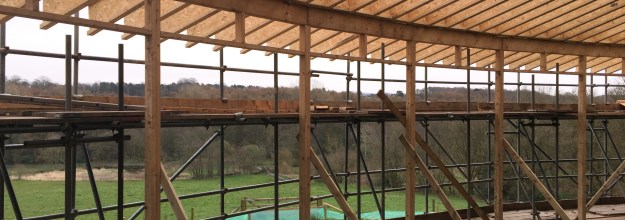
Straw Works have designed and successfully achieved Planning approval for a new Visitor Centre at Cuerden Valley Park (CVP), with the support of Chorley Borough Council. It is currently under construction by volunteers of the CVP, with Straw Works providing support and running training courses where necessary. The project is registered with the LBC, the first UK project to be registered, with funding from Veolia, who are part funding the whole project. http://www.strawworks.co.uk

The Living Building Challenge™ is the built environment’s most rigorous performance standard. It calls for the creation of building projects at all scales that operate as cleanly, beautifully and efficiently as nature’s architecture. To be certified under the Challenge, projects must meet a series of ambitious performance requirements over a minimum of 12 months of continuous occupancy. https://living-future.org/lbc

Martin Brown, Fairsnape, is a sustainability consultant, LBC Ambassador and UK Collaborative Facilitator. His new book, published by RIBA, FutuREstorative, exploring Inspirations + Challenges for a New Sustainability, publishes in summer 2016.

FR_Visuals_FINAL

REGENERATION 2016

Great news is that Regeneration, the very successful and innovative European, Living Building Challenge, 64 hours design competition is back for another edition in April 2016. The event to be held in the Italian Trento region is organised by Carlo, Paola and team at the Macro Design Studio in Revereto.

The event will take place at Centrale Fies, Dro (Trento – Italy), on April, 13th to 16th, 2016


The competition is open to professionals (architects, engineers, environmental sustainability and landscape experts) in Europe, under 35 years old. The deadline for the request of participation is next January 29th, 2016. 15 of the best applicants will be selected on the basis of the documentation submitted.

The applicant form can be downloaded from here 

The event is 64 non-stop hours of integrative design in which each team, assisted by tutors expert of LBC, will compete in designing the best redevelopment project of an existing local public building. There will be side events i.e. a final conference open to the public on the issues of LBC as well as the final presentation of the projects, with the proclamation of the best project by an international jury.
And, once again I am delighted to have been asked to tutor the teams on aspects and insights of the Living Building Challenge.

As you know, The Living Building Challenge™ is a building certification program, advocacy tool and philosophy that defines the most advanced measure of sustainability in the built environment possible today and acts to rapidly diminish the gap between current limits and the end-game positive solutions we seek. LBC is a Visionary Path to a Regenerative Future.
It is administered by The International Living Future Institute (ILFI) based in Seattle (WA), a hub for visionary programs that promotes a sustainability that is Socially Just, Culturally Rich and Ecologically Restorative SM. ILFI is partner and scientific advisor of Macro Design Studio and the Living Building Challenge Collaborative: Italy in organizing REGENERATION.