Category Archives: sustainability

Introduction to the Living Building Challenge + Project Workshop

UK_collaborative_logoWe are pleased to announce an Introduction to the Living Building Challenge (LBC) on Tuesday 9th Feb 2016 at the Cuerden Valley Park Visitor Centre, Berkeley Drive, Bamber Bridge, Preston PR5 6BY at 1pm.

The event will be led by Martin Brown of Fairsnape, the LBC UK Ambassador and supported by Barbara Jones and Hannah Hunt of the Straw Works Design team.

The event is free but we will accept donations of £5 or more towards costs.

Programme:

13.00 Introduction to the Living Building Challenge

including associated programmes: JUST, DECLARE, Living Product Challenge and Administration of LBC: Handbooks, Dialogue, Documentation, Certification

14:00 Understanding/Confirming LBC Requirements for CVP and the Seven Petals:

  • Place
  • Water
  • Energy
  • Health and Happiness
  • Materials
  • Equity
  • Beauty and Inspiration

16:30 Summary of Actions

17:00 Close

Background to the Event

Straw Works have designed and successfully achieved Planning approval for a new Visitor Centre at Cuerden Valley Park (CVP), with the support of Chorley Borough Council. It is currently under construction by volunteers of the CVP, with Straw Works providing support and running training courses where necessary. The project is registered with the LBC, the first UK project to be registered, with funding from Veolia, who are part funding the whole project. http://www.strawworks.co.uk

The Living Building Challenge™ is the built environment’s most rigorous performance standard. It calls for the creation of building projects at all scales that operate as cleanly, beautifully and efficiently as nature’s architecture. To be certified under the Challenge, projects must meet a series of ambitious performance requirements over a minimum of 12 months of continuous occupancy. https://living-future.org/lbc

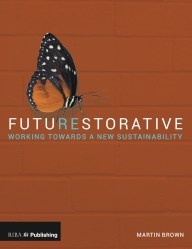
Martin Brown, Fairsnape, is a sustainability consultant, LBC Ambassador and UK Collaborative Facilitator. His new book, published by RIBA, FutuREstorative, exploring Inspirations + Challenges for a New Sustainability, publishes in summer 2016.

FR_Visuals_FINAL

2016 Built Environment Challenges

KONICA MINOLTA DIGITAL CAMERA

One: 2016 is the year Building Information Management in the UK becomes mandated for public sector projects. Our ongoing challenge is increasing the scope and application, across all the built environment sectors and organisations, moving us towards a digital and data driven industry.

Two: The 2015 Paris Agreement sets ambitious intent to cap global warming to 1.5deg C. Current built environment sustainability strategies and approaches are based around a 2deg cap, with targets too low or too slow. Our challenge is to enable the built environment to play it part, for which we will need all the restorative sustainability tools we have at our disposal. We need to flip our 40% negative impact, but can no longer seek to be near zero or net positive but need to push towards being demonstrably ‘very positive’.

ThreeHealth is the new GreenBuild. We have seen a big increase in health and wellbeing awareness with biophilia now firmly within the sector’s lexicon. Our challenge is to ensure health and wellbeing is a key driver in design, in materials, in the construction process and within building operations.

Four: our biggest opportunity is to now create the conditions that allow for leadership in integrated and collaborative thinking, combining the innovative approaches and development from the BIM, Restorative Sustainability and Healthy Buildings agendas.

FR_Visuals_FINAL


These challenges are explored in depth in forthcoming RIBA Book:
FutuREstorative

Something Remarkable Happened at COP21 (update)

We now know the outcome from COP21 and the Paris Agreement on climate change.

cop21 article 2 draft


The Paris Agreement will be highly significant for the built environment, signalling one of its most exciting and challenging eras, one of innovation and reward;

  • The climate change and sustainability language is changing, from 2degC to 1.5degC based on science, rather than economic targets.
  • The Paris COP21 discussions, negotiations and events were played out in a social, open, collaborative and transparent environment. During the summit we turned to social media feeds and the #COP21 hashtags rather than traditional newsprint or news media.  This sets a future for transparency and collaboration for the climate change  agenda, at global, national, the built environment sector, company and project level.
  • Construction and the built environment has now be recognised as a climate change problem and a key part of the solution. We now have to flip our 40% negative impact into a 40% positive impact.
  • With existing construction sustainability strategies, building certification standard and reduction targets based on 2 Deg, there is now the urgent need to rethink and to address  a 1.5Deg future with faster, tougher reduction targets and more focused approaches.
  • To achieve 1.5degC caps, we cannot continue with a sustainable construction as usual approach of being incrementally less bad, but would need to make the flip to restorative and regenerative approaches, such as the Living Building Challenge.
  • The Paris Agreement is recognised as signalling the end of the fossil fuel era, and the signal for a low carbon future. This presents a huge opportunity and challenge for construction, utlilising all the tools and approaches we have at our disposal – for example
    • BIM to design and model low carbon buildings and construction methods,
    • circular economy to reduce impact from construction resources
    • lean construction to reduce all forms of waste along with
    • education and advocacy to inform and inspire both the next generation and those in the industry.

As I write this I am reviewing an 2015 updated copy of Olgyay’s Design with Climate, A BioClimatic Approach to Architectural Regionalism. Originally published in 1963 – over 50 years ago – was a groundbreaking book for students of sustainable architecture. One of the core concepts, (the Interlocking Fields of Climatology, Biology, Architecture and Technology) would unfortunately still appear new and radical to many today, but is profoundly relevant to the new climate change agenda.  We cannot wait any longer to learn or relearn basics of sustainability.

Related previous blog post

Presentation to Brightest Greenest Buildings event on 10/12/15:


How significant was the first Buildings Day at COP21?

banner-nama-cop21_800-percent

In coming years, hopefully very significant. This was the first time that the built environment has been recognised as important in any global, United Nation climate change summit.

We now have the recognition that buildings and construction have a major impact and influence on climate changes, being part of the problem but also key to climate change solutions

My thoughts from following inspiring feeds from Paris and elsewhere, through the twitter hashtags of #COP21, #BuildingsDay #BuildBetterGreen #BackClimateAction and others:

I felt ashamed by the approach of our government in weakening and dismantling sustainability strategies for homes and buildings whilst others around the world are deepening their green building strategies

That the built environment players (leaders, companies, advocates, agencies, academics) all need to collaborate to ensure a sub 2 degrees warming path is central to sustainability strategies

Not once did I see BIM mentioned or cited as part of the building environment solution. BIM needs to engage with the leaders and decision makers who are shaping the design, construction and operation of buildings.

Encouraged to hear of net positive approaches, being restorative and regenerative in built environment sustainability approaches. Not only for carbon reduction but for social and health strategies to be ‘net-positive’

Encouragingly there have been many great pledges from GBC members around the world – including the UK.

Whilst major contractors and manufacturers were visible in making commitments or presenting the built environment world of contracting, of SME’s and supply chains right across the sector still needs to engage, and understand that business as usual may not be that usual in the coming year.

Finally – with the built environments impact on climate change, often quoted as 40% of the problem, making the real change to get on a sub 2 degree global warming path may seem impossible. Globally, through design and construction we need to reduce emissions by 84 GtCO2 by 2050 – thats taking over 22.000 coal fired power stations out of service.

Yet impossible is only a challenge – and as Steve Jobs said – its kind of fun to do the impossible.

What Is COP21?

Understand COP21 in these 7 graphics (via Green Biz)

France is chairing and hosting the 21 th Conference of Parties to the Framework UN Convention on Climate Change (COP21 / CMP11) from 30 November to 11 December 2015. This is a crucial conference since it must lead to a new international climate agreement, applicable to all, to keep global warming below 2 ° C.

18 countries (Austria, Brazil, Cameroon, Canada, Finland, France, Germany, Indonesia, Japan, Mexico, Morocco, Norway, Senegal, Singapore, Sweden, Tunisia, Ukraine, United Arab Emirates, United States of America), and over 60 organisations launched an unprecedented Global Alliance for Buildings and Construction to speed up and scale up the sector’s huge potential to reduce its emissions and literally build greater climate resilience into future cities and infrastructure.

Global Alliance for Buildings and Construction to Combat Climate Change

Lendlease: Accelerating Wellbeing in Built Environment

In November 2015, Lendlease, one of the world’s leading integrated infrastructure and real estate groups, announced a global alliance with Delos, aiming to accelerate the integration of human health and wellness outcomes in the built environment. This alliance will include identifying pioneering projects in Australia, Asia, the United Kingdom and the United States, which will pursue WELL Certification and provide ‘WELL ready’ workplaces for tenants.

Untitled 5Geoff Dutaillis, group head of sustainability at Lendlease said, “Supporting the next generation of buildings and places that get it right for people, as well as the environment is very important….The built environment has a critical role to play in helping cities and governments transition towards a low carbon future; however, it’s the direct impact on human capital and productivity through increased focus on supporting human health and wellbeing which is the untapped potential.”*

The WELL Building Standard is the first protocol of its kind to focus on “improving human wellness within the built environment by identifying specific conditions that, when holistically integrated into building interiors, enhance the health and wellbeing of the occupants.” The WELL Building Standard is a performance-focused system for measuring, certifying and monitoring features of the built environment that impact human health and wellbeing including air, water, nourishment, light, fitness, comfort and importantly mind.

Wellness and Happiness: The Next Built Environment / CSR Frontier 

WELL Building Institute launches pilot programs for new sectors.

Designing Buildings Wiki: Well Building Standard 

REGENERATION 2016

Great news is that Regeneration, the very successful and innovative European, Living Building Challenge, 64 hours design competition is back for another edition in April 2016. The event to be held in the Italian Trento region is organised by Carlo, Paola and team at the Macro Design Studio in Revereto.

The event will take place at Centrale Fies, Dro (Trento – Italy), on April, 13th to 16th, 2016


The competition is open to professionals (architects, engineers, environmental sustainability and landscape experts) in Europe, under 35 years old. The deadline for the request of participation is next January 29th, 2016. 15 of the best applicants will be selected on the basis of the documentation submitted.

The applicant form can be downloaded from here 

The event is 64 non-stop hours of integrative design in which each team, assisted by tutors expert of LBC, will compete in designing the best redevelopment project of an existing local public building. There will be side events i.e. a final conference open to the public on the issues of LBC as well as the final presentation of the projects, with the proclamation of the best project by an international jury.

And, once again I am delighted to have been asked to tutor the teams on aspects and insights of the Living Building Challenge.

As you know, The Living Building Challenge™ is a building certification program, advocacy tool and philosophy that defines the most advanced measure of sustainability in the built environment possible today and acts to rapidly diminish the gap between current limits and the end-game positive solutions we seek. LBC is a Visionary Path to a Regenerative Future.
It is administered by The International Living Future Institute (ILFI) based in Seattle (WA), a hub for visionary programs that promotes a sustainability that is Socially Just, Culturally Rich and Ecologically Restorative SM. ILFI is partner and scientific advisor of Macro Design Studio and the Living Building Challenge Collaborative: Italy in organizing REGENERATION.

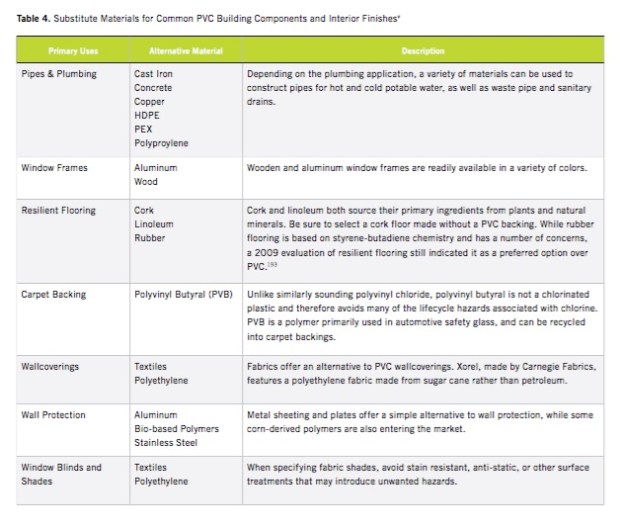
Avoiding PVC health hazards through substitute materials.

Aside from building materials that present obvious and accepted hazards to health (asbestos, leadpaint etc) it is PVC that generates the most discussion when exploring the Materials RedList imperative in Living Building Challenge training or workshop sessions. To design and construction buildings that are PVC free seems impossible to many, but LBC projects are doing just that through viable alternatives.
PVC imageThe Perkins+Will white paper, Healthy Environments, Whats New (and Whats Not) with PVC published last week (16th Nov) reviewed why PVC is on their ‘precautionary list’ in light of recent advances in PVC chemistry and manufacture. The white paper, a collaboration with the Healthy Building Network, to promote health in the built environment, concluded that despite advances in production, PVC should remain on their precautionary list.

Influential materials rating systems, including the Living Building Challenge building certification and Cradle to Cradle product certifications recommend avoiding PVC. Influential building owners such as Kaiser Permanente and Google have adopted PVC avoidance policies. Perkins+Will, an international architecture practice with about 1,000 architects, included PVC in its Precautionary List as a substance for which to seek alternatives.

“Exposure to a single PVC fire can cause permanent respiratory disease… Due to its intrinsic hazards, we support efforts to identify and use alternative building materials that do not pose as much risk as PVC to fire fighters, building occupants or communities.”  Richard M Duffy, International Association of Fire Fighters139

This does not mean that Perkins+Will has eliminated the specification of all PVC-based products. Instead, in keeping with the precautionary principle, when evidence indicates a relevant adverse finding as it relates to human health or negative environmental impact, Perkins+Will seeks to, where possible and appropriate, present alternatives to building owners for their consideration. The goal is to empower design teams to make informed decisions, recognising that this is an issue where scientific certainty is elusive.

Perkins+Will includes PVC on the Precautionary List because it presents hazards to people and the environment, beginning with its synthesis and continuing through its manufacture into products, use, and additional significant hazards during its disposal or recycling.

The white paper includes detailed analysis on the Health Hazards Associated With PVC and Hazardous Emissions from PVC, but the section on Avoiding PVC hazards through substitute materials will be of great help for those seeking PVC free constructions.

Avoiding PVC hazards through substitute materials

Mobilising the Construction Sector for Climate Action

We now know that buildings and the built environment are a key factor to our climate change problem, whilst at the same time, a vital part of climate change solutions.

2015 is seen by many as the turning point in the fight against climate change. In December, France hosts the 21st “Conference of the Parties”, or COP21, with a goal of reaching a binding agreement to limit global warning to between 1.5degC to 2degC.

Without significant action by the built environment sector, this target can not be met

December 2015 


The built environment sector’s crucial role in mitigating climate change is finally being recognised. For the first time in the history of climate negotiations, A ‘Buildings Day’ will be held December 3 at the COP21 UN conference on climate change in Paris.

  • Helping to put the buildings and construction sector on the below 2 °C path
  • Aligning existing initiatives, commitments and programmes to achieve greater scale and increase the pace of efficiency actions
  • Catalysing stronger collaboration and targeting sectoral and cross sectoral climate action and solutions for all

17062008118

Now then, is the time for every built environment organisation; funder; client; designer; constructor; and maintainer, to revisit and to recommit to sustainability goals that will not only seek to limit global warming through reducing carbon and other greenhouse gas emissions, but also seek to be net positive.

More than 30 per cent of global greenhouse gas emissions are buildings related, with emissions from buildings set to double by 2050 if we continue business as usual. Not addressing climate change will increase the risks and vulnerability of countries, regions and local communities. The forecast rapid urbanisation, without action will accelerate impacts.

Yet:

  • The built environment sector offers one of the most cost-effective and economically beneficial paths for reducing energy demand and associated emissions while at the same time supporting adaptation and resilience to climate change.
  • Many low-energy, renewable and deep renovation solutions are available. Proven policy, finance and technology actions exist.
  • The economic, health, and social benefits of sustainable buildings are significant. Buildings provide shelter, places to live, work, learn and socialise, directly affecting our daily lives. Providing more than 50 per cent of global wealth, and one of the largest employers at local level, the sector also offers a path to poverty alleviation.
  • Buildings are long-term ventures. Today’s new buildings are tomorrow’s existing stock. Failure to act now would lock in growth in GHG emissions for decades.

Better Build Green is the World Green Building Council’s new campaign which focuses on the UN climate change negotiations – COP21 in Paris. The campaign aims to show the world that green buildings offer one of the best and most cost-effective ways to tackle climate change and help keep global temperature rises within the two degrees limit. The message is simple: not only had we better build green if we are to reach a two-degree world tomorrow, but we are better off today if we do.

Sources:

UN Environment Programme Buildings Day 

Friends of Europe

Better Build Green

The New Economy – Why Buildings Matter in Fights Against Climate Change

Fairsnape iSite: Beyond Sustainability

Circulate News Launched

The Ellen MacArthur Foundation has launched Circulate, an online platform for news and thought-leadership on circular economy thinking, providing a central location for information and news on circular economy related topics.

Content on Circulate falls into three distinct types:

  • fortnightly featured articles with a journalistic focus, from a range of writers;
  • daily updated news articles from various industries and on a number of subjects, accompanied by comment from the Circulate editorial team;
  • and suggested reading material recommended by the Ellen MacArthur Foundation team.

Circulate has a twitter account at @circulatenews

Tesla’s Powerwall: a game changer for BIM and Built Environment Sustainability?

Following the announcement from Elon Musk, we have seen energy and sustainability commentators proclaiming the new Tesla PowerWall a game changer for energy management, and for good reasons, moving from centralised energy to local energy management.tesla-demand

Tesla estimate that with only 9 million Powerwall devices, carbon targets to address climate change can be achieved and that’s not such a big number given the number of cars in the world. What happens when every home, office, building has a Powerwall (or similar: there will be others) enabling local energy management, connected to the internet of course.

The Information Age Is Over. Welcome to the Infrastructure Age.

The Powerwall has also be heralded as an example of the emerging ’world view’ age, we are leaving the Age of Information to enter an Age of Infrastructure. An age that will focus on the way not only energy but how information is managed, transported and communicated, constantly and in real time – the Infrastructure of Information.

Imagine future Building Information Management models that up date instantly and constantly based on incoming data feeds from building’s internet of things , from weather, from other BIM’s building user data and so on

The age of Infrastructure, in which the internet of things is a key element will mash up physical and cyber spaces. Will BIM’s also start to blur the boundary between physical and web space, making Augmented Reality the tip of an iceberg. Building Infrastructure Management anyone?

But of course there is the security aspect:

There are the inevitable dangers that come with infusing physical space with all the vulnerabilities of cyberspace. People will hack your building; they’ll inject malicious code into delivery drones; stealing your phone might become the same thing as stealing your car.

Whilst this could well give us near perfect buildings and facilities, it could also take us one step closer to the Blade Runner vision of cities and buildings that is the antithesis of the environment, restorative sustainability thinking movement, and a danger “We’ll still be mining unsustainably to support our glorious batteries and photovoltaics and smart dance clubs”

It is shaping up to be an incredible fast paced journey ahead for the built environment and even more reason for sustainability watchdogs, and for educational focus.

Sources/Credits:

Tesla’s new Powerwall battery could be world-changing

Tesla Powerwall: Game-changing batteries for homes and businesses, starting at $3,000

The Information Age Is Over. Welcome to the Infrastructure Age.

The Internet of Things (IoT)— an integrated fabric of devices, data, connections, processes, and people.