Category Archives: sustainability

sustainable stars

Friend and colleague Liz Mutch at Creative Concern has sent over details of the Sustainable Stars programme:

Constructing The Future are looking for the best examples of sustainability from across the Pennine Lancashire area, in a new competition launched this month. The project aims to uncover the unsung green heroes of the region who are doing their bit to promote sustainable practices across wide range of activities.

From house builders, to technology providers, community groups to eco decorators Constructing The Future are searching out projects that can show others how it is done and to increase the awareness of sustainability across Pennine Lancashire towns.

The 13 categories within the Sustainable Stars include sections for the best heritage renovation, most innovative use of renewable technology, a waste management and recycling award and a prize for the best eco home builder. There are also categories for the general public and community groups including the best eco home renovation which includes any improvement made to a home from eco paints to a solar panel.

The competition is free to enter and every project will have the chance to be included in the Sustainable Stars exhibition and book. The culmination of the competition will be an awards ceremony at Elevate’s Constructing The Future national sustainability conference to be held at the end of October in Burnley.

If you are involved in a project or know of one that could be suitable for a Sustainable Star and you live in the Pennine Lancashire area, we want to hear from you!

Please contact catherine hackett Project Administrator, Constructing the Future Elevate East Lancashire for more information or download the application form here

bike week this week

This week is bike week here in the UK, hence a series of bike related posts throughout the week on cycling its relevance to the built environment and to the climate change agenda.

Questions:

buildings with real cycling facilities?

facilities managers prevent cycles from the building or being locked outside?

construction sites that make it easy to cycle into work?

cities with free cycle facilities?

Other links:

bike week website

17 Reasons Why Bicycles Are the Most Popular Vehicle in the World Today

Live blog on Lourdes cycle ride

sustainable construction commitments launched

The UK Government today launches its Sustainable Construction Strategy, with a whole raft of targets, measures and reporting mechanisms. It seems like it has been a long time coming, the consultation period being most of last year. Construction minister Shriti Vadera comments “Our aim is to become a world leader in sustainable construction” (Building). Time will tell.

Looking back to the response from to consultation we submitted from the Collaboartive Working Champions, it seems the emphasis on integrated and collaboartive working, as a means to sustainability is recognised .

To achieve improved whole life value through the promotion of best practice construction procurement and supply side integration, by encouraging the adoption of the Construction Commitments in both the public and private sectors and throughout the supply chain.

Parts of the industry – clients, consultants, main contractors, specialist contractors*, and product manufacturers and suppliers – to be engaged in supply chains on 30% of construction projects and for 40% of their work to be conducted through integrated project teams. (By 2012)

It is also included with the construction commitments:

A successful procurement policy requires ethical sourcing, enables best value to be achieved and encourages the early involvement of the supply chain. An integrated project team works together to achieve the best possible solution in terms of design, buildability, environmental performance and sustainable development.

And note the reference to ethical sourcing, this is also picked up in the report as responsible sourcing, moving towards a cradel to cradle approach one would hope, maybe along the lines of BS6000, which will wake up a few people and organisations.

And as fellow CWC and blogger Paul over at ExtranetEvolution comments it is good to see ICT within the Innovation section.

I am not sure about the inclusion of the eco-town approach as a target though – has the strategy been hijacked, Trojan horse style, to embed political ambitions?

however, and here is my main observation, admittedly after only a single read but….

I am disappointed to see a lack of facilities management in the document. The strategy is as much about the use, the consumption of buildings as it is about their design and provision. (something about focusing on the 1, out of the 1:5:200 concept). I am now aware that the facilities management sector in the UK is just too weak as a voice to get involved and influence the built environment sustainability agenda. Something that must change.

Yes we may have here a viable construction strategy , but without the link to the end users and management of the facilities (note I avoid the word buildings) we may not have a strategy for a sustainable built environment.

Oh, and why a sustainable document that has a solid black cover. The additional quantity of ink that will be used every time this document is printed or copied will be huge. The answer of course is not to print – but we are not all in the mindset of reading from the screen yet.

Score …

chicken in the blasket roof

From a non-conference on virtual worlds in Limerick – to the experience of reconnecting with nature, wildness and remoteness at the edge of Europe …

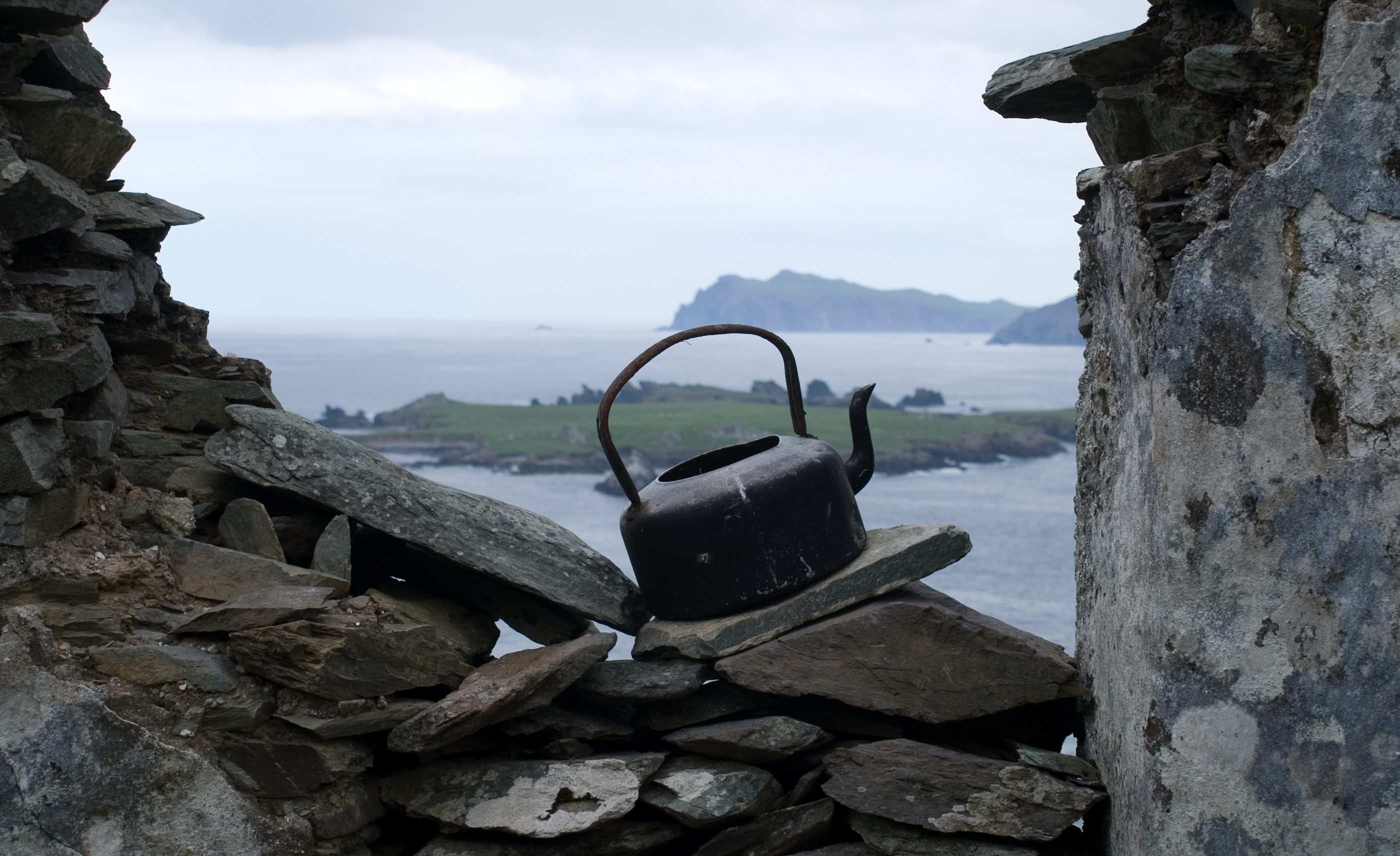
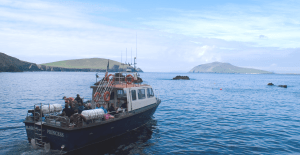
Last week I had the privilege of once again spending time on the Great Blasket Island, off the Dingle peninsular, Co Kerry Ireland.

This is always a highlight of our annual holiday in Ventry. The marine and bird life never ceases to amaze, this year ticking seals, basking sharks, minke whale, dolphin, gannets, puffins and much much more. The beach on the island is in my mind one of the best beaches in the world, and on a hot suny day the white bright sand can take you to the Caribbean. It really does feel like the end of the land out here, with the walk out over the highest point to the end of the island one of the most dramatic walks anywhere.

The island lies approximately 2 km from the mainland at Dunmore Head, and extends 6 km to the southwest, rising to 292 metres at its highest point (Croaghmore). Despite its close proximity to the mainland, visitors to the Dingle coast can often not see the island through the notorious sea mist.

The island was inhabited until 1953, when the Irish government decided that it could no longer guarantee the safety of the remaining population. It was the home of three noted Irish writers: Tomás Ó Criomhthain, Peig Sayers and Muiris Ó Súilleabháin. Their works were all written in Irish, and have all been translated into English, as well as other languages. The homes of Tomás Ó Criomhthain and Muiris Ó Súilleabháin are now in ruins but the house in which Sayers once lived has been restored, and used to form part of the hostel which previously functioned on the island.

Until 1953, the inhabitants of Great Blasket Island formed the most westerly settlement in Europe. The small fishing community (even at its peak the population was hardly more than 150) mostly lived in primitive cottages perched on the relatively sheltered north-east shore.

Over the ten years or so I have visited the island, the dispute on ownership and planning to restore and create tourist facilities has ebbed and flowed. Initially it seemed the vision was for a World Heritage listing which would mean no construction or restoration. Looking at planning minutes it seems the vision is now a somewhat less grand Irish National Historic Park which it would seem allow some facilities to be built.

This year though I was amazed to see, even upset to see, what was a poorly managed (ie untidy material storage) construction site to restore / extend self catering hostel. In stark comparison to the solid construction of existing buildings, made of solid and local stone, breeze blocks had been flown in, packs split and not restacked, timbers not stacked, (artificial?) slates from Northern Ireland awaited on pallets.

Earlier regulations would not allow any vehicles on to the island in an effort to preserve the pristine nature, now yellow diesel construction plant lay where it had been last used. Concrete and mortar spoils from the mixer hardened on the ground.

What a fantastic opportunity for alternative construction practices and designs – wasted. The creation of an alternative construction technology and education center here would have been a wonderful message, showing we can work within a sense of connectivity to nature and heritage. Instead we have taken the easy route and failed.

Read the account of Tomás Ó Criomhthain’s experiences

The roof of his home was made of a thatch of rushes or reeds and his sisters would climb up to collect eggs from under the hens nesting on top. One amusing episode in An tOileánach describes a neighbour’s family at supper when, to their bewilderment and consternation, young chickens began raining, one by one, onto the table and splashing into a mug of milk. “For God’s sake,” cried the woman of the house, “where are they coming from?” One of the children spied a hole scratched in the roof by a mother hen.

Ó Criomhthain lived in a cottage or stone cabin with a hearth at the kitchen end and sleeping quarters at the other. A feature of island life was the keeping of animals in kitchens at night, including cows, asses, sheep, dogs, cats and hens.

The Blasket Community was in its way sustainable and resilient until moved from the land by the Irish Government, reading the literature really strikes a note of resourcefulness, of reusing and of recycling:

The islanders’ sometimes meagre existence was often supplemented by gifts from the sea when shipwrecks occurred. Timber, copper and brass were salvaged, as well as cargoes of food such as meal and wheat, which helped them to survive lean years. At one time tea was unknown on the island and when a cargo of the stuff floated ashore from a wreck it was used by one woman to dye her flannel petticoats (normally dyed with woad). She also used it to feed pigs.

(facts on Blasket taken from wikipedia)

Developers accused of pursuing gadgetry instead of saving planet

The Guardian reported on Saturday on the CABE criticism of architects and developers who are, according to CABE ignoring the threat of climate change and failing to address concerns over sustainability, (Based on design reviews of more than 700 large construction projects over the last two years that concluded that fewer than 10 made sustainability a priority)

Thats less than 2% !! Why has it taken two years and 700 project reviews to highlight such failings?

“painfully slow, piecemeal approach to sustainability” and a focus on
superficial “green gadgets” is threatening efforts to build green towns
and cities.”There are some architects and developers who really get climate
change, but most don’t or choose not to. As a result we get a lot of
greenwash, such as green gadgets and microtechnology stuck on to
buildings, rather than a proper approach to sustainable design.”

I am intrigued as to the review criteria used by CABE and will report more here when I can track down and read the report.

on the zero carbon house

Barratt Developments has unveiled what it calls the first zero-carbon house developed by a volume housebuilder, built at the Buildings Research Establishment in Watford, packed with the latest technology, including solar panels, rainwater harvesting and an air source heat pump.

Its new kind of concrete walls and floors, combined with super insulation and triple-glazed windows, means its heat requirement will be minimal as it is airtight. Fresh air is brought into the building through a heat exchanger, which extracts the heat from outgoing stale air and puts it back into the house.

Mark Clare, chief executive of Barratt, said it would not be easy to reduce the cost of the prototype to commercial levels but he was confident it could be done. The important thing, he added, was to build houses that people would buy.

The public and builders still need to be convinced, according to the NHBC Foundation report, and it would seem todays kids – who will buy the homes – Kids dream homes – whose dream homes aren’t high on eco features.

The UK Green Building Council released a report this week defining what a zero-carbon house should be in practice. This is likely to form the basis of the legislation that the government is soon going to work on.

Housebuilders had been unhappy at the costs of going zero carbon and had wanted to be able to invest in off-site renewable energy such as wind turbines that would be cheaper for them. But the government is likely to endorse the GBC proposals that a zero-carbon house should produce almost all its energy on site or very near by in, say, a communal heat and power system.

Barratt plans rolling out its zero-carbon homes on the site of Hanham Hall hospital near Bristol. It will build 200 of them, a third of which will be affordable to lower-income buyers. All will be code level six and will completed in 2011, five years ahead of the deadline.

Source

on greening existing buildings

Within a month of the release date for the UK Construction Sustainability Strategy ( due 11 June) we see another initiative announcement from government:

a parliamentary enquiry into the greening of existing offices, shops and warehouses, aimed at providing industry leaders and public figures the opportunity to contribute evidence that will go into the final report of the All Party Urban Development Group, which will cover what ministers, city leaders and property owners and occupiers need to do to reduce the environmental impact of commercial property.

Key issues are likely to be the lack of clear guidance over standards and the lack of information on costs and benefits of the various available schemes. It is expected that business leaders will call for clearer definitions and evidence on the financial impact of green agendas.

Attention to existing building stock – domestic and non domestic is urgently required so this enquiry is more than welcome, I just hope when the CSS arrives it joins together all the jigsaw initiative pieces.

08 thoughts from think 08

I attended Think08 yesterday afternoon, visiting some of the free seminars and chatting to a good number of exhibitors. It was also good to meet up with fellow bloggers Phil, Mel, Paul, Rob and Casey for an early evening drink.

My impressions from the afternoon was that it didn’t quite have the buzz of last year but again a very worthwhile event to attend, pushing the boundaries of sustainability … but …

Resilience is the new sustainability

The biggest impression was that sustainability as a green label has run its course – has it been highjacked to mean sustainable business as usual, sustainabily? Someone at another online event recently planted this idea – sustainability is so 1990’s. We need a new describer – resilience. (A link to a post in draft)

I captured my key thoughts during the afternoon which coincidently numbered eight:

  1. its the way we use buildings, operate them and manage energy use that will have the biggest initial impact on energy performance – not necessarily new green ‘kit’
  2. focus on existing building stock not new build however ‘green’
  3. like wise focus on make existing communities sustainable – not new build eco towns and try to make them sustainable
  4. all this reinforces my view that sustainability in the built environment is a facilities management issue not a construction one – but when the fm sector will wake up to this is another post.
  5. among the exhibitors there were more planners / developers / investment organisations than noticed before, and encouragingly more colleges and universities
  6. does this lead to promoting services and competing on green issues – and the danger of greenwash though? – “choose use, we are the greenest with the best green credentials” and have been doing it for years
  7. why is nearly everyones sustainability concept, strategy or objectives a pastel coloured wheel?
  8. not as much focus on going zero – was that last years thing?

And Highlights for me – for being different:

Footpint friends– giving young people a voice on climate change and global warming.

Verveproperties and the Paintworks

I picked up far too much information which I will plough through – of note though was the information, papers and articles from the Town and Country Planning stand – informed views on sustainable communities and eco-towns.

… on what makes a building green

Build the best product, cause no unnecessary harm, use business to inspire and

implement solutions to the environmental crisis.

Patagonia’s Mission Statement

I have mentioned Patagonia the outdoor clothing organisation a few times before on this blog, and recently searching for a model CSR policy or statement for a Masters course I am in part delivering, went back to their web site and Yvon Chouinard’s Let My People Go Surfing book.

More on Patagonia’s approach to building here and Patagonia’s environmental, CSR, approach here. And if you like environmentalism mixed with the great outdoors, mountains, clothing innovation and quality, along with a sprinkling of built environment comments – then check out the blog from staff, customers and friends at The Clean Line

zero carbon ‘floating’ development for Preston

Green, innovative and zero carbon project development on our doorstep in Preston, Lancs, !

The RIBA have recently awarded a zero carbon design as the visitor center at the new Brockholes Wetland and Woodland Nature Reserve in Preston, to regenerate a former quarry site into a major visitor attraction.

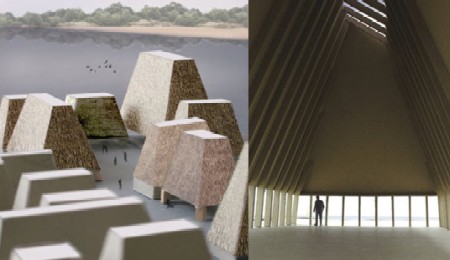
The project called “A Floating World”, consists of zero-carbon floating buildings (the name coming from the fact that the zero-carbon buildings will be built on an island of floating pontoons)

Adam Khan Architects, won the RIBA design competition to work on the ‘jewel in the crown’ of Britain’s largest eco-regeneration scheme. The project is zero-carbon in both use and production, with materials of low embodied energy – thatch, willow, timber, with off-site prefabrication and on-site energy generation and waste treatment.

Floating world will feature cafe, shops, gallery, education areas and meeting rooms and is part of the £59 million Newlands Scheme, a project that will turn 900 hectares to community woodland and green space.

On announcement of the winner, Peter White, Head of Infrastructure & Development at the Northwest Regional Development Agency said:

“This site has the potential to become an important visitor attraction for the region, building on its rich natural assets and impressive biodiversity. The Agency is supporting its development through Newlands, a wide reaching scheme that aims to reclaim brownfield land and transform it into thriving community open spaces, and has so far invested £800,000 in Brockholes. The chosen design will not only create an inspirational open space for the local community to enjoy but will also enhance a key gateway into Lancashire and attract further investment into the area. We look forward to working with our partners to progress these plans.”

More on this as the project develops …