Tag Archives: construction

London Environment Strategy and the Built Environment

On 11 August Mayor of London, Sadiq Khan, published his draft London Environment Strategy for public consultation (open until 17th November) The Mayor is taking a range of  actions to ‘improve the environment now, setting London on the path to create a greenercleaner future’

LES Aims

Construction, buildings and the built environment feature large in this strategy to bring together approaches to every aspect of London’s environment, including

•    Air quality:  Construction contributes to air quality as a major sources of local PM pollution with high volumes of dust and emissions from transport, the strategy looks to reducing construction traffic by five per cent by 2020, and reducing the number of freight trips during the morning peak by ten per cent by 2026. And that monitoring on construction sites to inform operators when additional measures are required must be improved.

“Non-road mobile machinery used in the construction and infrastructure building sectors currently accounts for approximately seven per cent of NOx and eight per cent of PM10 emissions in London.”

•    Green infrastructure

London will be a National Park City where more than half of its area is green; where the natural environment is protected and the network of green infrastructure is managed to benefit all Londoners.

•    Climate change mitigation and energy

To minimise carbon dioxide emissions from construction and future operation of the building and to achieve the Mayor’s zero carbon development target, the energy hierarchy wording will be updated to:

  1. be lean: use less energy and manage demand during construction and operation
  2. be clean: exploit local energy resources (such as secondary heat) and supply energy efficiently and cleanly
  3. be green: generate, store and use renewable energy on site

Ninety per cent of construction industry professionals responded to a survey stating that they would benefit from better embodied carbon guidance and support.

•    Waste

Aim : London will be a zero waste city. By 2026 no biodegradable or recyclable waste will be sent to landfill. – “waste” refers to any substance or object which the holder discards, intends to discard or is required to discard

•    Adapting to climate change

LES Water

Download the London Environment Strategy from here

Consultation is open until Nov 17th  for individuals –Talk London surveys and discussions and organisations to respond to  survey with evidence and ideas

M2020 – The Carbon Tipping Point

The ambitious but achievable carbon M2020 initiative, launched by Christiana Figueres in London this week, sets out carbon emission reduction ‘pathways’ to meet the temperature goals agreed in Paris back in 2015

Bending the curve of emissions by 2020 is the only way to limit global warming and ensure that the Sustainable Development Goals remain within our reach. It will also pave the way to delivering a just transition to net zero emissions by 2050.

The year 2020 is seen as a critical turning point in expediting the least expensive transition to a safer fossil-free economy by 2050.

M2020

M2020 sets out 6 milestones for 2020, to meet the Sustainable Development Goals by 2030 and to be Net Zero by 2050. With regards to the built environment, Milestone 2 for Infrastructure is clear:

(By 2020) … Cities and states have established plans and are implementing policies and regulations with the aim to fully decarbonise infrastructure by 2050. 

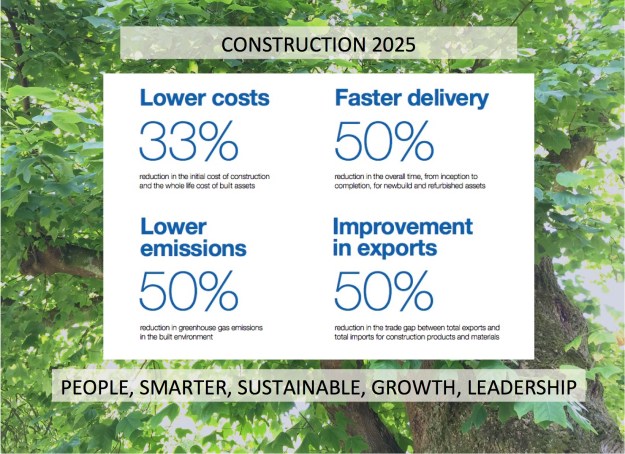
Whilst this aligns with our UK Construction 2025 Vision for 50% lower emissions  by 2025, the other milestones (Energy, Transport, Industry, Land Use and Finance) would have profound impacts on the design, construction and operation of our buildings and cities:


M2020 2

With carbon reduction now being recognised as one of todays most important public health interventions, it is now an imperative for built environment organisations to include carbon reduction commitments and ‘pathways’ within their sustainability, responsibility and health strategies. Indeed, as John Elkington wrote in a recent article, carbon management and carbon ‘productivity’ must become, and is becoming the centre of our sustainability world, but that we don’t have the time to delay waiting for a carbon mindset shift.

And, as we have discussed in recent sustainability workshops – its time to collaboratively rethink the construction process .. planning for construction without fossil fuels. 


More | Better. An alternative approach to housing.

more-better-coverDelighted to have participated in the excellent More | Better – an evaluation of the potential of alternative approaches to inform housing delivery in Wales report by Ed Green and others at Cardiff University.
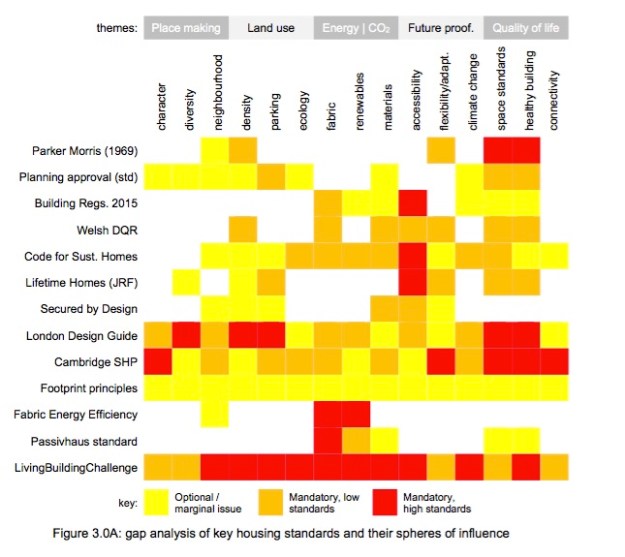
The compelling More | Better report, consisting of a spectrum of case studies and commentaries from expert contributors, concludes that there is no single housing ‘silver bullet’, but that there is potential for more, better housing through a combination of innovative delivery pathways and construction techniques. And the innovative delivery pathways considered include Passivhaus, the Fabric Energy Efficiency Standard, and the Living Building Challenge.

“Affordable housing is uniquely placed to benefit from the philosophy and application of the Living Building Challenge and aligns well with and will assist with adherence to the Welsh Well-being of Future Generations Act (2015)”

more-better-standards

In the absence of a Welsh, national mandate for zero carbon, more onerous standards including CfSH Level 6, Passivhaus and the Living Building Challenge all provide optional pathways to 43 higher standards of environmental performance. 


The report concludes:

Wales should lead the way by placing affordable housing and affordable warmth at the centre of national policy, with homes and places that meet our needs, now and in the future. We must stop thinking purely in terms of capital costs. Construction that drains resources should be replaced with buildings that generate resources – that are energy positive and carbon negative. This fundamental perspective shift is in line with the Wales Future Generations Act 2015.

  • By employing alternative approaches, we could be constructing new homes and neighbourhoods in a more contextually appropriate way, with greater long term value.
  • Alternative approaches have the potential to deliver affordable homes in parallel with more established methods, so long as knowledge is shared with commissioners and constructors.
  • Different delivery pathways and construction techniques could lead to more diverse housing that is better quality, more fit-for-purpose, more affordable and more sustainable.
  • Further benefits could include the growth of employment in Wales, a national supply chain, greater long term resilience, and renewable energy infrastructure as a source of income.
  • The creation and maintenance of sustainable communities could provide a new focus for post-industrial Wales, facilitating joined-up development that works at a local level.

The More | Better report should become a touch-stone housing reference for change. And as such should be on must-read lists, not only for those in the Welsh housing sector, but for anyone interested and engaged in the future of built environment sustainability standards and alternative ‘innovative pathways’

Download the More | Better full document and executive summary here

Lancashire Construction is Blooming

With the regions transformational City Deal now getting into swing there will be ‘blooming’ opportunities for those in the Lancashire built environment sector over the coming months and years. And Constructing Excellence, through its Lancashire and Regional Clubs is well placed to assist in the development and transfer of best practice knowledge and skills. These cover the core ingredients of successful built environment organisations – Productivity, BIM & Digital Construction, Sustainability and Continuous Improvement –  all geared to meeting the Construction 2025 Vision

construction-2025-headlines

Whilst you are here: Supporting the Lancashire Club: We are looking for new steering group members to steer and drive the club over the coming years, a period that will be a busy, challenging but rewarding one for built environment organisations within the region. if you are interested please get in touch with our Chair, Martin Brown, our Sec, Andrea Atherton or Regional Club Coordinator Zoe Brooke 

Our … speak to us at our next event on 23rd Feb in Lancaster 

We Are Lancashire – The Place For Growth

Lancashire, Preston and South Ribble’s transformational City Deal pitched to over 100 developers, agents and investors at half-day Place North West business conference last week.

Entitled “We Are Lancashire – The Place For Growth”, the event was organised by the City Deal Partnership (including Lancashire County Council, Preston City Council, South Ribble Council and the Homes & Communities Agency), Marketing Lancashire and the Lancashire LEP. It was run in partnership with leading property news and investment website Place North West, and hosted at the Preston headquarters of accountants RSM.

At the heart of the discussions was the impact and opportunities offered by the £434m City Deal programme. The City Deal is a key initiative of the Lancashire Enterprise Partnership’s strategic plan to create 50,000 new jobs over the next 10 years across the county.  The City Deal will help to create more than 20,000 new private sector jobs and see over 17,000 new homes built across Preston and South Ribble, as well as new school places, open green spaces and new health provision to cater for the growing population

  • Key themes which emerged throughout the sessions included how all of the Lancashire local authorities, both county and district, involved in City Deal were working closely together to ensure private investment can flourish. This included their pragmatic, joined-up approach to the planning process, and the substantial public sector support on offer to help private sector schemes get started, and completed, with a minimum of barriers.
  • Another important debate centred around the need to create a diverse mix of housing, and have different types of tenure, throughout Central Lancashire. This was to ensure families, young people, the elderly, students and recent graduates could all get access to affordable and desirable accommodation which suited their needs.
  • As well as providing suitable homes to encourage graduates to stay in the area, many of the speakers also touched on the need to retain graduate talent through a combination of suitable jobs in the region, and the creation of an attractive environment to live in. This included a need for an improved for an improved evening economy as well as strengthening its position as a visitor destination.
  • This led to a focus on the strengths and benefits of Central Lancashire’s existing regeneration and development schemes, and highlighted some of the major City Deal investments which have recently been announced.
  • These included Preston city-centre developments such as the new Harris Quarter cinema and leisure scheme, the potential for the re-development of an ‘HS2 ready’ Preston train station, the £200m UCLan masterplan, the regeneration of Winckley Square and the proposed Altus Grade A office project.
  • The major investment opportunities based around the Samlesbury Enterprise Zone site, which has now been designated as a specialist aerospace and advanced manufacturing hub as part of The Lancashire Advanced Manufacturing and Energy Cluster programme were discussed, including reference to the recently green-lighted Advanced Manufacturing Research Centre which will be based at Samlesbury.
  • The major mixed use logistics, retail and residential scheme at Cuerden, anchored by a new IKEA, was also held up as an example of how the City Deal is helping to unlock a series of complementary developments which are set to have a genuinely transformational effect on the Central Lancashire economy.

Threats and challenges to Lancashire’s growth were also debated, with issues like skill shortages, Brexit and Lancashire’s historic reputation for being a divided county all coming under discussion.

However, the general consensus from both private and public sector speakers was that Lancashire has made incredible progress over the last few years to speak with one voice showcasing its growing ambition and confidence, is looking to tackle the issue of vocational skills through a series of effective education and employer strategies, and is set to play a key role at the heart of the Northern Powerhouse initiative through a private-public partnership approach to stimulating economic growth.

More

PreCycling: A gateway to the Construction Circular Economy

pexels-photo-93013

Precycling is a term I adopted within FutuREstorative to describe the decision making process when specifying, procuring, ordering and calling off materials. It is the thought process, not for only the avoidance of waste but in considering net-positive and secondary uses for a product at the end of its initial use.

Precycling is defined as ‘making purchasing decisions that will ultimately eliminate, delay, reduce the need to recycle or dispose of waste” and should be at the top of all waste hierarchies, as indeed it now is with some of the organisation whom I am supporting.

I have suggested elsewhere that product or material data sheets or passports within BIM should contain deconstruction, disassembly future use options within their attributes, hence enabling and informing precycling decisions.

“Precycling is one of the gateways into a construction circular economy” and assists in making the conversion from Site Waste Management Plans (that detail methods for reducing and better management of waste) to Material Conservation Plans (that detail methods for conserving resources)

Material Conservation Plans are a Living Building Challenge requirement under the Materials imperative. A framework for UK Project Material Conservation Plans is included within FutuREstorative

In January 2017 BRE published Material resource efficiency in construction: Supporting a circular economy (FB 85) which although still having a focus on Site Waste Management Plans assists in shifting waste thinking further up stream, noting that Material resource efficiency can be applied across a construction project’s life cycle, but with the greatest benefits at early, pre-construction stages

4_fb85_165px “There is increasing awareness that improved material resource efficiency will produce benefits across the construction industry such as cost savings, reduced environmental impact and an enhanced reputation. At a construction project level, resource efficiency can be implemented at all stages (design, procurement, construction, in use and end of life) using established tools and techniques.

This guide describes the material resource efficiency requirements in BREEAM. It provides the background, drivers, benefits and practical advice to assist clients, designers and contractors in achieving higher levels of material resource efficiency. It will also be useful to product manufacturers, suppliers and waste management companies”


WELL & BREEAM announce alignment for credits: more good or less bad?

UPDATE 01 Feb 2017

Credit Crosswalks: BRE and IWBI have released guidance to streamline joint certification of BREEAM and WELL

….

As mentioned and illustrated in FutuREstorative, we will see an alignment in building sustainability and performance standards over coming months and years. In the US we have seen an alignment between LEED and the Living Building Challenge on materials (Red List) and recently on energy and water.

On Monday 28th  Nov, we saw an announcement from The International WELL Building Institute and BRE for an agreement to pursue alignment between WELL and BREEAM will making it easier for projects pursuing both standards.

In practice this will mean documentation submitted for certain credits will be recognised by both WELL and BREEAM, saving project teams time and cost.

This will be a very interesting journey and further recognises the importance of health within building design, construction and use. WELL, like the Living Building Challenge is an excellent, robust but tough standard and one that cannot be attained without a different mind-set approach to buildings.

Key to that mindset is recognition of the impact of materials on health on construction workers and building users. An alignment or agreement between BREEAM and the LBC’s Red List would make great sense here.

It will be interesting to see how the differing philosophies between WELL (do more good) and BREEAM (do less bad) work together. Hopefully this further opens the door to a salutogenic approach to design – not just reducing ill-health but using buildings to improve health, for example, using light as medicine, as explored in FutuREstorative

salutogenesis-slide

Health – the next performance gap.

I will also be watching with interest if this agreement extends to the construction process, (ie. the BREEAM MAN credits) to improve the wellness and health of those involved in and affected by construction works. This is a health and wellness area that BREEAM, LEED, WELL and the Living Building Challenge do not readily address. Yet for those whose career is spent on construction sites, it is a key health and sustainability area, and one that benefits from biophilic design considerations, for example greenery in accommodation and living walls as project hoardings.

living-walls-construction-hoarding

“This Changes Everything” Paris Agreement and the Built Environment

That the Paris Agreement has come into force today, 4th November 2016, some four years early, now ratified by the requisite number of nations, is a huge milestone and speaks volumes for the global recognition and consensus to reduce carbon emissions.

cop21 article 2 draft

Back in December in Paris, the built environment was recognised as a major contributor to the carbon problem as well as having a major role to play in a low carbon sustainable future. (See How significant was the first Buildings Day at COP21?)

Now, then, is the time to review our approaches to taking carbon out of the built environment, through design, through the operation of buildings and in the manufacture and construction processes.

Through ConstructCO2 we know that up to 70% of construction carbons are travel and transport related, and much of this through diesel fuelled vehicles, further adding to our air quality problems and stretched health services. Construction transport impact must now be a primary target for sustainable construction.

In the UK, our most recent industry target is within Construction 2025 Vision – to reduce emissions by 50% by 2025. Consider however that this was written when the consensus for carbon reduction was based on a 2 degree target for temperature increase. We are now looking at 1.5 degree as the emerging consensus, and that changes everything.

construction-2025-headlines

There is a sense of urgency here, and as I explored and commented within FutuREstorative ‘we no longer have the luxury of being only less bad’ but need to be doing more good, and in doing so heal the future.

less-bad-more-good-chart

In 2015 the UK Green Construction Board noted that ‘reducing built environment carbon emissions (50% from 1990 levels by 2025) is now out of reach with current practice’, and as Namoi Klein wrote in This Changes Everything (2015) “There are no non-radical approaches left before us in addressing climate change’

But we do have approaches, tools and initiatives to ensure that the built environment can contribute to a 1.5 degree future, again as explored in FutuREstorative and illustrated here in this infographic:

carbon-image

As we celebrate the Paris Agreement coming into force, lets also take the opportunity to look forward and start working collaboratively within the built environment towards a 1.5 degree future. And in doing so,to address the other hugely important aspects of the Paris Agreement, adopt the Sustainable Development Goals.

Chart_of_UN_Sustainable_Development_Goals

Will Tesla solar roof tiles be an industry game changer?

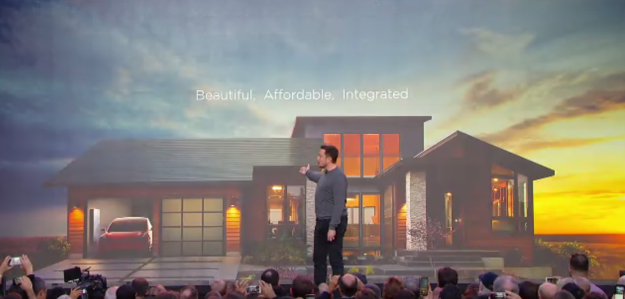
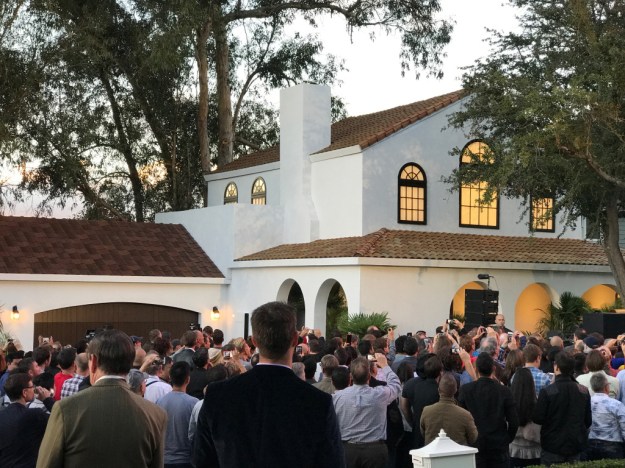
Elon Musk in a quest to make solar as attractive as electric vehicles may have leap-frogged many solar building innovations and prototypes in revealing a range of solar tiles (to be in mass production soon) at a show case event at Universal Studios yesterday.

screen-shot-2016-10-28-at-8-52-19-pm

It is not often, or at all, that building products are launched with the degree of secrecy and flair that is the domain of new cars or smart phones. But that’s what Tesla did yesterday, revealing new solar tiles and power packs on a completed detached home, to invited guests. The event was reportedly powered by the energy from the display home, and then as the sun sank, powered by the battery Powerpack energy stored from the roof tiles.

Being able to generate more energy than required, and store that energy within the building for when it is not being generated, is key to sustainable buildings.  Such breakthroughs will enable both new build and refurbished buildings to move closer to the Living Building Challenge Energy petal imperative. Generating 105% of a building’s energy from the sun. And with roof tiles rather than panels, start to address the challenges Beauty petal, removing the all-too-often unsightly post construction solar panels

0cf27641-f7f1-4ead-a8af-030e742088c9

The tiles price point is still be announced, yet whilst reported to be more expensive than standard tiles, they will be cheaper than the cost of tiles and equivalent cost of energy  over the life of the tiles or building. And far cheaper than the cost of post-roof or post-construction solar panels.  The tiles will also have a longer life time than more traditional US roof tiles. (US domestic buildings have a roof replacement cycle of 20 years or so)

References:

BBC: Tesla shows off solar roof tiles

Tesla: Sustainably Power your Home or Business

Mashable: Elon Musk tied together some of the disparate threads of his company’s various grand ambitions in a product launch event here at Universal Studios Friday night.

iSite Related: at last … low cost solar power that works in the (Welsh) rain…

Sustainia publishes 100 innovative solutions to support SDG’s

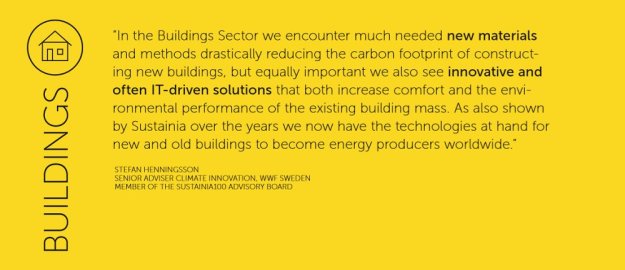
Over the last five years the Sustainia100 publication from Sustainia has always been a welcomed and inspiring read. Over this period It has tracked more than 4,500 solutions to date from all over the world. This year’s edition features solutions deployed in 188 countries, and more than half come from small and mid-sized enterprises. Showcasing everything from health solutions that tackle climate change, to renewable energy products that alleviate gender inequality, this year’s publication presents 100 solutions that respond to interconnected global challenges and help achieve the Sustainable Development Goals.

Chart_of_UN_Sustainable_Development_Goals


  • Four key trends:
    • Cities as Health Promoters
    • Making Profit from Unlikely Materials
    • Disrupting the Electrical Grid
    • People Powered Data for Better Infrastructure
  • Many Building related innovations and solutions are included, of particular note are:
    • Making Carpet Tiles from Old Fishing Nets (Interface / Aquafil)
    • Legislated Green Roofs and Solar Panels (France)
    • Growing Bricks with Bacteria (bioMason)
    • Green Bonds for Low Impact Building projects (Vasakronan)
    • Cement Free Mortar (KALK)
    • Solar Powered Water Purification (Desolenator)
    • Cities and Health: Using Communities to Bolster Health
    • Solar Storage Community Platform (Sonnen)

CkVtEqyWEAACyus

Read the Sustainia  100 online here. The publication was launched on 7th June with an accompanying tweetchat, a storify record of which can be found on line, for example:

Q1: What does sustainable action mean to you ?

Q3 How have the #SDGs changed sustainable innovation?

Q8: What do you think is the next big opportunity in sustainability?


Biophilic Design & Rewilding- the secret sauce of sustainability?

Biophilia is emerging as the secret sauce of sustainability. It is not just about being able to see trees and fields from our windows, or having green plants within rooms, but something deeper and more profound.

The Cuerdon Valley Park Visitor Centre in Lancashire, the first UK project to be registered for and working towards Living Building Challenge certification, recently staged a project team biophilic design workshop (1), led by Joe Clancy using the Terrapin Bright Green guide ’14 Patterns of Biophilic Design’ (Joe, as an intern with Terrapin Bright Green was part of the guide team and co-author)

The workshop reviewed the design, construction and operation of the building from a new perspective, through each of the 14 patterns, covering aspects from light through to the layout of chairs and food to be served in the cafe.


Biophilia translates as love of nature and in design terms the consideration of how our innate relationship with nature can be addressed within buildings. We have evolved as part of nature, and as such the human mind and body function with greater efficiency and performance when natural elements are present. Biophilic design is ensuring that these elements and patterns are present.

Biophilic elements enhance wellbeing, foster the feel good factor, reduce building related illness and even improve health. For example light as in daylight, circadian lighting, differing light spectrums is being considered as a form of medicine, not only to reduce illness, but to improve and maintain health.

ReWilding
There is much talk of rewilding at present, and as rewilding nature and environments is not just about reintroducing wolf, lynx or other top of the chain predators but more about restoring or regenerating the natural environment ‘creating conditions that allow the emergence of natural responsiveness and development’(2)

We should learn from and apply rewilding thinking to our built environment,and in doing so rewild people, those who inhabit buildings, creating the conditions, through for eg biomimicry and biophilic applications, that allow (new and existing) buildings to breathe and to respond to natural and bioclimatic cycles. We are losing or removing our natural barometers from buildings, increasingly replacing them with SMART technologies, to satisfy a blinked focus on energy performance. In turn, this has weakened our intrinsic relationship with nature.(3)

It is recognised that a lack of connection with nature reduces our tolerance to respect the environment. However, enabling biophilic conditions that ‘rewild’ our built environment will improve user behaviour and increase respect for the sustainable function of buildings.

Biophilia could, therefore be a root cause solution to addressing our buildings sustainability performance, closing performance gaps, providing salutogenetic improvement on the health & well-being of those using the building, and providing business benefits relating to people costs and productivity

And, biophilic workshops are not just for green building design, but should be part of the start-up activities for any project, considering in addition to the building in use, the biophilic aspects of the construction process. Biophilic thinking applied to construction environment can address the stress, mental health and safety, productivity, enthusiasm and wellbeing of those working on our construction projects. Therefore, biophilic thinking could be a key to improving construction quality, environmental and safety compliance, productivity and hence costs.

On two, very recent, project sustainability review/audits, it has been encouraging to hear of construction organisations increasing awareness of biophilia through training related to health, sustainability and design.

(1) Report available soon.

(2) George Monbiot in Feral

(2) extract from FutuREstorative

Lynx Kitten Image:   www.conservationjobs.co.uk

Rewilding Building Image: Cuerdon Valley Park Visitor Centre

Rewilding People image – see – Last Child in the Woods Richard Louv

Images from Sense of Urgency presentation available on Slideshare.