Tag Archives: fairsnape

RegenerativeBIM … moving the GreenBIM debate

green bimBuilding Information Management offers huge benefits to Sustainability and to GreenBuild, but needs to move from GreenBIM to RestorativeBIM

Bringing together the two most important themes of todays built environment, Sustainability and BIM, the ThinkBIM and Green Vision programmes at Leeds Beckett are setting the agenda for GreenBIM.

However we need to guard against GreenBIM falling into a trap of being Sustainability and BIM as usual, but to move GreenBIM into the visionary, Regenerative Sustainability arena, as adopted by Green Vision through their association with the Living Building Challenge.

Rethinking BIM for the Ecological Age

It does seems a waste that all the creative and innovative thinking and energy being put into BIM should only incrementally improve built environment sustainability, and that we will be a little less bad next year, a bit more less bad by 2018

Aligning the innovation of BIM and the forward thinking of Regenerative Sustainability provides an immense opportunity that could and should powerfully push the overall built environment agenda forward. And, through the intelligence of a RegenerativeBIM, ensure that each element, not just the building, contributes in a net-positive manner, doing more good, not just doing incrementally less bad.

Where GreenBIM is today and where Green BIM needs to be, RegenerativeBIM.

Where GreenBIM is today and where Green BIM needs to be, RegenerativeBIM.

Imagine then if every building, indeed every ‘facility’ was designed, constructed and operated through a RegenerativeBIM, that;

> is designed and constructed specifically in relation to its ‘place’, positively impacting and benefiting its immediate environment.

> becomes a provider of water, cleaning all that falls on the building and providing clean water to adjacent facilities.

> generates more energy than required and contributes the net positive difference to nearby homes, community buildings.

> contains no harmful materials. There should be no place in a GreenBIM for materials on Red Lists. An intelligent RestorativeBIM could not allow materials or products such as PVC, formaldehyde, or SPF’s. Every Product Data Sheet would include the elements of the Living Product Challenge, with every product having a net-positive Handprint

>  are based on biophilic and biomimic principles. RegenerativeBIM would constantly ask the question, How would nature approach this?

> focus on a positive, salutogenetic health principle – on making people healthy, not as present on the negative stopping people getting less ill. (Big difference!)

> cleans the air, emitting better quality than intaking.

> delights and encourages creativity …

> intelligently and digitally inspires and educate the next …. BIM.

Such an approach is not only possible but arguably the responsible approach we must take. An approach that in a short time could be the accepted way of designing, constructing and maintaining buildings.

OLYMPUS DIGITAL CAMERA

These ideas will be explored further in upcoming ‘GreenBIM’ events hosted through Green Vision, ThinkBIM and CE Yorkshire.

Watch this space.

On #tweetchats and future #sustldrconv conversations …

By Martin Brown and Andrea Learned

It has been huge fun co-hosting the sustainability leadership conversation since back in early 2013. This labor of love has introduced us to new ideas, leaders and friends, both in social media and in real life. However with emerging additional commitments (Martin with his forthcoming FutuREstorative book, Andrea in her new We Mean Business role) we have decided to scale back.

slc

What ambitiously started as monthly chats, then dropped to every two months or so. We now propose to drop to 3 or less per year, likely with Martin taking the lead and Andrea an occasional guest host.

Having given time freely to run the conversation series for a few years now, we have huge respect for others who run regular successful chats on twitter. They are time consuming and don’t happen overnight. Guests and topic are sought, questions and anticipated responses discussed, promotion and invites managed, in addition to the hosting and post chat transcripts … it all takes more time than the casual tweet-chat observer might realize.

Tweet chat hosts are by no means simply hosts. Instead, they need to be fairly knowledgeable in the topic and to know their way around, have experience in and be well known on across social media. They need to have developed a trusted reputation within their topic’s community, and thus, be able to persuade a fair number of people to take an hour from an already busy day to learn in an often very new-to-them way.

Through #sustldrconv we feel we have established a brand for sustainability conversations. We’ve held very successful conversations, connected many twitter users through excellent guests, and shared great content (see some of our Storify accounts). Perhaps most important to us, we know from feedback that we’ve moved the needle on sustainability awareness for many.

Keen to not lose that influence or brand, sustldrconv will continue, but on a less rigid footing, holding chats to meet demand, related to our own work or research and related themes. That said, the experience and skill we have developed should not go to waste. For example Martin will continue to be “for hire” as Tweetchat consultant and Andrea will be using her strengths, perhaps more behind the scenes, with her work the rest of this year.

In addition we would not be adverse for our great friends, guests and contributors to the series so far to ‘guest’ host future #sustldrconv from. If that interests you, please so get in touch.

Social media technology is changing fast. Martin has often commented that the tweet chat is the new benchmarking. No longer do we need to travel and spend to understand what others are doing. There is so much initial fact-finding that can be done from our offices or homes, with little more than an hour’s chat investment. It will be interesting to see how the tweet chat element of twitter develops or is eclipsed by new applications. (Will this year’s SXSW-emergent social media app Meerkat or twitters own Periscope replace some twitter sharing?)

We thank you for your interest in, and support of, #SustLdrConv these past years. We have enjoyed learning with you, and have felt so rewarded by perhaps getting even a handful of you more interested in the power of Twitter and sustainability.

Martin and Andrea

The UK Living Building Challenge Collaborative Report

The following was first published on the CKE blog:

The UK Living Building Challenge Collaborative met this week at Squire Patton Boggs in Leeds and saw construction professionals, architects, landscape architects, software vendors, sustainability experts and representatives from Leeds Beckett University discuss Standard V3 and the future of the UK Collaboratives.

Martin Brown gave an inspiring introduction to version 3.0, launched earlier in the year, covering the standards principles, petals and key imperatives. This was followed with a great discussion on the Living Building Challenge and relevance in the UK sector.

Martin emphasised that the Challenge is ‘A visionary path to a regenerative future’. Whereas other standards are focused on doing ‘less bad,’ the Living Building Challenge is based on the philosophy of doing more good, that is, restorative sustainability. We should no longer be satisfied with creating buildings that have negative impacts however small they may be, but look to create buildings, structures, and communities that contribute back to the environment and nature.

The Living Building Challenge uses a less technical, but more powerful, softer language than most standards, and puts topics such as beauty, education and biophilic design back into the equation.

Many present commented that a welcomed aspect was the inclusion of ‘health, happiness, beauty, nature’ within the standard.

Indeed the standard uses a metaphor of a flower, with seven petals, each of which comprises of several imperatives, 20 in total. All of these must be met in order to obtain full certification and the status of a Living Building.  We heard there are currently 201 registered projects worldwide.

2015 Plans

We are currently the only collaborative in the UK, however, we will be sharing this status with London due to launch in the spring and interest is growing elsewhere across the country.

During 2015 we will explore each of the Petals individually through workshops which will be held on the second Wednesday of each month, before the Green Vision evening and half day sessions. The timetable will be:

February 11th  – Place

March 11th –Water

April 22nd  –  Energy

May 13th – Health and Happiness

June 10th – Materials

July 8th – Equity

Aug – Beauty and Education

To drive these workshops, we are looking for ‘champions’ to head each ‘petal’. If you feel that you are an expert on any of the standard areas, or passionate about specific imperatives, or just want to get involved please send us an email at CKEEvents@leedsbeckett.ac.uk

We will also deepen the relationship with projects interested in registering and pursuing certification. And the exciting news here is that we have one potential project ready to register and other in development. Other activities will include design competitions, project charrette support, and a UK overlay to the International Standard with terminology, regulations and standards appropriate to the UK sector.

We are also compiling a library of UK building case studies that illustrate Living Building Challenge concepts. If you are aware of any projects, your own perhaps that addresses any of the standard imperatives or philosophies please do let us know for inclusion into our library.

We look forward to you joining our Collaboratives and getting involved, with your projects perhaps, in this exciting new era for built environment sustainability.

As Martin has said many times, ‘it’s time to heal the future’…

Sustainability on the late radio show

I was delighted to be invited on to the Elizabeth Alker Sunday late radio show on BBC Lancashire / BBC Manchester and discuss sustainability and improving energy use in the home. Below is a precise of my comments, links and references:

My intro:

“Based in Inglewhite on the south western edge of the Forest of Bowland, a great part of Lancashire in which to live and to work from. I run a sustainability consultancy business, Fairsnape, supporting organisations in the built environment on sustainability issues. Typically this means working with construction organisations clients, contractors,architects as well as individuals. I am Chair of Constructing Excellence Lancashire and UK Ambassador for the Living Building Challenge”

As I followed inspiring sustainability sessions from Vincent Walsh (Biospheric Project Salford), Kerry Gormley (OnePlanet) and Jacqui Brocklehurst (Hungry Gardener) I continued the ‘green nature and plants’ theme with a quick intro to the Living Building Challenge: 

“The Living Building Challenge encourages us to look at buildings differently, and imagine buildings and indeed homes using the metaphor of a flower, one that is independent, self sufficient, using only the energy and water that falls on it. The Challenge covers  7 Petals; Place (location, relationship to nature and food) Water; Energy (100% sun!); Health and Happiness; Material; Equity and Beauty. It is based on the philosophy of doing more good, not just less bad. Regenerative Sustainability”  More at http://living-future.org/lbc

Why do we need to do this?

“Sustainability is often described as having three elements – Economic; we want to reduce the money we spend on fuel and services for the home, Social; we want to be healthy, happy and feel good in the home, and Environmental; we all want to play our bit in improving our local environment, reducing carbons and addressing climate change, And it is our buildings that have one of the biggest impacts on climate change” And we see the affect of climate change increasingly through extreme weather patterns.

What can we do in the home to improve energy sustainability?

Easy / Low Cost – Check energy and water wastage – gadgets left on or on standby for example. (Its is estimated that 8% of energy production goes just to keep our stuff on standby!) Switch to LED and low energy lighting. Get an electricity meter and find out exactly where you are using energy, and watch how that kettle boils!

Medium Cost: Ensure insulation and draughts – 43% of UK homes have serious energy leaks through ill-fitting windows and doors. Get an EPC ( an Energy Performance Certificate for your home – it will show you how energy-efficient your home actually is)

High Cost: Look at alternative energy supply – PV and Solar Panels are most appropriate, Ground Source/Air Source if you have the space. However the investment can be high and returns slow, so make sure you tackle any energy waste and home efficiency issues first!

For more tips and information check out the Energy Saving Trust via their informative web pages at http://www.energysavingtrust.org.uk/ and follow on @EnergySvgTrust

Funding is available from time to time although initiatives like the green deal are a political football, and has been called the ‘green sub-prime’ For advice from approved Green Deal organisations see the Green Deal ORB site http://gdorb.decc.gov.uk/ 

And importantly for any builders and trades people you may use make sure they carry the TrustMark – find out more at http://www.trustmark.org.uk/ or via their twitter feed on @trustmarkUK

Other topics I mentioned included:

Healthy Materials – be sure that the materials used in any improvement scheme are healthy. There are some great materials for energy efficiency once they are in the place, but increasingly we should be concerned where the materials come from (is the manufacturing process harmful to the environment or workers) and where it goes (is the removal or demolition hazardous, can then be reused?) Note that PVC and other ‘Red List’ materials are the next harmful products to consider avoiding in this respect!

Circular Economy – moves us from our traditional Make, Buy, Dump linear thinking to a circular approach that keeps materials and products in use as long as possible, up-cycling and recycling in the home for other uses rather than put in the bin. Brings back the Make Do and Mend concepts!

Passive House – a standard that sets very stringent limits on how much energy for heat a house can use – requiring super levels of airtightness and insulation. Mechanical Ventilation is used to deal with air quality, fresh air and managing humidity levels.

The show is (still) on iplayer, with my session just after midnight (2.10.30 in) following Gypsy Tramps and Thieves up to just after Babooshka, Kate Bush around 12.30. Enjoy!


Getting lost in maps

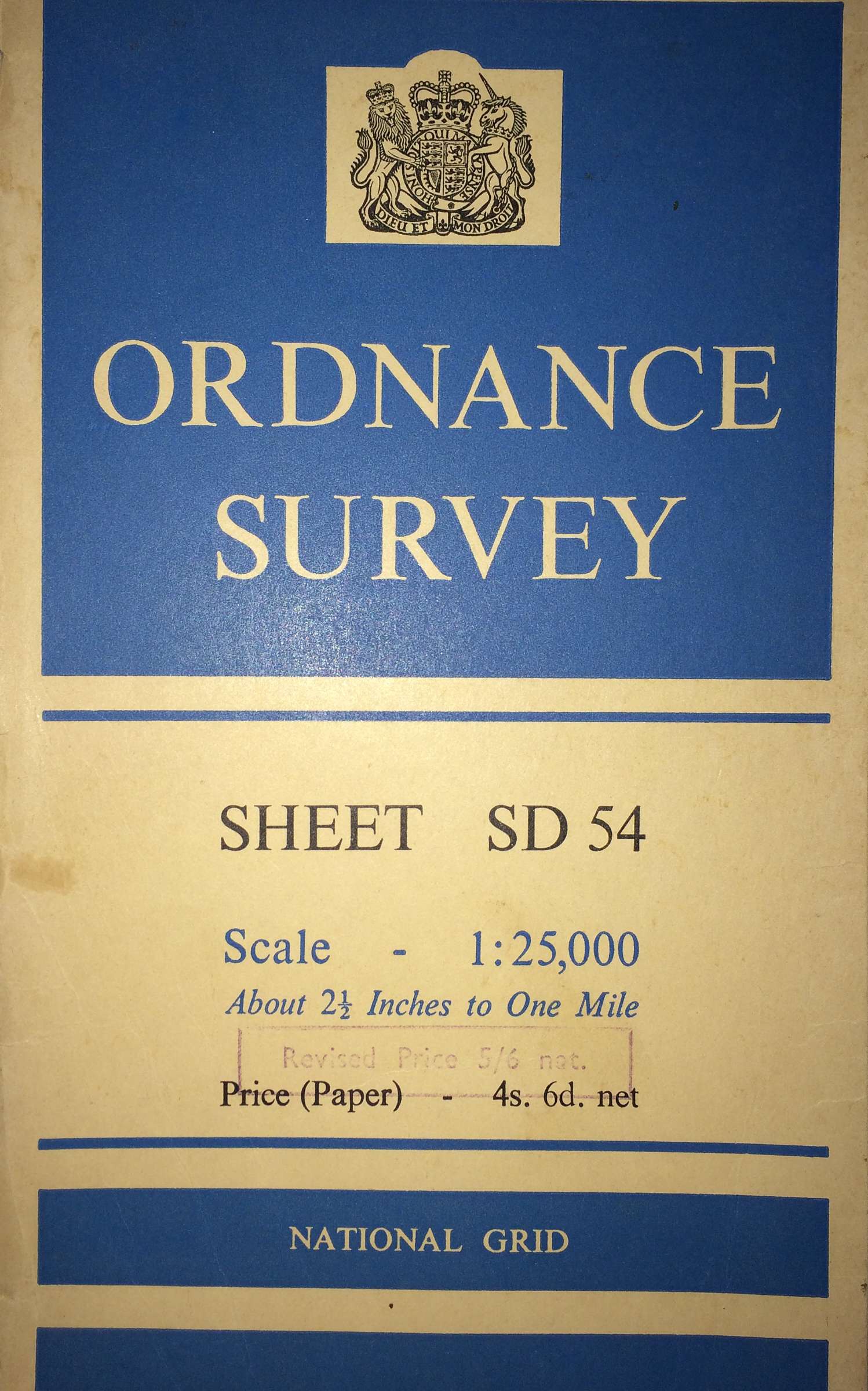
photo (4)Its not often that I blog here on my fascination with maps. But yesterday’s find in a charity shop, a 1955 map of my home area, an OS Sheet SD54 1:25,000, brought home once again how wonderful it is to get lost in maps.

 
Its fascinating to see how both the natural and man made landscape changes over decades and indeed how cartography styling changed.
 
 
 photo (5)                   photo (6)
 
The nearby Beacon Fell, my  ‘get out for a short cycle or walk’ area,  shows hardly any trees in 1955, it is today just about 90% forested, unfortunately with many non native trees, although there is a programme to remove or to thin these in progress.
 
The circular one way road, that now has umpteen Strava segments and a favourite for Preston boy racers had not been built, neither has ‘the tarn’ (now an SSSI), the visitor centre or any of the car parks!

Fairsnape Fell was dangerously close to Yorkshire (!) and noted as being in the Bowland Forest, Higher Division. My home village of Inglewhite just on the southern edge of the map proudly displays a P (Post Office) – now sadly gone, a couple of decades ago.

The map, reprinted in 1956 with minor corrections is based upon 1907-1930 surveys, is littered with the beautiful icons and information typical of a bygone cartographic era.

photo (3)The scale bar gives measurement in furlongs, in feet, in yards and in miles. The magnetic declination is a whopping 10 deg west, which must have been the cause of many scouting,  map to compass navigation mistakes. (It is now zero, or just swinging back in parts of the UK)  In a seemingly odd mix of metric and imperial, the grid is based on 1km squares, but we are reassuringly told that one square inch presents 99.619 acres on the ground. 
 
The original cost of the printed map was 2s 6d net, with a cover price of 4/6 later revised to 5/6. (Thats 27p in real money)
 
I am assuming for practical cost reasons rather than an environmental considerations, it is stated that “to save paper the reference tables of Conventional Signs are omitted and published separately”
 
Wonderful.

#SustLdrConv – Update to our autumn series.

Sustainability is moving into new territories, with new leaders and leadership styles. Social media is increasingly being used as a tool for engaging, learning and sharing to further the emerging collective of sustainability leadership and organizational development approaches.

Because we realized how much “socialising” sustainability leadership could impact our sustainable future, Andrea Learned  (Seattle based writer and social strategist for sustainable business and so much more)  and I decided to collaborate, across “the pond” and a continent to develop the #SustLdrConv (Sustainability Leadership Conversation) Twitter chat.

We know that our combined individual professional expertise and solid sustainability social networks results in a thoughtful and fun transfer of sustainability learning across sectors. Since we launched the chat in July of 2013, the built environment has been the root of our explorations, but our conversations since have also included organisational leadership authors, corporate sustainability directors and open forums on women in leadership, among other topics.

Our May chat with Denis Hayes of The Bullitt Foundation was incredibly rich.

We are excited for our fall schedule that includes:

BuOSfWeIUAAG1tHAugust 5: Alison Watson of Class Of Your Own discussed how she is inspiring and educating the next generation of sustainability leaders in construction and design and more, (see storify of the conversation from Andrea Learned here

September 2: Tabitha Crawford, SVP of sustainability and innovation for Balfour Beatty Investments, and the author of Five Epic Mistakes of Sustainability in Higher Education.

October 7: We go live from #SXSWEco (guests TBA) in Austin.

***

Select archived Storify summaries of past #SustLdrConv:

Aman Singh of CSRWire (April 1, 2014)

Peggy Ward of Kimberly-Clark (February 4, 2014)

#SustLdrConv happens the first Tuesday of the month at 11 am PT, 2 pm ET, 7 pm UK.

This article also appears on Andreas blog at http://learnedon.com/

Why EXPOC21 is a vital event for the built environment

Time was, to uncover the latest thinking and developments in the world of sustainability meant a lot of travel and time investment. I recall, whilst developing and driving the Mowlem Sustainability Strategy for Prime Contracting at the end of the 90’s, having to trundle to conferences in London, or to Defence Estates in the Midlands, spending a whole day in conference mode, only to pick up a few nuggets of intelligence or inspiration.

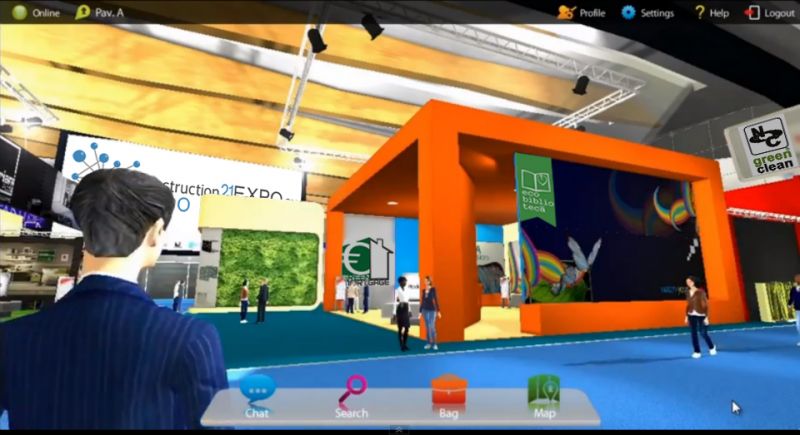
Today we can pick up most intelligence via the web and social media. We use webinars and online events to share. Physical events such as Eco Build, now wrapped in social media and web applications, certainly have their place. But mainstream trade fairs haven’t as yet really embraced the potential of the online world, by going completely virtual.

One organisation driving the emerging virtual expo space is HyperFair – and it is their technology, that allows visitors to attend exhibition as an avatar, that the forthcoming Construction21 virtual trade fair will be using.

Construction21EXPO.eu EUROPE - logo

Over two days, 14th and 15th May, EXPOC21, will enable you to visit a number of greenbuild product stands, talk to leading sustainability organisations on their stands, be inspired and talk with a number of leading greenbuild  thoughtleaders, engage in panel debates and network with construction and sustainability professionals across Europe and Globally.  All with a vastly reduce commitment on your time, and on your carbon emission, without leaving the office or your kitchen table!

And, I think there is another important reason visiting EXPOC21 – to experience and interact with others within a virtual environment.  One of the great drivers for todays industry is BIM, information management and modelling, and the associated emergence with 3D environments.

60199455601729109971916966764nfEngaging with others in virtual environments, discussing proposed designs with clients and contractors and end users, whilst moving through the design itself, will become an established aspect of our industry – and a key skill to hone now. Those who have experience of Second Life, Minecraft or even Sims will feel at home, but for others, this is an experience not to be missed, and attendance as a delegate is free.

See you there!

Links for the show:

To register go here

Check out the Thought Leader Presentation series

Green Build Panel Debate hosted by World GBC Europe, covering topics such as Economics of Green Building projects, Scaling up for Retofit, Green Responsibilities and Sustainability performance Directives

Follow the show via Twitter #EXPOC21 #EXPOC21chat and @C21EXPO_EUROPE

Tweetchats and Twitterviews held leading up to the show, with more in show interviews to come.

Construction21EXPO Background and Team (pdf)


Disclosure: I have been supporting and advising the Construction21 team on social media and related sustainability aspects.

Why Fairsnape?

I have been asked a lot recently on how my business name came about:

Fairsnape is a hill in the Forest of Bowland Fells, and was visible from my office window at the time I set up the business. (It hasn’t moved, we have, half a mile or so down the road). I wanted a name that wasn’t just tied to consultancy in construction, but one that could be flexible, grow with my interests in for example the outdoors and sustainability, as well as business improvement support.

And that has worked well.

photo (13)

But there is more significance in the name. Fairsnape is a minor hill at 510m with superb views, south across the Lancashire plains, north east, the Yorkshire Dales and north west to the Lake District. The later being inspirational to move on and explore greater ranges, from the Lakes to Scotland to the Alps to the Himalayas, as we did many years ago.

And so it is with sustainability. I delight in helping organisations climb that first hill, away from the flatlands of environmental management, and then on towards greater and bigger achievements. Something of Ray Andersons Mount Sustainability here I guess.

But, having discovered mindfulness of late, it is of course very fine to sit, contemplate and refresh, wherever you are on route, be it a mountain or a sustainability journey and not always to rush on to something new.  In the words of Nan Shepherd in her inspirational Living Mountain book on the Cairngorms  ‘I sat and listened to the waterfall until I didn’t hear it any more”  An approach we can learn from for a new sustainable construction thinking.

Construction virtual trade show for Europe

60199455601729109971916966764nfSave money!  Reduce CO2 emissions!  and visit leading innovative sustainable construction solutions and projects from across the European continent.

UPDATE: Construction21 Chapters and Green Building Councils from France, Spain, Italy, Poland, Croatia, Romania, Serbia, Ireland, Lithuania, Latvia and Montenegro have joined Construction21EXPO, with many more to be announced shortly.

Construction21EXPO EUROPE be held the 18th & 19th of February 2014 and will bring together 500 exhibitors and 20,000 participants including architects, engineers, project managers, investors, and other essential stakeholders.

Exhibitors will be able to reach the most active green building professionals across Europe with a very small investment. Exhibitors can gather high quality sales leads from EXPO visitors from both existing and new markets for sustainable construction solutions.

Booth setup is very simple but will create very attractive exhibits with your desired branding. Review the website and watch the video at Construction21EXPO.eu to see the conversational features and rich interactive experience our virtual tradefair will provide.  Fees are explained in the Exhibitor section of the EXPO website.

Potential exhibitors will also want to visit the Construction21EXPO EUROPE Community to download theIntroduction document highlighting more details on the event plan.

Related on isite: Living Building Challenge UK is UK Partner for EXPO

Construction21EXPO – the first virtual tradeshow for Green Buildings for the whole of EUROPE!

Construction21EXPO.eu EUROPE - logo

The “business case” for green buildings is understood by many of Europe’s leading project developers. Now we need to quickly enable design, construction and management teams to deliver the expected results for green new construction and renovation projects.

Construction21EXPO will bring together, in a cost efficient manner, green building investors, designers, solution providers and the many other important stakeholders in a two day virtual expo; saving money and eliminating travel time and associated carbon emissions with physical meetings.

UK_collaborative_logoWe are delighted that the UK LBC COLLABORATIVE* is a key UK  partner in this exciting project that is  supported by Green Building Councils and Construction21 Chapters across Europe as well as many other expert organizations.

As such we can offer additional discounts on the Exhibitor fees, but be sure to obtain a discount code from us prior to registering.

Watch the promotional video here  and download the Construction21EXPO_ Introduction for more information,  and do not hesitate to contact the EXPO team listed in the introduction document with any questions.

The UK LBC COLLABORATIVE is driving Living Building Challenge awareness in the UK and is hosted by the Leeds Sustainability Institute, Green Vision, Fairsnape, CKE and Be2camp