Author Archives: martin brown

PreCycling: A gateway to the Construction Circular Economy

pexels-photo-93013

Precycling is a term I adopted within FutuREstorative to describe the decision making process when specifying, procuring, ordering and calling off materials. It is the thought process, not for only the avoidance of waste but in considering net-positive and secondary uses for a product at the end of its initial use.

Precycling is defined as ‘making purchasing decisions that will ultimately eliminate, delay, reduce the need to recycle or dispose of waste” and should be at the top of all waste hierarchies, as indeed it now is with some of the organisation whom I am supporting.

I have suggested elsewhere that product or material data sheets or passports within BIM should contain deconstruction, disassembly future use options within their attributes, hence enabling and informing precycling decisions.

“Precycling is one of the gateways into a construction circular economy” and assists in making the conversion from Site Waste Management Plans (that detail methods for reducing and better management of waste) to Material Conservation Plans (that detail methods for conserving resources)

Material Conservation Plans are a Living Building Challenge requirement under the Materials imperative. A framework for UK Project Material Conservation Plans is included within FutuREstorative

In January 2017 BRE published Material resource efficiency in construction: Supporting a circular economy (FB 85) which although still having a focus on Site Waste Management Plans assists in shifting waste thinking further up stream, noting that Material resource efficiency can be applied across a construction project’s life cycle, but with the greatest benefits at early, pre-construction stages

4_fb85_165px “There is increasing awareness that improved material resource efficiency will produce benefits across the construction industry such as cost savings, reduced environmental impact and an enhanced reputation. At a construction project level, resource efficiency can be implemented at all stages (design, procurement, construction, in use and end of life) using established tools and techniques.

This guide describes the material resource efficiency requirements in BREEAM. It provides the background, drivers, benefits and practical advice to assist clients, designers and contractors in achieving higher levels of material resource efficiency. It will also be useful to product manufacturers, suppliers and waste management companies”


Talking, Sharing, Launching

OLYMPUS DIGITAL CAMERA

My 2017 diary is shaping up with some great and exciting presentations & talks, sharing insights from FutuREstorative, introducing the Living Building Challenge, launching more collaboratives in the UK and launching RESTORE, our European COST restorative sustainability research programme. And more…

Jan 11th Preston
Sharing insights from FutuREstorative, Living Building Challenge along with healthy buildings topics such as biophilia and salutogenesis with the UCLan Healthy University Group in relation to the University Master Plan Development

Jan 25th Manchester
Book Talk. Sharing insights from FutuREstorative at Constructing Excellence Manchester, Breakfast Meeting
Archive

Jan 31st London
Sharing insights from FutuREstorative at Constructing Excellence Sustainability Working Group event: Healthy Buildings and Wellness
Archive

Feb 6th London
Intro to Living Building Challenge Talk and the Launch of a Living Building Challenge Collaborative for London in association with Mott MacDonald
Archive

Feb 23rd Lancaster
Lancashire Green Drinks
Book Talk. Green Build and Green Coffee. Sharing insights from FutuREstorative. With Ian Steel, Atkinsons Coffee at the Hall, Lancaster
Details and Registration

Feb 24th  Glasgow
Intro to Living Building Challenge Talk and the Launch of a Living Building Challenge Collaborative for Scotland in association with The Scottish Ecological Design Association (SEDA)
Details and Registration

March 9th Brussels
Kick Off Meeting: After 2 years writing submissions and developing the EU COST Action with EU colleagues Carlo Battisti and Emanuele Naboni, we finally kick off RESTORE, our EU COST Research Programme

March (tbc)
Sharing insights from FutuREstorative and Construction Carbon (with Carbon Trust) at Constructing Excellence Lancashire

April (tbc)
Sharing insights from FutuREstorative and Construction Carbon (with Carbon Trust) at Constructing Excellence Liverpool

April 26th  Trento, Italy
Supporting Regeneration Edition 3 Living Building Challenge Competition. Applications still open
Details and Registration

May, London Be2camp style book event with FutuREstorative contributors.

November 10th Leeds
Talking, a little way of yet but delighted to be a guest speaker for the CIBSE Yorkshire Awards Dinner in Leeds

More soon …

BS 8001 circular economy standard consultation

The British Standards Institute has issued consultation for BS 8001  for businesses implementing circular economy thinking. 

pexels-photo-94616I have covered the circular economy over the recent years within the built environment over recent years within blog posts here,through numerous presentations and workshops and of course within FutuREstorative It is great therefore to see that  BS8001 standard for circular economy guidance is out for consultation.

BS8001 in time will surely become as important as ISO 9001, 14001 etc in the lexicon of key standards, and more so than these standards, BS8001 will pull together a meaningful triple bottom line approach to business.

Unlike other technical standards BS8001 provides information on circular economy concepts, suggesting steps that can be taken to operate in a circular economy.  According to the BSI, the standard will help organisations take practical action to make the most of a low-carbon economy and cut costs and supply chain risks whilst generating economic and social value.

The standard is non sector, size or location specific, hence providing case studies, guidance and recommendations for all on circular economy business models and strategies

Perhaps one of the most useful aspects of the standard might be the in-depth review of current circular economy terminology and schools of thought. In an effort to clarify different parts of the circular economy for readers, 8001 seeks to distinguish between nuanced concepts and clear up some confusion that has emerged as circular economy conversation has proliferated. For example, the draft includes sections on ‘open’ and ‘closed’ loops, why the circular economy is distinct from resource efficiency and zero-waste agendas, and how the circular economy relates to other disciplines such as the Blue Economy, Cradle to Cradle and Biomimicry (1)

Consultation is open until January 15th to comment on the draft standard.

(1) http://circulatenews.org/2016/12/british-standards-institute-on-the-circular-economy/

22 Must Read Sustainability Books

FR_Visuals_FINALOne of my aims in writing FutuREstorative was to explore and encourage new thinking for sustainability in the built environment. In turn, inspiration for the book has, in part, come from a number of classic writers and books over the last half century or so, woven into FutuREstorative and into built environment sustainability potentials.

In addition to these books being powerful in shaping my thinking towards sustainability, they  often articulate alignment between nature, the outdoors, wildness and business sustainability.

The Bibliography in FutuREstorative gives a complete listing, but below are a sample 21 of the best, all worthy of making a great sustainable reading or gifts to inspire, as indeed would FutuREstorative!.  (Note the wonderful Icelandic tradition of giving books on Christmas Eve, simply as an additional gift to inspire)
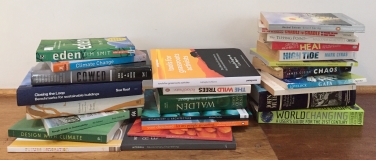
Image 8.1a Book Shelf

Let my People go Surfing – Chouinard, Y.
Three books in one here, a biography, a mountain & surf adventure and a business sustainability philosophy. This is a must read for reluctant business CSR people.

Sand County Almanac – Leopold, A.
Recognised as the godfather of ecology, Sand County is the classic land ecology book. Classic quotes form Sand County include Thinking like a mountain and We reached the old wolf in time to watch a fierce green fire dying in her eyes. I realized then, and have known ever since, that there was something new to me in those eyes – something known only to her and to the mountain.

Silent Spring – Carson, R.
First published in three serializsed excerpts in the New Yorker in June of 1962,this is the book that in many ways triggered the 1960s environmental protest movement. Still as valid today as we deal with persistent chemicals within the built environment materials

Cradle to Cradle – Remaking the Way We Make Things – Braggart, M. and W. McDonough Groundbreaking for the circular economy thinking, challenging the way we make and dispose of things.

Ecology of Commerce – Hawken, P
An important text that aligned ecology and environmental concerns with mainstream business. “if you look at the science about what is happening on earth and aren’t pessimistic, you don’t understand data. But if you meet the people who are working to restore this earth and the lives of the poor and you aren’t optimistic, you haven’t got a pulse.”

Biophilia – Wilson, E.O
Part autobiographical and personal, Wilson’s introduction to the love and relationship with nature, that introduced us to the concept of biophilia. “Nature holds the key to our aesthetic, intellectual, cognitive and even wellbeing. …”

Transition Handbook – Hopkins, R.
The original handbook for the now-global Transition movement, addressing actions required in transitioning to a post peak-oil economy. “… by unleashing collective genius of those around us to creatively and proactively design our energy descent, we can build ways of living that are more connected, more enriching and that recognize the biological limits of our planet.”

Wildwood – A Journey through Trees – Deakin, R.
Living with trees, an autobiography from one of the UK’s foremost environmentalist writers. “To enter a wood is to pass into a different world in which we ourselves are transformed

Revolutionary Engineering – Miller, M.
How the international engineering firm Intergral approach restorative sustainability. Included are case studies from their Living Building Challenge projects. Intégral: Revolutionary Engineering is for trailblazers who care about advancing the building and construction industry toward greater occupant health and happiness, and stronger resilience and regenerative systems.

Design with Climate: BioClimatic Architecture 2015 update – Olgyay, V.
Reprint of a classic 1960s text that inspired and promoted architectural design based on biology and climate. I was not fully aware of this important work until researching for a commissioned review

Biomimicry in Architecture, 2nd Edition – Palwyn, M.,
Insights into the amazing world and future potentials of biomimicry within the built environment

Feral – Rewilding the Land, the Sea and Human Life. Monbiot, G.
Inspiration for restorative and regenerative environmentalism and conservatism through  Monbiot’s experience and passion on rewilding themes.

Tools for Grass Roots Activists. Gallagher, N. and L. Myers, P Brilliant collection of essays and tools from over two decades of the Patagonia invite-only Tools Conferences

Walden – Thoreau, H.D.
Recognised by many as being the classic work on environmental and conservation thinking. “We need the tonic of wildness…At the same time that we are earnest to explore and learn all things, we require that all things be mysterious and unexplorable, that land and sea be indefinitely wild, unsurveyed and unfathomed by us because unfathomable. We can never have enough of nature.”

Last Child in the Woods: Saving our Children from Nature-Deficit Disorder – Louv, R. 
Why we need biophilia in our and in our children’s everyday lives. “We have such a brief opportunity to pass on to our children our love for this Earth, and to tell our stories”

Confessions of a Radical Industrialist: How My Company and I Transformed Our Purpose, Sparked Innovation, and Grew Profits – By Respecting the Earth – Anderson, R.C. and R. White,
The guide that shaped and continues to inspire the values and ethos of Interface Inc. to take nothing from the earth that can’t be replaced by the earth

Landmarks – Macfarlane, R.
Why language and words are important to understanding our relationship with nature and landscapes. Certain books, like certain landscapes, stay with us even when we left them, changing not just our weathers but our climates.”

This Changes Everything: Capitalism vs. the Climate – Klein, N.
How capitalism and our economic structures are at the root cause of climate change.“So we are left with a stark choice: allow climate disruption to change everything about our world, or change pretty much everything about our economy to avoid that fate. But we need to be very clear: because of our decades of collective denial, no gradual, incremental options are now available to us.”

Responsible Business – Chouinard, Y. and V. Stanley
Background to the responsible business values and approaches at Patagonia. “At Patagonia, making a profit is not the goal because the Zen master would say profits happen ‘when you do everything else right.’”

Reinventing Fire – Lovins, A.
A route to a non fossil fuel future in four industries that includes the built environment. Reinventing Fire will require tapping, in particular, the two biggest motherlodes of energy, efficiency and the Sun.

Eden – Smit, T.
Background to the development and principles of the Eden Project in Cornwall, UK. “…. construction is a culture that depends on warfare and fault finding that is not compatible with collaborative partnerships …”

&

FutuREstorative: Working Towards a New Sustainability Brown, M.
Focuses on the emergence of a net positive and restorative sustainability, as a more rounded social, wellness, health and healthy buildings debate “We can and must reignite sustainability, set the sustainability soul on fire, make sustainability fun and exciting, and inspire a new generation – not only for a vision of sustainability that is regenerative but a vision that also acknowledges the damage of the past and makes amends, healing the future

 FutuREstorative : is available via RIBA Bookshops and other online book services!

WELL & BREEAM announce alignment for credits: more good or less bad?

UPDATE 01 Feb 2017

Credit Crosswalks: BRE and IWBI have released guidance to streamline joint certification of BREEAM and WELL

….

As mentioned and illustrated in FutuREstorative, we will see an alignment in building sustainability and performance standards over coming months and years. In the US we have seen an alignment between LEED and the Living Building Challenge on materials (Red List) and recently on energy and water.

On Monday 28th  Nov, we saw an announcement from The International WELL Building Institute and BRE for an agreement to pursue alignment between WELL and BREEAM will making it easier for projects pursuing both standards.

In practice this will mean documentation submitted for certain credits will be recognised by both WELL and BREEAM, saving project teams time and cost.

This will be a very interesting journey and further recognises the importance of health within building design, construction and use. WELL, like the Living Building Challenge is an excellent, robust but tough standard and one that cannot be attained without a different mind-set approach to buildings.

Key to that mindset is recognition of the impact of materials on health on construction workers and building users. An alignment or agreement between BREEAM and the LBC’s Red List would make great sense here.

It will be interesting to see how the differing philosophies between WELL (do more good) and BREEAM (do less bad) work together. Hopefully this further opens the door to a salutogenic approach to design – not just reducing ill-health but using buildings to improve health, for example, using light as medicine, as explored in FutuREstorative

salutogenesis-slide

Health – the next performance gap.

I will also be watching with interest if this agreement extends to the construction process, (ie. the BREEAM MAN credits) to improve the wellness and health of those involved in and affected by construction works. This is a health and wellness area that BREEAM, LEED, WELL and the Living Building Challenge do not readily address. Yet for those whose career is spent on construction sites, it is a key health and sustainability area, and one that benefits from biophilic design considerations, for example greenery in accommodation and living walls as project hoardings.

living-walls-construction-hoarding

Bright Green – the new Black (Friday)

That Green is the new Black is illustrated through sustainability focused alternatives to the commercialism of Black Friday.

100-planet-tcl-1404x778-c-defaultPatagonia whose sustainability vision entails using business to make change will be giving 100% of sales to 1% For The Planet this Black Friday. 

This year Patagonia will donate 100 percent of global Black Friday sales in our stores and on our website to grassroots organisations working in local communities to protect our air, water and soil for future generations. These are small groups, often underfunded and under the radar, who work on the front lines. The support we can give is more important now than ever

pexels-photo-94616REI and others under the hashtag banner of #optoutside will be closing stores, encouraging staff to spend time with family and friends – out of doors.
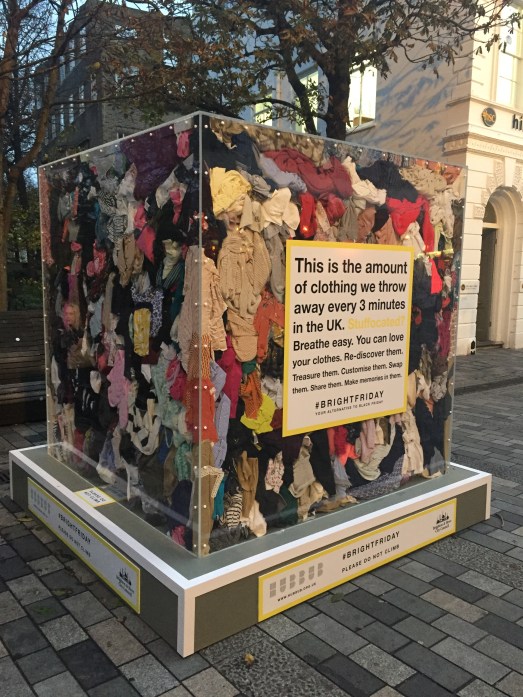
Here in the UK we have adopted the US Black Friday sales madness. In conversation with a local outdoor gear store, they felt they couldn’t make the stand as Patagonia and REI are doing as they would just loose out (online) sales to competition over the black Friday 2 week period. But there are signs we are adopting the green Friday thinking here in the UK.

As I write this blog on a business trip to Brighton, I am encouraged to see BrightFriday activities in place coordinated through alt fashion Hubbub.org. Their three simple guidelines to create a BrightFriday also serves as a great circular economy statement.

How to create your #BrightFriday this Black Friday

1. Resist the pressure of buying things you don’t want or even need. Remember, the best bargain is not buying stuff you didn’t want in the first place.

2. Rekindle love for what you already have.

3. Create memories rather than buying them by trying something you’ve always wanted to do.

img_3070


“This Changes Everything” Paris Agreement and the Built Environment

That the Paris Agreement has come into force today, 4th November 2016, some four years early, now ratified by the requisite number of nations, is a huge milestone and speaks volumes for the global recognition and consensus to reduce carbon emissions.

cop21 article 2 draft

Back in December in Paris, the built environment was recognised as a major contributor to the carbon problem as well as having a major role to play in a low carbon sustainable future. (See How significant was the first Buildings Day at COP21?)

Now, then, is the time to review our approaches to taking carbon out of the built environment, through design, through the operation of buildings and in the manufacture and construction processes.

Through ConstructCO2 we know that up to 70% of construction carbons are travel and transport related, and much of this through diesel fuelled vehicles, further adding to our air quality problems and stretched health services. Construction transport impact must now be a primary target for sustainable construction.

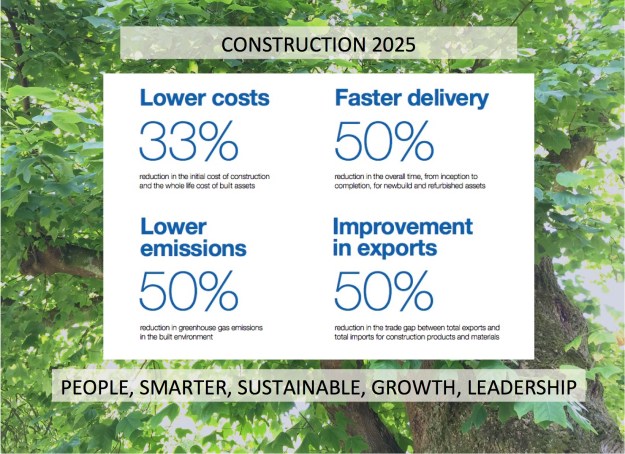
In the UK, our most recent industry target is within Construction 2025 Vision – to reduce emissions by 50% by 2025. Consider however that this was written when the consensus for carbon reduction was based on a 2 degree target for temperature increase. We are now looking at 1.5 degree as the emerging consensus, and that changes everything.

construction-2025-headlines

There is a sense of urgency here, and as I explored and commented within FutuREstorative ‘we no longer have the luxury of being only less bad’ but need to be doing more good, and in doing so heal the future.

less-bad-more-good-chart

In 2015 the UK Green Construction Board noted that ‘reducing built environment carbon emissions (50% from 1990 levels by 2025) is now out of reach with current practice’, and as Namoi Klein wrote in This Changes Everything (2015) “There are no non-radical approaches left before us in addressing climate change’

But we do have approaches, tools and initiatives to ensure that the built environment can contribute to a 1.5 degree future, again as explored in FutuREstorative and illustrated here in this infographic:

carbon-image

As we celebrate the Paris Agreement coming into force, lets also take the opportunity to look forward and start working collaboratively within the built environment towards a 1.5 degree future. And in doing so,to address the other hugely important aspects of the Paris Agreement, adopt the Sustainable Development Goals.

Chart_of_UN_Sustainable_Development_Goals

Will Tesla solar roof tiles be an industry game changer?

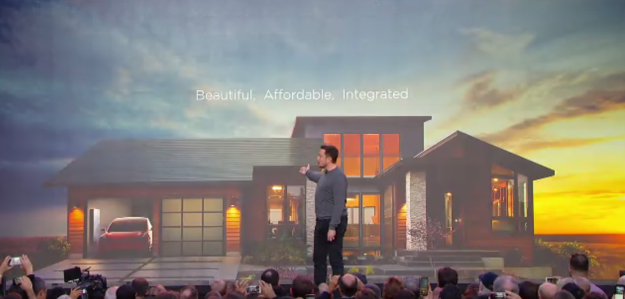
Elon Musk in a quest to make solar as attractive as electric vehicles may have leap-frogged many solar building innovations and prototypes in revealing a range of solar tiles (to be in mass production soon) at a show case event at Universal Studios yesterday.

screen-shot-2016-10-28-at-8-52-19-pm

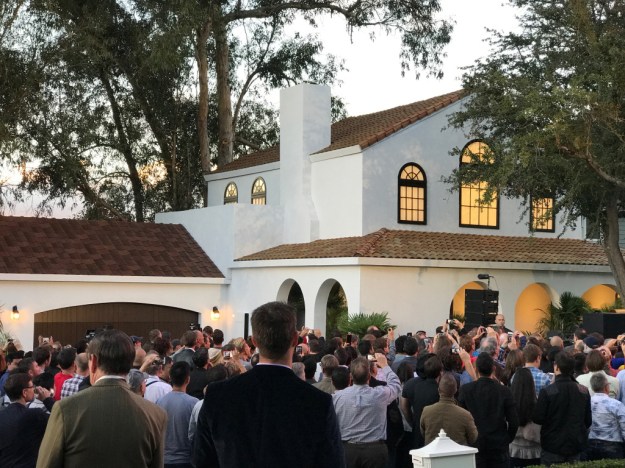
It is not often, or at all, that building products are launched with the degree of secrecy and flair that is the domain of new cars or smart phones. But that’s what Tesla did yesterday, revealing new solar tiles and power packs on a completed detached home, to invited guests. The event was reportedly powered by the energy from the display home, and then as the sun sank, powered by the battery Powerpack energy stored from the roof tiles.

Being able to generate more energy than required, and store that energy within the building for when it is not being generated, is key to sustainable buildings.  Such breakthroughs will enable both new build and refurbished buildings to move closer to the Living Building Challenge Energy petal imperative. Generating 105% of a building’s energy from the sun. And with roof tiles rather than panels, start to address the challenges Beauty petal, removing the all-too-often unsightly post construction solar panels

0cf27641-f7f1-4ead-a8af-030e742088c9

The tiles price point is still be announced, yet whilst reported to be more expensive than standard tiles, they will be cheaper than the cost of tiles and equivalent cost of energy  over the life of the tiles or building. And far cheaper than the cost of post-roof or post-construction solar panels.  The tiles will also have a longer life time than more traditional US roof tiles. (US domestic buildings have a roof replacement cycle of 20 years or so)

References:

BBC: Tesla shows off solar roof tiles

Tesla: Sustainably Power your Home or Business

Mashable: Elon Musk tied together some of the disparate threads of his company’s various grand ambitions in a product launch event here at Universal Studios Friday night.

iSite Related: at last … low cost solar power that works in the (Welsh) rain…

NW England: for the best of this year’s Autumn colour.

If you’re keen to catch autumn leaves at their best then this may be the best time to head out with your camera. In fact, recent research highlights that 2016 is a particularly vibrant year for autumn colours. Owing to 2016’s wet spring, followed by above-average amounts of sunshine and a mild August and September, trees […]

via Where to see the best of this year’s Autumn leaves — Wild about Scotland

REGENERATION17 – Your Invited …

“our responsibility must be to inspire the next generation to become better than us and to reach higher than we have” Martin Brown in #FutuREstorative

reach-higher

The Italy Collaborative through Macro Design Studio  is organising the third edition of REGENERATION, the European design competition entirely based on the Living Building Challenge sustainability certification standard .

IMG_2334Having supported the first two editions of REGENERATION as an LBC tutor and presenter, I can wholly recommend this event as truly enriching and inspiring,  not only in learning about the Living Building Challenge in applied detail, or being hosted in a wonderful region of the Italian Dolomites, but making a positive contribution through regenerating a local municipal facility.

The competition is open to professionals (architects, engineers, environmental sustainability and landscape experts) in Europe, under 35 years old. The deadline for the request of participation is next January 31st, 2017. We will select the best 15 on the basis of the documentation submitted.

The event (which will take place at CentIMG_2350rale Fies, Dro (Trento – Italy), on April, 26th to 29th, 2017.) is a 64 non-stop hours of integrative design in which each team, assisted by tutors expert of LBC, will compete in designing the best redevelopment project of an existing local public building. There will be side events i.e. a final conference open to the public on the issues of LBC as well as the final presentation of the projects, with the proclamation of the best project by an international jury.

One goal is to have the most various participation possible, in terms of European countries represented. 

More information about REGENERATION:

– REGENERATION web site: regenerationcompetition.eu
– The REGENERATION Facebook group

The deadline for the request of participation is next January 31st, 2017. 

Administered by The International Living Future Institute (ILFI) based in Seattle (WA), a hub for visionary programs that promotes a sustainability that is Socially Just, Culturally Rich and Ecologically Restorative SMILFI is partner and scientific advisor of Macro Design Studio and the Living Building Challenge Collaborative: Italy in organizing REGENERATION.