via TweetDeck

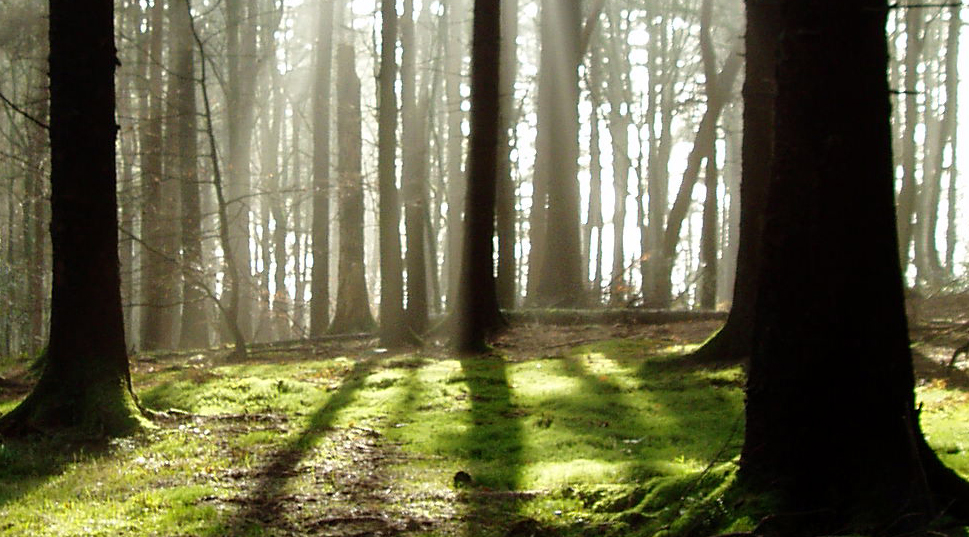 “suddenly the air smells much greener now”
Listening to ‘These Streets’, lyrics by Paolo Nutini summed up the brilliant, inspiring Green Vision conference in Leeds – exploring CSR within the built environment.
A mix of talks, presentations, round table discussions and pecha kuchas from Mel Starrs, Eden Brukman, Tamara Bergkamp, Eddie Murphy, Martin Brown, Faye Jenkins, Claire Walker, Rick Hamilton, Mark Warner, Pedro Pablo Cardoso-Castro, Andy Ainsworth, Paula Widdowson and many others showed that there is real emergence and a future for a Built Environment founded on social responsibility principles.
The air smells much greener …
We heard of excellent progress being made by individuals, projects and organisations on the CSR journey, and how behind these are great influential thinkers, often outside of the sector, many, unsurprisingly, related to the ‘outdoor’ sector.
Many of the speakers were enthusiastic in sharing CSR heros and recommended CSR reading. So here, as a summary, or reading list are those mentioned during the day. I wonder how many of these are on the reading list within design, construction and fm education? (Book titles link to Amazon)
Yvon Chouinard
Rock climber, environmentalist and outdoor industry businessman, noted for his contributions to climbing, climbing equipment and the outdoor gear business. His company @Patagonia is widely acclaimed for its environmental and social focus. According to Fortune magazine, Chouinard is arguably the most successful outdoor industry businessman alive today.
The Responsible Company What we have learnt in the first 40 years at Patagonia by Yvon Chouinard and Vincent Stanley (see my blog)
Let My People Go Surfing Yvon Chouinard – Probably the ‘must read book’ to understand CSR in Business
(On my blog: How can construction learn from Patagonia?)
Founder of Interface Inc., one of the world’s largest manufacturers of modular carpet for commercial and residential applications and a leading producer of commercial broadloom and commercial fabrics. He was known in environmental circles for his advanced and progressive stance on industrial ecology and sustainability.
Ray was was posthumously awarded an Outstanding Achievement award at this year’s Guardian Sustainable Business Awards in 2012. (There is a related, must watch, video here: John Elkington describing the work and legacy of Ray Anderson)
Confessions of a Radical Industrialist: Profits, People, Purpose: Doing Business by Respecting the Earth (2009) Later released in paperback as Business Lessons from a Radical Industrialist in 2011.
Paul Hawken
An environmentalist, entrepreneur, and author. Ray Anderson of Interface credited The Ecology of Commerce with his environmental awakening. He described reading it as a “spear in the chest experience”, after which Anderson started crisscrossing the country with a near-evangelical fervor, telling fellow executives about the need to reduce waste and carbon emissions.
Hawken’s book, Natural Capitalism: Creating the Next Industrial Revolution (1999) coauthored with Amory Lovins and Hunter Lovins, popularized the now-standard idea of natural capital and direct accounting for ecosystem services, a theme revisited by Rio +20 and likely to become more mainstream across the built environment.
Her 1997 book Biomimicry: Innovation Inspired by Nature defines Biomimry as a “new science that studies nature’s models and then imitates or takes inspiration from these designs and processes to solve human problems”. Benyus suggests looking to Nature as a “Model, Measure, and Mentor” and emphasizes sustainability as an objective of biomimicry. Key thinking in the Living Building Challenge principles, as is
E O Wilson
Edward Osborne Wilson an American biologist, researcher, theorist, naturalist and author. In the mid 80’s developed the concept of Biophilia, the connection between humans and nature, which translates into architecture and the built environment as comfort, well being and productivity through exposure to natural light and natural surrondings or imagry.
Anita Roddick
Dame Anita Roddick, human rights activist and environmental campaigner, best known as the founder of The Body Shop, a cosmetics company producing and retailing beauty products that shaped ethical consumerism The company was one of the first to prohibit the use of ingredients tested on animals and one of the first to promote fair trade with third world countries. Roddick was involved in activism and campaigning for environmental and social issues, including involvement with Greenpeace andThe Big Issue.
John Elkington
John Elkington @volansjohn is a world authority on corporate responsibility and sustainable development. He is currently the Founding Partner & Executive Chairman of Volans, a future-focused business working at the intersection of the sustainability, entrepreneurship and innovation movements
His latest book The Zeronauts, Breaking the Sustainability Barrier describes many of todays inspirational leaders : “Just as our species broke the Sound Barrier during the 1940s and 1950s, a new breed of innovator, entrepreneur, and investor is lining up to break the Sustainability Barrier”
Jorgen Randers
2052: What will the world look like in 2052
Jeff Hollender,
Jeffrey Hollender is an American businessperson, entrepreneur, author, and activist. He was well known for his roles as CEO, co-founder, and later Chief Inspired Protagonist and Executive Chairperson of Seventh Generation Inc., the country’s largest distributor of non-toxic, all-natural cleaning, paper and personal care products. www.jeffhollender.com/
Gary Hirshberg,
Gary Hirshberg is chairman and former president and CEO of Stonyfield Farm, an organic yogurt producer, based in Londonderry, New Hampshire. Now part of the Danone group.
Published in January 2008, Stirring It Up: How to Make Money and Save the World is a book about socially minded business that calls on individuals to realize their power to make a difference in the marketplace, while doing business in ways that adhere to a multiple bottom line – one that takes into consideration not only finance, but the environment and health as well.
Jeffrey Swartz,
Jeffrey Swartz is the former president and CEO of The Timberland Company an organization that believes that doing well and doing good are inextricably linked. Timberland’s commitment is to reducing global warming and preserving the outdoor environment.
David and Claire Hieatt,
Founders of Howies a clothing company based in Cardigan Bay, Wales produces eco-friendly T-shirts, jeans and sportswear, and aims to have ethically correct practices. Howies use natural fabrics as alternatives to petrochemical-derived modern fabrics. Examples include organic cotton, Merino wool and recycled cotton. Howies T-shirts often have images or slogans with political or environmental themes
Dee Hock
Dee Ward Hock is the founder and former CEO of VISA , described systems that are both chaotic and ordered, and used for the first time the term “chard” and chaordic,combining the words chaos and order.
More?
Over to you –
Follow the discussion on twitter with the #GVis2012 hashtag.
Who are your CSR Heros and CSR Texts to add to this Built Environment inspirers list?
What additions or comments would you make to the entries above?
A full record (video, blog, tweets, presentations, storify) of the Building CSR Event is being curated on the be2camp event page here.
The interesting and innovation Green Deal Conduit approach from Parity Projects, giving better involvement with and access to Green Deal for SME’s is gathering pace, as the recent press release from Parity Projects indicates.

New Organisation Announced – ‘Green Deal Conduit’ for Smaller Construction Practioners to put SMEs in charge of their own destiny
The final touches are being made to the business plan for a new organisation that will allow smaller organisations to take a significant slice of the Green Deal (GD) work on their own terms. It will stem the threat to their existing workload that is presented by the larger organisations that are, at this time, the only organisation linked to the Green Deal and enable those involved in the assessment and refurbishment of buildings to be in charge of their own destiny.
The ‘Green Deal Conduit’ is the current working name for a new organisation that will build a large network of small and medium sized organisations involved in the assessment and refurbishment of buildings across the UK and the aim is for it to be owned by its members. Backing this initiative is a wide range of professional institutions and trade associations working hard to ensure their members have control over the delivery of their products, not just ending up as the tail end of the supply chain.
Read the full press release here
Keep informed by following @ParityProjects on twitter
We have been asked by our Irish client, just established in London, to help find them a suitable Business Development/Managing Director.
They are looking for the right individual with good interpersonal skills rather than technical. They have a target of developing the business from £1m in Year 1 to £7.5m in year 3 with majority of projects around the £150K-£750K primarily from public sector or high end private sector. They are used to schools and LA building in Ireland
The job comes with a Six figure package.
Contact vassos@ibepartnership.com for more information
 Much has been written and discussed around the use of the word ‘sustainability’ and indeed, within the built environment has become over an used term, we are seemingly littered with sustainable construction, design and fm, with sustainable products, techniques and technologies. It is as though the pre-fix ‘sustainable’ has become to mean little more than the way we now do things. Business as usual?
And yet in a world of transparency we increasingly run the risk of greenwash if we claim ‘sustainability status’ (or indeed ‘zero carbon’) for our activities and are really called to account.
I was reminded of this debate on reading the excellent The Responsible Business by Yvon Chouinard and Vincent Stanley
“A word about a word we have chosen to use as little as possible: Sustainability. Its a legitimate term that calls us not to take more from nature than we can give back. But we do take more than we give, we do harm nature more than we help it.
We have no business applying the the word sustainable to business activity until we learn to house, feed, clothe and entertain ourselves – and fuel the effort – without interfering with natures capacity to regenerate itself and support a rich variety of life.
We are a long long way from doing business … and no human economic activity is yet sustainable”
What do you think? Let us know if you think the word sustainability has become over used and hence lost its meaning
Related Links:
Construction CSR Makeover: can construction learn from Patagonia?
CSR and Transparency seem to be linked buzz words in the world of sustainability at the moment.
Fuelled perhaps by an increase in CSR generally, a growing awareness of social media ‘whistleblowing’, the potential of the Social Value Act and a desire to improve or differentiate sustainability offering in bids and delivery on contracts.
Our Green Vison tweetchat last night concluded construction is ready for and in need of a CSR make over. But where to start? One of the suggestions was to listen to and learn from other sectors.
As if on cue, this morning I was aleretd to Patagonia’s Footprint Chronicles update. A grand example of merging CSR, Supply Chain Management, Transparency, Storytelling and using social media to stitch it all together
For our tenth season we have completly revamped the Footprint Chronicles to show a world map of every factory that makes Patagonia clothing and gear, profiles of the social and environmental of key suppliers and fabric mills and profiles of key independent partners who vet social and environmental practices throughout our supply chain
The Footprint Chronicles® examines Patagonia’s life and habits as a company. The goal is to use transparency about our supply chain to help us reduce our adverse social and environmental impacts – and on an industrial scale. We’ve been in business long enough to know that when we can reduce or eliminate a harm, other businesses will be eager to follow suit.
A great place to start learning where CSR in Construction can go …
Indications that this is possible are emerging. With similar end game intentions, our own constructco2 which maps construction phase carbon emissions, transport and the project supply chain foorprint and Sourcemap a crowdsourced directory of product supply chains and carbon footprints – see for example CITRIS Builing
Your comments are most welcome, engage in the CSR debates on twitter @fairsnape or get in touch to discuss further. We are helping many construction organisations measure their carbons and re-evaluate their approach to CSR.
It’s 1992, five years after the Brundtland Commission launched the now well accepted Sustainable Development definition. Heads of State and environmentalists convened in Rio to agree, or attempt to agree, a strategy to implement the sustainable definition globally.
At that time I was changing role from Project Management to Business Improvement Management, taking an interest in improvement issues and wondered then at the relevance of Rio and ‘sustainability’ on construction.
The impact was to be slow burn. Sustainable construction was then a very rarely heard expression, if at all. However Agenda 21, the global national and local strategy from Rio ’92 would go on to kick start and shape our Sustainable Construction agenda in so many ways, from strategy to standards to winning and delivering work. It would also shape our sustainability thinking linking economic, social as well as environmental aspects.
And continues to do so. Only last month I had a call from a contractor looking for help in understanding a Local Authority PQQ question “How do you meet our Local Agenda21 principles”
20 years later it is worth reflecting on progress in sustainable construction. Undoubtably a mixed bag, we have moved a long way in some areas, but we are still debating the some same 1992 issues a generation later. And have we avoided compromising the current generation? No
With design, construction and the way we use buildings (the “built environment”) Accounting for 40% of energy use, waste and resources we have a profound impact, but where in Rio +20 is the voice of the built environment? (Follow the hashtag #Rioplus20 and an embyronic Rio twitter list for those with a built environment interest)
Whatever the outcome the Rio+20, with a (perhaps flawed) focus on a Green Economy we can expect significant impact on the way we approach sustainable construction, not least in the financial accounting and price of ‘nature’ (biodiversity, carbon emissions, waste)
Green Economy growth would in many ways be good for the construction sector, but to be good for the planet, good for a sustainable and resilience sector, growth has to be tempered with effective corporate social responsibility, collaborative working and appropriate sourcing. That is doing more with less.
Interesting days ahead…
link – 10 things you need to know about Rioplus20
link #GVischat – CSR in Construction Tweetchat – will explore what Rio Plus 20 could mean for construction. 8pm 20 June.
Will we turn environmental protection into a game of profit? What you need to know about the global gathering.
The following article written by Janet Redman appeared recently on Yes Magazine and is reposted under the magazines creative common share licence
In 1992, the Rio Earth Summit brought world leaders together around the frame of “sustainable development” and launched global agreements on biodiversity, climate change and desertification. Two decades later, the environmental and economic crises they had hoped to stave off—global warming, record extinction rates, depleted fisheries, vast economic inequality—are upon us. And so political leaders and grassroots activists are gathering again in Rio in late June to take up the planet’s most pressing issues. Here are 10 things you should know about the Summit:
The Rio Earth Summit is presenting us with a false choice between environmental protection through private profit on the one hand and state-sponsored green growth on the other. What we really need is a multilateral process that supports local living economies, and public institutions to democratically manage the commons.

Is your PQQ or Bid success rate dopping? Are you loosing out to competitors and not sure why? You could do no better than to get along to one of the numerous best practice or knowledge exchange events such as the excellent Green Vision programme from CKE in Leeds.
Last night the focus was on CSR, Corporate Social Responsibility, which has moved a million miles away from just doing good, volunteering and charity donation, important though as these are. No, supply chain CSR approaches in the words of Bob Simpson (Walmart/ex ASDA) have to be ‘contemporary’ and demonstrate value to clients.
Bob went on to emphasis how the supply chain has to demonstrate “a point of difference” through CSR, when bidding for work, that includes:
Paul Connell E.on consultant reinforced the same message describing how supply chains adding value to E.on to help them deliver their ambitious Cities Programme of collective intelligence, enabling large organisations to engage with individuals on a meaningful level.
Setting the scene, my CSR presentation focused on the changing world of communications and transparency, and the need for construction not only to be solid and reliable but also innovative in CSR. Particularly in the public sector, where the newly minted Social Value Act will require construction to start to really understand and demonstrate the value of CSR approaches.
There is a storify record of the event here.
How contemporay is your CSR approach? Is it helping you demonstrate value to your clients and winning you work? Maybe now is the time to re-evaluate. We are helping many organisations review their CSR, PQQ and Bid approaches. Do get in touch to discuss.

 Fairsnape