Category Archives: comment

5 reasons why walking is good for physical and mental wellbeing — Wild about Scotland

It’s official: nature is good for you. In fact, according to England’s Chief Medical Officer in 2010: “If a medication existed which had a similar effect to physical activity, it would be regarded as a “wonder drug” or a “miracle cure”’. But nature isn’t just a remedy for a healthy body, it also nurtures a […]

Re-blogged from

5 reasons why walking is good for physical and mental wellbeing — Wild about Scotland

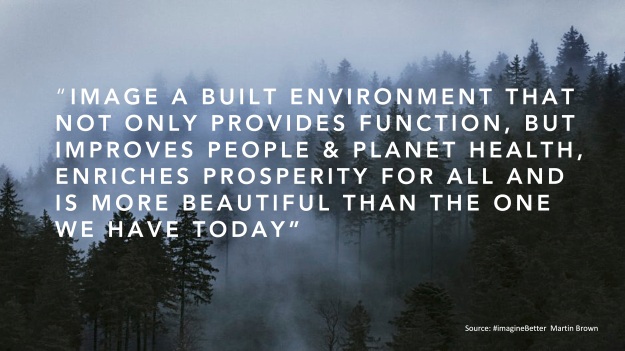
Imagine Better

imagine better costrestore budapest

People, Planet and Prosperity: A regenerative sustainability perspective of the classic Social, Environment and Economic ‘Venn’ diagram.

Image result for Social, Environment and Economic 'Venn' diagram.

Blockchains: enabling a sustainable future?

pexels-photo-119562Mid way through last year I raised the concept of blockchain in relation to transparency and responsibility aiding and disrupting material supply chains (within the context of the Grenfell Tower tragedy).

Arup Foresight have just published a useful guide to Blockchain within the context of BIM that really should be essential reading for anyone working in or interested in BIM and Digital construction.  

The Built Environment delivery, operation and service provision sectors are the last bastion of old analogue methods and traditions. The sector is characterised by fragmentation, low margins and unpredictable performance. Over the last five years interventions by a number of Governments led by the UK have seen the first tentative steps in digitisation through the use of Building Information Modelling (BIM) technologies.

BIM has shown us that it is possible to create useful structured data which describes brief, design, manufacturing and operational scenarios. However, the sector is limited by the existing data processing and exchange methods which remain characterised by analogue methods that support old adversarial behaviours.

What is the solution to complex data transactions where openness, transparency, honesty and immutability are the basic foundations?

Enter Distributed Ledger and blockchain, with the promise of permanent, secure and valuable transaction methodologies.

However, from my perspective, one of moving forward towards a built environment that is regenerative (BIM 6D?),  it is the application of blockchain to create immutable records that is of note. The Arup publication provides a snippet of what will be possible, given the speed of digital implementation, within a very short timeframe:

Immutable Data for enabling Circular Economy
Data captured from a building could be used to accurately predict the remaining lifespan of a (device, element, product, building) and its suitability for re-use in other buildings or applications, reducing the likelihood of waste and over-supply, therefore cutting down material use and carbon emissions, and underpinning the principles of the Circular Economy.

Material passports via blockchain enable recovery and re-use of materials, thereby helping realise a truly Circular Economy.

Immutable Life Cycle Energy Usage and Efficiency Record

The accumulated data that could be gathered by the blockchain can allow anyone to view an immutable and complete record of the energy used by a building over its life. The data could be used to compare how effciency a building has used energy relative to similar modern buildings, and those built in the past.

Immutable Life Cycle Performance Efficiency Record
The performance efficiency of individual components can be recorded, meaning a total gure for an entire building can be calculated. As with energy efficiency, this could be compared to the performance of previous buildings, to measure progress over time.

Immutable Life Cycle Carbon Footprint Record
The carbon footprint of individual devices and even materials could be calculated, giving an overall total. This data would be extremely valuable for helping to identify if a building is meeting carbon emissions targets.

Immutable Recyclable Material and Component Record
The quantity of materials such as plasterboard and steel, as well as IoT devices, that are able to be recycled to some degree, or even reused, could be easily recorded on the blockchain.

Immutable Recyclable Material and Component Location Record
Tying in with the previous use case, this one would help to quickly identity where recyclable components are located exactly, in turn reducing the time to remove them from a building.

P2P Surplus Energy Transfer
In the future, buildings could become net producers of energy. Any surplus energy generated could have its ownership transferred in a peer-to-peer manner to other buildings that require it, enabling buildings to generate their own profit.

Blockchain Explainer:

blochain explainer

The Arup Report: Blockchain Technology, How the Inventions Behind Bitcoin are Enabling a Network of Trust for the Built Environment can be downloaded from Arup Foresight page here.

The Business Case for ‘Sustainable’ Buildings

pexels-photo-227675

Three recent reports focus on the business case for sustainability, green buildings and human-centric buildings.

Are we now witnessing the new normal, where the question of sustainability cost is flipping from, how much extra will the sustainable building cost? to, what are the real costs in not providing sustainable buildings?

The WorldGBC Business Case for Green Building: A Review of the Costs and Benefits for Developers, Investors and Occupants, examines whether or not it is possible to attach a financial value to the cost and benefits of sustainable buildings.

The report highlights how green buildings can be delivered at a price comparable to conventional buildings and investments can be recouped through operational cost savings. It also notes that with the right design features, green buildings can create a more productive workplace.

The report specifically focuses on the potential benefits of green buildings throughout the various stages of the building lifecycle, from reduced costs during the design and construction phases through to improved health and productivity of workers when a building is in use.

“This is the first time all the credible evidence has been compiled into one collective resource”

  • Asset value: Emerging evidence in some markets of green buildings being able to more easily attract tenants and to command higher rents and sale prices
  • Design and construction costs: There has been an overall reduction in the costs associated with designing and constructing sustainable buildings
  • Operating costs: The direct benefits from green buildings in use (such as reduced energy and water use and lower long-term operations and maintenance costs) typically exceed any costs premiums associated with their design and construction within a reasonable payback period
  • Workplace productivity and health: The characteristics and indoor environments of green buildings can influence the productivity and health of workers who occupy them, resulting in bottom line benefits for businesses
The UKGBC Report Capturing the Value of Sustainability, Identifying the links between sustainability and business value focuses on a wider business case for sustainability, looking at at the challenges that businesses face in trying to identify the value they derive from their sustainability initiatives.

… the purpose of this report is to empower businesses and individuals to make the business case for environmental and social impact activities and to enable them to measure and demonstrate the value their organisations derive from such practices. 

Of particular note, relevant to my current work relating to FutuREstorative and with COST RESTORE in understanding the emergence of restorative and regenerative sustainability, this report notes we are seeing the rise of the restorative enterprise within the built environment

Much has been written on how businesses are moving towards doing more good rather than less bad. The phrases ‘net positive’ and ‘restorative enterprise’ are now appearing within sustainable business circles, with both referring to businesses that put back more than they take and restore social and natural capital whilst making a profit. Such businesses may be termed as using a ‘business with impact’ approach or being a ‘purpose driven’ organisation. In this context, ‘purpose’ may be de ned as ‘an aspirational reason for being which inspires and provides a call to action for an organisation, its partners and stakeholders, and provides bene t to local and global society’.

The white paper from Buildings 2030: Building 4 People: People-Centric Buildings for European Citizens published in November 2017 notes how the buildings we live and work in are affecting our environment, our physical & mental health, our wellbeing and our productivity.

The broad alignment of environmental and health agendas presents an opportunity to not only invest in better performing buildings, but also to improve the quality of life for people using these buildings. Enhancing the health and comfort of people in buildings has a huge potential for economic and societal benefits such as better health, increased productivity, reduced sick leave and a decrease in associated medical costs We call this approach “Building 4 People.”

UK Government 25 Year Environment Plan is … disappointing.

nature globeThe UK Governments 25 Year Environment Plan (A Green Future: Our 25 Year Plan to Improve the Environment) released yesterday should, on the face of it be a very significant document. Leaks and pre-issue comments from Gove in particular, hinted at great things in respect to addressing plastic, aligning health benefits of nature with healthcare and restoring nature in light of housing and infrastructure developments.

The Plan identifies six key areas:
Using and managing land sustainably (chapter 1).
Recovering nature and enhancing the beauty of landscapes (chapter 2).
Connecting people with the environment to improve health and wellbeing (chapter 3).
Increasing resource efficiency, and reducing pollution and waste (chapter 4).
Securing clean, productive and biologically diverse seas and oceans (chapter 5).
Protecting and improving the global environment (chapter 6).

And of note for the built environment,

‘Embed an ‘environmental net gain’ principle for development, including housing and infrastructure. (Chapter One)

High environmental standards for all new builds. New homes will be built in a way that reduces demands for water, energy and material resources, improves flood resilience, minimises overheating and encourages walking and cycling. Resilient buildings and infrastructure will more readily adapt to a changing climate.

And, to improve existing green infrastructure by encouraging more investment while making sure there is a presumption for sustainable development.

However what we have is low on ambition and nothing more than a plan to plan. Each action is peppered with “consider”, “explore”, “promote”, “help” etc … and to work with others if they would care to.

25 yr plan quote

The fact this is a 25 year plan, in 2018, it takes us through to 2043 – firmly into the next generation that will undoubtedly be severely compromised by what we do or don’t do today.  One only has to compare other initiatives with target dates within this timeframe to see how low on intent this plan is. Compare with the WorldGBC plans for zero carbon new buildings by 2030 and all buildings zero carbon by 2050, or the auto industry to move away from fossil fuels.

As commented by many, there is an ‘extraordinary omission’ in the plan: there is no mention at all of fracking. Given that the only sustained solution to the environmental and climate crisis is leaving fossil fuels in the ground, the continued support for extracting yet more through fracking cannot be justified in the light of the this report.

We are now acutely aware that  we do not have the luxury only to explore, to consider and to just reduce impacts … that is not sustainable. We require more direct leadership, commitment and action to do more good, to restore and regenerate the environment.

George Monbiot commented ‘ Those who wrote (the plan) are aware of the multiple crises we face. But, having laid out the depth and breadth of our predicaments, they propose to do almost nothing about them”

Stephanie Hilborne, Chief Executive of The Wildlife Trusts, “unless more leadership is shown, wildlife will continue to decline & with it our mental health as more people become isolated from benefits of contact with nature’

What we do have however, and should take action on, is further recognition that the environment  and connection with nature is severely affecting the health of the planet, of ourselves and of other species. Gove is trying to secure commitment to an Environment Act in the next Queen’s speech and we should help to secure this as there is not yet full government support, but there certainly needs to be more leadership, direct action and targets in this 25 year plan.

The Plan is available to download from here 

Seasons Greetings

DRjtj76XkAAnGUi.jpg-large.jpeg

Inglewhite, Lancashire. Our daily view …

IMG_5732.jpg

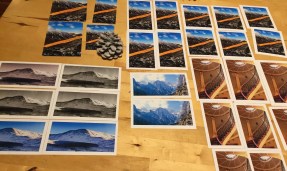
It is custom at chez fairsnape to create our own Christmas cards with our images taken during the year.

Here are the images from 2017 used on our cards.


IMG_3486 2.jpg

Fairfield and Grisedale Tarn January 2017

P1010974 2.jpg

Brenta Dolomite. 60th Birthday Celebrations April 2017

IMG_3479 2.jpg

Dunmail Raise, February 2017 

IMG_5331.jpg

Soller Mallorca, November 2017

Materials in Buildings: the impact on health of those who work, learn and play within them.

pexels-photo-206290

“the next phase of market transformation for the built environment is going to be led by material performance …” 

Health and wellbeing issues relating to the materials we specify, purchase, build with and dispose of has been increasingly arising in discussions of late. These may be within CSR, Environmental ISO workshops or in events such as the Specifi series (recent London). Indeed it is unusual for wellbeing in relation to materials not to be on the agenda for sustainability events.

In addition, within sustainability related meetings with clients, contractors and facilities management organisations, the issue of material health raises, often in reference to Grenfell, asking the question – do we really know the wider impacts on what we specifi, build with, maintain, replace  or dispose of?

Alongside this there is a rapidly growing interest in health related material standards such as Declare, RedList, Portico Fitwell and Well

A welcome addition to the debate is the (forthcoming) Materials Wellography from the Well Build people at IWBI. Below is an extract from their recent blog release which provides a very useful insight to the importance of materials and products we work with day in and day out.

Materials WELLography; your guide to the connection between the materials and products that make up the built environment, and the effect they have on the health of those who work, learn and play within them.

Materials make up our world. Much of the industrialized world is built from man-made, industrial chemicals. The chemical industry converts raw materials into more than 70,000 different chemical substances that make up our world. As the global population increases and urban centers expand, so do both the demand for manufactured goods and the rate of chemical production, which is projected to grow three times faster than the global population and to double every 25 years.1

The quantity and variety of chemicals on the global market makes the task of tracking chemical hazards both critical and extremely difficult. An estimated 95% of chemicals, used largely in construction, lack sufficient data on human health effects.,2 Although various countries apply their own framework for the management of chemical production and use, these are not harmonized globally, so different chemicals are regulated to different extents in different countries.

Life cycle of building materials and exposure hazards. Exposure to harmful chemicals can happen at various stages in the lifecycle of a commercial material or product. Below is an example of this lifecycle:

  1. Exposure can occur when contaminants are released into the environment during manufacturing or materials extraction.3, 4, 5, 6
  2. Throughout occupancy of a built space, chemicals used in furniture, furnishings, paints, adhesives and coatings can off-gas and end up in indoor dust, compromising air quality. 7,8,9,19 Proper ventilation practices and materials selection can help minimize indoor air contaminants. For more information on the benefits of adequate ventilation, refer to the Air WELLography
  3. Finish, maintenance and renovation work often involve dust-laden contaminants, fumes, solvents and gases. This is especially problematic in the absence of the exposure and ventilation controls typically required in production or construction settings.
  4. Construction and demolition work often include exposure to large amounts of dust (made up or and carrying chemical substances), as well as solvents, and other hazardous substances, for example those  associated with use of diesel-powered heavy equipment 10,20. Fortunately, improved awareness of exposure risks in maintenance, renovation and demolition has prompted additional work safety measures through various voluntary standards.

Environmental and Health Impacts. Chemicals used in building materials and byproducts made during their manufacture can persist in the environment. Even small concentrations of these chemicals can find their way into organisms in high enough doses to cause damage. The accumulation of toxicants in water or soil has implications for human health as these chemicals can advance up the food chain and accumulate in human tissue. 14

Long-term, large-scale biomonitoring studies have helped to show the impact of policy changes on human exposure risks. For example, a Swedish study involving long-term testing of human breast milk for the presence of the pesticide DDT and its residues has shown a significant decrease of the chemical following its restriction and later ban. A gradual decrease in PCB is also evident, likely due to efforts to move away from the chemical across the European Union. In contrast to the decline of these two chemicals over time, concentrations of the flame retardant PBDE was found to increase along the same timeline, consistent with increased across EU states. 21

Market forces at work. As evidence of the environmental hazards and health issues related to chemicals accumulates 15, an increasing number of hazard assessment tools emerge in the building material sector. These evaluation tools are being introduced and used in the marketplace as means to differentiate products and ingredients with lower hazards and to certify greener chemical ingredients in consumer products. Despite gaps in data and regulation, the good news is that we have a growing repository of tools at our disposal that can provide direction in understanding the tradeoffs of materials and products over their life cycle.

Careful evaluation and selection of building materials and products is an important and effective first step to identifying safer materials across installation, use, maintenance and disposal. In the long run, the call for the prioritization and responsibility of advancing safer chemicals and sustainable materials can lead to an improved, data-rich market, comprehensive regulations and policy reforms and a shift towards safer chemicals and investment in green chemistry.

Access the full IWBI article here. And download the excellent Well App for news and articles.

References noted above can be found via the IWBI article.

Towards 1.5 DegC: Built Environment’s role in COP23

pexels-photo-425050-2COP23 located in Bonn, Germany and hosted by Fiji takes place from 6 – 17 November.

The hosting by Fiji is significant as as a island nation they already feel the impact of climate change more than other nations. Fiji will also bring a new consensus building and discussion approach to COP23 – ‘Talanoa’.

Talanoa is a Pacific, story telling, term for discussions aimed at building consensus, airing differences constructively, and finding ways to overcome difficulties or embark on new projects. It is one of the building blocks of Fijian society, used for centuries to foster greater understanding among a people distributed over many small islands, and carry them through a tough existence. It is hoped that Talanoa will break deadlocks that have limited COP progress over the last 20 years.

The built environment

In recognition of its crucial role of the built environment, (as part of the climate change ‘problem’ and part of the solution for reducing CO2 emissions) the sector should receive high levels of visibility at this year´s COP.

An unprecedented four-day buildings programme has been pulled together by Global Alliance for Buildings and Construction  which has at its core the overarching goal of COP23:

To harness innovation, enterprise and investment to fast track the development and deployment of climate solutions that will build future economies with net zero greenhouse gas emissions, in an effort to limit the rise of global temperatures to 1.5°C above pre-industrial levels.

You should be able to follow discussions, comments and outcomes from the four days via a combination of #COP23 #GABC twitter hashtags 

Setting the scene: Building Action Symposium

9 November action is very much at the heart of the Building Action Symposium, a public event that will kick off the four-day event programme.

The objective of this action day is to identify key ingredients to achieving a low-carbon, energy efficient buildings and construction sector that will help to achieve the Paris Climate Agreement from 2015.

Turning theory into practice: Best practice examples on the ground

To illustrate that it is possible to walk the talk, the following day, a guided tour by the Federal Chamber of German Architects will showcase a selection of local buildings that are exemplary for sustainable architecture, including a day care centre and student housing.

Bringing about change within the construction and real estate sector: Human Settlements Day

Taking onboard recommendations from the Building Action Symposium on 9 November, this event will explore high impact change agents and measures, the role of private sector engagement and how to link buildings to the UN Sustainable Development Goals (SDGs).

Linking buildings to the Sustainable Development Goals: SDG11 Day

Finally, Monday, 13 November is SDG11 Day will see a high-level dialogue between country representatives and senior industry leaders focused on ensuring the buildings sector delivers against key relevant UN Sustainable Development Goals:

  • SDG11 – Make cities and human settlements inclusive, safe, resilient and sustainable
  • SDG7   – Ensure access to affordable and clean energy
  • SDG13 – Take urgent action to combat climate change and its impacts

Sources: this post is based on and adapted from

RICS News post

Global Alliance for Buildings and Construction

Guardian 6th Nov 

Reimagining Construction Materials: (Waste) Food for Thought.


pexels-photoA new Arup publication, (The Urban Bio-Loop) aims to demonstrate that a different paradigm for materials in construction is possible, through the adoption of organic waste re-imagined as construction materials.

“Adopting the principles of Circular Economy provides the rationale for a shift from a linear (take, make, dump) disposal model – towards a circular value chain where organic waste is the main resource.

The use of organic waste in construction would possibly allow the exploitation of its untapped value with a positive impact not only from an environmental perspective but also from a technical, social and economic standpoint”

The waste and resource use profile of construction is not healthy, as reinforced by statistics within the report. For example,  60% of UK raw materials are consumed by construction and operation of the built environment and up to 30% of EU waste comes from construction. (FutuREstorative used the 40% rule of thumb for waste and resource use)

And the food waste sector is equally poor, with 0.6 billion tonnes consumer organic waste produced globally,  accounting for 5% of global green house gases.

The report suggests that “organic waste from our cities and countryside, traditionally managed through landfill, incineration and composting could be diverted – at least in part – to become a resource for the creation of construction engineering and architecture products before being fed back in the biological cycle at the end of their service life”

Intriguing and Inspiring facts and examples include:

  • Pineapple: Internal cladding and furniture
  • Rice: Brick and Block Products. Rice can be also used as raw material for board production
  • Banana fruit and leaves can be used to obtain rugged textiles and carpets. The material is 100% biodegradable. http://leoxx.nl/
  • Sunflower: floors walls and ceiling boards, made by the repurposing of waste from sunflower harvesting. They are made by just adding water, heat and pressure with no additives. http://www.kokoboard.com/
  • Peanut: Flame retardant boards, made by the repurposing of waste from peanut shells. Peanuts shell are turned into particle boards by a hot press procedure and the use of a formaldehyde-free (e.g. soy based) adhesives.

Download the Arup report from https://www.arup.com/en/publications/research/section/the-urban-bio-loop 

Vitosha Mountain, walking health, stone rivers and natural patterns …

The merits of walking, of connecting with nature, bringing nature into cities and city people into nature is one of the current sustainability and health zeitgeists. It is increasingly a prescribed remedy by GP’s.

Back in 1895 a famous Bulgarian writer, Aleko Konstantinov, persuaded 300 or so people to leave ‘dusty streets’ and ‘stuffy cafes’ of Sofia to take a refreshing walk from the city centre to the top of Vitosha mountain – Cherni Vrah (Black Peak) A mountain that has now become synomous with Sofia

In front of the National Theatre there’s a stone that marks the starting point of Aleko’s interesting journey.

IMG_5045.JPG

National Theatre, Sofia

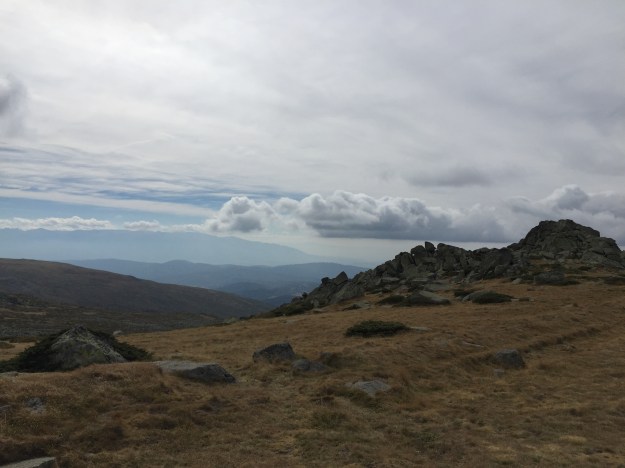
I took that journey at the end of a COST Restore working group meeting in the city. Time prevented walking the whole distance from the Theatre, but through a combination of the city’s Metro, buses and taxis, I managed to take in a circular walk starting and finishing at the Aleko huts (1800m).

IMG_5095 2.JPG

Aleko Huts

IMG_5084.JPG

Above Sofia

IMG_5076.JPG

Cherni Vrah (Black Peak) Summit

Vitosha Nature Park, the oldest park on the Balkans, established in 1934 and famous for its ‘stone rivers’ – rock landforms forming lengthy ribbons of huge round boulders that run down the mountainside arising from granite rock erosion.


IMG_5100.JPG

Stone River. Natural Patterns.