Category Archives: sustainability

Regenerative Sustainability: Co-Benefits of the Built Environment.

A number of excellent reports and papers have passed through my reading list and feeds in the last week or so, that together represent a wonderful view on regenerative sustainability co-benefits.

No Longer have luxury

Health co-benefits from air pollution and mitigation costs of the Paris Agreement: a modelling study

The Lancet Planetary Health , Volume 2 , Issue 3. Although the co-benefits from addressing problems related to both climate change and air pollution have been recognised, there is not much evidence comparing the mitigation costs and economic benefits of air pollution reduction for alternative approaches to meeting greenhouse gas targets. We analysed the extent to which health co-benefits would compensate the mitigation cost of achieving the targets of the Paris climate agreement (2°C and 1·5°C) under different scenarios in which the emissions abatement effort is shared between countries in accordance with three established equity criteria.

New Harvard Study: Green Buildings Provide Nearly $6 Billion in Benefits to Health and Climate

Harvard University examined a subset of green-certified buildings over a 16-year period in six countries: the U.S., China, India, Brazil, Germany and Turkey. Known as HEALTHfx, the study found nearly $6 billion in combined health and climate benefits.

UTC Healthfx The Impact Infographic

Related see also http://forhealth.org

The Healthy Buildings Team created the 9 Foundations of a Healthy Building as a standardized, holistic approach to understanding how buildings impact the people inside them. In any indoor space – offices, homes, schools, airplanes – these foundations can be assessed via Health Performance Indicators, or HPIs. Derived from the business term Key Performance Indicators, HPIs are metrics that provide insight into how a building is performing.

 By tracking HPIs on all 9 Foundations of the built environment, we can discover how to optimize buildings for health. We call this “Buildingomics”: the totality of factors in the built environment that influence human health, well-being and productivity of people who work in those buildings.

COBE Co-Benefits of the Built Environment

CoBE (Cobenefits of the Built Environment) is a tool to determine the health and climate benefits related to reductions in energy use. Reducing a building’s energy consumption reduces amount of energy produced by power plants, resulting in fewer emissions of pollutants that contribute to climate change and cause premature mortality, hospitalization, and lost school or work days.

Doughnut Dialogues

Welcome to the Doughnut Dialogues, inspired by Kate Raworth’s book Doughnut Economics: seven ways to think like a 21st century economist. This looks a brilliant platform to debate ideas, share links and examples, and start new conversations relating to Doughnut Economics see https://discuss.doughnuteconomics.org

BAMB Passports

The electronic Materials Passports developed in BAMB aim to be a one stop shop for material information. Materials Passports developed in BAMB are sets of data describing defined characteristics of materials in products that give them value for recovery and reuse, aiming to

  • Increase the value or keep the value of materials, products and components over time
  • Create incentives for suppliers to produce healthy, sustainable and circular materials/building products
  • Support materials choices in Reversible Building Design projects
  • Make it easier for developers, managers and renovators to choose healthy, sustainable and circular building materials
  • Facilitate reversed logistics and take back of products, materials and components

The Economics of Biophilia 

Not a new document but is now being re-published in 6 instalments. From offices and schools to hospitals and hotels, the case is made for incorporating nature into the spaces we live and work.

Sustainaspeak: A Guide to Sustainable Design Terms

The complex and evolving language used in the sustainable design community can be very challenging, particularly to those new to environmentally friendly and resource-efficient design strategies that are needed today.

Still to review this in full, but looks a good compliment to the work from COST RESTORE Working Group One Language of Sustainability report (available early April)
 

Imagine Better

imagine better costrestore budapest

People, Planet and Prosperity: A regenerative sustainability perspective of the classic Social, Environment and Economic ‘Venn’ diagram.

Image result for Social, Environment and Economic 'Venn' diagram.

The Business Case for ‘Sustainable’ Buildings

pexels-photo-227675

Three recent reports focus on the business case for sustainability, green buildings and human-centric buildings.

Are we now witnessing the new normal, where the question of sustainability cost is flipping from, how much extra will the sustainable building cost? to, what are the real costs in not providing sustainable buildings?

The WorldGBC Business Case for Green Building: A Review of the Costs and Benefits for Developers, Investors and Occupants, examines whether or not it is possible to attach a financial value to the cost and benefits of sustainable buildings.

The report highlights how green buildings can be delivered at a price comparable to conventional buildings and investments can be recouped through operational cost savings. It also notes that with the right design features, green buildings can create a more productive workplace.

The report specifically focuses on the potential benefits of green buildings throughout the various stages of the building lifecycle, from reduced costs during the design and construction phases through to improved health and productivity of workers when a building is in use.

“This is the first time all the credible evidence has been compiled into one collective resource”

  • Asset value: Emerging evidence in some markets of green buildings being able to more easily attract tenants and to command higher rents and sale prices
  • Design and construction costs: There has been an overall reduction in the costs associated with designing and constructing sustainable buildings
  • Operating costs: The direct benefits from green buildings in use (such as reduced energy and water use and lower long-term operations and maintenance costs) typically exceed any costs premiums associated with their design and construction within a reasonable payback period
  • Workplace productivity and health: The characteristics and indoor environments of green buildings can influence the productivity and health of workers who occupy them, resulting in bottom line benefits for businesses
The UKGBC Report Capturing the Value of Sustainability, Identifying the links between sustainability and business value focuses on a wider business case for sustainability, looking at at the challenges that businesses face in trying to identify the value they derive from their sustainability initiatives.

… the purpose of this report is to empower businesses and individuals to make the business case for environmental and social impact activities and to enable them to measure and demonstrate the value their organisations derive from such practices. 

Of particular note, relevant to my current work relating to FutuREstorative and with COST RESTORE in understanding the emergence of restorative and regenerative sustainability, this report notes we are seeing the rise of the restorative enterprise within the built environment

Much has been written on how businesses are moving towards doing more good rather than less bad. The phrases ‘net positive’ and ‘restorative enterprise’ are now appearing within sustainable business circles, with both referring to businesses that put back more than they take and restore social and natural capital whilst making a profit. Such businesses may be termed as using a ‘business with impact’ approach or being a ‘purpose driven’ organisation. In this context, ‘purpose’ may be de ned as ‘an aspirational reason for being which inspires and provides a call to action for an organisation, its partners and stakeholders, and provides bene t to local and global society’.

The white paper from Buildings 2030: Building 4 People: People-Centric Buildings for European Citizens published in November 2017 notes how the buildings we live and work in are affecting our environment, our physical & mental health, our wellbeing and our productivity.

The broad alignment of environmental and health agendas presents an opportunity to not only invest in better performing buildings, but also to improve the quality of life for people using these buildings. Enhancing the health and comfort of people in buildings has a huge potential for economic and societal benefits such as better health, increased productivity, reduced sick leave and a decrease in associated medical costs We call this approach “Building 4 People.”

Materials in Buildings: the impact on health of those who work, learn and play within them.

pexels-photo-206290

“the next phase of market transformation for the built environment is going to be led by material performance …” 

Health and wellbeing issues relating to the materials we specify, purchase, build with and dispose of has been increasingly arising in discussions of late. These may be within CSR, Environmental ISO workshops or in events such as the Specifi series (recent London). Indeed it is unusual for wellbeing in relation to materials not to be on the agenda for sustainability events.

In addition, within sustainability related meetings with clients, contractors and facilities management organisations, the issue of material health raises, often in reference to Grenfell, asking the question – do we really know the wider impacts on what we specifi, build with, maintain, replace  or dispose of?

Alongside this there is a rapidly growing interest in health related material standards such as Declare, RedList, Portico Fitwell and Well

A welcome addition to the debate is the (forthcoming) Materials Wellography from the Well Build people at IWBI. Below is an extract from their recent blog release which provides a very useful insight to the importance of materials and products we work with day in and day out.

Materials WELLography; your guide to the connection between the materials and products that make up the built environment, and the effect they have on the health of those who work, learn and play within them.

Materials make up our world. Much of the industrialized world is built from man-made, industrial chemicals. The chemical industry converts raw materials into more than 70,000 different chemical substances that make up our world. As the global population increases and urban centers expand, so do both the demand for manufactured goods and the rate of chemical production, which is projected to grow three times faster than the global population and to double every 25 years.1

The quantity and variety of chemicals on the global market makes the task of tracking chemical hazards both critical and extremely difficult. An estimated 95% of chemicals, used largely in construction, lack sufficient data on human health effects.,2 Although various countries apply their own framework for the management of chemical production and use, these are not harmonized globally, so different chemicals are regulated to different extents in different countries.

Life cycle of building materials and exposure hazards. Exposure to harmful chemicals can happen at various stages in the lifecycle of a commercial material or product. Below is an example of this lifecycle:

  1. Exposure can occur when contaminants are released into the environment during manufacturing or materials extraction.3, 4, 5, 6
  2. Throughout occupancy of a built space, chemicals used in furniture, furnishings, paints, adhesives and coatings can off-gas and end up in indoor dust, compromising air quality. 7,8,9,19 Proper ventilation practices and materials selection can help minimize indoor air contaminants. For more information on the benefits of adequate ventilation, refer to the Air WELLography
  3. Finish, maintenance and renovation work often involve dust-laden contaminants, fumes, solvents and gases. This is especially problematic in the absence of the exposure and ventilation controls typically required in production or construction settings.
  4. Construction and demolition work often include exposure to large amounts of dust (made up or and carrying chemical substances), as well as solvents, and other hazardous substances, for example those  associated with use of diesel-powered heavy equipment 10,20. Fortunately, improved awareness of exposure risks in maintenance, renovation and demolition has prompted additional work safety measures through various voluntary standards.

Environmental and Health Impacts. Chemicals used in building materials and byproducts made during their manufacture can persist in the environment. Even small concentrations of these chemicals can find their way into organisms in high enough doses to cause damage. The accumulation of toxicants in water or soil has implications for human health as these chemicals can advance up the food chain and accumulate in human tissue. 14

Long-term, large-scale biomonitoring studies have helped to show the impact of policy changes on human exposure risks. For example, a Swedish study involving long-term testing of human breast milk for the presence of the pesticide DDT and its residues has shown a significant decrease of the chemical following its restriction and later ban. A gradual decrease in PCB is also evident, likely due to efforts to move away from the chemical across the European Union. In contrast to the decline of these two chemicals over time, concentrations of the flame retardant PBDE was found to increase along the same timeline, consistent with increased across EU states. 21

Market forces at work. As evidence of the environmental hazards and health issues related to chemicals accumulates 15, an increasing number of hazard assessment tools emerge in the building material sector. These evaluation tools are being introduced and used in the marketplace as means to differentiate products and ingredients with lower hazards and to certify greener chemical ingredients in consumer products. Despite gaps in data and regulation, the good news is that we have a growing repository of tools at our disposal that can provide direction in understanding the tradeoffs of materials and products over their life cycle.

Careful evaluation and selection of building materials and products is an important and effective first step to identifying safer materials across installation, use, maintenance and disposal. In the long run, the call for the prioritization and responsibility of advancing safer chemicals and sustainable materials can lead to an improved, data-rich market, comprehensive regulations and policy reforms and a shift towards safer chemicals and investment in green chemistry.

Access the full IWBI article here. And download the excellent Well App for news and articles.

References noted above can be found via the IWBI article.

Reconnecting the eco system: Specifi Services London

logoIt was a real pleasure to present a sustainability keynote to the 100 plus service experts and engineers attending the Specifi Services event in London on the 29th November.

The keynote focused on the impact that the built environment sector  has on climate change and how we can all become part of climate change solutions. I introduced the need to think beyond sustainability, to a regenerative approach that connects with and enables natural eco systems to flourish.

wolf

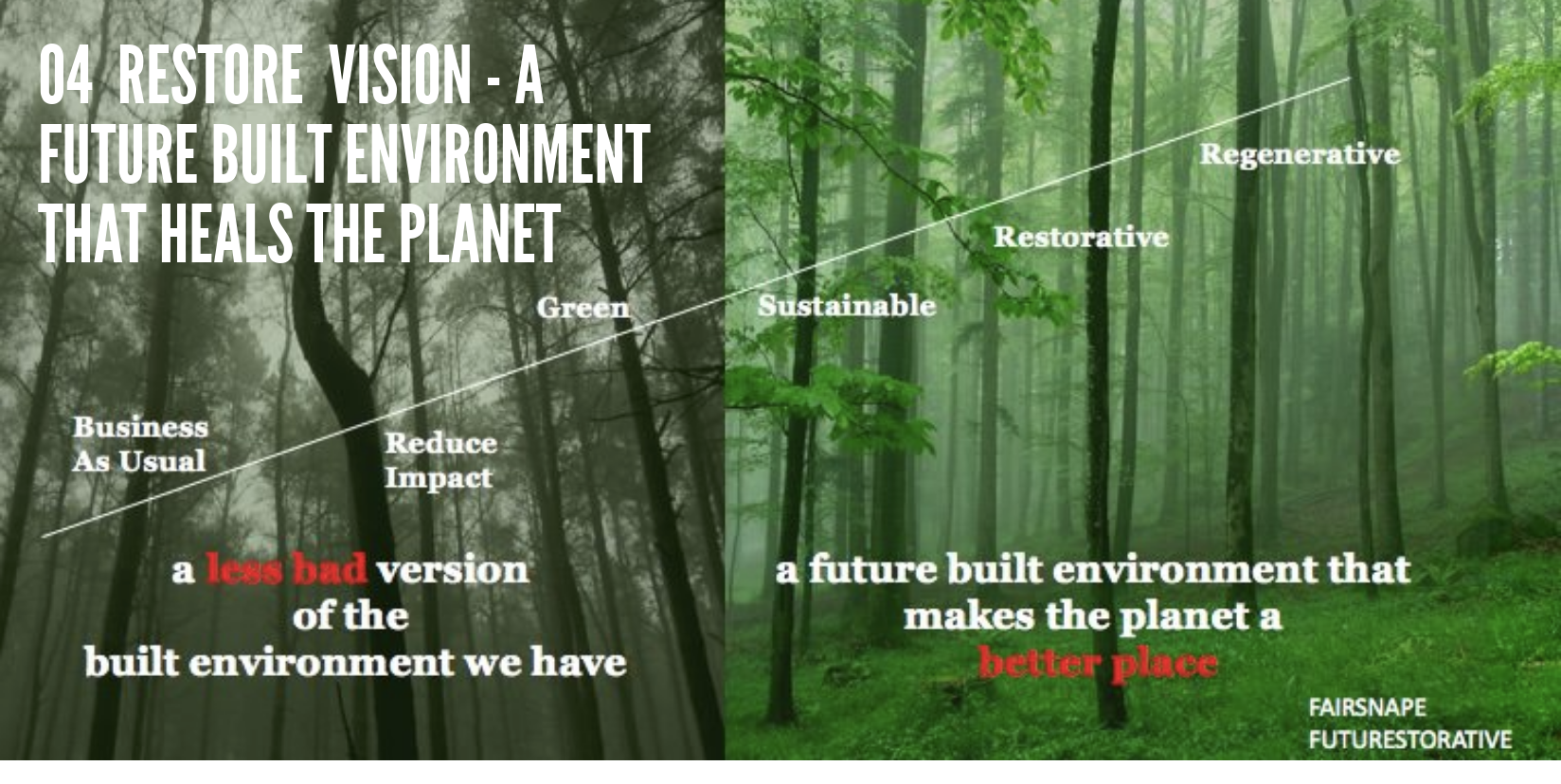
Sharing insights from FutuREstorative, I put forward the case that we no longer have the luxury of being less bad, and that we need increasingly radical approaches of being more good.

This includes working towards the Sustainable Development Goals (that will replace the Brundtland definition of sustainability) and for example meeting the World GBC from Thousands to Billions target for all new buildings to be net zero carbon from 2030 and all buildings to be net zero carbon by 2050

One particular mention for London services is the Getting to Zero report which lays out a ‘roadmap for making all London buildings zero net energy by 2050‘ from the London Energy Transformation Initiative. LETI is driven by Clara Bagenal George at Elementa who was able to respond to questions during the evening, particularly the recommendation, endorsed by the London Plan, that public and private buildings to disclose their performance on energy use.

On LETI, the following extract is from the recent Integral publication Impact, transforming the engineering industry’

Focused on mitigating catastrophic climate change by dramatically reducing carbon emissions from the city’s buildings, LETI was established as a multidisciplinary collaboration working toward a zero-emissions future for London.

LETI is poised to make a big difference, and it all began with the vision of one person, a member of Elementa’s London office named Clara Bagenal George. Hers is a story of the power of one to make a big difference, and is also a story of the power of many. It shows how a person with a vision, backed by a supportive team with access to resources, can mobilise like-minded people who together can have a tremendous impact on one of the world’s biggest cities.

The new normal

We now have many solutions available to us that will undoubtley become the new normal. For example, Project Draw Down contains over 100 solutions that already exist in practice, and the new emerging regenerative sustainability standards such as the Living Building Challenge  that gives us a new direction for a new future built environment.

The keynote focused on two new normal aspects – Healthy Material and Rethinking Carbon …

Healthy Materials:

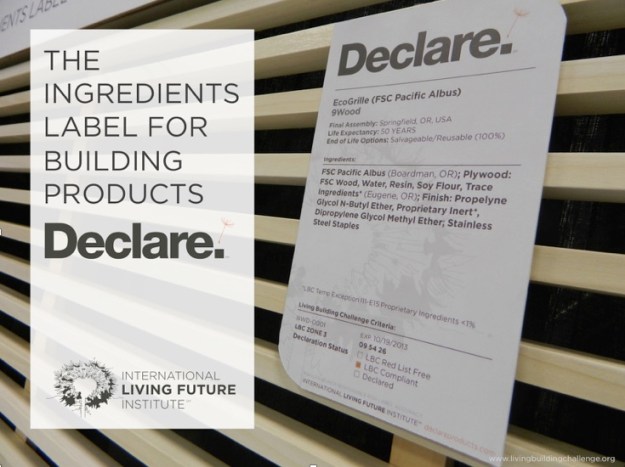
declare

Declare is the ILFI material declaration standard against the Living Building Challenge Redlist– a key area of debate for LBC, Well Build, Google and other projects in London at the moment.
The Declare label asks three questions .

  • Where does a product come from?
  • What is it made of?
  • Where does it go at the end of its life?

Rethinking Carbon:

There is a growing recognition to reimagine carbon. Thinking of carbon as an unwanted evil may be preventing real advance on effective carbon management.

Maybe the metric for carbon success is not just reduction in fugative emissions but a metric that acknowledges the carbons locked into circular economy materials (Durable Carbon) and carbon returned to where it belongs (Living Carbon)

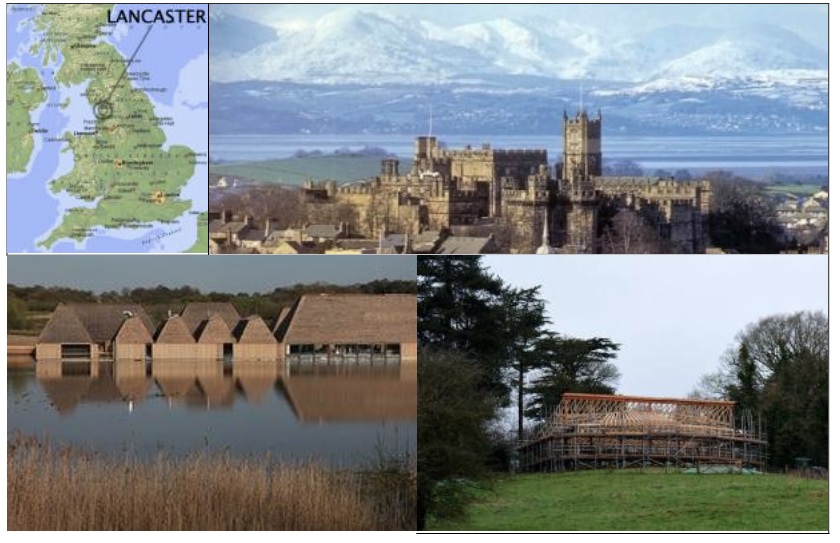
The keynote provided examples of two Living Building Challenge projects, the Bullitt Centre in Seattle & the Cuerdon Valley Park in Lancashire, and concluded with the question – ‘how will your organisation, your product, your building get beyond zero’

Specifi events are unique, providing an opportunity to listen and to learn from inspirational speakers, an opportunity to learn and share in an informal networking format with leading exhibitors and industry colleagues, and then to discuss in more detail over a three course meal. (All included in the free attendee ticket price!)

DP3zdt-W4AA7o6o

Download an abridged version of the Specifi Services London keynote

See you at the next Specifi: Design in Manchester in 2018

Revolutionary, Regenerative Sustainability; RESTORE Training School

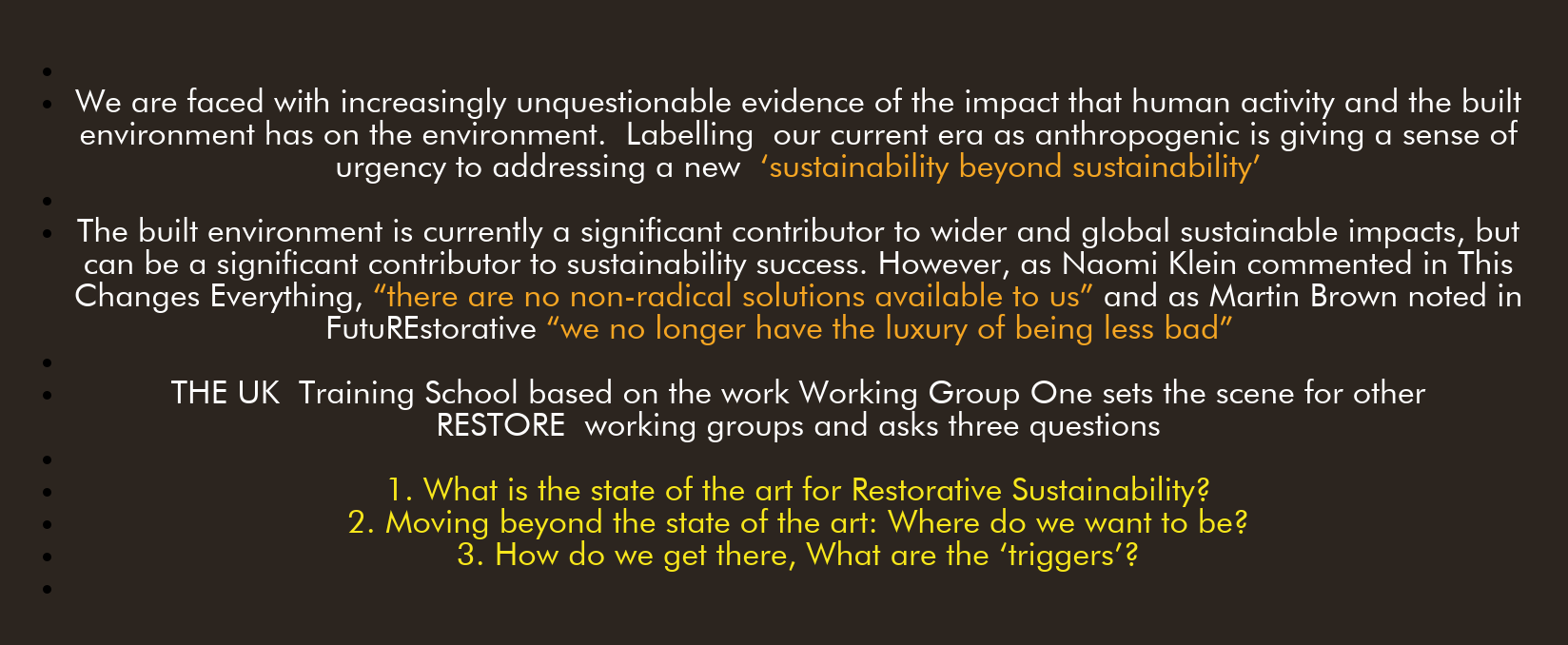
The UK RESTORE Training School

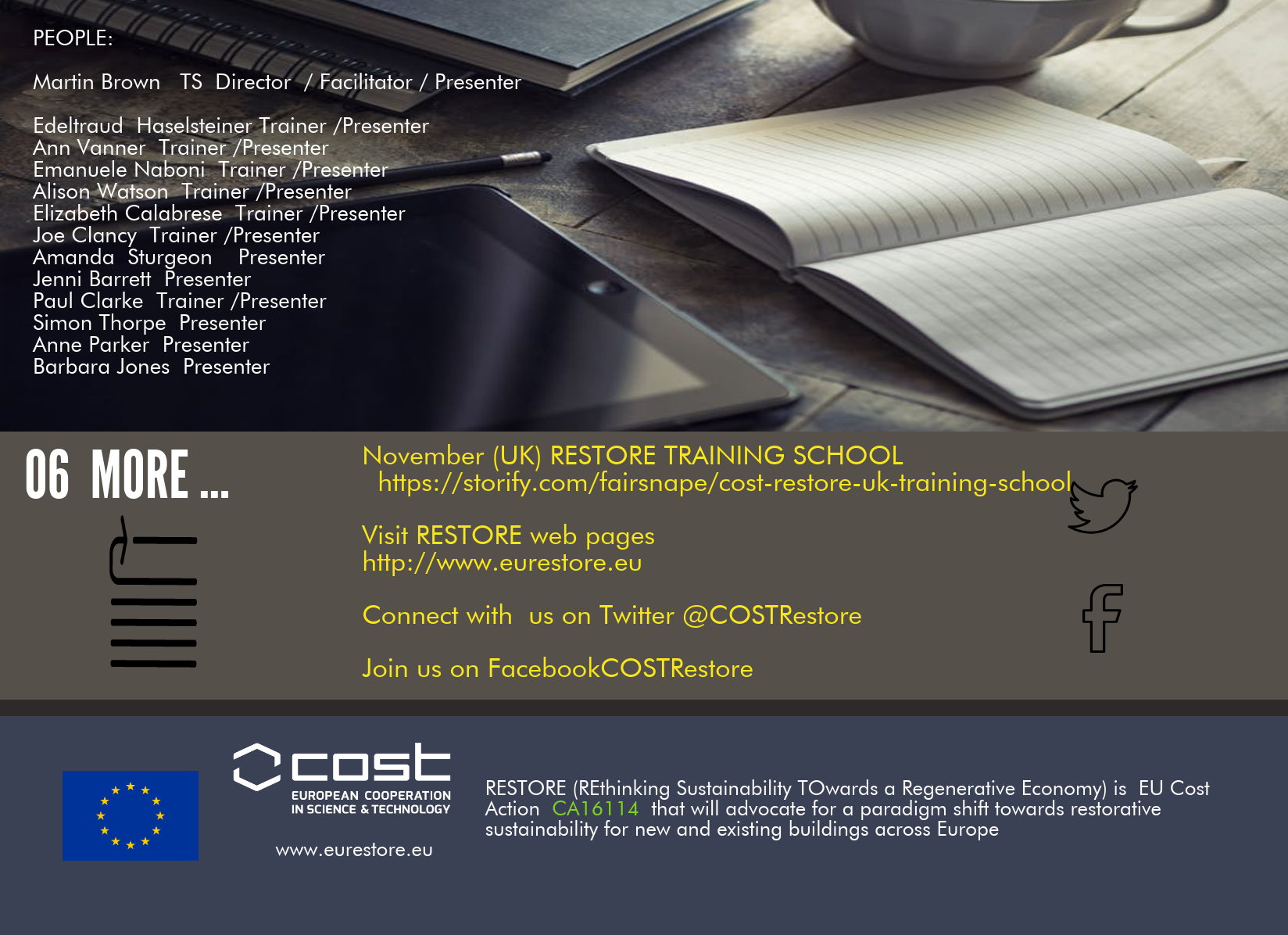
The first RESTORE Training School took place in Lancaster, UK between 14th and 17th November 2017 organised and facilitated by Martin Brown, Fairsnape. Over 40 trainees and RESTORE core group members attended, representing a great spectrum of sustainability disciplines, experience and EU countries. The four days were lead by trainers and guest lectures from the UK, EU and USA, but with a distinct Lancashire focus!.

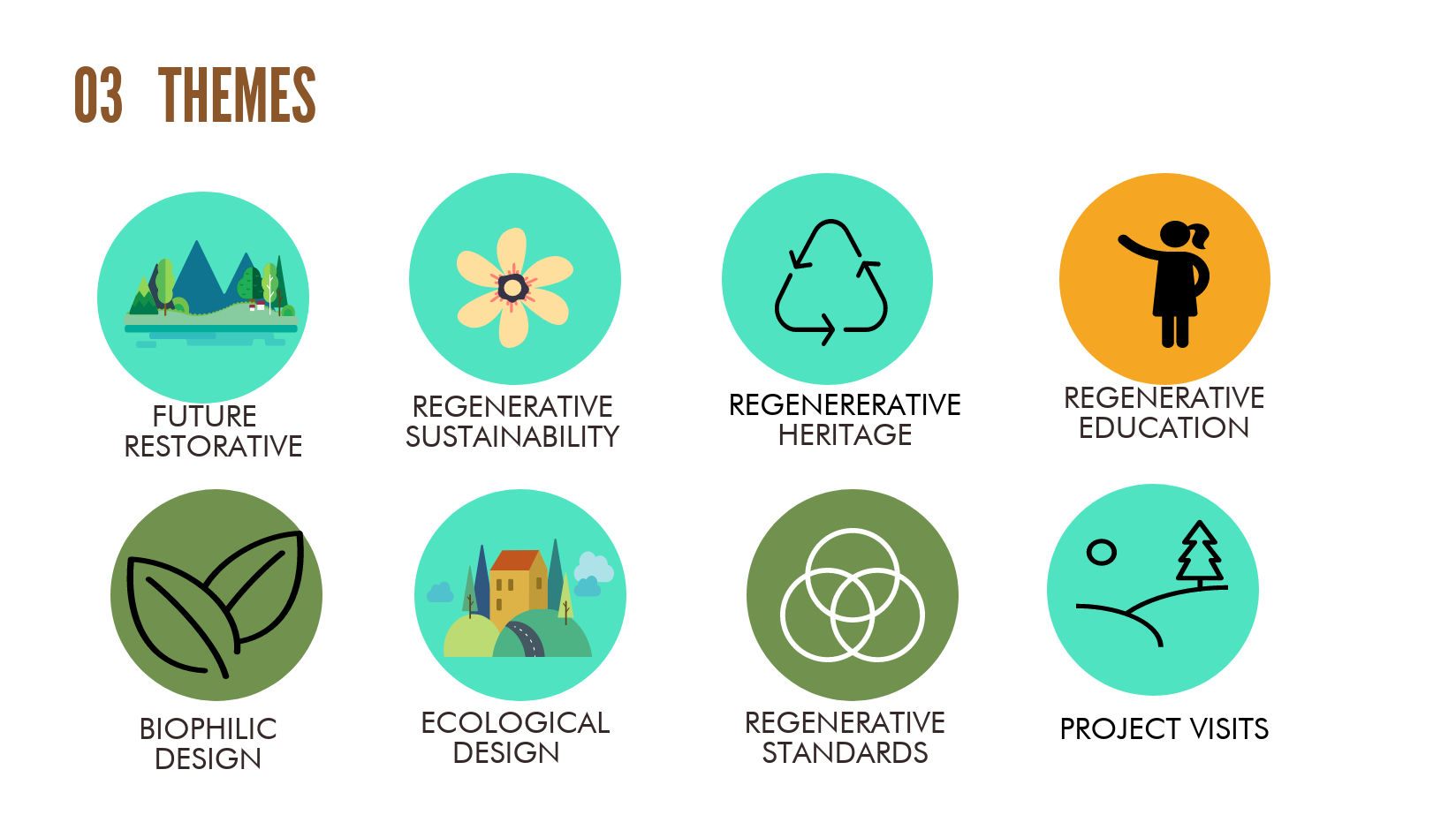
The focus was firmly on Regenerative Sustainability, Biophilia, and Sustainability Education,  in four days trainees gained a deep understanding of Restorative and Regenerative Sustainability and the key topics from RESTORE working groups.

The week was very busy and very interesting, with topics and activities that went well beyond my initial scope and expectations” Trainee Report Feedback

Training school designed to progress the RESTORE Cost Actions purpose.

“I believe this was the beginning of something bigger and totally revolutionary”            Trainee Report Feedback

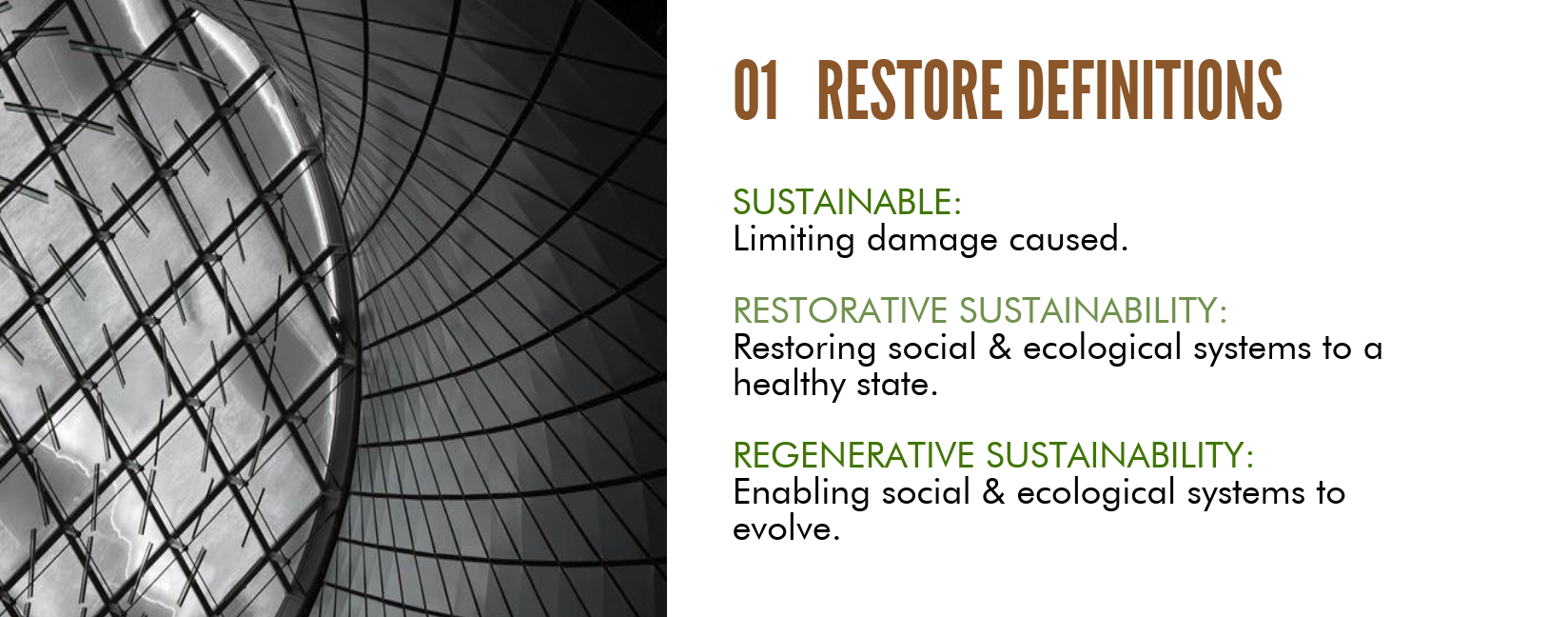
Discussions and agreement on sustainability definitions was a crucial start to the four day training school

“I received clear definitions and deep understanding of three basic, but important words: sustainability, restoration and regeneration. I think that this precise explanation will allow me to direct my research toward more “green direction” Trainee Report Feedback


“So one of the key insights to me was to understand sustainable design as a philosophy. It’s not a list of do’s and don’ts about materials, site development, and building systems. It’s a holistic ethic that includes all the stakeholders in the dialogue, encouraging feedback for continuous refinement and improvement. It seeks to imitate the efficiency and diversity of nature and create design solutions that are responsive, self-regulating, and full of spirit” Trainee Report Feedback

“Working with experts from different fields, discussing different ideas, learning about others and about their expereinces, their work, education, their side of the story – that is how you can learn so much in just few days, something that you can not learn by reading only books. I am so very glad that I was part of this Training School and I can surely say that I had a great time, but at the same time learnt a lot”  Trainee Report Feedback

“Do nothing today to compromise tomorrows generation” Also, the concepts of salutogenesis and healthy materials were introduced. These were completely new expressions to me, so besides trying to process all the information I had great times in the debate parts, where discussions among a completely heterogeneous group lead to a perfect understanding. Trainee Report Feedback

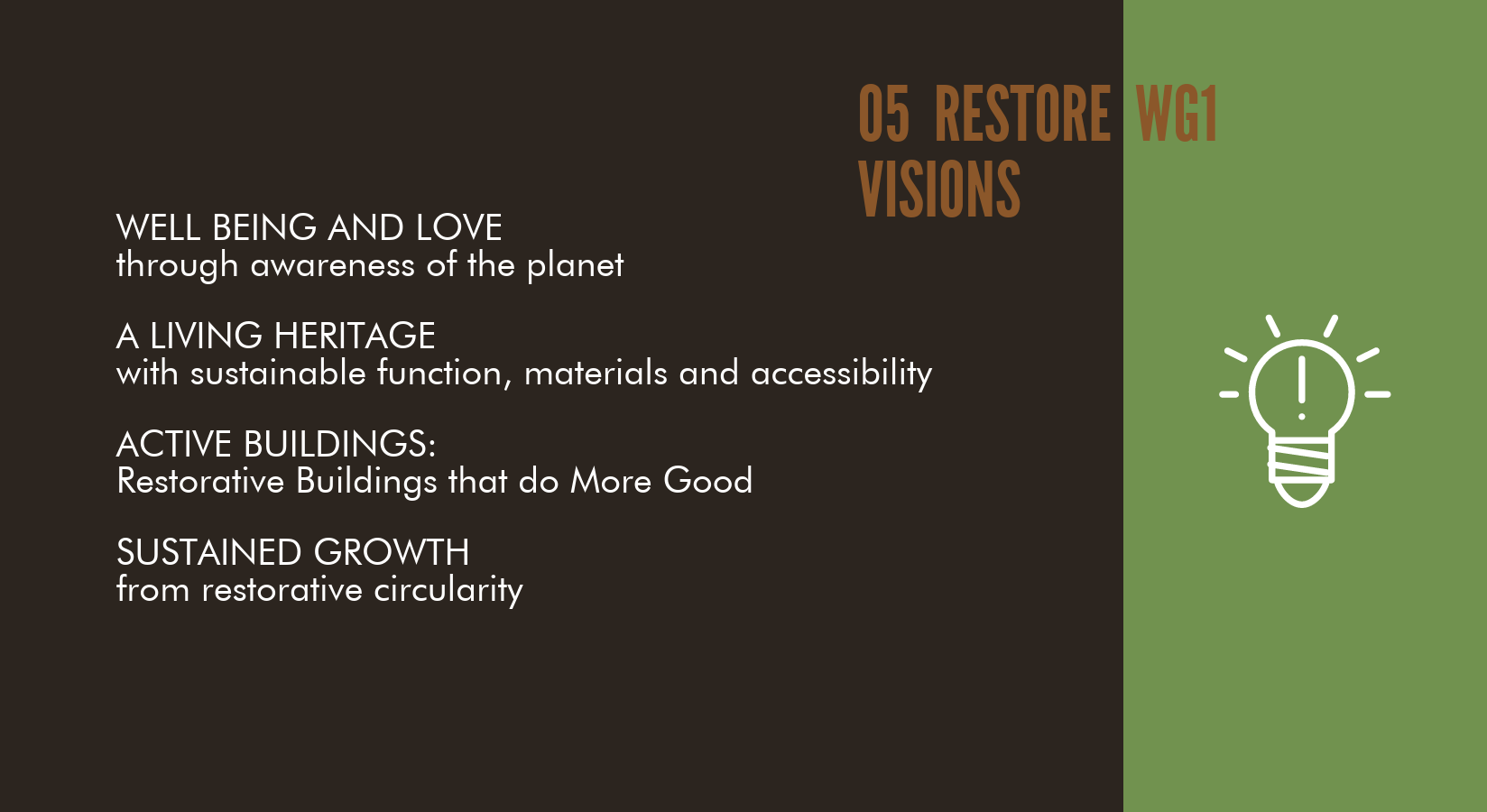
State of the Art and Visions from the working group subgroups central to the training school content

“Newly learned term: salutogenesis. The “sustainability” of the people living/working inside a building could be more important than the sustainability of the building itself”  Trainee Report Feedback

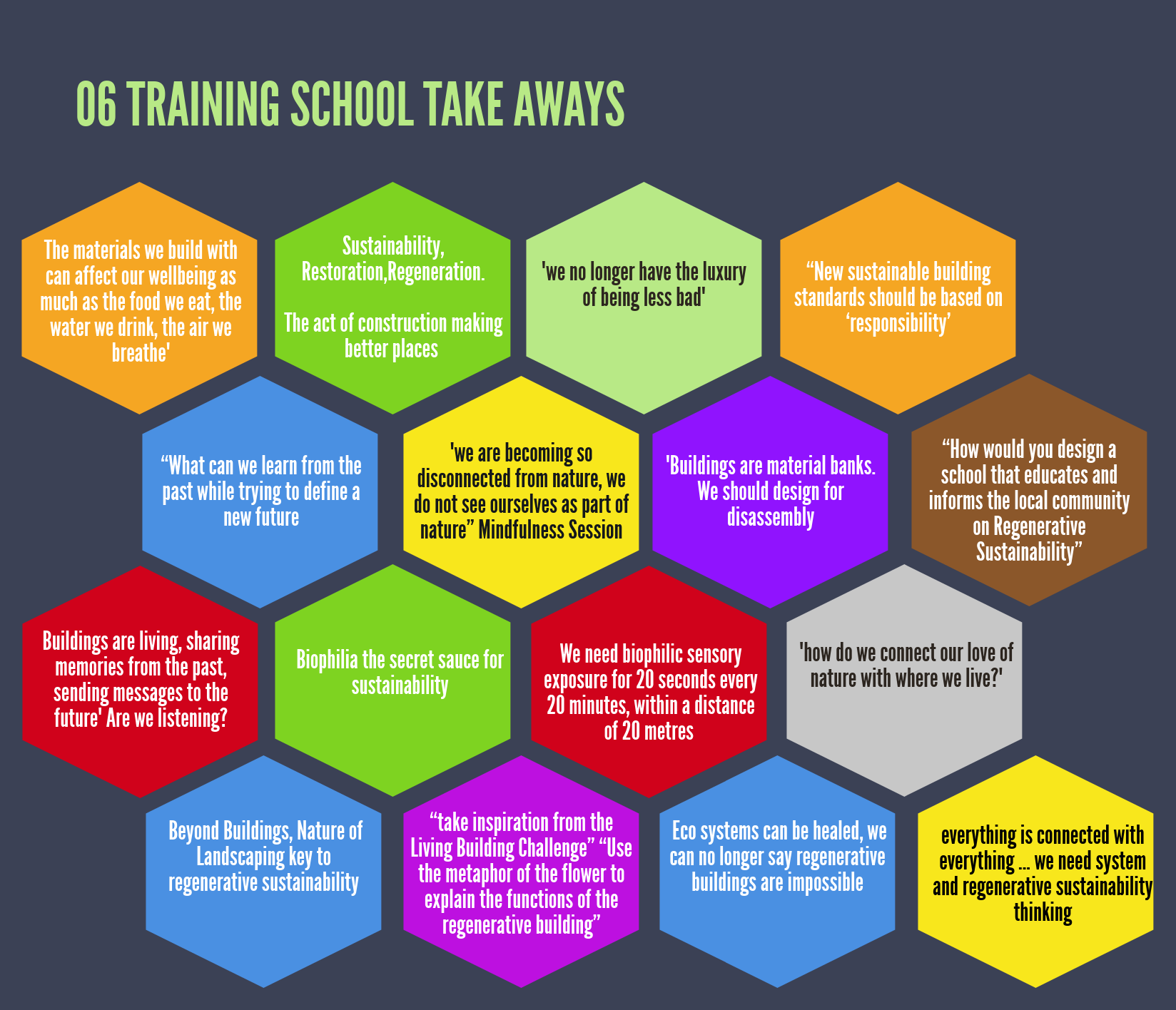
Quotes and comments shared through social media during the four days made for a good number of Regenerative Sustainability Takeaways …

“The Living Building Challenge presented itself as one of the most holistic sustainable building standards I have come across and I would really hope to get the LFA certification and aim for a LBC building in one of my future projects. I also thought the 20 LBC imperatives provide a great lens in which to scrutinise projects”. Trainee Report Feedback

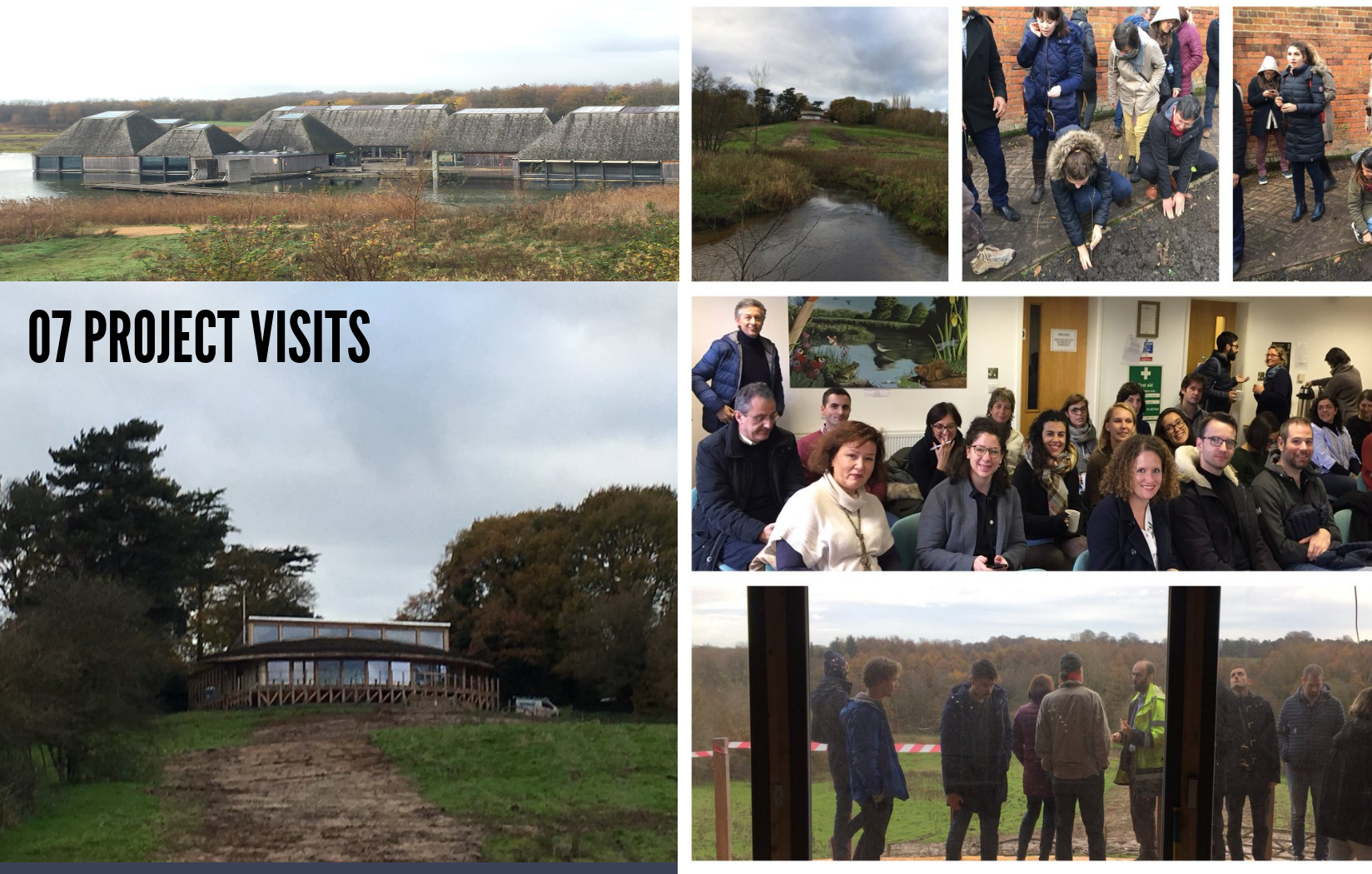
Project visits to Brockholes and CVP enabled the students to witness the application of the topics covered during the training school. Planting trees at the Living Building Challenge Project ( in part to offset carbon from travel, but also to provide locally available Larch timber for any future cladding replacement of the Visitor Centre)

“New approaches were given, new ideas were born and this was only possible due to amazing hosts and organizers which knew how to keep us motivated and focused all day long… hard work was done, and great results were attained” Trainee Report Feedback

Read our Storify here 

Download our full infographic here


(Header Image Credits TopL JustEngland.org TopR Lancaster Uni. Bot L+R Martin Brown @fairsnape)

Towards 1.5 DegC: Built Environment’s role in COP23

pexels-photo-425050-2COP23 located in Bonn, Germany and hosted by Fiji takes place from 6 – 17 November.

The hosting by Fiji is significant as as a island nation they already feel the impact of climate change more than other nations. Fiji will also bring a new consensus building and discussion approach to COP23 – ‘Talanoa’.

Talanoa is a Pacific, story telling, term for discussions aimed at building consensus, airing differences constructively, and finding ways to overcome difficulties or embark on new projects. It is one of the building blocks of Fijian society, used for centuries to foster greater understanding among a people distributed over many small islands, and carry them through a tough existence. It is hoped that Talanoa will break deadlocks that have limited COP progress over the last 20 years.

The built environment

In recognition of its crucial role of the built environment, (as part of the climate change ‘problem’ and part of the solution for reducing CO2 emissions) the sector should receive high levels of visibility at this year´s COP.

An unprecedented four-day buildings programme has been pulled together by Global Alliance for Buildings and Construction  which has at its core the overarching goal of COP23:

To harness innovation, enterprise and investment to fast track the development and deployment of climate solutions that will build future economies with net zero greenhouse gas emissions, in an effort to limit the rise of global temperatures to 1.5°C above pre-industrial levels.

You should be able to follow discussions, comments and outcomes from the four days via a combination of #COP23 #GABC twitter hashtags 

Setting the scene: Building Action Symposium

9 November action is very much at the heart of the Building Action Symposium, a public event that will kick off the four-day event programme.

The objective of this action day is to identify key ingredients to achieving a low-carbon, energy efficient buildings and construction sector that will help to achieve the Paris Climate Agreement from 2015.

Turning theory into practice: Best practice examples on the ground

To illustrate that it is possible to walk the talk, the following day, a guided tour by the Federal Chamber of German Architects will showcase a selection of local buildings that are exemplary for sustainable architecture, including a day care centre and student housing.

Bringing about change within the construction and real estate sector: Human Settlements Day

Taking onboard recommendations from the Building Action Symposium on 9 November, this event will explore high impact change agents and measures, the role of private sector engagement and how to link buildings to the UN Sustainable Development Goals (SDGs).

Linking buildings to the Sustainable Development Goals: SDG11 Day

Finally, Monday, 13 November is SDG11 Day will see a high-level dialogue between country representatives and senior industry leaders focused on ensuring the buildings sector delivers against key relevant UN Sustainable Development Goals:

  • SDG11 – Make cities and human settlements inclusive, safe, resilient and sustainable
  • SDG7   – Ensure access to affordable and clean energy
  • SDG13 – Take urgent action to combat climate change and its impacts

Sources: this post is based on and adapted from

RICS News post

Global Alliance for Buildings and Construction

Guardian 6th Nov 

Reimagining Construction Materials: (Waste) Food for Thought.


pexels-photoA new Arup publication, (The Urban Bio-Loop) aims to demonstrate that a different paradigm for materials in construction is possible, through the adoption of organic waste re-imagined as construction materials.

“Adopting the principles of Circular Economy provides the rationale for a shift from a linear (take, make, dump) disposal model – towards a circular value chain where organic waste is the main resource.

The use of organic waste in construction would possibly allow the exploitation of its untapped value with a positive impact not only from an environmental perspective but also from a technical, social and economic standpoint”

The waste and resource use profile of construction is not healthy, as reinforced by statistics within the report. For example,  60% of UK raw materials are consumed by construction and operation of the built environment and up to 30% of EU waste comes from construction. (FutuREstorative used the 40% rule of thumb for waste and resource use)

And the food waste sector is equally poor, with 0.6 billion tonnes consumer organic waste produced globally,  accounting for 5% of global green house gases.

The report suggests that “organic waste from our cities and countryside, traditionally managed through landfill, incineration and composting could be diverted – at least in part – to become a resource for the creation of construction engineering and architecture products before being fed back in the biological cycle at the end of their service life”

Intriguing and Inspiring facts and examples include:

  • Pineapple: Internal cladding and furniture
  • Rice: Brick and Block Products. Rice can be also used as raw material for board production
  • Banana fruit and leaves can be used to obtain rugged textiles and carpets. The material is 100% biodegradable. http://leoxx.nl/
  • Sunflower: floors walls and ceiling boards, made by the repurposing of waste from sunflower harvesting. They are made by just adding water, heat and pressure with no additives. http://www.kokoboard.com/
  • Peanut: Flame retardant boards, made by the repurposing of waste from peanut shells. Peanuts shell are turned into particle boards by a hot press procedure and the use of a formaldehyde-free (e.g. soy based) adhesives.

Download the Arup report from https://www.arup.com/en/publications/research/section/the-urban-bio-loop 

Regenerative thinking embedded in new DGNB System 2017.

nature globeSustainable building certification standards are immense influencers on not only the built environment sector but also commercial, industrial and domestic green lifestyles. With that influence comes a real responsibility in establishing the current direction of travel for the industry against a backdrop of climate, economic and social change.

Get it right, and we move closer to addressing major climate change issues, attaining carbon reduction targets and achieving ecologically, economically and socially just goals. Get it wrong and the negative impact ripples far beyond our built environment sector.

It is the purpose of ‘regenerative’ certification schemes not only to identify best practice requirements for design, construction and operation, but to go way beyond current best practices and establish a vision for sustainable buildings based on future requirements — with practice then measured against that vision.

FutuREstorative Working Towards a New Sustainability makes the case for regenerative building standards, using the Living Building Challenge, Well Build Standard, One Planet Living and The Natural Step as examples. Encouragingly, news of the 2017 DGNB System update, the result of an intensive internal review, could well now join that the regenerative sustainability standards family.

The following are extracts and comments are from a DGNB System update release,  illustrating its proposed alignment with current regenerative sustainability theme:

Sustainability should not be an add-on or nice-to-have. Instead, it should be seen as an integral part of every building project. Given the number of global challenges we now face and the demands of climate change, it will become increasingly important for everyone to face up to the key topics of sustainability, especially when it comes to implementing different aspects in practice. Paying lip service to sustainability or reacting simply because it looks good for marketing purposes will no longer be accepted

Health and Wellbeing: We build for ourselves – for people who spend most of their lives in buildings. This intrinsically means that people and their need for health and wellbeing must therefore be the lynch pin – the point around which everything revolves when making all the decisions that influence planning and building


Circular Economy: When selecting the materials to be used in a building it is necessary to consider that one day it may be disassembled or reclaimed. The DGNB certification system thus plays an important role in ensuring that material cycles are put in place so that products can be re-used or reclaimed, along the lines of cradle-to-cradle principles.

The DGNB System is therefore the first of its kind to make circular economy principles an assessable and measurable aspect of buildings. To promote the use of new methods, such solutions are rewarded with bonuses, in turn having a positive impact on certification outcomes.

Positive Contribution: The DGNB sees design quality and Baukultur (architectural culture) as a central aspect of sustainable building.  Version 2017 …looks more closely at any factors that consider a building’s contribution to its … environment.


Sustainable Development Goals: In 2016, the United Nations issued its Sustainable Development Goals (SDGs), a set of specific and meaningful targets aimed at shaping the future development of our planet, encouraging people to think again and thus paving the way for life in a sustainable world. The DGNB supports the UN objectives and wants to encourage others to make a tangible and positive contribution to achieving these targets through certification.  All projects that achieve DGNB certification in future will also include a statement on the extent to which they contribute towards fulfilling the SDGs


Life cycle assessment of entire buildings. This is captured in the DGNB System in accordance with EU standards and ranges from how materials are produced to final deconstruction. It’s important that scientifically defined benchmarks are used to calculate and optimise impacts on the environment.


Innovation: It is the DGNB’s goal to promote new thinking and a willingness to step outside comfort zones. It was this underlying thought that resulted in a new instrument being added to the criteria contained in Version 2017: Innovation Capacities. With immediate effect, many of the criteria have been defined in a way that should motivate planners to pursue the best possible and the most sensible solutions for their project.

RelatedA case for reconstructing the world of sustainable building standards

Future Pathways to Zero: Specifi Bristol Services

logo

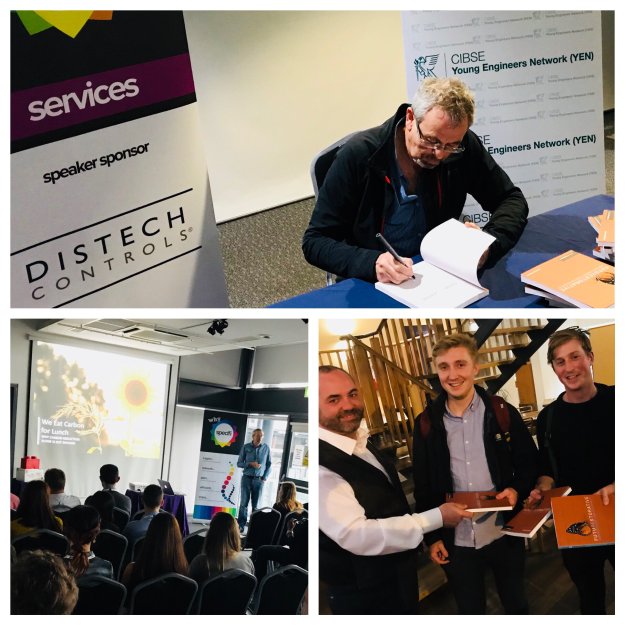
It was a real pleasure to share insights from Future Restorative and other initiatives at the Specifi Services and Facilities Management event in Bristol last night.

The event was also billed as part of the World Green Build Council’s Green Build Week, focusing on re-imagining carbon to address the World GBC’s call for all new buildings to be zero by 2030 and for all buildings by 2050. A very ambitious call, but as the recent report From Thousands to Billions points out, we already have thousands of zero buildings, we just need to learn from these climate hero buildings and scale up for the remainder.

To do so, we have some awesome solutions and proven approaches now available to us – for example in Paul Hawken’s Project Drawdown, William McDonough’s  Reimagine Carbon work, (Nature: Carbon is not the Enemy) the Well Build and Living Building Challenge standards – all of which indicate future pathways to zero.

My keynote “We Eat Carbon for Lunch‘ focused on carbon positive aspects of two Living Building Challenge projects – the Bullitt Centre in Seattle and the Cuerdon Valley Project in Lancashire. Very different projects indeed – but climate heroes both, demonstrating that restorative sustainability is possible. Much of this work and thinking is being explored by the EU COST Restore action, a network of researchers and practitioners from across the EU and beyond, exploring how Rethinking Sustainability leads to Regenerative Economies.

Questions following my keynote from the audience indicate important themes for future keynotes at upcoming Specifi events

  • What is the Living Building Challenge?
  • What are the financial considerations for restorative sustainability?
  • What one (services) climate solution could we implement tomorrow?
  • Just what is Biophilic Design?
  • What clients and organisations are adopting Restorative Sustainability approaches?

Specifi events are unique, providing an opportunity to listen and to learn from inspirational speakers, an opportunity to learn and share in an informal networking format with leading exhibitors and industry colleagues, and then to discuss in more detail over a three course meal. (All included in the free attendee ticket price!)

The Bristol event was in partnership with CIBSE YEN (Young Engineers Network) – these are the young engineers of the future, hungry with an appetite to learn more, on restorative sustainability, but also from the services and facilities organisations exhibiting.

Future events in 2017 include Glasgow (Landscape) Newcastle, (Design) Birmingham (Landscape) and London (Design and Services)

I am delighted to be part of the Specifi Team – curating keynotes and talking at events throughout 2018, so I look forward to continuing the discussion with the Services people in Bristol next Feb and to meeting you at your next local Specifi event soon.

DKynN4zX0AAaFVz.jpg-large