Tag Archives: fairsnape

Award nominations for fairsnape projects

benchmarkI am rather in awe and delighted that a number of the social media and sustainability advocacy projects I am supporting have been nominated for Be2camp social media awards.

This fairsnape blog, started way back in 2005 as Excelsus and from 2007 as iSite, has been nominated for Best sustainability or built environment blog along with some excellent co-nominees!

The @fairsnape twitter account has been nominated for Best AEC use of Twitter

Green Vision -the brilliant deep green programme as part of Leeds Met and the Leeds Sustainability Institute is nominated for the Best AEC community, network or application

The Sustainability Leadership Conversation (#sustldrconv) initiative kicked off by Andrea Learned and myself earlier this year has been nominated as Best virtual or hybrid event

ConstructCO2 – the online construction carbon and geo-spend tool has been nominated for the Best ‘internet of things’, location-based or mobile app

and the excellent ThinkBIM  programme, web supported through be2camp with Paul Wilkinson and myself has also been nominated for the Best virtual or hybrid event

Please do take a few minutes to check out the nominations for this years awards and vote for those that inspire (hopefully those listed above!!)

(As social media advocates at be2camp we encourage the active online involvement of supporters, we didn’t follow  approach of many awards programmes – no decisions made by judges or panels in private here, the nomination and voting process for be2awards is crowd sourced across social media and is totally transparent and independent )

Constructing social media leadership …

OLYMPUS DIGITAL CAMERAOver the last year or so we have seen growth and a big change in attitudes to social media, with perhaps in twitter particular, now an accepted element in today’s communication mix.

Those who a few years back were adamantly against social media have now joined, often with a fanfare of “we’ve arrived, we’re innovative” (look at us!) and with some organisations once totally anti social media now proclaiming expertise in helping others.

Back in 2012 I wrote in the Guardian (Why the construction sector should engage with social media) that one of the barriers to social media take up, and hence by default a barrier to collaborative working communications,  BIM, learning and sharing  and general construction improvement is the reluctance of directors and senior managers to recognise, embrace or enable social media. Of course there are as ever some great exceptions to this,  But all too often directors have tinkered out of curiosity, and empty LinkedIn and twitter accounts set up now tell a different story … of organisations and directors who are poor communicators.

So why are built environment organisation leaders slow to embrace these communication platforms? Maybe its the:

Need to retain control – the beauty of social media is in its open sharing, we can never know who staff will reach, converse with, learn from, share with, collaborate with and how those we converse with will respond.

Lack of understanding Digital communications is expanding rapidly, beyond the understanding of many. Consequently many directors feel vulnerable in engaging with something they don’t understand, so stay away.

Fear of just being a fad. Without a clear vision of how social media will evolve, and how it can be used strategically to benefit an organisation, many directors are reluctant to invest in seemingly unchartered waters.

And all this is sad for a 21st century construction sector, where communications are so often the root cause of most of our problems, where most companies promote a vision of innovative, open, collaborative and where most directors sell themselves as enabling role models for innovation.

Social media presence is increasingly used as a good test of an organisations, and indeed the organisation’s leaders  claims within PQQ’s, Bids and PR material to be innovative, having effective internal and external communications.

Earlier this year we started Sustainability Leadership Conversations, powered by social media, to enable leaders of smaller built environment organisations to engage with the sustainability conversations that take place across across social media. Initially these are  monthly twitter conversations with leading individuals, but will expand to facilitate conversations between organisations, between UK and USA SME organisations. Join us and discuss on the 01 Oct  for our next sustainability leadership conversation by using and following the #SustLdrConv hashtag.

Having a strategy for social media in your organisation is essential, as it is with other initiatives, and should be the starting point for adopting social media approaches. To discuss support for getting your strategy underway, get in touch (Martin in UK, Andrea in USA)

If you are UK based, we can help you apply for Innovation Voucher funding to ensure your social media, digital communication and BIM journey sets off on the right footing. (Next application closes in October)

my shared links over the last week (May 12th)

Experimenting with a round up of key links shared via twitter over last few days, brought together by Rebel Mouse.

[rebelmouse sitename =”martinbrown/Latest”]

Introducing the Living Building Challenge in the UK

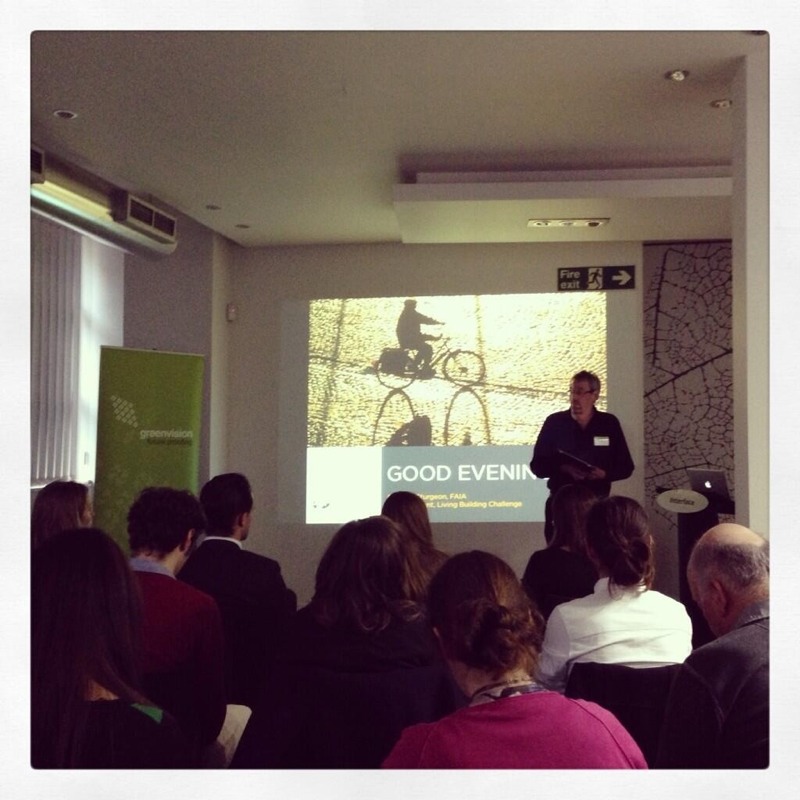
It was a real treat to introduce the public lecture from Amanda Sturgeon as part of the UK Living Building Collaborative launch at the Interface showroom in London last night.


Here are my introduction notes …

Good evening and a warm welcome to Living Building Challenge UK

Firstly a huge thank you to Interface, Kelly Grainger for hosting this evening and Claire Bowles at Green Vision for making it happen, and of  course Amanda Sturgeon from Living Building.

I and a few others have waited a long time for this …

As you may have read in Hattie Hartmans AJ article, our awareness with Living Building started via twitter and through twitter dialogues during the Living Futures conference in Portland in 2011

Later that same year I was privileged to have a guided tour of the CIRS building in Vancouver, during the week before completion (The CIRS building is one of the few buildings scheduled for LBC certification) Since then we have received Living Building related remote presentations live into Green Vision and Be2camp events.

Over the last few months we, that’s myself and Claire at Green Vision, have held regular Skype chats with Amanda and others at LBC, to set up this UK Collaborative and this event, so it’s a real pleasure to welcome Amanda along this evening

But before introducing Amanda a word about the Living Building UK Collaborative. We are part of the Green Vision / Leeds Sustainability Institute with two main aims:

One of advocacy to increase awareness and understanding of the Living Building Challenge

Secondly to provide support to clients for living building design, construction and certification in line with the challenging Living Building principles.

If you want to know more about the collaborative, would like to get involved or indeed would like support on possible future Living Building projects here in the UK please do get in touch.

We cannot let this evening pass without mentioning Mel Starrs, and her advocacy for deep green thinking. Mel, in her last blog piece (an article which you must read) welcomed the idea of LBC in the UK as a standard worthy of the green credentials of leading clients.

Mel’s blog was read by Su Butcher.

I am sure you will agree – launching the LBC here in the UK is in fitting honour for Mels passion for sustainability, green building and challenging standards.

Amanda – Vice President Living Building Challenge

Amanda is an award winning architect recognised as a pioneering leader in the green building movement in the US northwest, a founding member of the Cascadia Green Building Council and is a visiting professor at the University of Washington

Amanda was awarded with better bricks Architect Award in 2008 and recently gained Fellowship of the AIA, the American Insitute of Architects

Amanda, welcome to London and the UK Collaborative

The event was well tweeted, to catch up on comments and pictures view the #lbcuk and #uklbc hashtags (don’t ask) and follow @UK_LBC.

Record of the evening now on Storify

There will be a Slideshare record very soon

Image Building Pieces

A low carbon diet for construction boards

benchmark

Question for you:who on your board is really championing sustainability and the low carbon agenda?

Board members, as Lucy Marcus reminded us at construcTALKs, need to balance continuity with change, to embrace the changes in technology.

From my experience in (small-medium) construction organizations, boards are too focused on looking back at performance, rather than forward; and when looking forward, tend to do so with the risk-eye of past problems. And sustainability is often only discussed when necessary, as part of an ISO 14001 project or incident issue. Too often, as 14001 sits with Health and Safety, sustainability takes a back seat. Rarely do construction boards view sustainability as a critical strategic, opportunity issue, rather than simply one to be dealt with at project level.

Yet the world is moving forward, and increasingly so towards a low carbon environment and economy. Only those with proven performance and attitude of low carbon approaches may well survive—all the more reason to have board members champion change. Non-execs tend to provide the independent financial and governance role, but increasingly they should drive the organization towards change.

Perhaps it’s because construction boards are slow to embrace the communication power social media can bring that they remain out of touch. I do wonder whether we had the same issue when other, now well-established, means of communication emerged; did we resist telephones, faxes, conference calls and emails as we seem to be doing with social media?

If construction boards were more diverse and embraced a wider range of views and outlooks, through board composition and social media awareness, the transition to a low carbon construction economy would be more successful.

Construction boards really do need to embrace social media potential, not just as a tool for others in the organization, but for the board itself, tuning into discussions and commentaries on emerging standards and legislation and sharing what is working or not. The likes of Twitter, Linkedin groups, blogs, forums and news aggregators are abundantly rich with low carbon and sustainable construction information.

This is all vital client, competitor and industry intelligence that enables boards to move their organization forward – and, through embracing social media in this manner, become role models for its mature use.

To quote from Lucy, boards need to be both Grounded and Stargazers.Are construction boards so grounded they go underground? Or do they at least from time to time stand on a hill and gaze the stars to wonder, then to understand what is out there?

This post originally appeared on CSRWire in April 2011 and savedhere from now defunct Posterous blog 

From Greendeal to Mindfulness in Sustainability

My More than Just a Green Deal keynote to the Merseyside Construction Conference March 13th 2013, making the case to see Green Deal as part of the Green Build and Sustainability agenda, and the need for doing the right green thing every time.

#PPPConf2013 – Industry Day to Explore Public Private Partnerships

ppp

Cover it Live blog for Days 1 and 2 now live here

Are PPP’s the way forward for construction, energy, health, education, infrastructure and wellbeing projects?

UCLAN are hosting an industry day with industry and academic thought leaders on the 20th March to address this question. This will form the third day of the three day PPP International Conference in Preston

In addition to hearing from keynote speakers John Lorimer (ex MCC now JLO Innovations) and Dr. Sheila Farrell (Port Consultant and Visiting Professor,
Imperial College London) there will be the opportunity to explore and discuss local, national and international PPP topics on a series of round tables.

Industry Day Programme Join in live with the online PPP discussions using the #PPPConf2013 hashtag

The four discusion Round Table groups have been identified as:

Group 1: PPPs in general – Identifying projects suitable for structuring, financing and sustaining PPPs – to deliver superior value

Chair: Prof. Pekka Leviakangas, Finland; Note taking by: Martijn Van Den Hurk, University of Antwerp, Belgium; Live Blogging by: Renuka Takore, UCLAN, UK.

Group 2: Education, Health and other ‘Social Infrastructure’ PPP Projects

Chair: Mike Yarwood, Director, Navigant Consulting, Leeds, UK; Note taking by: Adrienne Yarwood, Lecturer, UCLAN, UK; Live Blogging by: Dr. Sachie Gunatilake, UCLAN, UK.

Group 3: Transport and other ‘Economic/ Physical Infrastructure’ PPP development

Chair: Prof. Rosario Macario, Lisbon Technical University, Portgal, Note taking by: Robert Argen, Lund University, Sweden; Live Blogging by: Jennifer Barrett, UCLAN, UK. @meme_cloud

Group 4: Nuclear and other specialised PPPs

Chair: David Atherton, Project Manager, WDA Project Limited, UK; Note taking by: Angela Vodden, Senior Solicitor at Barnsley MBC, UK; Live Blogging by: Ann Vanner, UCLAN, UK @annvanner

Virtual Roundtable Discussion: Current Position and Future of PPP

For those participating online – engage in an online discussion from 9.15. Comments will be feed back into the room along with the other round table group discussions. Use the #pppconf2013 hashtag. Facilitator: Dr, Jennifer Doyle, UCLAN, UK @JDoyleCSD

The PPP International Conference Website is here

Conference Programme Days 1 and 2

Construction Localism – how do you compare against benchmark?

Construction ‘localism’ is currently high on the agenda. And set to grow in importance.

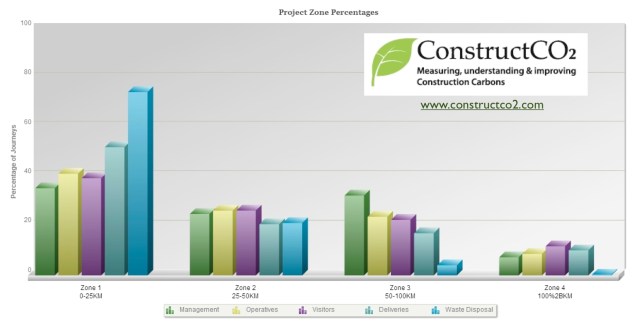
There is, rightly, much talk and focus on localism within construction projects and frameworks at the moment, based on the principle of keeping project spend local. And of course realising other benefits such as reduced travel and transport distances, reduced carbon emission, improved productivity and more.

But how do we compare and benchmark ‘localism’? How local is your project? As a client how can you know if your contractor is addressing your ‘localism’ requirements?

The benchmark being set through ConstructCO2 can provide a starting point. How do you compare? Do you know your project stats?

Construction Localism by Zone

Measuring and understanding your localism (and CO2) footprint must be a key measure, a KPI, as part of your sustainability and CSR programme. Going beyond the measuring it’s essential we monitor trends, make the comparisons, understand the causes and, take action.

bb7dff99a6e2e90c5e67b380cb0aac7b

It is one of the more important impact and influence areas your construction project has on sustainability and the environment.

For more on measuring your construction project carbons and project localism check out constructco2 or please do get in touch.

Heros and Texts for a future Built Environment based on #CSR

“suddenly the air smells much greener now”

Listening to ‘These Streets’, lyrics by Paolo Nutini summed up the brilliant, inspiring Green Vision conference in Leeds – exploring CSR within the built environment.

A mix of talks, presentations, round table discussions and pecha kuchas from Mel Starrs, Eden Brukman, Tamara Bergkamp, Eddie Murphy, Martin Brown, Faye Jenkins, Claire Walker, Rick Hamilton, Mark Warner, Pedro Pablo Cardoso-Castro, Andy Ainsworth, Paula Widdowson and many others showed that there is real emergence and a future for a Built Environment founded on social responsibility principles.

The air smells much greener …

We heard of excellent progress being made by individuals, projects and organisations on the CSR journey, and how behind these are great influential thinkers, often outside of the sector, many, unsurprisingly, related to the ‘outdoor’ sector.

Many of the speakers were enthusiastic in sharing CSR heros and recommended CSR reading. So here, as a summary, or reading list are those mentioned during the day. I wonder how many of these are on the reading list within design, construction and fm education? (Book titles link to Amazon)

Yvon Chouinard

Rock climber, environmentalist and outdoor industry businessman, noted for his contributions to climbing, climbing equipment and the outdoor gear business. His company @Patagonia is widely acclaimed for its environmental and social focus. According to Fortune magazine, Chouinard is arguably the most successful outdoor industry businessman alive today.

The Responsible Company What we have learnt in the first 40 years at Patagonia by Yvon Chouinard and Vincent Stanley (see my blog)

Let My People Go Surfing Yvon Chouinard – Probably the ‘must read book’ to understand CSR in Business

(On my blog: How can construction learn from Patagonia?)

Ray Anderson

Founder of Interface Inc., one of the world’s largest manufacturers of modular carpet for commercial and residential applications and a leading producer of commercial broadloom and commercial fabrics. He was known in environmental circles for his advanced and progressive stance on industrial ecology and sustainability.

Ray was was posthumously awarded an Outstanding Achievement award at this year’s Guardian Sustainable Business Awards in 2012. (There is a related, must watch, video here: John Elkington describing the work and legacy of Ray Anderson)

Confessions of a Radical Industrialist: Profits, People, Purpose: Doing Business by Respecting the Earth (2009) Later released in paperback as Business Lessons from a Radical Industrialist in 2011.

Paul Hawken

An environmentalist, entrepreneur, and author. Ray Anderson of Interface credited The Ecology of Commerce with his environmental awakening. He described reading it as a “spear in the chest experience”, after which Anderson started crisscrossing the country with a near-evangelical fervor, telling fellow executives about the need to reduce waste and carbon emissions.

Hawken’s book, Natural Capitalism: Creating the Next Industrial Revolution (1999) coauthored with Amory Lovins and Hunter Lovins, popularized the now-standard idea of natural capital and direct accounting for ecosystem services, a theme revisited by Rio +20 and likely to become more mainstream across the built environment.

Janine Benyus

Her 1997 book Biomimicry: Innovation Inspired by Nature defines Biomimry as a “new science that studies nature’s models and then imitates or takes inspiration from these designs and processes to solve human problems”. Benyus suggests looking to Nature as a “Model, Measure, and Mentor” and emphasizes sustainability as an objective of biomimicry. Key thinking in the Living Building Challenge principles, as is

E O Wilson

Edward Osborne Wilson an American biologist, researcher, theorist, naturalist and author. In the mid 80’s developed the concept of Biophilia, the connection between humans and nature, which translates into architecture and the built environment as comfort, well being and productivity through exposure to natural light and natural surrondings or imagry.

Anita Roddick

Dame Anita Roddick, human rights activist and environmental campaigner, best known as the founder of The Body Shop, a cosmetics company producing and retailing beauty products that shaped ethical consumerism The company was one of the first to prohibit the use of ingredients tested on animals and one of the first to promote fair trade with third world countries. Roddick was involved in activism and campaigning for environmental and social issues, including involvement with Greenpeace andThe Big Issue.

John Elkington

John Elkington @volansjohn is a world authority on corporate responsibility and sustainable development. He is currently the Founding Partner & Executive Chairman of Volans, a future-focused business working at the intersection of the sustainability, entrepreneurship and innovation movements

His latest book The Zeronauts, Breaking the Sustainability Barrier describes many of todays inspirational leaders : “Just as our species broke the Sound Barrier during the 1940s and 1950s, a new breed of innovator, entrepreneur, and investor is lining up to break the Sustainability Barrier”

Jorgen Randers

2052: What will the world look like in 2052

Jeff Hollender,

Jeffrey Hollender is an American businessperson, entrepreneur, author, and activist. He was well known for his roles as CEO, co-founder, and later Chief Inspired Protagonist and Executive Chairperson of Seventh Generation Inc., the country’s largest distributor of non-toxic, all-natural cleaning, paper and personal care products. www.jeffhollender.com/

Gary Hirshberg,

Gary Hirshberg is chairman and former president and CEO of Stonyfield Farm, an organic yogurt producer, based in Londonderry, New Hampshire. Now part of the Danone group.

Published in January 2008, Stirring It Up: How to Make Money and Save the World is a book about socially minded business that calls on individuals to realize their power to make a difference in the marketplace, while doing business in ways that adhere to a multiple bottom line – one that takes into consideration not only finance, but the environment and health as well.

Jeffrey Swartz,

Jeffrey Swartz is the former president and CEO of The Timberland Company an organization that believes that doing well and doing good are inextricably linked. Timberland’s commitment is to reducing global warming and preserving the outdoor environment.

David and Claire Hieatt,

Founders of Howies a clothing company based in Cardigan Bay, Wales produces eco-friendly T-shirts, jeans and sportswear, and aims to have ethically correct practices. Howies use natural fabrics as alternatives to petrochemical-derived modern fabrics. Examples include organic cotton, Merino wool and recycled cotton. Howies T-shirts often have images or slogans with political or environmental themes

Dee Hock

Dee Ward Hock is the founder and former CEO of VISA , described systems that are both chaotic and ordered, and used for the first time the term “chard” and chaordic,combining the words chaos and order.

More?

Over to you –

Follow the discussion on twitter with the #GVis2012 hashtag.

Who are your CSR Heros and CSR Texts to add to this Built Environment inspirers list?

What additions or comments would you make to the entries above?

A full record (video, blog, tweets, presentations, storify) of the Building CSR Event is being curated on the be2camp event page here.

Bidding to Win

Following my Bid to Win session in association with the Lancashire Construction Best Practice Programme and the Federation of Master Builders on the 17th May 2012, below is a background narrative article, links to the key slides and documents referenced.

If you would like to know more about Fairsnape bid support please do get in touch with myself via @fairsnape or via email

The following article was originally written for Interiors, the AIS publication.

Bids that Win 2012 Style

The world is changing, today we find our selves in a very different and more challenging environment than we have previously faced. New themes and initiatives have taken over from those in the nineties and noughties. Probably never before have we had the urgency and importance for survival and resilience, for integrated and balanced approaches to economic, environmental and social responsibilities.

Winners are those who have embraced change. But, are we applying the same patterns of thinking to bid responses that we did 5, 10 and more years ago?

Winning work today requires more than just the technical capability and capacity to deliver the work. Important as these are, increasingly vital is the how, the responsible manner in which we undertake the work.  Responsible management approaches, or Corporate Social Responsibilities, have been described recently as the DNA of a business, your image and your reputation.

Towards the end of 2011 I wrote a five part series of bidding articles as part of the AIS Build a Better Contractor programme that covered

  • Getting Ready (you do not win the bid at bid stage)
  • Improving Content (evidence, evidence, evidence)
  • Getting it Right (selected not de‐selected)
  • Presenting your Bid (can you walk the talk)
  • Learning (for the next bid)

These articles can be found on the AIS Build a Better Contractor web site along with a series of three accompanying webinars delivered more recently for AIS Members

This article then, provides an overview and further narrative to the on line material along with questions to challenge, and indeed improve, your approaches

Getting Ready (you do not win the bid at bid stage)

Understand the industry and embed progress.  Being able to demonstrate that you are tuned into current and emerging best practice and legislation can be essential in moving a ‘good’ bid response to an ‘excellent’ bid response.

Understand where your sector and the industry is heading and ensure these changes are fully discussed at board level (or equivalent). Sustainability, diversity, localism and CSR for example should be seen as strategic issues not just a tick box for bid or project issues. Directors and boards need to lead,  providing stability and encouraging innovation for change.

Being visible and engaging with the industry has perhaps never been easier with today’s social media, web and cloud technologies. The power and potential of social media is yet to be realised. On one hand social media presents a phenomenal tool for sharing news, keeping informed, demonstrating innovation and engaging with clients and partners, on the other hand it can be your Achilles heel, rapidly broadcasting irresponsible practices or intentions, undermining all the good work in bids and client relationships.

Having an appropriately positive approach to Social Media with guidelines or codes of practice for use by staff in the business and on projects will increasingly become high priority.

Improving the content of bids (evidence, evidence, evidence).  

Evidence of how you go about delivering projects is your key to successful bids. Who in your organisation is collating and recording your story, the who, the why, the how, and the where  ‐ as well as the what you did.

A project diary kept as a project blog can provide an effective time line and record of how you approached the project, worked with the client and others, brought innovation and solutions to the project. Good solid, honest evidence could well move your bid scores from a five or six out of 10 to a 10 out 10.

Take a look at the evidence you have submitted previously and ask the ‘so what’ question. If you were reading for the first time what would really you think?

Is it anecdotal, could it have been written by anyone or is it unique to you, does it tell your “story’?  Do you find it interesting or dull?  Is it innovative?

Its also a good time to review your project data sheets, are they what you would expect from an innovative company in 2012? Make them come alive by adding maps, links to innovate web pages, your company, the building or clients websites, online pictures, reports, blogs or articles on the building or project. View your project sheets as an interactive PR tool rather than simply a flat brochure. Using online material wisely and effectively can really demonstrate how innovative your organisation is.

Getting it Right (getting selected not deselected)

Through careless errors, bidders all too often throw away points, deselecting themselves from success. Having a robust written process, as part of, rather than outside of your management systems, to manage the preparation, collation and submission of bids is essential

Presenting your Bid (can you walk the talk)  

Once you have submitted your excellent, well focused PQQ, have been invited to an interview and to present to the client, can you really ‘walk your talk’? Often the presentation can be your last hurdle in the bid process, a competition with just a limited number of bidders. It’s your opportunity to demonstrate you are better than the best. Prepare, Practice and Seize the opportunity to impress!

Learning (… for the next bid)  

Submitting good bids is not always good enough. Your bid submissions must continually improve, each one being better than the previous, and of course each being better than the competition. Don’t leave improvement of your bids to chance, but view bid writing as a core business activity, with appropriate management, resources and contribution from all.

It is vital that you work to improve bid responses between bids, for example collating evidence to strengthen your story and demonstrate your capabilities and innovations

Five Bid Improvement Thoughts

  1. How can you embrace social media to win work?
  2. Get an independent (internal or external) health check to review and update your evidence.
  3. List the reasons why you have de-selected yourself on previous bids
  4. How can you really shine at interviews and presentations?
  5. How do you ensure that each bid is better than the last one you did?

Zap or Sap

How do your bids appear to others? Reading between the lines do you Zap energy, ie come across as an eager, open and problem solving, collaborative working, with a proven supply chain of a similar ethos, or do you come across as a business that Sap’s energy, that in spite of technical excellent appears as hard work, guarded responses with a supply chain to be advised?

Martin Brown is a built environment improvement and social media advocate, providing consultancy support through Fairsnape, and can be contacted on martin.brown@fairsnape.net. You can join bid improvement conversations by following Martin on twitter @fairsnape (and indeed through following @AISInteriors)

Martin’s blog at www.fairsnape.wordpress.com provides commentary on built environment news, comments and tips for bidding. Martin is also a contributor to the Guardian Sustainable Business built environment hub and CSRWire’s Talkback

LINKS

The slides used to set the context for bidding in Todays Construction can be found here.

Simplified Bid to Win slides can be found here.

Download a copy of Never Waste a Good Crisis document from here The Wolstenholme_Report_Oct_2009

Construction PR and Marketing in a Digital Age – Record of Target Event held in Leeds 23 May 2012

MORE

If you would like to know more about Fairsnape bid support please do get in touch with myself via @fairsnape or via email