Category Archives: comment

Social Value Act, CSR and Construction

Could the Social Value Act 2012 which came into being earlier this year have profound implications on construction procurement and on construction’s approach to Corporate Social Responsibility?
Indications are that it will.

The Social Value Act requires local authorities, when entering into public procurement contracts, to give greater consideration to economic, social or environmental wellbeing during the procurement stage.

(3) The authority must consider—

(a) how what is proposed to be procured might improve the economic, social and environmental well-being of the relevant area, and

(b) how, in conducting the process of procurement, it might act with a view to securing that improvement.

This will require the authority to pre-determine social value expected, along with measures and targets for both the project procurement and delivery. Raising the game on construction understanding of Social Value and CSR.

In response, bids will clearly demonstrate how social value will be created and delivered (as a result of selection to the project). We could (will?) see more weighting and scores afforded to social value issues making ‘soft’ issues ever more competitive.

What are currently seen as innovative differentiators could well become the norm and common place (such as free fruit in site canteens, free whole person health checks for operatives, demonstrating localism through mapping carbons of site travel etc)

Construction can have a huge influence and impact on social value and social wealth, through employment, transport, material purchase, SME procurement, environmental and social impacts … and more. With a little rethinking those impacts, often seen as negative, can deliver real positive value.

Construction, and built environment CSR strategies and performance will need to become ever more important, more strategic and more informed. At one level demonstrating a coherent approach to social value and at another as a competitive differentiator.

Hence now, as ever, is the best time to ensure that CSR approaches are robust, realistic and aligned with staff client and society expectations.

If you are interested in the growing debate on the impact of the Social Value Act and CSR in construction, please join me on twitter @fairsnape, using the #socialvalueact hashtag. You can also comment below and or subscribe to this blog or get in touch to discuss wider CSR and Bidding support.

We have a planned CSR in Construction Tweetchat scheduled for the 18th June where we will be debating, over twitter, the impact of the Social Value Act. (Using hashtag #GVischat)

Bidding to Win

Following my Bid to Win session in association with the Lancashire Construction Best Practice Programme and the Federation of Master Builders on the 17th May 2012, below is a background narrative article, links to the key slides and documents referenced.

If you would like to know more about Fairsnape bid support please do get in touch with myself via @fairsnape or via email

The following article was originally written for Interiors, the AIS publication.

Bids that Win 2012 Style

The world is changing, today we find our selves in a very different and more challenging environment than we have previously faced. New themes and initiatives have taken over from those in the nineties and noughties. Probably never before have we had the urgency and importance for survival and resilience, for integrated and balanced approaches to economic, environmental and social responsibilities.

Winners are those who have embraced change. But, are we applying the same patterns of thinking to bid responses that we did 5, 10 and more years ago?

Winning work today requires more than just the technical capability and capacity to deliver the work. Important as these are, increasingly vital is the how, the responsible manner in which we undertake the work.  Responsible management approaches, or Corporate Social Responsibilities, have been described recently as the DNA of a business, your image and your reputation.

Towards the end of 2011 I wrote a five part series of bidding articles as part of the AIS Build a Better Contractor programme that covered

  • Getting Ready (you do not win the bid at bid stage)
  • Improving Content (evidence, evidence, evidence)
  • Getting it Right (selected not de‐selected)
  • Presenting your Bid (can you walk the talk)
  • Learning (for the next bid)

These articles can be found on the AIS Build a Better Contractor web site along with a series of three accompanying webinars delivered more recently for AIS Members

This article then, provides an overview and further narrative to the on line material along with questions to challenge, and indeed improve, your approaches

Getting Ready (you do not win the bid at bid stage)

Understand the industry and embed progress.  Being able to demonstrate that you are tuned into current and emerging best practice and legislation can be essential in moving a ‘good’ bid response to an ‘excellent’ bid response.

Understand where your sector and the industry is heading and ensure these changes are fully discussed at board level (or equivalent). Sustainability, diversity, localism and CSR for example should be seen as strategic issues not just a tick box for bid or project issues. Directors and boards need to lead,  providing stability and encouraging innovation for change.

Being visible and engaging with the industry has perhaps never been easier with today’s social media, web and cloud technologies. The power and potential of social media is yet to be realised. On one hand social media presents a phenomenal tool for sharing news, keeping informed, demonstrating innovation and engaging with clients and partners, on the other hand it can be your Achilles heel, rapidly broadcasting irresponsible practices or intentions, undermining all the good work in bids and client relationships.

Having an appropriately positive approach to Social Media with guidelines or codes of practice for use by staff in the business and on projects will increasingly become high priority.

Improving the content of bids (evidence, evidence, evidence).  

Evidence of how you go about delivering projects is your key to successful bids. Who in your organisation is collating and recording your story, the who, the why, the how, and the where  ‐ as well as the what you did.

A project diary kept as a project blog can provide an effective time line and record of how you approached the project, worked with the client and others, brought innovation and solutions to the project. Good solid, honest evidence could well move your bid scores from a five or six out of 10 to a 10 out 10.

Take a look at the evidence you have submitted previously and ask the ‘so what’ question. If you were reading for the first time what would really you think?

Is it anecdotal, could it have been written by anyone or is it unique to you, does it tell your “story’?  Do you find it interesting or dull?  Is it innovative?

Its also a good time to review your project data sheets, are they what you would expect from an innovative company in 2012? Make them come alive by adding maps, links to innovate web pages, your company, the building or clients websites, online pictures, reports, blogs or articles on the building or project. View your project sheets as an interactive PR tool rather than simply a flat brochure. Using online material wisely and effectively can really demonstrate how innovative your organisation is.

Getting it Right (getting selected not deselected)

Through careless errors, bidders all too often throw away points, deselecting themselves from success. Having a robust written process, as part of, rather than outside of your management systems, to manage the preparation, collation and submission of bids is essential

Presenting your Bid (can you walk the talk)  

Once you have submitted your excellent, well focused PQQ, have been invited to an interview and to present to the client, can you really ‘walk your talk’? Often the presentation can be your last hurdle in the bid process, a competition with just a limited number of bidders. It’s your opportunity to demonstrate you are better than the best. Prepare, Practice and Seize the opportunity to impress!

Learning (… for the next bid)  

Submitting good bids is not always good enough. Your bid submissions must continually improve, each one being better than the previous, and of course each being better than the competition. Don’t leave improvement of your bids to chance, but view bid writing as a core business activity, with appropriate management, resources and contribution from all.

It is vital that you work to improve bid responses between bids, for example collating evidence to strengthen your story and demonstrate your capabilities and innovations

Five Bid Improvement Thoughts

  1. How can you embrace social media to win work?
  2. Get an independent (internal or external) health check to review and update your evidence.
  3. List the reasons why you have de-selected yourself on previous bids
  4. How can you really shine at interviews and presentations?
  5. How do you ensure that each bid is better than the last one you did?

Zap or Sap

How do your bids appear to others? Reading between the lines do you Zap energy, ie come across as an eager, open and problem solving, collaborative working, with a proven supply chain of a similar ethos, or do you come across as a business that Sap’s energy, that in spite of technical excellent appears as hard work, guarded responses with a supply chain to be advised?

Martin Brown is a built environment improvement and social media advocate, providing consultancy support through Fairsnape, and can be contacted on martin.brown@fairsnape.net. You can join bid improvement conversations by following Martin on twitter @fairsnape (and indeed through following @AISInteriors)

Martin’s blog at www.fairsnape.wordpress.com provides commentary on built environment news, comments and tips for bidding. Martin is also a contributor to the Guardian Sustainable Business built environment hub and CSRWire’s Talkback

LINKS

The slides used to set the context for bidding in Todays Construction can be found here.

Simplified Bid to Win slides can be found here.

Download a copy of Never Waste a Good Crisis document from here The Wolstenholme_Report_Oct_2009

Construction PR and Marketing in a Digital Age – Record of Target Event held in Leeds 23 May 2012

MORE

If you would like to know more about Fairsnape bid support please do get in touch with myself via @fairsnape or via email

Which? Campaigns for Improvement to #GreenDeal

Which? believes that the Green Deal as it stands needs to change and has issued five challenges to the government to improve the deal, and make sure that it delivers a better deal for consumers.

Savings must be linked to a detailed energy assessment

Green Deal savings estimates – known as the golden rule – should be based on tailored assessments of peoples’ individual circumstances, such as how many people live in the property, and the actual energy they use.

No shocking early repayment fees

We don’t want people being punished for paying back a loan early.

No mis-selling

The government must make sure that independent assessments are a key part of the Green Deal. Having an independent assessment will mean that a customer can get impartial information before making what could potentially be a significant financial investment. We have also asked for a ban on cross-selling of items on credit during the Green Deal process.

Energy Company Obligation must be fairer

Which? would like to see  Energy Company Obligation (ECO) funding allocated to low-cost measures like loft and cavity wall insulation, which have a much greater impact (… than on solid wall insulation,)

Warranties must match the loan terms

We think that if you install energy efficiency measures in your home, they should be guaranteed for at least the length of the loan you’ve taken out to pay for them.

….

Read more: http://www.which.co.uk/campaigns/energy-and-environment/the-green-deal/what-which-wants/#ixzz1vZpFWtLP

Consumer Champions Which?

Under Creative Commons License: Attribution Non-Commercial

New wheels …

After a winter of browsing cycle web sites, magazines and brochures and of course visiting too many cycle stores, I finally picked up my new wheels on Wednesday from Ghyllside Cycles in Ambleside (Highly recommended for service and bike-chat)

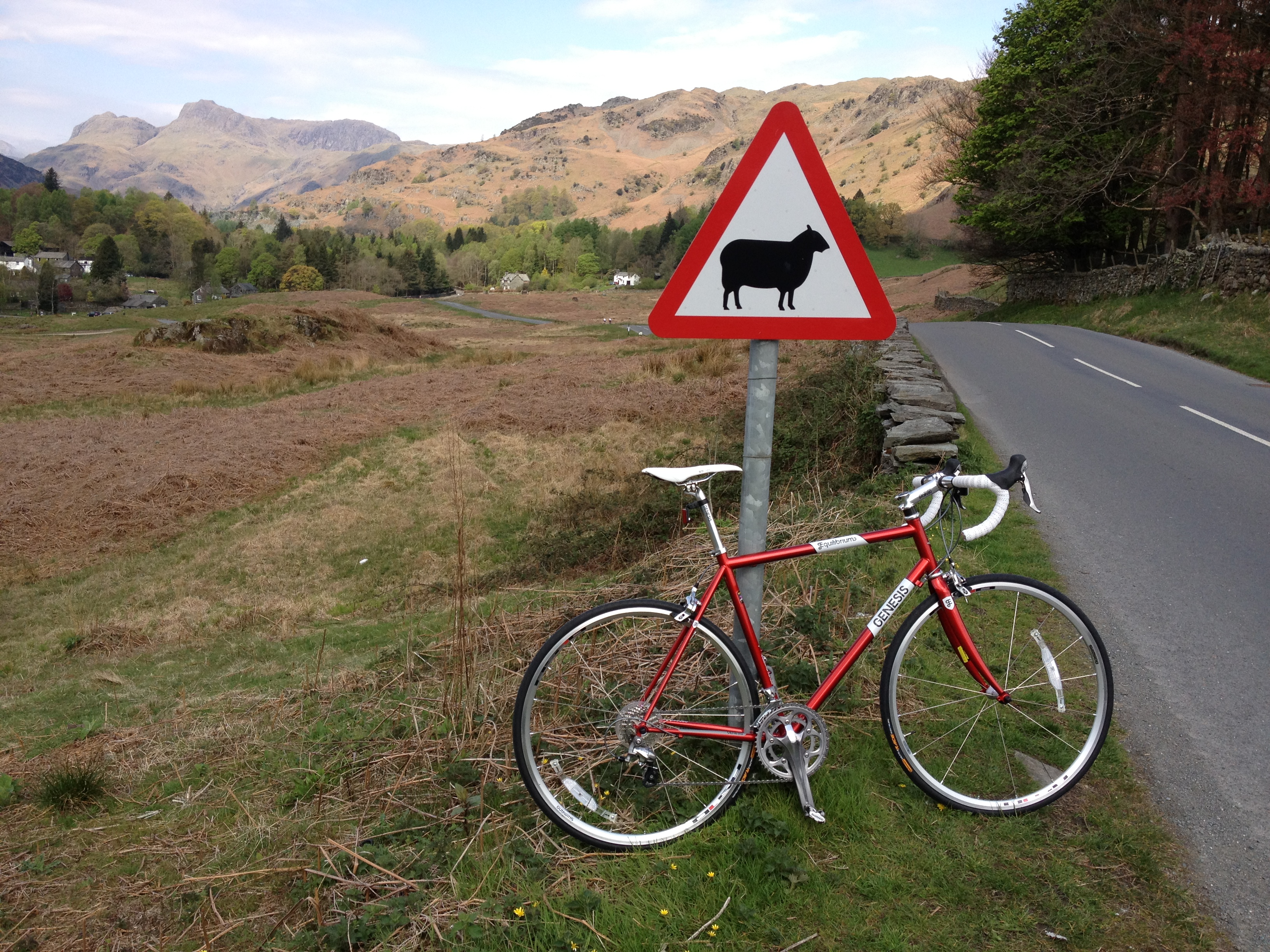
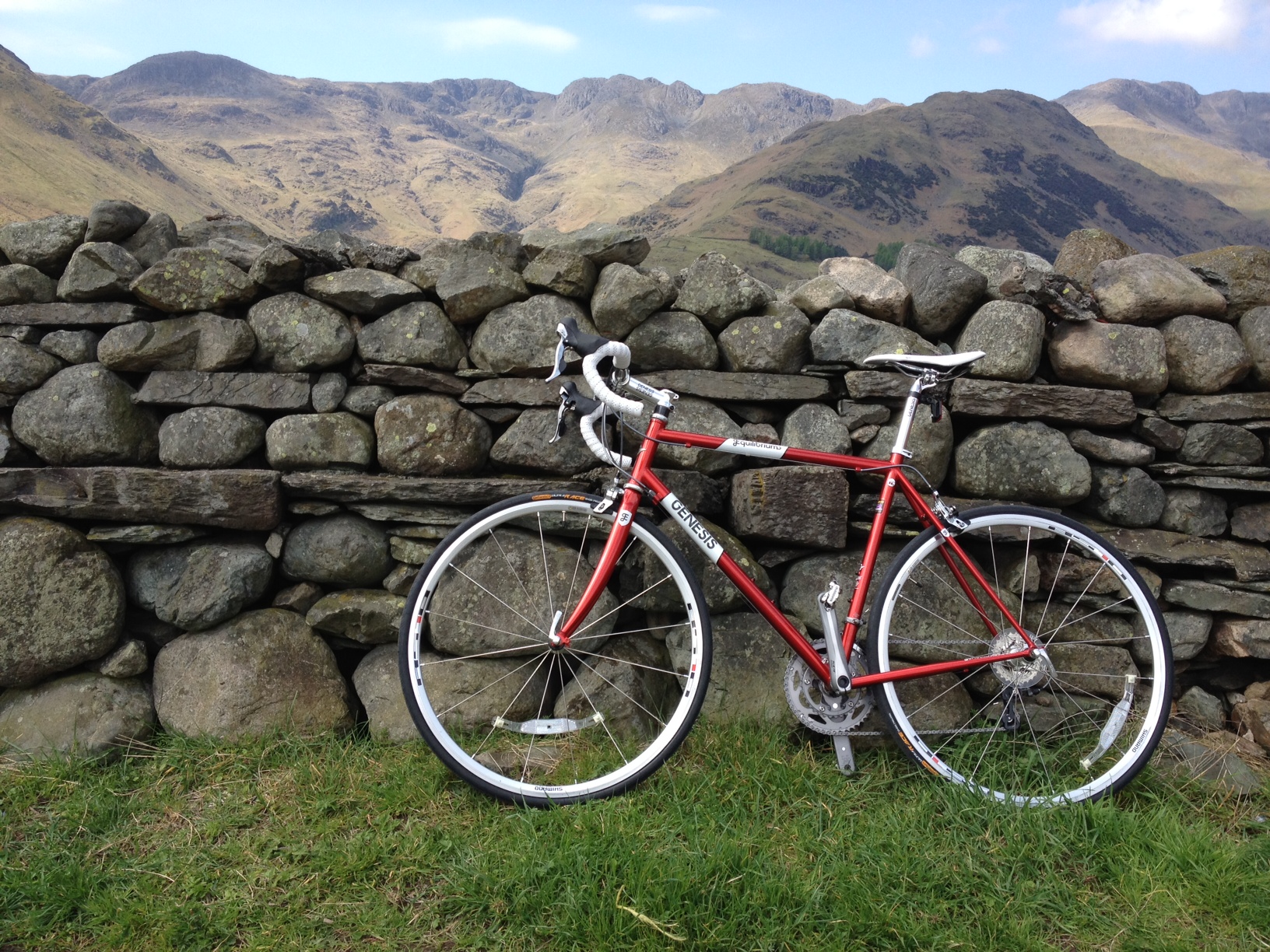
Its a Genesis Equilibrium 20, and its gorgeous.

I only had a an hour or so for a maiden flight, but the Cumbria air was so clear, the fells looking so magnificent I couldn’t resist a spin out of Ambleside and around Little Langland by way of Blea Tarn.

A great chance to ‘test’ or experience the climbing and descent capabilities

And the stats from the Cyclemeter iphone app. (again highly recommended)

 Following the ride it was back to Ambleside for a quick coffee / meeting catch up and then lengthy phone chat with Paul @EEPaul re Be2camp and next weeks Green Build Expo event.

Is the new Linkedin app a game changer?

I must admit I have had a love hate relationship with Linkedin.

Loved it for its contact management relationship building power and the amazing groups which I see as modern digital communities of practice, Hated it for the clunky nature of searching – you have to go looking for interesting updates, even the email alerts prove too spammy as they only tell you an update has been made, not its content.

Until recently it hasnt fitted into my online workflow as say Twitter or Flipboard has (scan, save to instapaper, read offline at leisure then archive to Evernote)

I say until recently … the new iPad Linkedin app I am begining to see as a game changer. It has been designed as a morning feed app – ie you can bring yourself up to date with news from your contacts and updates to groups over a morning coffee, and note interesting articles for reading later, With a similar concept to Flipboard, it brings a brand new look and feel to the social network, and its a pleasure to use.

Since using the iPad app I have discovered much more function and ease in using Linkedin, for example running conversations through the message function, and I have been using Linkedin on other devices for a good number of years.

I am looking forward to learning more user tips from expert Su Butcher at our Linkedin/Twiiter training workshop in Manchester next week. See you there?

.

20120502-063552.jpg

20120502-064043.jpg

ISO14051: Turning waste to gold with ISO standard for environmental management accounting

With the proposed demise of Site Waste Management Plans SWMP under the ‘Greenest Government Ever’ red tape plans, could a new-ish ISO standard that puts costs to the impacts identified under ISO 14001 provide direction, guidance or framework for construction to measure and improve material and energy waste?

The standard, ISO 14051:2011, Environmental management — Material flow cost accounting — assists organizations to better understand the environmental and financial consequences of their material and energy use practices, so that they can identify opportunities for improvement.

The standard uses MFCA, Material flow cost accounting,  which is “applicable to any organisation that uses materials and energy, regardless of their products, services, size, structure, location, and existing management and accounting systems”

MFCA could be applied on a business wide basis across all projects, understanding material, energy and resource inputs, processing and outputs, as well as on a project basis adopting a SWMP format combined with a Carbon plan driven by ConstructCO2 could indeed turn waste into gold.

Background Reading:

Constructing Excellence SWMP position

ISO turn waste into gold  

Measure, Understand and Improve Construction Carbons www.constructco2.com

Could built environment leaders cut it in a digital world?

An excellent Communique newsfeed from Nancy Settle-Murphy this morning, at looking at effectiveness of leaders in a virtual world.  It strikes me this is a lesson perhaps for built environment and construction leaders as we move into a communication era that is increasingly digital, web based, social media enabled and BIM (Building Information Model) focused:

Even the most experienced team leaders can make us weep with boredom. They torture us with their monotone narrations of 10-Mb slide decks. They regale us with irrelevant minutiae, while sidestepping the really important stuff. Their meetings are more like monologues, with everyone else listening from the sidelines. And for the most part, they probably imagine they’re pretty interesting people!

When we experience boring leaders face-to-face, we have to at least pretend to be somewhat interested. We might take notes (even if it’s a shopping list!), throwing in a few occasional nods so we won’t be called on to replay key points. Copious amounts of caffeine help to some degree, as do the many bio breaks we’ll inevitably need as a result. And who hasn’t had a colleague place an “emergency” phone call in extreme cases of ennui?

Tuning out boring virtual leaders is far easier. Once you put yourself on mute, there’s no end to the more important things you can do, like responding to emails, writing up your latest status report, or finding the best price on that new digital camera you’ve been pining for. (If you work from home, this “important” work can extend to laundry, dinner prep, weight-lifting and more.) As long as you’re within earshot of the conversation, your team leader may assume you’re present while in fact you are completely absent.

So, how can boring virtual leaders learn to become more captivating? (And no, it is not an inherent skill that some are just born with!) In this issue, I take a look at some steps even the blandest leader can take to evolve into an engaging, stimulating and captivating leader, from near or far.

No one actively aspires to be boring. And yet regrettably, few leaders actively attempt to be interesting.

Read on … from Nancy Settle-Murphy on Commique 

175 Little Acts of CSR

Whilst the debate on Linkedin Group CSR in Construction asks why Corporate Social Responsibility is the domain of large organisations, SME  Emanuel Whittaker are pushing ahead with an inspiring CSR approach.  This being their 175th year, the CSR approach for 2012 is aptly called 175 Little Acts of Kindness, setting a target to deliver, record and share 175 CSR themed acts of kindness.

The Emanuel Whittaker  new look web site neatly puts CSR center stage as the envelope or wrap around for many activities (green deal, training and employment, equality and diversity, ISO 14001, carbon management, training, customer care, and more).

In a recent discussion with Rukhsana Nabi, Partnerships Manager at Emanuel Whittaker, she explained that CSR at Emanuel Whittaker reflects the culture, “its who we are and what we do – not a set of processes and procedures” and that the reason for this years initiative is simply to share what we do, rather than a PR or marketing campaign.

Emanuel Whittaker will be sharing their 175 stories during 2012, through their website,  facebook and through twitter @emanuel_whittack, using the #175littleacts hashtag.

Lancashire: Green Deal, BIM, Green Building and Social Media events

Hi, here is a quick update of Lancashire Construction Best Practice Club related events in the NW region over the coming months which may be of interest:

Green Deal: If you have been following the news you will have seen that £3.5m has been released for Green Deal training and news is expected soon from Ed Davey MP on Green Deal for Busineses.

Our timely Introduction to PAS 2030 session is scheduled for the 30th March as part of our Green Deal Initiative, with monthly sessions thereafter. Also CSkills are holding an Employers Advisory Forum on March 28th, at St Helen’s Rugby League Stadium which will feature Green Deal

Bidding: The Association of Interior Specialists (AIS) are hold a A free webinar  Improve your Bids: 13th March 27th March and 17th April

BIM: Unfortuntaley we have had to push the LCBPC BIM event back until June, however, there are a lot of BIM events happening regionally.

There are Events across in Yorkshire on the 15th March looking at BIM impact on Regional SME’s and on 4th April looking at BIM Level 2.

And in Manchester BIM – Software with Tough Choices Workshop 29 March 2012, 08:30 – 11:00 at the and BIM Compete or collaborate? 16th May. You may also find this “What is BIM, and why should we care” item of interest.

Waste: Waste update will be the topic for the LCBPC event. Details to follow.

Green Building: Again there is a lot happening on this theme as you would expect: What is your Green Vision? is a Global TweetChat (online, via twitter using the #GVisChat hashtag) hosted by Green Vision on 20th March 8pm to coincide with Eco Build. In addition Green Vision Leeds 29th March will feature the lessons learnt from the greenest building on earth, live from Vancouver

Green Build Expo Returns to Manchester on 9th /10th May, I will be there with Be2camp on the 9th and talking Social Media on the Green Deal  as part of the Green Deal Debate stage the 10th, and if you are going to EcoBuild, 20-22nd March in London do let us know via twitter @fairsnape + @lcbpc or on the linkedin Lancashire Construction group

Social Media: Su Butcher and myself will be running a Linkedin and Twitter Workshop for built environment professionals in the NW on 8th May.

Finally, Progress in Procurement: the Effectiveness of Frameworks is at the CUBE Manchester 19th March, and the RICS in the NW have a full programme of events on their calendar.

If you know of any events then please do flag them on the Lancashire Construction group linkedin or in comments below and we can share across the club membership.

You can get details of club membership here and application form here