Category Archives: sustainability

A Green Built Environment supports the Sustainable Development Goals (SDG’s)

This blog has referenced the Sustainable Development Goals on many occasions, indeed within FutuREstorative I make the case for the SDG’s to replace the Brundtland definition.

It is now three decades since the Brundtland Commission defined Sustainable Development as ‘doing nothing today that compromises future generations’. It was and remains the definitive ‘strapline’ that has been built into countless sustainability strategies definitions, statements and policies. We have chosen the ‘do nothing’ option, and are compromising future generations, and without radical, positive change we will continue to compromise the next generation.

Understanding and addressing the huge influence of the built environment is essential. This (influence and responsibility) must be included as an organisational governance issue to enable a culture of restorative approaches and delivery.   FutuREstorative

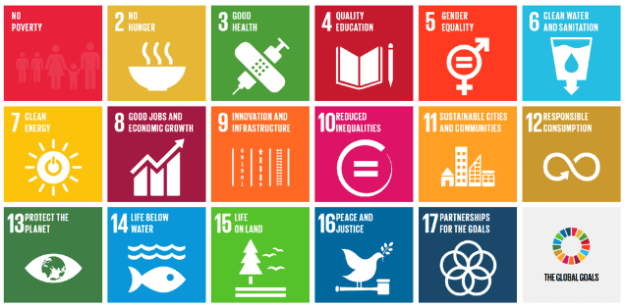
In 2015 the UN published its Sustainability Development Goals 2030. The SDGs define the intention to change the Brundtland definition of sustainability to a new purpose that is proactive and net-positive, and one that improves the social, environment and financial wellbeing of people and the planet by 2030. Just as we embraced the Brundtland definition, so we must now embrace the SDGs as a foundation for our sustainability visions and strategies.

The World Green Building Council recently released a handful of great infographics illustrating how the built environment can support SDG’s,

While many might look at a building and see only an inanimate structure, we look at buildings and see both the physicality and the process by which they are created – an opportunity to not only save energy, water and carbon emissions but to educate, create jobs, strengthen communities, improve health and wellbeing, and much, much more. Green building is a true catalyst for addressing some of the world’s most pressing issues. World Green Building Council 

The SDG’s give new purpose to  built environment Corporate Social Responsibility (CSR):

Content pages cityscape SDGs new

Giving purpose to green facilities management, that can, through promotion of green offices, address several SDG’s:

C7nSguzXwAEB3gQ

And how our homes can be the building blocks in support of the sustainability goals:

C7mKrNbVwAIPRdw


A case for reconstructing the world of sustainable building standards.


pexels-photo-129743

The sustainability media platform Green Biz recently carried an extract fromFutuREstorative Chapter Six, the New Sustainability Standards. Here is an abridged version …

… (The following is an excerpt from “FutuREstorative, Working Towards a New Sustainability,”authored by Martin Brown and published by RIBA Publishing. The selection was edited for clarity and length)

Sustainable building certification standards are immense influencers on not only the built environment sector but also commercial, industrial and domestic green lifestyles. With that influence comes a real responsibility in establishing the current direction of travel for the industry against a backdrop of climate, economic and social change.

Get it right, and we move closer to addressing major climate change issues, attaining carbon reduction targets and achieving ecologically, economically and socially just goals. Get it wrong and the negative impact ripples far beyond the built environment sector.

However, it is the purpose of certification schemes not only to set best practices for design, construction and operation but to go beyond current best practices and establish a vision for sustainable buildings based on what is required — with required practice then measured against that vision.

We need to stop regarding green buildings as a benefit to be proud of. They should be seen as the norm; the way we build. Indeed, as a sector we should feel guilty about not using our skills and expertise to create green buildings for us and future generations. That we remain content to commission, design, build and operate buildings below this sustainability threshold reinforces the argument that the built environment sector is one of low aspiration.

Green Biz article

FutuREstorative is now available in a digital format

Equality, Respect, Image, Sustainability … all connected.

‘When we try to pick out anything by itself, we find it hitched to everything else in the universe’ John Muir

With todays International Womens Day, falling mid week of the National Apprentice Week and concurrent with Eco Build, here are my thoughts on the inter-connectivity of equality, respect, image with sustainability.

Earlier this morning I shared on twitter what I thought was a  brilliant quote, seen within a full page ad in todays papers for International Womens Day under the #RewritingtheCode hashtag

“Because none of us can move forward if half of us are held back” #IWD2017 #RewritingTheCode

This is a topic dear to me, and as I concluded within FutuREstorative …

There can be no sustainability in an unequal world. Indeed sustainability should embrace the three E’s of ecology, economy and equality.

As part of our sustainability journey, the language of construction also needs to evolve – from one that is perhaps too combative, technical and confrontational to one that is mindful, and embraces a language of collaboration, sharing, care and love.

I return to and close, for now, with one of the most important and powerful of the Living Building Challenge’s aims: the transition to a socially just, ecologically restorative and culturally rich future.

These points were emphasised just last week in my talks at a Baxall supply chain workshop that focused on Sustainability, the Sustainable Development Goals, Modern Slavery and FIR, Fairness, Inclusion and Respect

Untitled 2

Slide from Sustainability, Modern Slavey and FIR Presentation

So, as Eco Build progresses with Redefining Sustainability then it is important and encouraging that the wider sustainability aspects of health, just, equality, respect and inclusion are taking center stage. A sustainability stage that will see the rather passive Brundtland definition replaced by the positive and proactive SDGs.

SDG

Connecting the Dots …. The Sustainability Development Goals. 

RESTORE: REthinking Sustainability TOwards a Regenerative Economy

pexels-photo-93013

REthinking Sustainability Towards a Regenerative Economy 


After a number of years discussing, bidding, meetings in Italy and skype calls across Europe we finally launch our four year RESTORE* Cost Action CA16114 programme, exploring restorative sustainability, in Brussels this Thursday 9th March.

* REthinking Sustainability TOwards a Regenerative Economy

COST Action public page 

RESTORE Overview:

Sustainable buildings and facilities are critical to a future that is socially just, ecologically restorative, culturally rich and economically viable within the climate change context.

Despite over a decade of strategies and programmes, progress on built environment sustainability fails to address these key issues. Consequently the built environment sector no longer has the luxury of being incrementally less bad, but, with urgency, needs to adopt net-positive, restorative sustainability thinking to incrementally do ‘more good’.

Within the built environment sustainability agenda a shift is occurring, from a narrow focus on building energy performance, mitigation strategies, and minimisation of environmental impacts to a broader framework that enriches places, people, ecology, culture, and climate at the core of the design task, with a particular emphasis on the salutogenic benefits towards health.

 Sustainability in buildings, as understood today, is an inadequate measure for current and future architectural design, for it aims no higher than trying to make buildings “less bad”. Building on current European Standards restorative sustainability approaches can and will raise aspirations and deliver restorative outcomes.

The RESTORE Action will affect a paradigm shift towards restorative sustainability for new and existing buildings across Europe, promoting forward thinking and multidisciplinary knowledge, leading to solutions that celebrate the richness of design creativity while enhancing users’ experience, comfort, health, wellbeing and satisfaction inside and outside buildings, and in harmony with urban and natural ecosystems, reconnecting users to nature.

The COST proposal will advocate, mentor and influence for a restorative built environment sustainability through work groups, training schools (including learning design competitions) and Short Term Scientific Missions (STSMs).

Keywords: restorative sustainability, restorative design processes-methods-tools, climate change, health, wellbeing, sustainable urban development, social, ecology, built environment.

The Working Groups

  • Working Group 0: Project Coordination
  • Working Group One: Restorative Sustainability
  • Working Group Two:Restorative Design Process
  • Working Group Three: Restorative Buildings & Operations
  • Working Group Four: Rethinking Technology
  • Working Group Five: Scale Jumping

The Cost Action will also include:

  • RESTORE Training Schools
  • RESTORE STSM – Short Term Science Missions
  • RESTORE Early Stage Research opportunities

We have an ‘in development’ website with more information here

COST Action public page 

WELL & BREEAM announce alignment for credits: more good or less bad?

UPDATE 01 Feb 2017

Credit Crosswalks: BRE and IWBI have released guidance to streamline joint certification of BREEAM and WELL

….

As mentioned and illustrated in FutuREstorative, we will see an alignment in building sustainability and performance standards over coming months and years. In the US we have seen an alignment between LEED and the Living Building Challenge on materials (Red List) and recently on energy and water.

On Monday 28th  Nov, we saw an announcement from The International WELL Building Institute and BRE for an agreement to pursue alignment between WELL and BREEAM will making it easier for projects pursuing both standards.

In practice this will mean documentation submitted for certain credits will be recognised by both WELL and BREEAM, saving project teams time and cost.

This will be a very interesting journey and further recognises the importance of health within building design, construction and use. WELL, like the Living Building Challenge is an excellent, robust but tough standard and one that cannot be attained without a different mind-set approach to buildings.

Key to that mindset is recognition of the impact of materials on health on construction workers and building users. An alignment or agreement between BREEAM and the LBC’s Red List would make great sense here.

It will be interesting to see how the differing philosophies between WELL (do more good) and BREEAM (do less bad) work together. Hopefully this further opens the door to a salutogenic approach to design – not just reducing ill-health but using buildings to improve health, for example, using light as medicine, as explored in FutuREstorative

salutogenesis-slide

Health – the next performance gap.

I will also be watching with interest if this agreement extends to the construction process, (ie. the BREEAM MAN credits) to improve the wellness and health of those involved in and affected by construction works. This is a health and wellness area that BREEAM, LEED, WELL and the Living Building Challenge do not readily address. Yet for those whose career is spent on construction sites, it is a key health and sustainability area, and one that benefits from biophilic design considerations, for example greenery in accommodation and living walls as project hoardings.

living-walls-construction-hoarding

Bright Green – the new Black (Friday)

That Green is the new Black is illustrated through sustainability focused alternatives to the commercialism of Black Friday.

100-planet-tcl-1404x778-c-defaultPatagonia whose sustainability vision entails using business to make change will be giving 100% of sales to 1% For The Planet this Black Friday. 

This year Patagonia will donate 100 percent of global Black Friday sales in our stores and on our website to grassroots organisations working in local communities to protect our air, water and soil for future generations. These are small groups, often underfunded and under the radar, who work on the front lines. The support we can give is more important now than ever

pexels-photo-94616REI and others under the hashtag banner of #optoutside will be closing stores, encouraging staff to spend time with family and friends – out of doors.
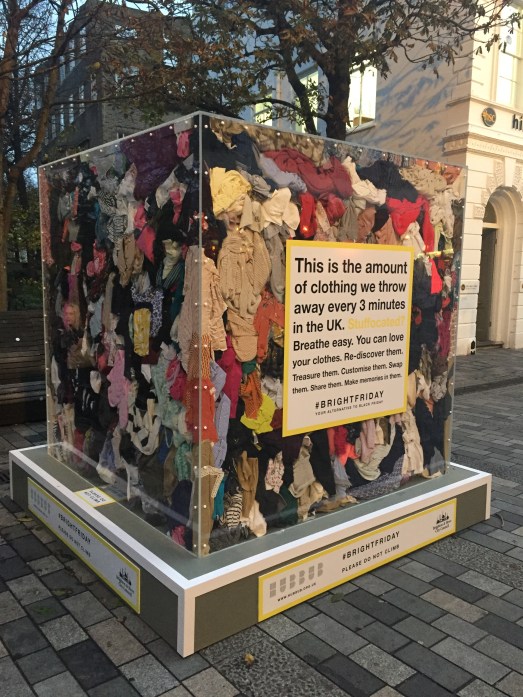
Here in the UK we have adopted the US Black Friday sales madness. In conversation with a local outdoor gear store, they felt they couldn’t make the stand as Patagonia and REI are doing as they would just loose out (online) sales to competition over the black Friday 2 week period. But there are signs we are adopting the green Friday thinking here in the UK.

As I write this blog on a business trip to Brighton, I am encouraged to see BrightFriday activities in place coordinated through alt fashion Hubbub.org. Their three simple guidelines to create a BrightFriday also serves as a great circular economy statement.

How to create your #BrightFriday this Black Friday

1. Resist the pressure of buying things you don’t want or even need. Remember, the best bargain is not buying stuff you didn’t want in the first place.

2. Rekindle love for what you already have.

3. Create memories rather than buying them by trying something you’ve always wanted to do.

img_3070


“This Changes Everything” Paris Agreement and the Built Environment

That the Paris Agreement has come into force today, 4th November 2016, some four years early, now ratified by the requisite number of nations, is a huge milestone and speaks volumes for the global recognition and consensus to reduce carbon emissions.

cop21 article 2 draft

Back in December in Paris, the built environment was recognised as a major contributor to the carbon problem as well as having a major role to play in a low carbon sustainable future. (See How significant was the first Buildings Day at COP21?)

Now, then, is the time to review our approaches to taking carbon out of the built environment, through design, through the operation of buildings and in the manufacture and construction processes.

Through ConstructCO2 we know that up to 70% of construction carbons are travel and transport related, and much of this through diesel fuelled vehicles, further adding to our air quality problems and stretched health services. Construction transport impact must now be a primary target for sustainable construction.

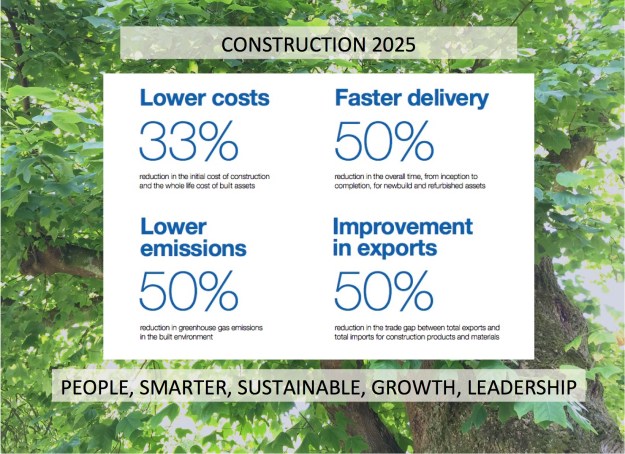
In the UK, our most recent industry target is within Construction 2025 Vision – to reduce emissions by 50% by 2025. Consider however that this was written when the consensus for carbon reduction was based on a 2 degree target for temperature increase. We are now looking at 1.5 degree as the emerging consensus, and that changes everything.

construction-2025-headlines

There is a sense of urgency here, and as I explored and commented within FutuREstorative ‘we no longer have the luxury of being only less bad’ but need to be doing more good, and in doing so heal the future.

less-bad-more-good-chart

In 2015 the UK Green Construction Board noted that ‘reducing built environment carbon emissions (50% from 1990 levels by 2025) is now out of reach with current practice’, and as Namoi Klein wrote in This Changes Everything (2015) “There are no non-radical approaches left before us in addressing climate change’

But we do have approaches, tools and initiatives to ensure that the built environment can contribute to a 1.5 degree future, again as explored in FutuREstorative and illustrated here in this infographic:

carbon-image

As we celebrate the Paris Agreement coming into force, lets also take the opportunity to look forward and start working collaboratively within the built environment towards a 1.5 degree future. And in doing so,to address the other hugely important aspects of the Paris Agreement, adopt the Sustainable Development Goals.

Chart_of_UN_Sustainable_Development_Goals

Will Tesla solar roof tiles be an industry game changer?

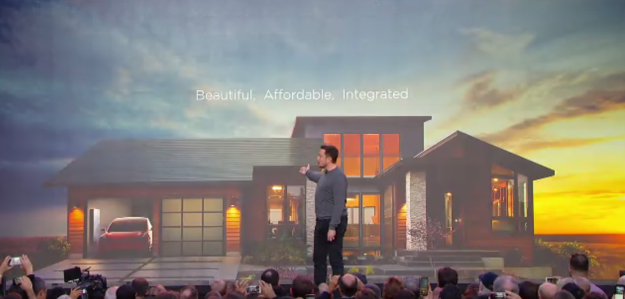
Elon Musk in a quest to make solar as attractive as electric vehicles may have leap-frogged many solar building innovations and prototypes in revealing a range of solar tiles (to be in mass production soon) at a show case event at Universal Studios yesterday.

screen-shot-2016-10-28-at-8-52-19-pm

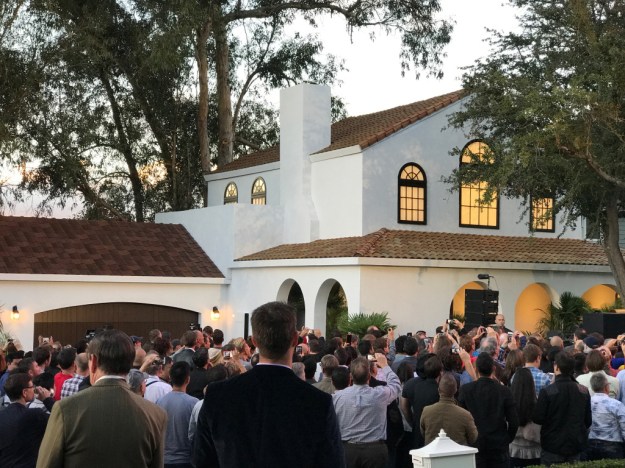
It is not often, or at all, that building products are launched with the degree of secrecy and flair that is the domain of new cars or smart phones. But that’s what Tesla did yesterday, revealing new solar tiles and power packs on a completed detached home, to invited guests. The event was reportedly powered by the energy from the display home, and then as the sun sank, powered by the battery Powerpack energy stored from the roof tiles.

Being able to generate more energy than required, and store that energy within the building for when it is not being generated, is key to sustainable buildings.  Such breakthroughs will enable both new build and refurbished buildings to move closer to the Living Building Challenge Energy petal imperative. Generating 105% of a building’s energy from the sun. And with roof tiles rather than panels, start to address the challenges Beauty petal, removing the all-too-often unsightly post construction solar panels

0cf27641-f7f1-4ead-a8af-030e742088c9

The tiles price point is still be announced, yet whilst reported to be more expensive than standard tiles, they will be cheaper than the cost of tiles and equivalent cost of energy  over the life of the tiles or building. And far cheaper than the cost of post-roof or post-construction solar panels.  The tiles will also have a longer life time than more traditional US roof tiles. (US domestic buildings have a roof replacement cycle of 20 years or so)

References:

BBC: Tesla shows off solar roof tiles

Tesla: Sustainably Power your Home or Business

Mashable: Elon Musk tied together some of the disparate threads of his company’s various grand ambitions in a product launch event here at Universal Studios Friday night.

iSite Related: at last … low cost solar power that works in the (Welsh) rain…

REGENERATION17 – Your Invited …

“our responsibility must be to inspire the next generation to become better than us and to reach higher than we have” Martin Brown in #FutuREstorative

reach-higher

The Italy Collaborative through Macro Design Studio  is organising the third edition of REGENERATION, the European design competition entirely based on the Living Building Challenge sustainability certification standard .

IMG_2334Having supported the first two editions of REGENERATION as an LBC tutor and presenter, I can wholly recommend this event as truly enriching and inspiring,  not only in learning about the Living Building Challenge in applied detail, or being hosted in a wonderful region of the Italian Dolomites, but making a positive contribution through regenerating a local municipal facility.

The competition is open to professionals (architects, engineers, environmental sustainability and landscape experts) in Europe, under 35 years old. The deadline for the request of participation is next January 31st, 2017. We will select the best 15 on the basis of the documentation submitted.

The event (which will take place at CentIMG_2350rale Fies, Dro (Trento – Italy), on April, 26th to 29th, 2017.) is a 64 non-stop hours of integrative design in which each team, assisted by tutors expert of LBC, will compete in designing the best redevelopment project of an existing local public building. There will be side events i.e. a final conference open to the public on the issues of LBC as well as the final presentation of the projects, with the proclamation of the best project by an international jury.

One goal is to have the most various participation possible, in terms of European countries represented. 

More information about REGENERATION:

– REGENERATION web site: regenerationcompetition.eu
– The REGENERATION Facebook group

The deadline for the request of participation is next January 31st, 2017. 

Administered by The International Living Future Institute (ILFI) based in Seattle (WA), a hub for visionary programs that promotes a sustainability that is Socially Just, Culturally Rich and Ecologically Restorative SMILFI is partner and scientific advisor of Macro Design Studio and the Living Building Challenge Collaborative: Italy in organizing REGENERATION.

Cities setting biophilic commitments.

Pittsburgh has become the latest city to be inducted into the Biophilic City network, setting ambitions and commitments to eliminate the use of all pesticides, fungicides and herbicides, to increase the city’s tree canopy from 42 percent to 60 percent by 2030, to pursue  the daylighting of streams in stormwater management efforts and to develop more greenways.

pexels-photo-94616-1

To qualify as a Biophilic City, cities work within a number of guidelines and monitoring indicators:

Guidelines:

  • Biophilic cities are cities of abundant nature in close proximity to large numbers of urbanites; biophilic cities are biodiverse cities, that value, protect and actively restore this biodiversity; biophilic cities are green and growing cities, organic and natureful;
  • In biophilic cities, residents feel a deep affinity with the unique flora, fauna and fungi found there, and with the climate, topography, and other special qualities of place and environment that serve to define the urban home; in biophilic cities citizens can easily recognise common species of trees, flowers, insects and birds (and in turn care deeply about them);
  • Biophilic cities are cities that provide abundant opportunities to be outside and to enjoy nature through strolling, hiking, bicycling, exploring; biophilic cities nudge us to spend more time amongst the trees, birds and sunlight.
  • Biophilic cities are rich multi-sensory environments, where the sounds of nature (and other sensory experiences) are appreciated as much as the visual or ocular experience; biophilic cities celebrate natural forms, shapes, and materials;
  • Biophilic cities place importance on education about nature and biodiversity, and on providing many and varied opportunities to learn about and directly experience nature; in biophilic cities there are many opportunities to join with others in learning about, enjoying, deeply connecting with, and helping to steward nature, whether though a nature club, organised hikes, camping in city parks, or volunteering for nature restoration projects;
  • Biophilic cities invest in the social and physical infrastructure that helps to bring urbanites to closer connection and understanding of nature, whether through natural history museums, wildlife centres, school-based nature initiatives, or parks and recreation programs and projects, among many others;
  • Biophilic cities are globally responsible cities that recognise the importance of actions to limit the impact of resource use on nature and biodiversity beyond their urban borders; biophilic cities take steps to actively support the conservation of global nature.

Indicators

  • Natural Conditions (eg % of forest or tree canopy cover, % working/living within 300m of green space, area of green roofs, living walls)
  • Biophilic Engagement ( eg daily visits to green spaces, flora and fauna eco-literacy, outdoor activity membership)
  • Biophilic Institutions, planning and governance, (eg city budget allocated to nature conservation, restoration education)
  • Human Health and Wellbeing (% spending 30 mins + in urban nature, in outdoor activities, equitable and just access to nature)

Other aspects of a biophilic city include bird friendly, water friendly (blue urbanism) and dark sky preservation.

Other Biophilic Cities include Wellington, NZ; Birmingham, UK; Victoria Gasteiz ; Spain; Portland, USA and Singapore.

The Biophilic City website has a wealth of information, stories and resources.