Tag Archives: built environment

UK Government 25 Year Environment Plan is … disappointing.

nature globeThe UK Governments 25 Year Environment Plan (A Green Future: Our 25 Year Plan to Improve the Environment) released yesterday should, on the face of it be a very significant document. Leaks and pre-issue comments from Gove in particular, hinted at great things in respect to addressing plastic, aligning health benefits of nature with healthcare and restoring nature in light of housing and infrastructure developments.

The Plan identifies six key areas:
Using and managing land sustainably (chapter 1).
Recovering nature and enhancing the beauty of landscapes (chapter 2).
Connecting people with the environment to improve health and wellbeing (chapter 3).
Increasing resource efficiency, and reducing pollution and waste (chapter 4).
Securing clean, productive and biologically diverse seas and oceans (chapter 5).
Protecting and improving the global environment (chapter 6).

And of note for the built environment,

‘Embed an ‘environmental net gain’ principle for development, including housing and infrastructure. (Chapter One)

High environmental standards for all new builds. New homes will be built in a way that reduces demands for water, energy and material resources, improves flood resilience, minimises overheating and encourages walking and cycling. Resilient buildings and infrastructure will more readily adapt to a changing climate.

And, to improve existing green infrastructure by encouraging more investment while making sure there is a presumption for sustainable development.

However what we have is low on ambition and nothing more than a plan to plan. Each action is peppered with “consider”, “explore”, “promote”, “help” etc … and to work with others if they would care to.

25 yr plan quote

The fact this is a 25 year plan, in 2018, it takes us through to 2043 – firmly into the next generation that will undoubtedly be severely compromised by what we do or don’t do today.  One only has to compare other initiatives with target dates within this timeframe to see how low on intent this plan is. Compare with the WorldGBC plans for zero carbon new buildings by 2030 and all buildings zero carbon by 2050, or the auto industry to move away from fossil fuels.

As commented by many, there is an ‘extraordinary omission’ in the plan: there is no mention at all of fracking. Given that the only sustained solution to the environmental and climate crisis is leaving fossil fuels in the ground, the continued support for extracting yet more through fracking cannot be justified in the light of the this report.

We are now acutely aware that  we do not have the luxury only to explore, to consider and to just reduce impacts … that is not sustainable. We require more direct leadership, commitment and action to do more good, to restore and regenerate the environment.

George Monbiot commented ‘ Those who wrote (the plan) are aware of the multiple crises we face. But, having laid out the depth and breadth of our predicaments, they propose to do almost nothing about them”

Stephanie Hilborne, Chief Executive of The Wildlife Trusts, “unless more leadership is shown, wildlife will continue to decline & with it our mental health as more people become isolated from benefits of contact with nature’

What we do have however, and should take action on, is further recognition that the environment  and connection with nature is severely affecting the health of the planet, of ourselves and of other species. Gove is trying to secure commitment to an Environment Act in the next Queen’s speech and we should help to secure this as there is not yet full government support, but there certainly needs to be more leadership, direct action and targets in this 25 year plan.

The Plan is available to download from here 

Towards 1.5 DegC: Built Environment’s role in COP23

pexels-photo-425050-2COP23 located in Bonn, Germany and hosted by Fiji takes place from 6 – 17 November.

The hosting by Fiji is significant as as a island nation they already feel the impact of climate change more than other nations. Fiji will also bring a new consensus building and discussion approach to COP23 – ‘Talanoa’.

Talanoa is a Pacific, story telling, term for discussions aimed at building consensus, airing differences constructively, and finding ways to overcome difficulties or embark on new projects. It is one of the building blocks of Fijian society, used for centuries to foster greater understanding among a people distributed over many small islands, and carry them through a tough existence. It is hoped that Talanoa will break deadlocks that have limited COP progress over the last 20 years.

The built environment

In recognition of its crucial role of the built environment, (as part of the climate change ‘problem’ and part of the solution for reducing CO2 emissions) the sector should receive high levels of visibility at this year´s COP.

An unprecedented four-day buildings programme has been pulled together by Global Alliance for Buildings and Construction  which has at its core the overarching goal of COP23:

To harness innovation, enterprise and investment to fast track the development and deployment of climate solutions that will build future economies with net zero greenhouse gas emissions, in an effort to limit the rise of global temperatures to 1.5°C above pre-industrial levels.

You should be able to follow discussions, comments and outcomes from the four days via a combination of #COP23 #GABC twitter hashtags 

Setting the scene: Building Action Symposium

9 November action is very much at the heart of the Building Action Symposium, a public event that will kick off the four-day event programme.

The objective of this action day is to identify key ingredients to achieving a low-carbon, energy efficient buildings and construction sector that will help to achieve the Paris Climate Agreement from 2015.

Turning theory into practice: Best practice examples on the ground

To illustrate that it is possible to walk the talk, the following day, a guided tour by the Federal Chamber of German Architects will showcase a selection of local buildings that are exemplary for sustainable architecture, including a day care centre and student housing.

Bringing about change within the construction and real estate sector: Human Settlements Day

Taking onboard recommendations from the Building Action Symposium on 9 November, this event will explore high impact change agents and measures, the role of private sector engagement and how to link buildings to the UN Sustainable Development Goals (SDGs).

Linking buildings to the Sustainable Development Goals: SDG11 Day

Finally, Monday, 13 November is SDG11 Day will see a high-level dialogue between country representatives and senior industry leaders focused on ensuring the buildings sector delivers against key relevant UN Sustainable Development Goals:

  • SDG11 – Make cities and human settlements inclusive, safe, resilient and sustainable
  • SDG7   – Ensure access to affordable and clean energy
  • SDG13 – Take urgent action to combat climate change and its impacts

Sources: this post is based on and adapted from

RICS News post

Global Alliance for Buildings and Construction

Guardian 6th Nov 

London Environment Strategy and the Built Environment

On 11 August Mayor of London, Sadiq Khan, published his draft London Environment Strategy for public consultation (open until 17th November) The Mayor is taking a range of  actions to ‘improve the environment now, setting London on the path to create a greenercleaner future’

LES Aims

Construction, buildings and the built environment feature large in this strategy to bring together approaches to every aspect of London’s environment, including

•    Air quality:  Construction contributes to air quality as a major sources of local PM pollution with high volumes of dust and emissions from transport, the strategy looks to reducing construction traffic by five per cent by 2020, and reducing the number of freight trips during the morning peak by ten per cent by 2026. And that monitoring on construction sites to inform operators when additional measures are required must be improved.

“Non-road mobile machinery used in the construction and infrastructure building sectors currently accounts for approximately seven per cent of NOx and eight per cent of PM10 emissions in London.”

•    Green infrastructure

London will be a National Park City where more than half of its area is green; where the natural environment is protected and the network of green infrastructure is managed to benefit all Londoners.

•    Climate change mitigation and energy

To minimise carbon dioxide emissions from construction and future operation of the building and to achieve the Mayor’s zero carbon development target, the energy hierarchy wording will be updated to:

  1. be lean: use less energy and manage demand during construction and operation
  2. be clean: exploit local energy resources (such as secondary heat) and supply energy efficiently and cleanly
  3. be green: generate, store and use renewable energy on site

Ninety per cent of construction industry professionals responded to a survey stating that they would benefit from better embodied carbon guidance and support.

•    Waste

Aim : London will be a zero waste city. By 2026 no biodegradable or recyclable waste will be sent to landfill. – “waste” refers to any substance or object which the holder discards, intends to discard or is required to discard

•    Adapting to climate change

LES Water

Download the London Environment Strategy from here

Consultation is open until Nov 17th  for individuals –Talk London surveys and discussions and organisations to respond to  survey with evidence and ideas

Circular By Design

IMG_1100

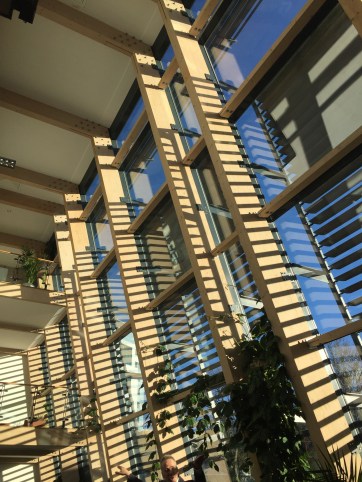
Circular Economy: the Bright Building at Bradford University

Furthering the discussion on circular economy here on the fairsnape blog, the recent publication Circular by Design, Products in the circular economy from the European Environment Agency, makes a valuable contribution and a worthwhile read.Of particular note for the built environment:

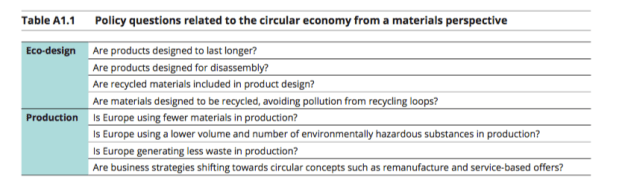
  1. policy questions posed, related to the circular economy from a materials perspective on eco design, design for disassembly and production.

Circualr by Design - Table 2

and suggested policy measures for the building sector to advance a circular economy.

Circualr by Design - Table for buildings.jpg

The Circular Economy will have a profound impact on building design, resources and waste management. The Circular Economy has been valued at a potential £29billion and estimated to create over 100,00 new jobs, and as defined by the Ellen MacArthur Foundation is both restorative in nature and design seeking to maintain products, components and materials at their highest value at all times – avoiding down-cycling, conversion to energy or disposal to landfill.  MB

Blockchain: Explainer and Grenfell relevance.

In relation to transparency and responsibility in the material supply chain we have covered material passport on a few occasions on this blog and in event workshops, (Cradle to Cradle, LBC Declare etc)


censorship-free-social-network-akasha-aims-to-tackle-internet-censorship-with-blockchain-technology-950x528


Emerging Blockchain technology, the technology of trust is redefining the way we transact. Combining the internet’s openness with cryptography security,  Blockchain can give everyone a faster, safer way to verify supply chain transactions, verify key information and (re)establish trust. 

pw tweet grenfell

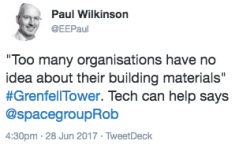
Being able to verify everything we specify, procure and install on building projects will go a big way to removing the uncertainty highlighted in the Grenfell Tower materials issue.


Blockchain can provide that certainty.

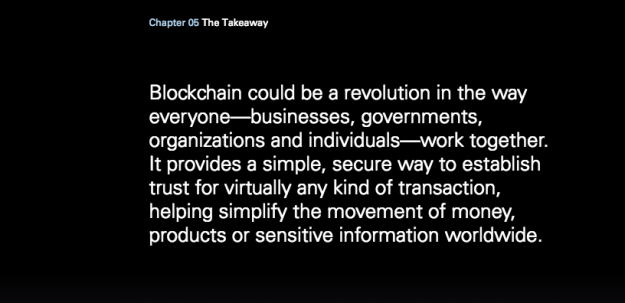
Blockchain is designed to store information in a way that makes it virtually impossible to add, remove or change data without being detected by other users.


But what is Blockchain?

This Blockchain explainer from Goldman Sachs is one of the best introductions (despite its clunky format!)

blockchain

Image: http://www.goldmansachs.com/our-thinking/pages/blockchain/

New standard and guide for the circular economy: BS 8001:2017

Following consultant the BSI has launched a new standard for the circular economy, BS 8001:2017: Framework for implementing the principles of the circular economy in organisations, the world’s first for implementing circular economy principles.

circular economy image

I have covered the circular economy within the built environment over recent years, eg within blog posts here, through numerous presentations and workshops and of course within FutuREstorative. It is good therefore to see that BS8001 standard for circular economy guidance is now available.

The new standard is designed to be applicable to businesses of all sizes as they seek to move to a more circular model.

BSI 8001 aims to aid the navigation of the tricky transition period for businesses towards a circular model, outlining what the circular economy is and providing guidelines for the implementation of more sustainable practices.

BS 8001 is built on six principles of the circular economy – innovation, stewardship, collaboration, value optimisations, transparency and ‘systems thinking’ – with the concept that components, products and materials should be kept at their highest utility and value at all times, placing emphasis on the importance of an economy that is restorative and regenerative.

Guidance included in the standard revolves around specific issues that may hamper the transition to the circular economy, such as measurements, liability and insurance, logistical concerns and materials, and also guides on associated business models such as leasing, the sharing economy, and remanufacturing.

The principles and guidelines within the standard are not meant to be prescriptive, but are intended to be used flexibly by businesses and organisations, no matter their size or stage of transition to the circular economy, to reduce costs and supply chain risks while contributing to a low-carbon and resource efficient economy

A free download short executive briefing document has also been produced which is aimed at senior level decision makers.

Related:

A Green Built Environment supports the Sustainable Development Goals (SDG’s)

This blog has referenced the Sustainable Development Goals on many occasions, indeed within FutuREstorative I make the case for the SDG’s to replace the Brundtland definition.

It is now three decades since the Brundtland Commission defined Sustainable Development as ‘doing nothing today that compromises future generations’. It was and remains the definitive ‘strapline’ that has been built into countless sustainability strategies definitions, statements and policies. We have chosen the ‘do nothing’ option, and are compromising future generations, and without radical, positive change we will continue to compromise the next generation.

Understanding and addressing the huge influence of the built environment is essential. This (influence and responsibility) must be included as an organisational governance issue to enable a culture of restorative approaches and delivery.   FutuREstorative

In 2015 the UN published its Sustainability Development Goals 2030. The SDGs define the intention to change the Brundtland definition of sustainability to a new purpose that is proactive and net-positive, and one that improves the social, environment and financial wellbeing of people and the planet by 2030. Just as we embraced the Brundtland definition, so we must now embrace the SDGs as a foundation for our sustainability visions and strategies.

The World Green Building Council recently released a handful of great infographics illustrating how the built environment can support SDG’s,

While many might look at a building and see only an inanimate structure, we look at buildings and see both the physicality and the process by which they are created – an opportunity to not only save energy, water and carbon emissions but to educate, create jobs, strengthen communities, improve health and wellbeing, and much, much more. Green building is a true catalyst for addressing some of the world’s most pressing issues. World Green Building Council 

The SDG’s give new purpose to  built environment Corporate Social Responsibility (CSR):

Content pages cityscape SDGs new

Giving purpose to green facilities management, that can, through promotion of green offices, address several SDG’s:

C7nSguzXwAEB3gQ

And how our homes can be the building blocks in support of the sustainability goals:

C7mKrNbVwAIPRdw


A case for reconstructing the world of sustainable building standards.


pexels-photo-129743

The sustainability media platform Green Biz recently carried an extract fromFutuREstorative Chapter Six, the New Sustainability Standards. Here is an abridged version …

… (The following is an excerpt from “FutuREstorative, Working Towards a New Sustainability,”authored by Martin Brown and published by RIBA Publishing. The selection was edited for clarity and length)

Sustainable building certification standards are immense influencers on not only the built environment sector but also commercial, industrial and domestic green lifestyles. With that influence comes a real responsibility in establishing the current direction of travel for the industry against a backdrop of climate, economic and social change.

Get it right, and we move closer to addressing major climate change issues, attaining carbon reduction targets and achieving ecologically, economically and socially just goals. Get it wrong and the negative impact ripples far beyond the built environment sector.

However, it is the purpose of certification schemes not only to set best practices for design, construction and operation but to go beyond current best practices and establish a vision for sustainable buildings based on what is required — with required practice then measured against that vision.

We need to stop regarding green buildings as a benefit to be proud of. They should be seen as the norm; the way we build. Indeed, as a sector we should feel guilty about not using our skills and expertise to create green buildings for us and future generations. That we remain content to commission, design, build and operate buildings below this sustainability threshold reinforces the argument that the built environment sector is one of low aspiration.

Green Biz article

FutuREstorative is now available in a digital format

RESTORE: REthinking Sustainability TOwards a Regenerative Economy

pexels-photo-93013

REthinking Sustainability Towards a Regenerative Economy 


After a number of years discussing, bidding, meetings in Italy and skype calls across Europe we finally launch our four year RESTORE* Cost Action CA16114 programme, exploring restorative sustainability, in Brussels this Thursday 9th March.

* REthinking Sustainability TOwards a Regenerative Economy

COST Action public page 

RESTORE Overview:

Sustainable buildings and facilities are critical to a future that is socially just, ecologically restorative, culturally rich and economically viable within the climate change context.

Despite over a decade of strategies and programmes, progress on built environment sustainability fails to address these key issues. Consequently the built environment sector no longer has the luxury of being incrementally less bad, but, with urgency, needs to adopt net-positive, restorative sustainability thinking to incrementally do ‘more good’.

Within the built environment sustainability agenda a shift is occurring, from a narrow focus on building energy performance, mitigation strategies, and minimisation of environmental impacts to a broader framework that enriches places, people, ecology, culture, and climate at the core of the design task, with a particular emphasis on the salutogenic benefits towards health.

 Sustainability in buildings, as understood today, is an inadequate measure for current and future architectural design, for it aims no higher than trying to make buildings “less bad”. Building on current European Standards restorative sustainability approaches can and will raise aspirations and deliver restorative outcomes.

The RESTORE Action will affect a paradigm shift towards restorative sustainability for new and existing buildings across Europe, promoting forward thinking and multidisciplinary knowledge, leading to solutions that celebrate the richness of design creativity while enhancing users’ experience, comfort, health, wellbeing and satisfaction inside and outside buildings, and in harmony with urban and natural ecosystems, reconnecting users to nature.

The COST proposal will advocate, mentor and influence for a restorative built environment sustainability through work groups, training schools (including learning design competitions) and Short Term Scientific Missions (STSMs).

Keywords: restorative sustainability, restorative design processes-methods-tools, climate change, health, wellbeing, sustainable urban development, social, ecology, built environment.

The Working Groups

  • Working Group 0: Project Coordination
  • Working Group One: Restorative Sustainability
  • Working Group Two:Restorative Design Process
  • Working Group Three: Restorative Buildings & Operations
  • Working Group Four: Rethinking Technology
  • Working Group Five: Scale Jumping

The Cost Action will also include:

  • RESTORE Training Schools
  • RESTORE STSM – Short Term Science Missions
  • RESTORE Early Stage Research opportunities

We have an ‘in development’ website with more information here

COST Action public page 

Lancashire Construction is Blooming

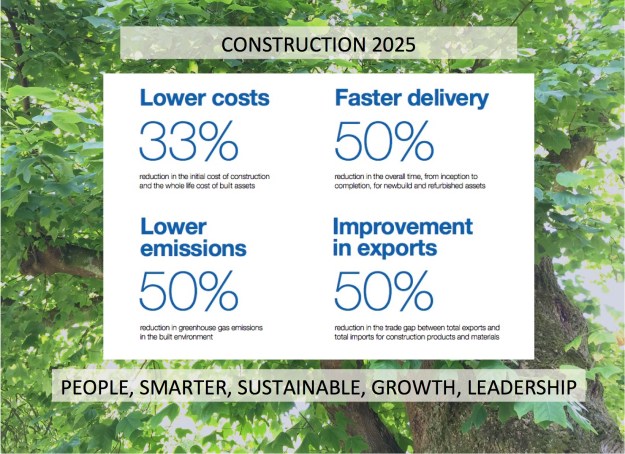
With the regions transformational City Deal now getting into swing there will be ‘blooming’ opportunities for those in the Lancashire built environment sector over the coming months and years. And Constructing Excellence, through its Lancashire and Regional Clubs is well placed to assist in the development and transfer of best practice knowledge and skills. These cover the core ingredients of successful built environment organisations – Productivity, BIM & Digital Construction, Sustainability and Continuous Improvement –  all geared to meeting the Construction 2025 Vision

construction-2025-headlines

Whilst you are here: Supporting the Lancashire Club: We are looking for new steering group members to steer and drive the club over the coming years, a period that will be a busy, challenging but rewarding one for built environment organisations within the region. if you are interested please get in touch with our Chair, Martin Brown, our Sec, Andrea Atherton or Regional Club Coordinator Zoe Brooke 

Our … speak to us at our next event on 23rd Feb in Lancaster 

We Are Lancashire – The Place For Growth

Lancashire, Preston and South Ribble’s transformational City Deal pitched to over 100 developers, agents and investors at half-day Place North West business conference last week.

Entitled “We Are Lancashire – The Place For Growth”, the event was organised by the City Deal Partnership (including Lancashire County Council, Preston City Council, South Ribble Council and the Homes & Communities Agency), Marketing Lancashire and the Lancashire LEP. It was run in partnership with leading property news and investment website Place North West, and hosted at the Preston headquarters of accountants RSM.

At the heart of the discussions was the impact and opportunities offered by the £434m City Deal programme. The City Deal is a key initiative of the Lancashire Enterprise Partnership’s strategic plan to create 50,000 new jobs over the next 10 years across the county.  The City Deal will help to create more than 20,000 new private sector jobs and see over 17,000 new homes built across Preston and South Ribble, as well as new school places, open green spaces and new health provision to cater for the growing population

  • Key themes which emerged throughout the sessions included how all of the Lancashire local authorities, both county and district, involved in City Deal were working closely together to ensure private investment can flourish. This included their pragmatic, joined-up approach to the planning process, and the substantial public sector support on offer to help private sector schemes get started, and completed, with a minimum of barriers.
  • Another important debate centred around the need to create a diverse mix of housing, and have different types of tenure, throughout Central Lancashire. This was to ensure families, young people, the elderly, students and recent graduates could all get access to affordable and desirable accommodation which suited their needs.
  • As well as providing suitable homes to encourage graduates to stay in the area, many of the speakers also touched on the need to retain graduate talent through a combination of suitable jobs in the region, and the creation of an attractive environment to live in. This included a need for an improved for an improved evening economy as well as strengthening its position as a visitor destination.
  • This led to a focus on the strengths and benefits of Central Lancashire’s existing regeneration and development schemes, and highlighted some of the major City Deal investments which have recently been announced.
  • These included Preston city-centre developments such as the new Harris Quarter cinema and leisure scheme, the potential for the re-development of an ‘HS2 ready’ Preston train station, the £200m UCLan masterplan, the regeneration of Winckley Square and the proposed Altus Grade A office project.
  • The major investment opportunities based around the Samlesbury Enterprise Zone site, which has now been designated as a specialist aerospace and advanced manufacturing hub as part of The Lancashire Advanced Manufacturing and Energy Cluster programme were discussed, including reference to the recently green-lighted Advanced Manufacturing Research Centre which will be based at Samlesbury.
  • The major mixed use logistics, retail and residential scheme at Cuerden, anchored by a new IKEA, was also held up as an example of how the City Deal is helping to unlock a series of complementary developments which are set to have a genuinely transformational effect on the Central Lancashire economy.

Threats and challenges to Lancashire’s growth were also debated, with issues like skill shortages, Brexit and Lancashire’s historic reputation for being a divided county all coming under discussion.

However, the general consensus from both private and public sector speakers was that Lancashire has made incredible progress over the last few years to speak with one voice showcasing its growing ambition and confidence, is looking to tackle the issue of vocational skills through a series of effective education and employer strategies, and is set to play a key role at the heart of the Northern Powerhouse initiative through a private-public partnership approach to stimulating economic growth.

More