Tag Archives: construction

Social media in construction – whats happening?

Towards the end of last year the Construction Marketing Association conducted a US national survey of construction professionals regarding their use of social media. Of note is that 90% of those surveyed used social media, and of those 91% managed social media internally. Also of interest is the % use of Social Media platforms used, along with the most effective (linkedin) and least effective (facebook) social media platforms.

Also take a look at my article feature in the Guardian last year Why the construction sector should engage with social media, our Be2Camp Social Media Framework for GreenDeal, and Pauley Creative’s 2011  How are the top 15 UK Construction Companies using Social Media

What do you think? What do you use in your business?

Social Media in Construction

Find Martin on Google+

Construction Localism – how do you compare against benchmark?

Construction ‘localism’ is currently high on the agenda. And set to grow in importance.

There is, rightly, much talk and focus on localism within construction projects and frameworks at the moment, based on the principle of keeping project spend local. And of course realising other benefits such as reduced travel and transport distances, reduced carbon emission, improved productivity and more.

But how do we compare and benchmark ‘localism’? How local is your project? As a client how can you know if your contractor is addressing your ‘localism’ requirements?

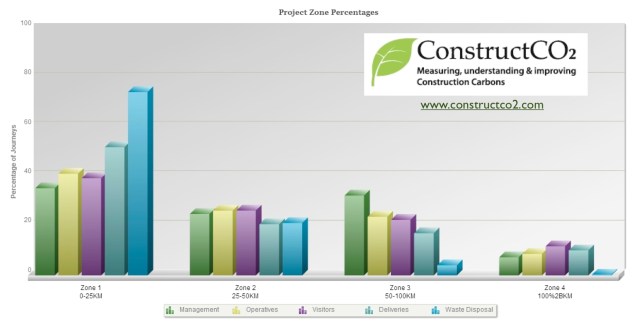
The benchmark being set through ConstructCO2 can provide a starting point. How do you compare? Do you know your project stats?

Construction Localism by Zone

Measuring and understanding your localism (and CO2) footprint must be a key measure, a KPI, as part of your sustainability and CSR programme. Going beyond the measuring it’s essential we monitor trends, make the comparisons, understand the causes and, take action.

bb7dff99a6e2e90c5e67b380cb0aac7b

It is one of the more important impact and influence areas your construction project has on sustainability and the environment.

For more on measuring your construction project carbons and project localism check out constructco2 or please do get in touch.

Have we picked the low hanging fruit of Sustainable Construction?

low hanging fruitThe mid 90’s saw my first involvement with sustainable construction, as Business Improvement Manager, setting up strategy and awareness programmes for Mowlem Construction, driven it should be noted to address client bid requirements in PFI and Prime Contracting.

At that time Brundtland’s definition from 1987 was fresh and it made good sense to include it in strategies and as a definition.

In hindsight, one of the problems of this approach is that it reinforced the thinking of that time, that environmental management, and by default sustainable construction belonged firmly and squarely within the Health and Safety departments.  A misconception that many organisations still subscribe to, or struggle to move away from.

But, since then, sustainability thinking has moved on from environmental management as H&S add on, to a wider view of sustainability that includes social and business responsibility, ethical procurement and localism and is now heading for a challenging future greener and deeper agenda

It is encouraging to note the move away from what I have referred to as ‘accommodationalist‘ thinking – ie doing only what we are required to do by law, no more no less. In fact this  thinking is now being challenged by the Governments red tape initiative, proposing to remove certain sustainability related legislation

Over the last 7 years I have been supporting organisations map out and chart progress on their ‘Route to Zero‘, identifying actions necessary today, tomorrow and most likely into the future. We may be in the position of being able to say we have picked off the low hanging fruit from the sustainability tree.

Most construction companies now have a sustainability policy and project approaches that are ISO 14001 accredited, to deal with better management of waste,  recording transport construction miles, employing locally and so on.

But now the real work begins, reaching higher into the greener, more dense canopies of the tree, with a new, emerging set of challenging actions that will take us closer to our zero impact ambitions.

Amongst these new challenges we can see:

  • Collaborative and circular economy thinking. For example what if every building improved with age, improved in its function, its resilience, its performance.  Became more ‘durable‘?  Contracts would not only need to cover the design and construction of buildings, but a new form of collaboration between provider and user that included continuous improvement criteria.  Such Circular Economy thinking would force new collaborations across the supply chain, across discipline and with clients.
  • Convergence of data, information rich ICT environments, an Internet of Things linked to metering sensors that will provide real time feedback on performance of the buildings and of the construction process, driving improved and sustainable resource utilisation. Getting us closer to zero waste and  zero carbon emissions.
  • Responsible specification and procurement, that is not only local but considers ethical and most importantly the health impact of building product ingredients. (see the Healthy Product Declaration Standard)
  • Challenging standards, that bring new deep green philosophies and certifications for buildings and facilities, as we see with the Living Building Challenge
  • The inclusion of costing nature within construction projects. ‘Cheap’ buildings may only be cheap because the real social, environmental costs have been externalised for someone else, often society and the public purse to deal with. Time to bring those externalised costs back into the project costs?
  • A mindful built environment sector, or one that has mindfulness, ie ‘in the moment’ awareness of the impact the design, the construction, the maintenance, use and deconstruction of the building will have upon the environment and nature. Mindfulness is a huge and complex topic but an important sustainability concept we will hear far much more of in 2013.

The first Green Vision tweetchat for 2013 will explore some of these issues on the 28th January at 8pm using the hashtag #GVisChat, asking the question are we getting closer to ‘Zero’?

If you would like to know more on how the Fairsnape Route to Zero mapping and charting programme can help your business, please do make contact

Update – Presentation on this theme 

Water Energy Nexus – a built environment mindfulness

screenshot.26

As a lead-up to Abu Dhabi Sustainability Week, January 13-17, Masdar is sponsoring a blogging contest called “Engage: The Water-Energy Nexus.”

The winner will be invited to Abu Dhabi as VIP media to cover the week’s high-profile events.

The following is my entry. Please vote for me here

Water Energy Nexus – a built environment mindfulness

Could we be facing a near perfect storm within the built environment, as our sustainability efforts, our energy and water performance efforts, or perhaps lack of effort hit an environmental cliff.

Consider:

  • 85% of buildings that will be in use in 2050 are already standing today, and many many of them, commercial, leisure and domestic were designed and constructed prior to any meaningful sustainability guidelines. Buildings that are water energy cavelier, designed and managed with a cornucopia view of resources
  • The built environment sector is often called the 40% sector on account of using 40% of the worlds resources, energy and water whilst generating 40% of the worlds waste.
  • Increasingly our lifestyles, workstyles and infrastructure styles are demand evermore energy and water.
  • We are making poor, behind target progress on energy reduction, water conservation and carbon reduction through our design, construction and use of buildings
  • Even today in 2012 water lacks behind energy in performance import for new build and refurbishment
  • We have a facilities management profession that adopts a status quo maintainence basis, often with low level SLA’s demanding same focus as water and in some cases energy performance
  • We are entering a future of big data, where rational, cold evidence based approaches will dominate, driven by Building Information Management. Whilst a very welcomed performance improvement for the sector we may be in danger of loosing the experience intuitive.
  • The dominating sustainable construction codes such as BREEAM and LEED are in danger of becoming corporate checklists, often criticised for the ability to trade water performance points against cycle travel provision points.

Addressing a Water / Energy Nexus

Looking forward the built environment should be looking for both strategic data-driven leaders and managers balanced with strategic creative leaders. This is particularly the case in facilities management sector, where the intuition that comes from deep knowledge of how buildings use water and energy, once a key skill of the building facilities manager that we are sadly loosing and one of the key green skills to rekindle.

We have a need for ‘Mindfulness’ in the built environment. A deep green understanding of the buildings relationship with nature, guided by building codes and green sustainability standards. And as a designer, as a builder as an inhabitant, develop an in-the-moment awareness connectivity or dis-connectivity with the nature and water / energy resources.

We need a move away from assessments looking at impact on the environment, but rather turning tables to look at how the facility connects with nature and its environment.

We can see standards such as the Living Building Challenge as a way forward with each building regarded as a flower, using only the water and energy that falls on the building.

We need new levels of engagement and relationship between building and user. For example the CIRS Vancouver UBC building, itself a LBC accredited building, refers to its users as inhabitants – requiring each to sign a charter that recognises the engagement expected

As I wrote in an earlier blog we need 3 New ‘R’s for built environment sustainability, and its impact on the water energy nexus

Re-Design. No longer are transactional efforts in conserving water and energy enough. Radical revolution in design thinking needed that encompasses Cradle to Cradle thinking, Circular Economy,

Re-Connect. Time to rethink our relationship with nature, a relationship that is deeper, that is deep green mindfulness. A direction that Living Building Challenge promotes – every building contributing to, not taking from its environment.

Re-Kindle. Time to rekindle the sustainability water / energy debate – moving away from the negative, harassment to doing less bad, to encouraging a move towards a positive new world of doing more good, better. Fostering Resilience.

The world may not be ending today, but does the construction industry continue to waste as though there is no tomorrow?

OLYMPUS DIGITAL CAMERAOK, not all construction and indeed we have many exemplar, near-zero-waste construction projects , yet the industry continues to be wasteful, locked into a Take, Make, Waste attitude that contributes 40% of all waste.

The last few weeks of Green Vision activity have highlighted the emerging circular economy, cradle to cradle, living building, healthy product philosophies that will move us away from our cornucopian approach.

The push for 2013 must be to ‘rethink the way we make things’ and aim for more near-zero- waste projects. (near-zero-waste as meaning waste generated on a project, not the percentage of waste diverted from landfill)

Related posts:

Cradle to Cradle Tweetchat Storify

3 R’s for rethinking built environment sustainability

Is Our Green Build Compass Broken?

3 R’s for rethinking built environment sustainability

OLYMPUS DIGITAL CAMERA

Its over ten years since rethinking construction became the driving force for improving the construction industry. Back then, in 1998, sustainability wasn’t on the agenda for many construction organisations, and didnt feature in Egans influential report.

Now at the close of 2012, it is of course one of the key challenges for construction.

But is it now just a ‘must do, tick box’ matter, rather than a real agenda for improving, reducing costs and reducing our impact?

Earth2.0 Hub in an excellent blog post ( The Future of Business – inspired by and in harmony with nature.) provides a framework and the language of 3 R’s for future businesses working in harmony with the earth .  And its a framework we should learn from, borrow, adopt or adapt  at project and business level in rethinking built environment sustainability; Re-Design, Re-Connect and Re-Kindle.

Re-Design. Not only design of buildings, but to re-design the way we build. No longer are transactional efforts (reducing waste, conserving energy and recycling) enough.

How?: Take a look at Cradle to Cradle thinking, Circular Economy, Designing out toxic materialsDesigning out Landfill

Re-Connect. Time to rethink our relationship with nature. However just including nature as a natural capital to be costed is not meaningful approach. We need a relationship that is deeper, that is deep green thinking.

How?: take a look at Living Building Challenge – what if every building, like a flower, contributed to its environment. Or the One Planet Living ten principles

Re-Kindle. Time to rekindle the sustainability debate – moving away from the negative, harassment to doing less bad, to encouraging a move towards a positive new world of doing more good,  better. Resilience.

How?: Learning and benchmarking from other industries and sectors, for example Patagonia, or closer to the built environment, Interface Flooring

This blog, since 2005, has had as a tagline built environment improvement and its connectivity to the natural world . Since then, it has been a core philosophy within fairsnape.

cropped-pc210049flip.jpg

Since 2005 we have organised and facilitated benchmarkwalks, discussing sustainability issues , across and within sectors, whilst walking in the natural environment. Rather than in the conference of training room. You would be amazed how diffierent, how green, sustainability discussions when conducted in the great outdoors. Try it !

Cradle to Cradle, Circular Economy, Healthy Products Standard, Designing Out Landfill , Interface UK, and the UK Living Building Challenge all featured in our #GVis2012. Green Vision Conference in Leeds on the 12 Dec 2012.

>>> See Green Vision event material, links, blogs and more here  <<<<

<<< Read the Cradle to Cradle tweetchat transcript here <<<

The Living Building Challenge UK Collaborative will be ‘launched’ at this event on the 12th.

And, Cradle to Cradle is the book-topic for our Dec #GVisChat tweetchat on Dec 10th at 8pm.

UK’s first Best Practice Benchmarking Awards 2012

It was a real pleasure to sit on the judging panel for the UK’s first Best Practice Benchmarking Awards 2012, devised by the UK Benchmarking Institute in conjunction with The Best Practice Club and Ideas UK at the 2012 Ideas UK Conference on 8th November.

France Telecom Orange and HSBC received awards for their outstanding benchmarking projects.

France Telecom Orange for its “Broadband MTBA (Mean Time Between Assist)” project led by Thierry Denant, Senior Benchmarking Manager

HSBC, for its “When Social Media meets Business Strategy” project led by James Shewry, Best Place to Suggest Manager.

Ray Wilkinson, founding fellow of The Benchmarking Institute and director of the Best Practice Club explains:

“The Benchmarking Awards were set up to recognise examples of best practice in large organisations and raise awareness of benchmarking as THE most powerful business performance improvement technique around today.  Successful benchmarking requires organisations to identify clearly what performance they want to improve, understand it fully and then select, adapt and implement the most appropriate best practice available.  None of this is easy to do and many organisations have wasted lots of time, effort and money in benchmarking activities that have failed to deliver business benefits. Lack of awareness of how best to apply best practice is the root cause of this.

Benchmarking in its broadest definition remains the most popular performance improvement tool, although this claim would include the simple act of comparing performance with another organisation through KPI’s rather than structured benchmarking.

It was a pity that although interest was high there were no entrants from the built environment sector. Hopefully this will be corrected in 2013. Benchmarking remains an important business improvement tool for the sector, and as Paul Morrell commented recently, benchmarking should be driving construction costs.

“If a company wants to see a future, 80% of what it will have to learn will be from outside its own industry.”

As our improvement, communication and sustainability agenda has widened considerably with topics not traditionally found in construction, for example, social value, Corporate Social Responsibility  healthy materials and so on, it is arguably external benchmarking that will return maximum improvement to organisations and the industry.

The Benchmarking Awards is a judged competition, celebrating outstanding benchmarking at individual project level.  After all submissions were assessed, finalists were then selected and invited to present their submissions on the 8th November, at the Ideas UK Conference, where they were subjected to an in depth questioning process to explore the details of their benchmarking project.

The 2013 Awards will open for submissions from March next year.

The Benchmarking Institute consists of a wealth of unparalleled benchmarking experience. Check out the list of founding fellows and industries represented.

If you are interested in dramatically improving your business, looking to gain far much more value from KPI’s or just curious of how benchmarking can help reduce costs, the Benchmarking Institute can help.  Please do get in touch.

Awards reported in Project Manager

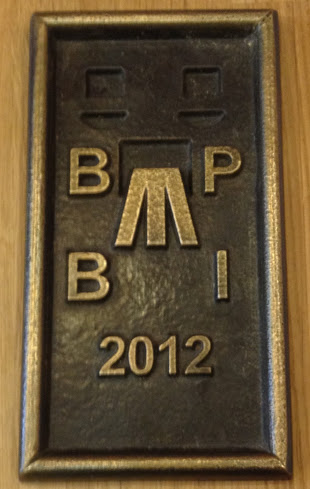
Eagle eyed observers will notice the Benchmarking Award is a replica of the Ordnance Survey trig column flush bracket plate. More here on wiki

Construction Carbon Cost and Risk Management

Having effective scenario planning in place within a construction business is essential to developing effective forward looking strategies that protect the business into the future and provide resilience against change.

One of our current uncertainties is related to the price of carbon, and how once the price of carbon has been fixed, how that will impact your business and project costs. It is now only a matter of time before carbon costing becomes established as an indicator and ‘repayment’ cost for your environmental impact

As with the increase cost of waste management over the last decade or so, cost of carbon will, most likely be a supply risk and cost.

The concept of shadow pricing is not new, (based on the lifetime damage costs associated with greenhouse gas emissions)  Applying a shadow cost to your carbon emissions now will enable you to action plan and reduce carbons, reducing exposure to future costs  hitting your business.

A good place to start is through measuring and understanding your project construction carbons with Constructco2 and then applying a carbon cost of £10 per tonne.  If you haven’t measured your construction carbons as yet (why not?) then use the ConstructCO2 benchmark of 96.7 Kg/£K project spend.

How would that cost affect your business? How would you manage projects with this additional cost, and importantly what actions would you take to reduce your project emissions?

Perhaps we should be asking the question will you start?

Many of the contractors, clients and subcontractors we support through constructco2 are seeing cost and bidding benefits. (More)

Useful Background Reading:

Based on recent Huffington Post article  The Benefits of Carbon Shadow Pricing Tyler Elm and Jim Harris

DECC: Carbon Valuation

Now is the future of construction

All too often I hear construction talk of how things will be better and back to normal when we emerge from the current tough environment, with a strategy of retrenching, waiting and picking up again in good times just around the corner.

Wrong – this is the future, right now, and only those who adapt and embrace change will find a better working environment, and turn the corner to find those good times. As Einstein said, doing the same thing over and over again hoping for better results is just plain insanity.

I was reminded at yesterdays Constructing Excellence Collaborative Working Champions meeting that the Never Waste a Good Crisis  – Challenge to the UK Construction Industry is now three years old – and the message is still as viable and important as ever.

Embracing change across so many facets of business today is vital for future success, but particularly in the sustainability and responsibility arena. As Michael Townsend wrote only yesterday on the Guardian Sustainable Business blog, companies that prosper in future will be the ones that take action on sustainability now, and asks the question:

Should construction companies remain engaged in the net depletion of resources, or move towards becoming a zero-adverse impact facilities business within the circular economy?

Understanding change and adapting for the future is a big ask for many organisations within the built environment, and we have yet to see breakthrough case studies. However, many are now embarking on the first step of increasing awareness of change, and through the Fairsnape Route to Zero approach starting to map out a strategy.

On changing culture …

This Wednesday, I attended, and was privileged to talk at, two seemingly unrelated events, one being Green Deal and the other Building Information Modelling (BIM). Both very topical with a common theme of real presenting challenges to the the way we work within our industry.

At both I heard the time-old concern that the industry needs a cultural change to address better ways of working. Couldnt agree more. But there is an expectation that someone else will do it for us – to us.  Somewhere, some organisation will wave a wand, mutter a few Harry Potter spell words and cultural change will sweep across us. It’s not going to happen that way.

Be the change we wish to see …

Changing the culture has to come from within us, as individuals and organisations, to stand up and challenge the accepted norms. When we see better ways of approaching projects and tasks, better ways of working together, better sustainability approaches we need to challenge. Much as in the way that last planner is giving voice to improved construction management from those at the construction sharp end, making the necessary changes to address Green Deal, the wider Sustainability, Green agendas and BIM has to come from those of us within the industry.

We can continue doing the same things day in day out knowing that there must be a better way, or actively seek better working and opportunities. It is worth (re)  reading Never Waste a Good Crisis  that promotes, amongst other actions, business models that promote behavioural change.

At both events I was reminded of Einstein definition of insanity – “doing the same things over and over and over, expecting them to have different results”