Tag Archives: Living Building Challenge

Could Google technology transform BIM and the built environment?

Snapseed (2)Have Google developed the next era of Building Information Modelling (BIM Level 3?) or even an alternative?

Reports via GLOBES News from Google X , the company’s secret development unit, (the unit responsible for driverless cars and Google Glass) provides exciting but tantalising news of a new construction technology, known as Genie. Google X’s construction technology project had a budget of $5 million.

Genie is described as a ‘platform with online-based planning applications to help architects and engineers in the design process, especially for skyscrapers and large buildings. The platform includes planning tools of expert architects and engineers and advance analytics and simulation tools. Genie standardises and automates the design and construction processes with unlimited design options, enabling an architect to preserve the building’s uniqueness in the urban environment’

And, not surprisingly given Googles interest and activity in sustainability and healthy buildings, ‘Genie was presented as a revolutionary technology for the construction of sustainable and environmentally-friendly buildings of a quality never before known’ (Google fund healthy construction product programmes in the US and are reportedly looking to use the Living Building Challenge Red List material approach on the new London project) 

Linking the transparency of construction products into BIM objects, (or Genie objects?) giving more information for selecting healthy, responsible materials seems a likely approach in a left field shake up for construction as  ‘a  technology  that will change the conservative global construction industry through a fundamental and revolutionary change in how buildings are designed, built, and maintained’

And … with big ambitions

Genie could save 30-50% in prevailing construction costs and shorten the time from the start of planning to market by 30-60%.

Not all of Googles projects make it mainstream or survive (think Google Wave) but success Google platforms rapidly gain mass take up (from search to Chrome browser to Google+) and with the global built environment looking for a solution that is perhaps more accessible, more collaborative and at lower cost than BIM, Genie could be a game changer, or even a sector changer.

And where else is there an innovation project with a budget of $5million to address the economic and sustainability failings of the built environment.

One to follow very closely, but it would appear the Genie has been released from a BIM bottle.

The full GLOBES report can be found here

Construction21EXPO – the first virtual tradeshow for Green Buildings for the whole of EUROPE!

Construction21EXPO.eu EUROPE - logo

The “business case” for green buildings is understood by many of Europe’s leading project developers. Now we need to quickly enable design, construction and management teams to deliver the expected results for green new construction and renovation projects.

Construction21EXPO will bring together, in a cost efficient manner, green building investors, designers, solution providers and the many other important stakeholders in a two day virtual expo; saving money and eliminating travel time and associated carbon emissions with physical meetings.

UK_collaborative_logoWe are delighted that the UK LBC COLLABORATIVE* is a key UK  partner in this exciting project that is  supported by Green Building Councils and Construction21 Chapters across Europe as well as many other expert organizations.

As such we can offer additional discounts on the Exhibitor fees, but be sure to obtain a discount code from us prior to registering.

Watch the promotional video here  and download the Construction21EXPO_ Introduction for more information,  and do not hesitate to contact the EXPO team listed in the introduction document with any questions.

The UK LBC COLLABORATIVE is driving Living Building Challenge awareness in the UK and is hosted by the Leeds Sustainability Institute, Green Vision, Fairsnape, CKE and Be2camp

Grey to Green sustainability – revisited

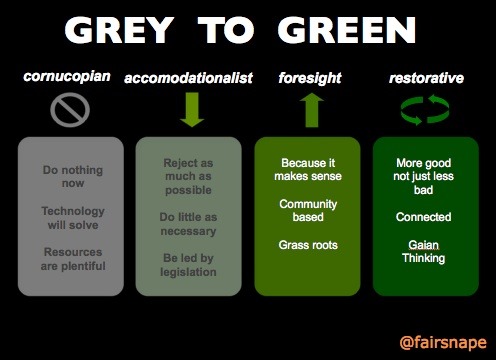
Grey to GreenWhere are you on the Grey to Green spectrum is a question I often ask at sustainability and CSR sessions with clients or in workshops.

Cornucopian Thinking: The glass that will always refills itself no matter what we do. Indeed the natural and financial environment will turn full circle and everything will be ok again. In fact we need do nothing different now as some emerging technology (carbon capture perhaps?) will make all of our problems go away. And if our customers and staff don’t like the way we operate, then, well, there are always the competition to turn to.

Accommodationalist Thinking: To accommodate the minimum, often to stay within the law, comply with ISO standards and satisfy the minimum requirements of our customers and staff. A key to this pattern of thinking is where sustainability and CSR sits within the organisation. Sitting alongside Health and Safety functions (for convenience) then it will always remain a bolt-on, which makes it difficult to move to a role that has a voice at a board level.

Foresight Thinking: Thinking based on the premise sustainability makes good business sense. Moving beyond the minimum and starting to embed CSR within the organisation. CSR and sustainability, as a function, sits at the centre of the organisation, often a dedicated CSR post with a voice at board level. Business impact understanding goes beyond the environmental and includes assessments on, for example, diversity or equality impact.

Restorative Thinking: Stems from the realisation of a greater holistic good as the driver for CSR approaches, alongside a recognition of connection with nature or the planet. There is a growing number of businesses in this thinking, epitomised for example by the 1% for the Planet group of organisations. In fact, I often give a copy of or recommend reading Yvon Chouinard’s Let My People Go Surfing to those I work with.

The Living Building Challenge, the most rigorous of green building certification schemes is firmly based on restorative thinking, doing more good – not just doing less bad.

There is a growing body of evidence linking good CSR and sustainability thinking to good business sense, but perhaps no one has summed this up so brilliantly and simply as Yvon Chouinard stated at Patagonia: “every time we do the right thing for the planet we make a profit.”

Tipping the Point

Somewhere along this grey to green spectrum there is a tipping point, where the switch from minimising the bad to maximising the good kicks in. I’d like to think of this as salutogenesis for sustainability and CSR. (Salutogenesis is an emerging and important school of thought within health care and increasingly within social well being that makes the switch from a focus on what makes us ill to a focus on what makes us stay healthy.)

In need of ideas on moving your business sustainability from grey to green?  Join in on the conversation on Twitter, subscribe to this blog (see right  hand column) or get in touch

(We can also help with Innovation Voucher funding to support your sustainability innovation ideas!)

JUST: a social justice label for construction …

Taking built environment sustainability deeper into the responsibility agenda, the International Living Future Institute are launching (Oct 2013) a new and important transparency initiative for the built environment to sit along side the Living Building Challenge and Declare. Just will provide clients, specifiers and procurers with ‘a view of how participating organisations treat their employees and where they invest their profits’

Just will cover the important areas of gender and ethnic diversity, salary equity, gender pay equity, community involvement, responsible investing and more, taking it beyond other programmes in the built environment sector. (And arguably areas that the UK Considerate Constructors Scheme should be addressing?)

The Press Release from ILFI reads:

In today’s global economy, it’s difficult to know what your consumer dollars are really supporting. JUST gives you an insider’s view of how participating organisations treat their employees and where they invest their profits. JUST works seamlessly with the International Living Future Institute’s Declare™ materials label and the next iteration of the Living Building Challenge™ (Version 3.0 — coming spring 2014).

By providing participating companies with a clear, elegant and informative equity ‘nutrition-label’, JUST aims to transform the marketplace through transparency and open communication. It aligns with the Institute’s Declare™ materials label to provide a holistic picture of both the products a company produces and the human story behind those products.
To participate in this voluntary disclosure program, an organization must submit documentation that asks for in-depth information about twenty distinct aspects of workplace equity and justice.
We’ll be launching the JUST label and searchable database FALL 2013. Join us in this critical initiative!
.

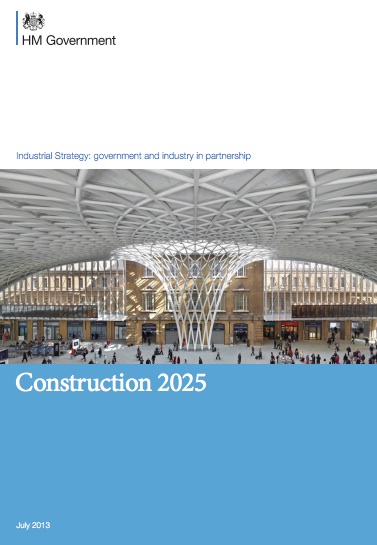
Construction 2025 Industrial Strategy

Reading the published edition of the Government Industry Strategy, Construction 2025, released yesterday I had two metaphors in mind, Snakes & Ladders and Babies in the River. Metaphors at first annoyingly contradictory, but on reflection pleasingly complementary.

UntitledThe Construction 2025 Industrial Strategy vision contains ambitions to cut costs, deliver projects faster, reduce carbon emissions, improve image and exports, through working digitally,  sustainably, and yes more efficiently.

Snakes and Ladders: illustrates the myriad strands and issues we are trying to deal with in the industry. Indeed the strategy includes a number of ladders with the excellent intention to move the industry forward, but also a number of slippery snakes to prevent meaningful progress for industry players and the industry as a whole. And, no doubt there will be plenty of commentaries on what issues are ladders (BIM and Carbon perhaps?) and which are snakes (image, diversity, SME relevance perhaps?)

However,

Babies in the River:  illustrates why only dealing with these strands and issues will not move us forward, and we will continue with energy sapping improvements, incremental changes and pockets of best practice. (You need to read  Annie Leonard, Story of Stuff excellent article)

Continue reading

Living Building Challenge Infographic

Spotted this excellent infographic explaining the Living Building Challenge recently covered on Treehugger

“The Living Building Challenge is the toughest green standard out there, but it is seriously gaining traction as people get to understand it”

Lloyd Alter writes “Skanska prepared what they call an infographic to help explain the Living Building Challenge. It’s not really; it is more like a Powerpoint presentation glued together, light on non-verifiable numbers, heavy on written content. It is the most concise summary of the LBC that I have seen yet”

Skanska_Living_Building_Final.jpg.492x0_q85_crop-smartWe are currently preparing the fist UK Living Building Challenge newsletter with exciting news, events, workshops, client interest and possibly the first UK registered LBC project!  To ensure you receive a copy follow @UK_LBC on twitter, leave a comment here or email us.

A tipping point for sustainability

Could this be one of the key important concept diagrams for sustainability and environmental impact?

Snapseed‘Restorative sustainability’ in one simple graphic.

This brilliant  slide came to my attention via a @melanieloftus tweeted picture  taken during Jason McLennan’s presentation, Mind the Gap at the Living Futures conference, positioning Living Building Challenge beyond LEED. 

Reflecting on this simple model, we can visualise the impact of our current built environment sustainability approaches – are they just doing less bad, or really doing more good and making a restorative, positive contribution?

And importantly we can visualise that tipping point for sustainability, from less bad to more good.

The urgency for reconsidering ‘sustainability’ was emphasised in the recent report State of the World 2013: Is Sustainability Still Possible? The term sustainable has become essentially sustainababble, at best indicating a practice or product slightly less damaging than the conventional alternative.

Is it time to abandon the sustainability concept altogether, or can we find an accurate way to measure sustainability?

The Living Building Challenge, as a philosophy, an advocacy and assessment scheme has real significance. It enables us to cross the sustainability rubicon, setting a vision for a future built environment and encouraging owners, designers, constructors, operators and users to track towards it. As commented on the opening of the Bullitt Centre in Seattle a LBC accreditation hopeful, such approaches are driving a wedge into the future so others can see whats possible.

I feel honoured to be a Living Building UK Ambassador, spreading the message of the Challenge as fresh sustainability thinking into the UK built environment agenda.

For more information and planned events for the Challenge in the UK , check out our presentation to Green Build Expo, visit the Living Building website,  follow us on @UK_LBC on twitter or say hi via email. (We even have a facebook page to like!)

Related Post: Have we picked the low hanging fruit of Sustainable Construction?

Green Vision for Social Media at Green Build Expo

logoBe2Camp returns to Greenbuild Expo in May with Green Vision.

This year’s session, taking place on 8th May at Manchester Central from 1pm, will be the most exciting  yet, with an amazing line-up of speakers (see below for programme).

GreenBuild Expo itself attracts over 4,000 built environment professionals and takes place on 8th and 9th May. It features over 100 free seminars and workshops on all aspects on sustainable buildings, from integrating renewable energy and BIM for beginners to skills for Green Deal and strategies for climate change adaptation. Speakers include UK Green Building Council, Energy Saving Trust, Warm Up North, Manchester City Council and many more. For free registration visit www.greenbuildexpo.co.uk.

Be2Green

The speakers will include some of the top presentations from Green Visions last three years’ programme, along with BE2 friends old and new. Join us for the whole afternoon, or one of the three great sessions we have planned.

1.00 Welcome

1.15 – 2.00 Green Knowledge – how social media can help us learn, share and advance green sustainability knowledge, including essential tips on promoting your green credentials and featuring ‘Integration is the name of the game’ Paul Toyne , Global Head of Sustainability WSP

2.15 – 3.00 Green Materials – transparency in green and healthy materials, featuring presentation from Kelly Grainger, Interface and Janet Beckett,Carbon Saver UK

3.15 – 4.00 Green Futures – what’s emerging in the world of green building, featuring ‘Green Towns’ Prof Angus McIntosh , Oxford Brooks University and a keynote live presentation from Amanda Sturgeon, VP Living Building Challenge, from the recently completed Bullitt Centre in Portland, called by many the greenest commercial building in the world. (Not one to miss)

Do you have something to share, Pecha Kucha style (thats 20 slides, each 20 seconds) that will fit one of the above sessions? We will keep one slot free for ‘on the day’ contribution But if you are interested please let the Greenbuild Expo organisers know in advance. (1st come, 1st served ….)

As in previous years, our afternoon session will be live streamed and web enabled allowing real global sharing from and into the event.

BE2 (Be2Camp) are Greenbuild Expo’’s social media partners, and a social media advocacy for built environment sustainability and collaborative working

Green Vision, part of the Leeds Sustainability Institute and Centre for Knowledge Exchange and committed to driving sustainable change for construction professionals

Introducing the Living Building Challenge in the UK

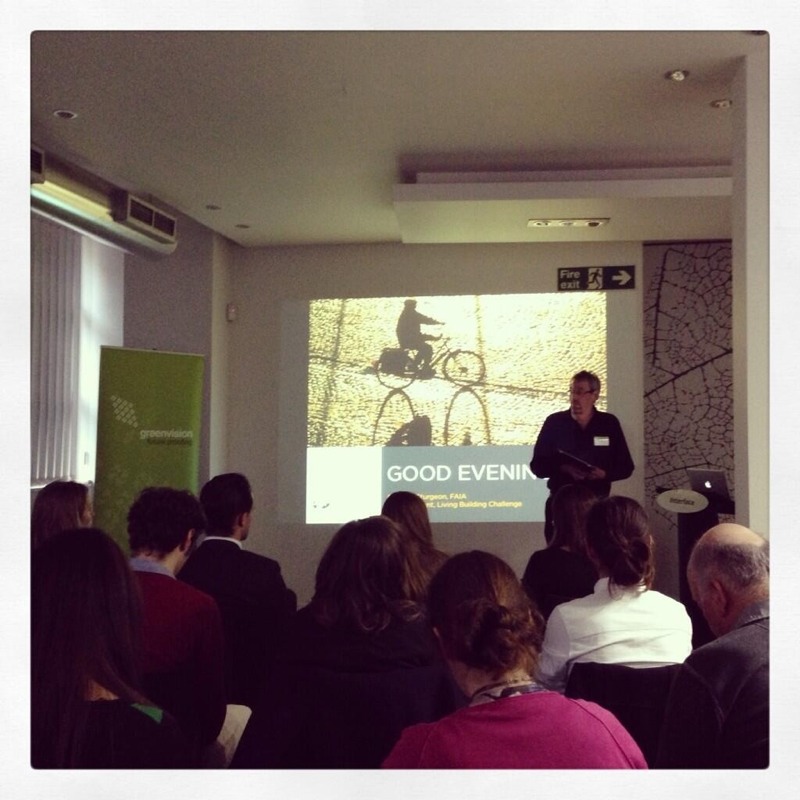
It was a real treat to introduce the public lecture from Amanda Sturgeon as part of the UK Living Building Collaborative launch at the Interface showroom in London last night.


Here are my introduction notes …

Good evening and a warm welcome to Living Building Challenge UK

Firstly a huge thank you to Interface, Kelly Grainger for hosting this evening and Claire Bowles at Green Vision for making it happen, and of  course Amanda Sturgeon from Living Building.

I and a few others have waited a long time for this …

As you may have read in Hattie Hartmans AJ article, our awareness with Living Building started via twitter and through twitter dialogues during the Living Futures conference in Portland in 2011

Later that same year I was privileged to have a guided tour of the CIRS building in Vancouver, during the week before completion (The CIRS building is one of the few buildings scheduled for LBC certification) Since then we have received Living Building related remote presentations live into Green Vision and Be2camp events.

Over the last few months we, that’s myself and Claire at Green Vision, have held regular Skype chats with Amanda and others at LBC, to set up this UK Collaborative and this event, so it’s a real pleasure to welcome Amanda along this evening

But before introducing Amanda a word about the Living Building UK Collaborative. We are part of the Green Vision / Leeds Sustainability Institute with two main aims:

One of advocacy to increase awareness and understanding of the Living Building Challenge

Secondly to provide support to clients for living building design, construction and certification in line with the challenging Living Building principles.

If you want to know more about the collaborative, would like to get involved or indeed would like support on possible future Living Building projects here in the UK please do get in touch.

We cannot let this evening pass without mentioning Mel Starrs, and her advocacy for deep green thinking. Mel, in her last blog piece (an article which you must read) welcomed the idea of LBC in the UK as a standard worthy of the green credentials of leading clients.

Mel’s blog was read by Su Butcher.

I am sure you will agree – launching the LBC here in the UK is in fitting honour for Mels passion for sustainability, green building and challenging standards.

Amanda – Vice President Living Building Challenge

Amanda is an award winning architect recognised as a pioneering leader in the green building movement in the US northwest, a founding member of the Cascadia Green Building Council and is a visiting professor at the University of Washington

Amanda was awarded with better bricks Architect Award in 2008 and recently gained Fellowship of the AIA, the American Insitute of Architects

Amanda, welcome to London and the UK Collaborative

The event was well tweeted, to catch up on comments and pictures view the #lbcuk and #uklbc hashtags (don’t ask) and follow @UK_LBC.

Record of the evening now on Storify

There will be a Slideshare record very soon

Image Building Pieces

Ecologically Rethinking Construction

Jonathan Dawson, head of economics at Schumacher College, writing on Guardian Sustainable Business asked “How do we redesign a new economic theory framed by ecological systems?”

OLYMPUS DIGITAL CAMERAA question we need to ask and start addressing within the built environment.

We are seeing a new vocabulary emerging with concepts such as biomimicry, zero or net energy, water and environmental impact, Living Buildings, biophillia, circular economy … and more … As the interest and importance of these concepts influence in the way we design, build and use buildings, do we need a new paradigm?  Some 15 years after Egan, do we need to again rethink construction to address these emergent sustainability themes. approaches and skills that once again the sector is lacking, engaging the economists, surveyors and accountants? As Jonathan Dawson comments:

Ecology offers the insight that the economy is best understood as a complex adaptive system, more a garden to be lovingly observed and tended than a machine to be regulated by mathematically calculable formulae.

A comment that makes a nice resonance with the Living Building Challenge philosophy

And of course a key element in this new thinking is the internet, web 2.0 and the power of social media.

Enabled by the growing power of information technology, whole new ways of doing business and organising society are emerging, whose strength lies not in economies of scale but in economies of co-operation and symbiosis

Over the weekend , via twitter I caught a slide via Rachel Armstrong illustrating the difference and need to move from 20th century Cartesian or Newtonian thinking into 21st complexity, emergent thinking …

screenshot.32

Jonathan Dawson: “This moment of history calls on us to rewrite the dictionary and create new stories, much as the generations following on from Copernicus did to reflect the new world-view that emerged from his astronomical insights”