Tag Archives: social media

A low carbon diet for construction boards

benchmark

Question for you:who on your board is really championing sustainability and the low carbon agenda?

Board members, as Lucy Marcus reminded us at construcTALKs, need to balance continuity with change, to embrace the changes in technology.

From my experience in (small-medium) construction organizations, boards are too focused on looking back at performance, rather than forward; and when looking forward, tend to do so with the risk-eye of past problems. And sustainability is often only discussed when necessary, as part of an ISO 14001 project or incident issue. Too often, as 14001 sits with Health and Safety, sustainability takes a back seat. Rarely do construction boards view sustainability as a critical strategic, opportunity issue, rather than simply one to be dealt with at project level.

Yet the world is moving forward, and increasingly so towards a low carbon environment and economy. Only those with proven performance and attitude of low carbon approaches may well survive—all the more reason to have board members champion change. Non-execs tend to provide the independent financial and governance role, but increasingly they should drive the organization towards change.

Perhaps it’s because construction boards are slow to embrace the communication power social media can bring that they remain out of touch. I do wonder whether we had the same issue when other, now well-established, means of communication emerged; did we resist telephones, faxes, conference calls and emails as we seem to be doing with social media?

If construction boards were more diverse and embraced a wider range of views and outlooks, through board composition and social media awareness, the transition to a low carbon construction economy would be more successful.

Construction boards really do need to embrace social media potential, not just as a tool for others in the organization, but for the board itself, tuning into discussions and commentaries on emerging standards and legislation and sharing what is working or not. The likes of Twitter, Linkedin groups, blogs, forums and news aggregators are abundantly rich with low carbon and sustainable construction information.

This is all vital client, competitor and industry intelligence that enables boards to move their organization forward – and, through embracing social media in this manner, become role models for its mature use.

To quote from Lucy, boards need to be both Grounded and Stargazers.Are construction boards so grounded they go underground? Or do they at least from time to time stand on a hill and gaze the stars to wonder, then to understand what is out there?

This post originally appeared on CSRWire in April 2011 and savedhere from now defunct Posterous blog 

Social media in construction – whats happening?

Towards the end of last year the Construction Marketing Association conducted a US national survey of construction professionals regarding their use of social media. Of note is that 90% of those surveyed used social media, and of those 91% managed social media internally. Also of interest is the % use of Social Media platforms used, along with the most effective (linkedin) and least effective (facebook) social media platforms.

Also take a look at my article feature in the Guardian last year Why the construction sector should engage with social media, our Be2Camp Social Media Framework for GreenDeal, and Pauley Creative’s 2011  How are the top 15 UK Construction Companies using Social Media

What do you think? What do you use in your business?

Social Media in Construction

Find Martin on Google+

Ecologically Rethinking Construction

Jonathan Dawson, head of economics at Schumacher College, writing on Guardian Sustainable Business asked “How do we redesign a new economic theory framed by ecological systems?”

OLYMPUS DIGITAL CAMERAA question we need to ask and start addressing within the built environment.

We are seeing a new vocabulary emerging with concepts such as biomimicry, zero or net energy, water and environmental impact, Living Buildings, biophillia, circular economy … and more … As the interest and importance of these concepts influence in the way we design, build and use buildings, do we need a new paradigm?  Some 15 years after Egan, do we need to again rethink construction to address these emergent sustainability themes. approaches and skills that once again the sector is lacking, engaging the economists, surveyors and accountants? As Jonathan Dawson comments:

Ecology offers the insight that the economy is best understood as a complex adaptive system, more a garden to be lovingly observed and tended than a machine to be regulated by mathematically calculable formulae.

A comment that makes a nice resonance with the Living Building Challenge philosophy

And of course a key element in this new thinking is the internet, web 2.0 and the power of social media.

Enabled by the growing power of information technology, whole new ways of doing business and organising society are emerging, whose strength lies not in economies of scale but in economies of co-operation and symbiosis

Over the weekend , via twitter I caught a slide via Rachel Armstrong illustrating the difference and need to move from 20th century Cartesian or Newtonian thinking into 21st complexity, emergent thinking …

screenshot.32

Jonathan Dawson: “This moment of history calls on us to rewrite the dictionary and create new stories, much as the generations following on from Copernicus did to reflect the new world-view that emerged from his astronomical insights”

Managing sustainability knowledge across social media.

fs social media workflow

After last weeks UCLAN Centre for Sustainable Development,  Social Media launch session I was asked how to ‘manage’ and ‘filter’ what you can learn and share across the world of social media sustainability.  It was not too easy to summarise in a few minutes on notepaper, so here is my ‘work flow’ and the five key applications used:


Inwards …

Twitter

Most of my inflow arrives via twitter or twitter based apps, eg tweetdeck or hootsuite. I have a number of established feeds or filters established which enables me to keep a real time watch on activity relating to the topics I am concerned with, or related to my clients interests.

Google Reader

Blogs and websites I follow are RSS subscriptions into Google Reader

Flipboard

Described as a social magazine, Flipboard is a brilliant feed application that enables me have a one stop ‘viewing’ place. In addition to having twitter searches feeding into Flipboard, I also have Google Reader, linkedin groups I follow, hub feeds such as the Guardian Sustainable Business and 2degreesnetwork. (Feeds also include cycling, outdoor, walking and weather interests.)

Managing …

Instapaper

Instapaper works across many platforms and is my main ‘receptacle’. It is used to collect and tag articles for later reading. Train journeys and waiting times are great Instapaper reading catch up time. From here I retweet, and / or move to Evernote for keeping or further reference.

Evernote

Rapidly became my everywhere note book. I am drafting this in Evernote! Articles or extracts in Instapaper wanted for reference are exported to Evernote and filed away with tags. These can be for future reference, inspirations for blog posts or, importantly topics on which I can hone, improve or enhance the services I provide for my clients across the built environment.

Outwards …

Tweets can be made either direct from Instapaper or buffered through Buffer which enables some interesting time lapse tweets, or repeated tweets to catch differing time zones. (Care is needed with buffer however to be sure to react to responses!)

My Blog

From Evernote and within Evernote I can easily then compose and curate articles and  for this and other (eg Green Vision) blogs

So there you have it. This has been an established work flow a quite a while now and one that  works for me. It would be interesting to know your work flow and what works for you.

Having a strategy or plan to deal with social media is critical to making effective use of your time online. Building on the support provided to organisations  to date on similar social media strategies, we can help you hone your social media plans, with one to one face to face sessions, or on online via (eg) skype.

In addition coffee shop based, sustainability related, social media clinics will kick off  very soon. Watch his space, subscribed to this blog, follow on twitter or drop me an email

Innovation Voucher Provision

mb-m-and-c-1-blueThe Technology Strategy Board (TSB) is making Innovation Vouchers available worth up to £5000 for construction and built environment companies. Applications are due to open on the 10th of December and close on the 23rd of January 2013.

Fairsnape in association with IBE-Partnership is delighted to assist you  in preparing and submitting your application for Innovation Vouchers in the following topics that we offer as your innovation provider to improve your construction performance.

  1. Social Media – Awareness, Getting Started, Developing, Strategy and Policies, Measuring,
  2. CSR – Awareness, Developing Strategies, Integrating and aligning systems, Measuring.
  3. Sustainability (1) – Awareness, Strategy, Policies, Aligning / writing systems, Measuring
  4. Sustainability(2) – (Beyond Waste) – Awareness, circular economy, cradle to cradle thinking, healthy products innovation, measurement,
  5. Construction Carbon – Awareness, Strategies, Measuring and Improving, Application of wold class tools
  6. Benchmarking – (Beyond KPI’s) – Awareness, Strategy, Benchmarking Project, Measuring, Application of world class tools
  7. Business Strategy – (EFQM) Awareness, Improving overall and holistic strategy, facilitation, measurement
  8. Collaborative Planning / Last Planner – Awareness, Strategies, Training, Guidance, Facilitation, Application of world class tools
  9. Lean Construction Techniques – Awareness, Strategies, Training, Guidance, Facilitation, Application of world class tools
  10. Collaborative Working – Awareness, Strategy, Principles, Training, Facilitation, Preparation for BIM
  11. BIM – Awareness, Strategy, Policies, Preparation Plan, Facilitation,
  12. Customer Management– Awareness, Strategies, Training, Guidance, Facilitation, Application of world class tools
  13.  ISO14001 – Awareness, Strategy + Policies, Improving/Writing EM system + process, training, readiness for assessment
  14. ISO90001 – Awareness, Strategy + Policies, Improving/Writing QM, training, readiness for assessment system + process
  15. PAS 2030 – Awareness, Strategy + Policies, Improving/Writing Green Deal system + process, training, readiness for assessment
  16. Bidding – Awareness, Strategy, Process/Approach, Support,

mb-m-and-c-1-blueThis is a great opportunity for you to innovate and improve your effectiveness and efficiency, improve attractiveness to clients  and of course improve the bottom line at no cost to you. If you are interested in progressing further please call or get in touch to discuss.

00 44 7776 234702

Email | Twitter | Blog Linkedin | G+

UK’s first Best Practice Benchmarking Awards 2012

It was a real pleasure to sit on the judging panel for the UK’s first Best Practice Benchmarking Awards 2012, devised by the UK Benchmarking Institute in conjunction with The Best Practice Club and Ideas UK at the 2012 Ideas UK Conference on 8th November.

France Telecom Orange and HSBC received awards for their outstanding benchmarking projects.

France Telecom Orange for its “Broadband MTBA (Mean Time Between Assist)” project led by Thierry Denant, Senior Benchmarking Manager

HSBC, for its “When Social Media meets Business Strategy” project led by James Shewry, Best Place to Suggest Manager.

Ray Wilkinson, founding fellow of The Benchmarking Institute and director of the Best Practice Club explains:

“The Benchmarking Awards were set up to recognise examples of best practice in large organisations and raise awareness of benchmarking as THE most powerful business performance improvement technique around today.  Successful benchmarking requires organisations to identify clearly what performance they want to improve, understand it fully and then select, adapt and implement the most appropriate best practice available.  None of this is easy to do and many organisations have wasted lots of time, effort and money in benchmarking activities that have failed to deliver business benefits. Lack of awareness of how best to apply best practice is the root cause of this.

Benchmarking in its broadest definition remains the most popular performance improvement tool, although this claim would include the simple act of comparing performance with another organisation through KPI’s rather than structured benchmarking.

It was a pity that although interest was high there were no entrants from the built environment sector. Hopefully this will be corrected in 2013. Benchmarking remains an important business improvement tool for the sector, and as Paul Morrell commented recently, benchmarking should be driving construction costs.

“If a company wants to see a future, 80% of what it will have to learn will be from outside its own industry.”

As our improvement, communication and sustainability agenda has widened considerably with topics not traditionally found in construction, for example, social value, Corporate Social Responsibility  healthy materials and so on, it is arguably external benchmarking that will return maximum improvement to organisations and the industry.

The Benchmarking Awards is a judged competition, celebrating outstanding benchmarking at individual project level.  After all submissions were assessed, finalists were then selected and invited to present their submissions on the 8th November, at the Ideas UK Conference, where they were subjected to an in depth questioning process to explore the details of their benchmarking project.

The 2013 Awards will open for submissions from March next year.

The Benchmarking Institute consists of a wealth of unparalleled benchmarking experience. Check out the list of founding fellows and industries represented.

If you are interested in dramatically improving your business, looking to gain far much more value from KPI’s or just curious of how benchmarking can help reduce costs, the Benchmarking Institute can help.  Please do get in touch.

Awards reported in Project Manager

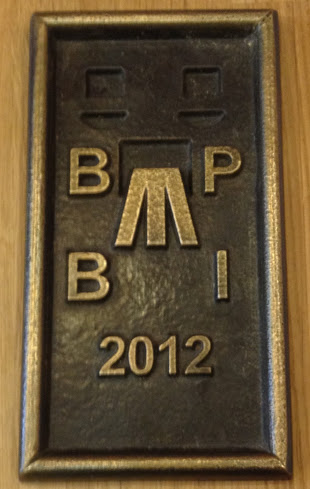
Eagle eyed observers will notice the Benchmarking Award is a replica of the Ordnance Survey trig column flush bracket plate. More here on wiki

Can social media power the Green Deal (and Sustainability)?

Earlier this year, through Be2camp, the built environment social media advocacy, we published a guide on using social media to improve understanding and application of Green Deal issues.  

This was discussed in a 2degreenework interview with myself and Stephen Kennett 

Stephen Kennett : You’ve launched the ‘Social media framework for the Green Deal’, can you explain what it’s about?

Martin Brown: Of course – It’s a wiki guide to using social media to improve understanding and application of Green Deal issues. It was initially compiled by a group of social media and sustainability advocates all working in the Green Deal space, and brought together through the Be2camp movement.

The purpose of the guide is to explain how social media can be used to understand, learn, and share Green Deal learning. The aim is to look at four key themes: Green Deal workflow – in other words, how the Green Deal will work in practice; Green Deal delivery – installation and the skills issues; Green Deal business issues; and visibility – promoting best practice and good news.

SK: Why use social media in the world of Green Deal? …. Read the rest of the interview here 

…. Access the guide to social media for green deal here  and please do add to the guide …

Or for more information just get in touch or drop us a tweet

Simple Rules: Addressing Sustainability

Addressing climate change, environmental harm and sustainability can seem far to difficult and complex to tackle, so often we dont, or we do so with approaches that are masked by process and checklist.

Daniel Goleman, in Ecological Intelligence gives us three simple, yet remarkably comprehensive rules for reducing impact:

1. Know your impacts

2. Favour improvement

3. Share what you learn

Imagine the power of everyone in your organisation fully understanding the environmental impact of what they do, favouring improvement to address (over doing nothing) and continually sharing with colleagues, supply chain, clients and the wider industry.

In respect for sharing, social media has enabled unparalleled learning and sharing for sustainable improvement, something the built environment is just awakening to.

Does your organisation have Ecological Intelligence and a set of simple rules for reducing environmental impact?

Simple Rules:
Through facilitated workshops, we can help you explore a ‘simple rules’ approach to dramatically improving effectiveness of your processes and procedures, increase buy in whilst reducing red tape bureaucracy.
Behind seemingly complex issues there are simple rules. The concept of Simple Rules is a key principle within complexity and emergence thinking. The oft cited simple rules being those for flocking birds. 
 This blog series will explore application of simple rules to sustainability and the built environment. Based on the premise: if we were to discard all strategies , policies, processes, procedures, work instructions and checklists, what simple rules would emerge or would we need.
Next: Simple Rules for Business Improvement
 

Celebrating social media in the built environment

Only two days left to our Be2Awards, 2012 Social Media awards event in London at the Building Centre,  kicking off at 1.30pm.  As with our 2011 awards, the event, part of Social Media London Week, will be an inspiring combination of TEDx style talks and a celebration of what is good in the world of built environment social media.

Recognition will be paid to the crowd-sourced winners from 12 categories, from best use of twitter, best sustainability blog, best use of media, and many many more. The Be2Talks presentations will cover BIM, Bikes, Social Hiking, Coffee, Green Deal and more.

The event will use the #be2awards  hashtag and will be live streamed, live blogged and tweeted. Check out our event page for more information.

Can there really be a better place to be on a wet Wednesday afternoon in London? Spaces still available here.

By the way, if you havent voted yet, you have under 12 hours left – so take a look at the excellent short-listings and be inspired as how social media is being used today.

And, if you are looking to make a day of social media in London – check out the Guardians Social Media for Sustainability event, taking place just up the road on the morning of the be2awards, with enough time to grab a drink and sandwiches you head over to the Building Center!

Be2Talks Presenters:

Richard Saxon CBE – “Growth through BIM”

Richard SaxonRichard Saxon is an architect and urban designer. He now works as a client adviser after a career at BDP (chairman 1996-2002), the RIBA (Vice-President 2002-8) and Be, Collaborating for the Built Environment (chairman, 1999-2005). He was made a CBE in 2001 for services to architecture and construction. He is on the board of the Construction Industry Council, is currently advising BIS on the growth potential of BIM and was recently appointed the CIC’s “BIM Ambassador”.

Carlton Reid – ”Cycling, the built environment and social media”

Carlton ReidCarlton Reid (@carltonreid) has been writing about bicycles and travel for 20 years. He has written for many cycling and travel magazines and UK newspapers including The Guardian and The Independent, and is the author of several books on travel and cycling. He is executive editor of BikeBiz.com, editor of Bikehub.co.ukQuickrelease.tv and iPayRoadTax.com. Author of the acclaimed Bike to Work Book, his latest project is Roads were not built for Cars. Carlton will present our Be2Bike Keynote on the growing application and importance of social media in the world of cycling.

Phil Sorrell – ”Geo-blogging”

Phil SorrellPhil Sorrell is the creator of Social Hiking – Share Your Adventure, a website for sharing outdoor adventures live using social media and GPS tracking. He is an experienced web developer, writes a blog about the outdoors and fundraises for Multiple Sclerosis charities. @daylightgambler

Liz Male – ”Why repair, maintenance and improvement is vital”

Liz MaleLiz Male (@LizMale) will talk about the rise of the RMI (repair, maintenance and improvement) sector – its new-found political, social, economic and environmental importance, and the opportunities and risks this creates for UK businesses in the built environment, including those linked to the imminent Green Deal initiative.

Liz is Chairman of TrustMark, a not-for-profit organisation licensed by Government and supported by consumer protection groups which helps people find reputable local tradesmen to do work on their homes. She is also a PR consultant with specialism in sustainability in the built environment.

Mark Stodgell – ”BIM, blogs, bikes and Pozzoni Architects”

Mark StodgellMark Stodgell was an early adopter of building information modelling and of social media, having used Twitter (he’s@Stodgeblog) and LinkedIn to raise the profile of Pozzoni in the BIM world. He will talk about how the technologies complement each other.

Mark works at Manchester-based architects’ practice Pozzoni Architects, and started using the internet to find about orienteering in Finland. In his spare time, he is a member of Great Britain’s mountain bike orienteering team.

Nick Katz – ”Honest Buildings”

Hear about Honest Buildings: a real estate network connecting professionals to new business opportunities and information for over 700,000 buildings across the US, and now with an office in London.

Honest Buildings was founded in 2011. Nick Katz (on Twitter, he’s @NicholasKatz), formerly at UK Green Building Council and then senior sustainability advisor for Colliers International, is associate director leading UK market development for Honest Buildings.  Nick believes that, through sharing information freely and showcasing great building projects delivered the world over, the bar for building performance will be raised globally.

BeAward Categories:


BE2 are the social media advocates behind the Be2camp movement. Since 2008, Be2camp has been championing the use of social media Web 2.0 in the Built Environment (hence Be2).

Since the first Be2camp unconference in London in October 2008, Be2camp people have organised more than 30 events focused on promoting collaboration and co-operation within a better, more sustainable built environment. Key topics have included education, building information modelling, property and real estate, facilities management, the Green Deal, marketing, and river basin management (among other things).

Founded by four practitioners (two in the UK, one in Australia and one in the US), the Be2camp online community is now nearly 700 strong with members around the world.

Social Media: Awards and Events – London, Sept 26th


We have gain chosen to run our Be2Camp flagship event, celebrating the application of social media in the architecture, engineering, construction and sustainability fields during London social Media Week 

The half-day event will be held on Wednesday 26 September at the Building Centre in London WC1, and – like last year – will be a lively mix of awards showcasing best practice in technology and social media and informative talks from leading thinkers on technology, sustainability and the built environment.

Be2Awards nominations open

Please submit your nominations for the awards short-lists. The categories include:

  • Built environment blogger of the Year
  • Best sustainability blog
  • Best AEC social media blog
  • Best use of Twitter
  • Best AEC collaboration platform
  • Best AEC community, network or community application
  • Best use of Web 2.0 for construction products
  • Best location-based AEC application
  • Best ‘internet of things’ application
  • Best mobile application
  • Best virtual or hybrid event
  • Be2 media award
  • Best use of social media in an AEC PR campaign
  • Best use of social media in an AEC marketing campaign
  • Best AEC education and learning project
  • Best charity, third sector use of social media
  • Best AEC use of photo / video

To nominate, you will need to login on the Be2Awards website (if you haven’t previously done so, click ‘login’ at the top left-hand corner, then add your registration detail; once your registration has been accepted, you will be able to make your nominations). Being Web 2.0 people, our nomination process uses an online discussion board. You may nominate once in as many categories as you like; candidates may be eligible in more than one category.

The 2011 Awards (see shortlists and successful candidates here) saw over 100 nominations across these categories, and we expect even more competition this year.

Be2Talks – We are currently finalising the speakers for the Be2Talks. If you have ideas for speakers, please email Martin Brown.

Sponsors – Meantime, we are also looking for sponsors. We have vacancies for a main sponsor and we ideally want sponsors for every category (this will help cover event expenses and ensure a top-notch event). If you can help, please get in touch.

Involved in Sustainability Communications?  Do two events in one day

We have been working with the Guardian‘s Sustainable Business initiative, which is holding its own Social Media for Sustainability event in London during Social Media Week. The half-day training course is at the Guardian‘s offices near King’s Cross station on the morning of 26 September – so you can take in both events! (see also Be2Awards news)