Are commitments and actions towards Climate and Biodiversity becoming procurement criteria for consultants, designers, contractors and building product manufacturers, and criteria for selecting which contracts to bid?
Practices and organisations who are making climate and biodiversity emergency Promise of Declarations are questioned on their actions, and outcomes on issues pledged within the declarations, for example:
Raising awareness,
Moving to regenerative design practices
Set mitigation as critical measures for awards, prizes and listings.
Sharing knowledge on open source basis
Evaluate all new projects against (climate declaration)
Going beyond net zero carbon
Collaborate (on climate / biodiversity emergencies)
Shift to low embodied carbon materials in all work
The pressure from investment organisations such as the Institutional Investors Group on Climate Change (IIGCC) in expecting material companies to make commitments on:
Accountability and oversight of climate change risk and opportunities.
Action to reduce greenhouse gas emissions across their value chain consistent with the Paris Agreement’s goal
Provide corporate disclosure
Interesting the Creative Climate declaration contains the pledge to
Reveal income from fossil fuel and high carbon clients
Not work with fossil fuel client briefs’
Assessing Regenerative Sustainability Capacity
Although written before the current raft of declarations, the RESTORE WG3 Publication provides a Regenerative PQQ procurement guide. (Pages 41-45)
What is the collective noun for declarations? An argument, (used to describe architects and wizards) sounds a good fit. But I like a Promise of Declarations.
Coupled with recent findings from the IPCC, the UK’s CCC Net Zero Report and inspiration from Greta Thunberg and school strikers, over 100 local authorities, have declared a climate emergency and / or committed to net zero carbon by 2030 or 2050. And within the built environment we have declarations from Architects (now over 500 practice signatures), Landscape Architects, Structural Engineers, Service Engineers, Creative Communicators and even Construction Supply Chains. Check them out:
And, if anyone is setting up, or knows of a construction sector emergency declaration, I would be more than keen to assist/support
Tell the Truth: The first objective of call of extinction rebellion is to recognise that a climate emergency exists and to tell the truth. The second is to Act Now. Now that these groups, institutes, practices and individuals have recognised a climate emergency problem exists, we can act, and now is the time to turn these commitments into actions.
Act Now – All of these declarations have similar, reassuring, commitments for faster change in our industry towards regenerative approaches. And in doing so recognising that business as usual sustainability (BAUS) has not moved the needle on carbon, global climate temperatures or biodiversity.
“faster change in our industry towards regenerative design practices”
Reducing Impact no longer cuts it We need to move positive good of Regenerative Sustainability
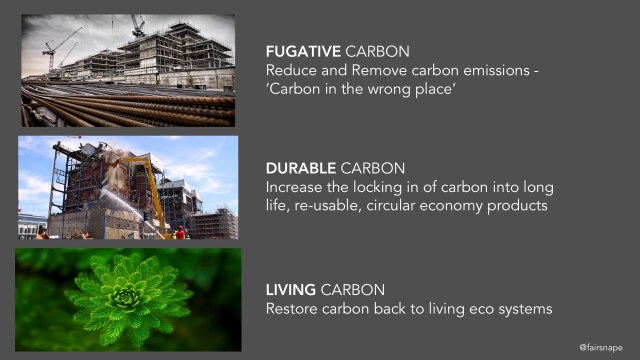
Act Now – Reimagine carbon – the greatest contribution we can make in the built environment, given that we emit 40% of emissions, is to design, deliver buildings that store carbon.
Reimagine Carbon, Carbon is not the Enemy
Act Now – Declare: Only with greater transparency in respect of the products we use, can we address impacts our buildings have on human, biodiversity and planetary health. Declare is focused on taking toxic materials out of the Built Environment through fostering a transparent materials economy free of toxins and harmful chemicals.
3 Collaborate and going beyond silos, we cannot do this alone and will need the might of all good collaborative working approaches from the last 30 years. One powerful benefit of Living Building Challenge accreditation, in not awarding certification until design intent is proven over a 12 months continuous period, is the way in which design, construction, facilities managers and those using the building have to collaborate for sustainable success
Having knowledge and transparency in respect of the materials we incorporate into our buildings remains a significant global social justice issue, as much as it is one of health and wellbeing. As ILFI Declare label asks, “where does a product come from, how is it used and what happens at end of its life” are vital questions in todays built environment.
This aspect, social justice in sustainability, was the theme of my presentation (*) at Green Build Europe 2019 in Amsterdam last week that mentioned the social impact of PVC and the report from HBN launched the same day.
PVC and Chlor-alkali
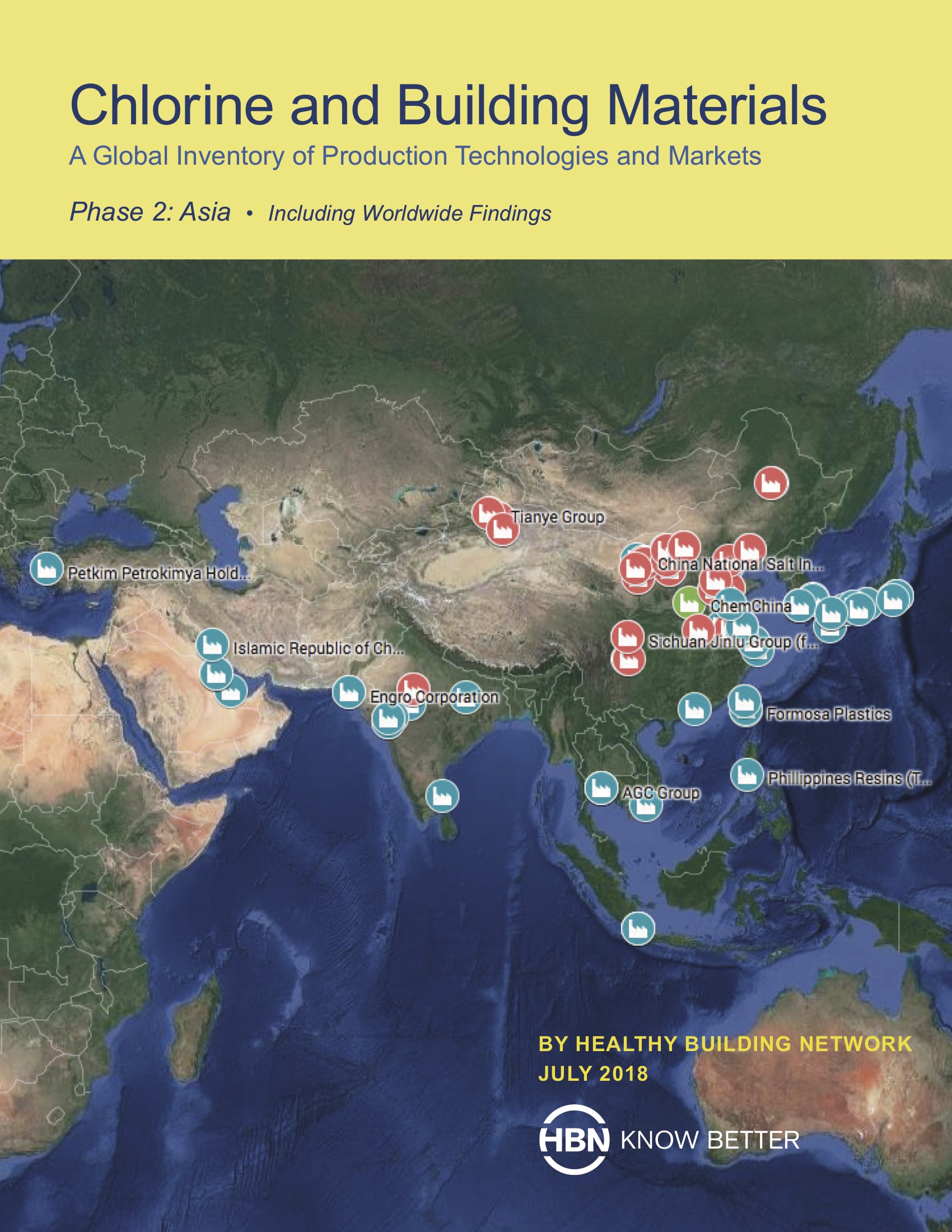
On the 19th March, HBN released part two of their investigative research into PVC and chlor-alkali looking at the Asia market (Part One Covered USA and EU). This was also the focus for their webinar on 27th March. Having transparency on PVC production is vital, from both the social justice and wellbeing perspectives, if we are to create buildings that are socially justice, ecological sound and culturally rich.
Healthy Buildings Network Vision: All people and the planet thrive when the environment is free of toxic chemicals
Moving Forward. While environmentalists, building owners, architects and designers, and building-product manufacturers differ in their opinions on avoiding PVC, there is widespread and growing support for the elimination of pollution from the supply chain of PVC and of other chlorine-based products. A public global inventory of chlorine and PVCproducers is a necessary first step for taking action.HBN is providing this report, and accompanying online materials, spreadsheets, and map, as full open-accesscontent. This data can help manufacturers to avoid chemicals derived from toxic technologies, and scientists to fill gaps in understanding the material flow of pollutants like mercury, PFAS, and carbon tetrachloride.
A worrying aspect that I take away from these reports is the use of mercury, asbestos and coal in the production of chlorine and its widespread use within PVC production.
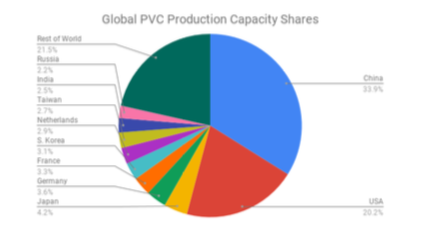
PVC is the most common plastic used in building materials, by far. With the resources developed by HBN, users can trace PVC production sites back to the source of chlorine, understand the technologies (those that use mercury, asbestos and/or PFAS), and make informed decisions about the materials used in their products. HBN’s Chlorine and Building Materials initiative also details the ties between chlorine production and other plastic building products, including epoxy, polyurethane, and polycarbonate.
China
An increasing proportion of PVC is sourced from massive new plants in the coal mining region of interior China. The highest concentration of these plants is in the Xinjiang Uyghur Autonomous Region. These government owned plants consume local coal that is inexpensive due to its abundance and low labor costs. They use toxic mercury catalysts to turn coke and chlorine into VCM for the PVC.
These plants, including three of the world’s largest, are located near internment centers into which the Chinese government is forcing Uyghurs to undergo so-called “re-education.” Some of the PVC flooring made in this region is entering the building and construction market. There are many other social justice issues involved in the industrial geography of the chlor-alkali and PVC industries, but this is potentially the most dire. This raises some questions, in particular:
Is forced labor involved in the mining of coal, the building, the operation, and the handling of waste, from these massive new coal-to-PVC plants?
Has the industry taken any steps to ensure that PVC used in building and construction does not come from entities (including government agencies and related private investors) that violate human rights?
Many thanks to Jim Vallette, report author and President Material Research, L3C for insights on China and related social issues.
GreenBuild Europe Presentation
(*) The GreenBuild Europe presentation was in conjunction with Emmanuel Pauwels Green Living Projects and Paola Moschini Macro Design Studio who presented on their experience of attaining the ILFI JUST Label (at present the only two organisations Europe)
This is the second edition in a 2019 series covering pieces I have been reading online and in print that I think are worthy of further sharing. Followers on twitter, linkedin, and to a lesser degree on Instagram will be aware that I regularly share items relating to sustainability, the built environment and our relationship with the outdoors and nature. However posts there can be flitting and often difficult to track down and return to. They will hopefully have a longer life here …
Articles, papers and images that catch my eye, or as a result of a search I move into my ever growing Instapaper (and occasionally Evernote) Library. This enables me to read offline, and importantly to keep and or return to for reference: here are a few recents:
Sustainability
It is worse, much worse, than you think. The opening line from David Wallace-Wells’s Uninhabitable Earth continues: The slowness of climate change is a fairy tale, perhaps as pernicious as the one that says it isn’t happening at all, and comes to us bundled with several others in an anthology of comforting delusions: that global warming is an Arctic saga, unfolding remotely; that it is strictly a matter of sea level and coastlines, not an enveloping crisis sparing no place and leaving no life un-deformed; that it is a crisis of the “natural” world, not the human one; that those two are distinct, and that we live today somehow outside or beyond or at the very least defended against nature, not circumscribed and literally overwhelmed by it; that wealth can be a shield against the ravages of warming; that the burning of fossil fuels is the price of continued economic growth; that growth, and the technology it produces, will allow us to engineer our way out of environmental disaster; that there is any analogue to the scale or scope of this threat, in the long span of human history, that might give us confidence in staring it down.– there is a free chapter to read here, if you haven’t read it as yet!
DeepMind Wind Predictions: 4 Ways A.I. Is Saving the Environment How A.I. can be harnessed to reduce the mounting affects of climate change 1. Protecting Scarce Supplies of Water in Arid Regions2. Real-Time Crop Data Will Inform Future Farmers 3. Climate Modeling Offers Extremely Long-Term Forecasts 4. The Big Data of Weather Forecasts Make Solar Panels More Lucrative
Built Environment
Guardian Concrete Week . A series of hard hitting articles: Guardian Cities celebrates the aesthetic and social achievements of concrete, while investigating its innumerable harms, to learn what we can all do today to bring about a less grey world
What Would a “Green New Deal” Look Like for Architecture? – Ocasio-Cortez’s plan,in line with the Intergovernmental Panel on Climate Change (IPCC)’s most recent warning that the world has about a decade to get climate change under control, would see buildings as mini power plants that can not only produce enough energy to supply their own needs, but also fuel vehicles and send excess energy back to the grid. (Something explored in FutuREstorative)
The Nature of Air the latest publication from Terrapin Bright Green sheds light on the financial burden of poor air quality as well as the atmospheric mechanisms by which earth is able to addresses air pollution in an energy efficient and circular manner
AI, Machine Learning, construction and bots A great overview from colleague Paul Wilkinson: Construction is waking up to the opportunities posed by artificial intelligence and machine learning to mine rich data and deliver powerful business insights and predictions.
Using public health data to inform building practiceAngela Loder & Regina Vaicekonyte on how the WELL Building Standard™ (WELL™) uses public health data and how projects can use this data to inform their project health goals.
Why rewilding? – Rewild Everything! In our attempts to tame and control nature, to de-wild the natural world, we also tame, control and de-wild ourselves, and in the process lose fundamental parts of us that make being alive meaningful and enjoyable. We deny parts of ourselves that frighten and inconvenience us, ignore messages from our animal bodies as we stare at screens under artificial lights, inside concrete buildings kept at artificial temperatures to boost ‘productivity’.
Free Solo Alex Honnold, now 33, has been a legend in the sport for a while, with a rack of insane firsts and nobody-will-evers hanging from his harness (except he doesn’t usually wear one of those). With a goofy grin and a bad haircut, he has been fighting a single-handed battle against gravity, and winning. When, on 3 June 2017, he free-soloed the freerider route on El Capitan, the New York Times described it as “one of the greatest athletic feats of any kind, ever”. Then the film about that climb – Free Solo – came out, and the world outside the climbing community sat up and took note. It is a brilliant, beautiful film – not just the story of an incredible physical performance, but a very human story of a remarkable, beguiling character.
When imagining clean, rejuvenating air, one might conjure visions of high mountain-tops or misty waterfalls—in other words, pristine nature.
When imagining clean, rejuvenating air, one might conjure visions of high mountain-tops or misty waterfalls—in other words, pristine nature. In reality, plants, animals, and even underlying geology pose numerous challenges to air quality whether from airborne particulate matter, pollen, mold, bacteria or noxious gasses. Despite these many natural pollutants, Earth’s troposphere—the bottom layer of atmosphere—has remained clean, intact, and molecularly balanced over the hundreds of millions of years it has existed in this particular state of dynamic equilibrium. Utilizing only ambient energy and basic tenets of physics and chemistry, the mechanisms by which the atmosphere remains clean exemplify principles of circularity, synergy, and resource efficiency. Most of these cleaning mechanisms initiate from an interaction between the atmosphere and something else (plants, soils, oceans, rainfall), but arguably the most important atmospheric cleaning process is carried out by the atmosphere itself.
The Nature of Air
The Nature of Air: Economic and Bio-Inspired Perspectives on Indoor Air Quality Management, the latest publication from Terrapin Bright Green sheds light on the financial burden of poor air quality as well as the atmospheric mechanisms by which earth is able to addresses air pollution in an energy efficient and circular manner. Sponsored by AtmosAir Solutions, the report explores how those same mechanisms can be brought indoors to support rethought indoor air quality management, and how one technology–bi-polar ionization –is doing just that.
This Terrapin Bright Green white paper represents another facet of the ever growing body of research into the human-nature connection. It outlays actionable information that companies can use to improve productivity, employee satisfaction, and the bottom line.
Poor indoor air quality has received greater attention as yet another deterrent of our mental and physical well-being. Despite a growing demand for healthy buildings, IAQ management has remained a design challenge as typical strategies, such as increased filtration, pit energy performance against air quality. Competing outcomes—in this case, energy-efficiency and well-being—can seem intractable, however nature provides a different perspective.
Abstract: Poor indoor air quality diminishes cognitive functioning. For employers, reduced work task performance translates into a lower return on their investment in employees. Indoor air quality management remains an industry challenge as efforts to improve air quality, and subsequent occupant wellness, often come at the expense of energy performance. Insights from atmospheric cleaning mechanisms have spurred the development of air purifying technology to realign air quality management with the fundamental processes found in nature. Doing so allows for better management of pollutants and helps to decouple air quality with the amount of air brought in from outside.
The Nature of Air
Header Image: Mist Rolls Down, Roland Batke-Mutschler, Unsplash
We chose these images because they inspire. They tell a story of a 4.5-billion-year-old planet where there is always something new to see. They tell a story of land, wind, water, ice, and air as they can only be viewed from above. They show us that no matter what the human mind can imagine, no matter what the artist can conceive, there are few things more fantastic and inspiring than the world as it already is. The truth of our planet is just as compelling as any fiction.
Earth, a free photo book from NASA features stunning imagery captured over the years by various NASA satellites. There is a hardcover version for sale, but you can also download a free pdf, or e-version
But, better than the free book is the online version that also offers interactive elements and image of the day for the four categories: atmosphere, water, land, and ice and snow.
Moose River, Ontario
Sixty years ago, with the launch of Explorer 1, NASA made its first observations of Earth from space. Fifty years ago, astronauts left Earth orbit for the first time and looked back at our “blue marble.” All of these years later, as we send spacecraft and point our telescopes past the outer edges of the solar system, as we study our planetary neighbors and our Sun in exquisite detail, there remains much to see and explore at home.
Every one of the images in this book is publicly available through the Internet, truly making science accessible to every citizen
This is the first in a regular series covering pieces I have been reading online that I think are worthy of further sharing. Followers on twitter, linkedin and to a lesser degree on Instgram will be aware that I regularly share items relating to sustainability, the built environment and our relationship with the outdoors and nature. However posts there can be flitting and often difficult to track down and return to. They will hopefully have a longer life here.
Articles, papers and images that catch my eye, or as a result of a search I move into my ever growing Instapaper (and occasionally Evernote) Library. This enables me to read offline, and importantly to keep and or return to for reference: here are a few recents:
Sustainability
Patagonia is in business to save our home planet For the past 45 years, Patagonia has been a business at the cutting edge of environmental activism, sustainable supply chains, and advocacy for public lands and the outdoors. Its mission has long been “Build the best product, cause no unnecessary harm, use business to inspire and implement solutions to the environmental crisis.”But for Yvon Chouinard, that’s not enough. So this week, the 80-year-old company founder and Marcario informed employees that the company’s mission statement has changed to something more direct, urgent, and crystal clear: “Patagonia is in business to save our home planet.”
Ten lessons for embedding sustainability across the business Sue Garrard, Cambridge Institute for Sustainability Leadership Senior associate and Unilever’s former EVP Sustainable Business, was responsible for leading and embedding the company’s ambitious USLP (the Unilever Sustainable Living Plan) into the business and ensuring progress against its 70-plus time bound targets. Here she provides 10 lessons for embedding sustainability across the business.
Image food for thought: Disturbing images like this emphasis the need for urgency in our sustainability actions. The Pastoruri glacier, part of the Cordillera Blanca.
Concrete responsible for 8 per cent of all CO2 emissions. Research by the think tank Chatham House underlines the need for drastic changes in the production and use of concrete, the world’s most used man-made material, because of the way in which cement is made.
Outdoors / Nature
Plantwatch: is sphagnum the most underrated plant on Earth? Sphagnum is probably the most underrated plant on Earth. This humble little moss makes up the bulk of our peat bogs and holds up to 20 times its weight in water. That makes boglands huge sponges that store water, slowing its flow and helping prevent flooding downstream.
Image food for thought: Human Modification v Ecological Integrity. Shared at #Rewilding2019
The Search for England’s Forgotten Footpaths. Article by Sam Knight in The New Yorker on our English footpaths “The Countryside and Rights of Way Act created a new “right to roam” on common land, opening up three million acres of mountains and moor, heath and down, to cyclists, climbers, and dog walkers. It also set an ambitious goal: to record every public path crisscrossing England and Wales by January 1, 2026”
Business as Usual Sustainability may well prove to be our barrier in addressing the climate change issues we face. To only ‘sustain’ is no longer enough, we now have a real urgency to embrace regenerative sustainability, to thrive … and to enable thriving.
The last three decades have given us many opportunities to embrace sustainability, but have only done so reluctantly and given the worsening CO2, air quality and health issues associated with our buildings, inadequately. So now the options available to us are increasingly radical and of necessity transformative.
The recent 2018 IPCC report has given us 12 years to avoid a painful climate breakdown and the risk of irreversibly destabilising the Earth’s climate. If we are to meet the targets in front of us, related to the 2015 Paris Agreement, the SDG’s and here at home in the UK Built Environment with our CO2 reduction by 2025 targets, we need to move way beyond Business as Usual Sustainability …
The report confirmed that we must take widespread changes to design, construction, maintenance and re-use of buildings. It reinforces buildings account for 40% of CO2 emissions with building materials such as cement and concrete accounting for some 8% of the global figure. In essence this would require no construction, building, industry, plant or vehicles using gas, oil, coal or fossil fuels; a building products sector converted to green natural products and / or non-toxic chemistry; and heavy industries like cement, steel and aluminum production either using carbon-free energy sources or not used in buildings.
Further, the construction and use of buildings will by necessity need to be positive, not passive, neutral or negative – sequestering and capturing more carbon than emitted, generating more energy than used, improving air quality rather than polluting and improving inhabitants wellbeing rather than contributing to health problems.
The best time to start radically reducing carbon was 30 years ago, the second best time is to start today.
Its time to step up.
We can do this.
The Paris 1.5 aspiration is still within our reach – just! Thankfully the 2018 IPCC report does contain at least one positive, and that is anthropogenic emissions up now are unlikely to cause further warming of more than 0.5°C over the next two to three decades or on a century time scale.
This means that, if we stop using fossil fuels today, the carbon dioxide and other greenhouse gases that have already been released into the atmosphere to date are not likely to warm the earth the additional 0.5°C, either by 2030, or 2050, or even by 2100.
No doubt you have read many end of 2018, start of 2019 sustainable lifestyle things we can do – from eating less meat, cycling not driving, avoiding fossil fuel energy – and these are all good, and things we should be doing. But we can do more, and in the built environment we can make significant and meaningful progress in, for example:
Educate and Advocate As individuals, as organisations and as a sector we must educate and advocate. Many of those entering the design and construction sector over the next twelve years are still in education (many at primary school and have a whole secondary and university education in front of them)They need to be inspired and motivated for a built environment that will be radically different to the one we have today.
Reverse the Performance Gap The performance gap between design and actual causes unnecessary co2 emissions. As with the Living Building Challenge, let’s make award of any sustainable standard only on achievement of or bettering of the agreed design intent. Perhaps planning should only be given, or priority given to buildings that positively make a contribution – on carbon, water, or air quality. A challenge for Building Regulations and Planning requirements to step up.
Grow from Thousands to Billions Trees: “Our planet’s future climate is inextricably tied to the future of its forests,” states the 2018 IPCC report, calling for billions of trees to be planted and protected. We have the skills, materials and mindsets to design, construct and maintain buildings that function as trees. Perhaps the flagship here is the Bullitt centre, but we have thousands of buildings around the world that have regenerative attributes. Building on the title of the 2018 World Green Building Council report we can ramp this up from Thousands to Billions – to all buildings.
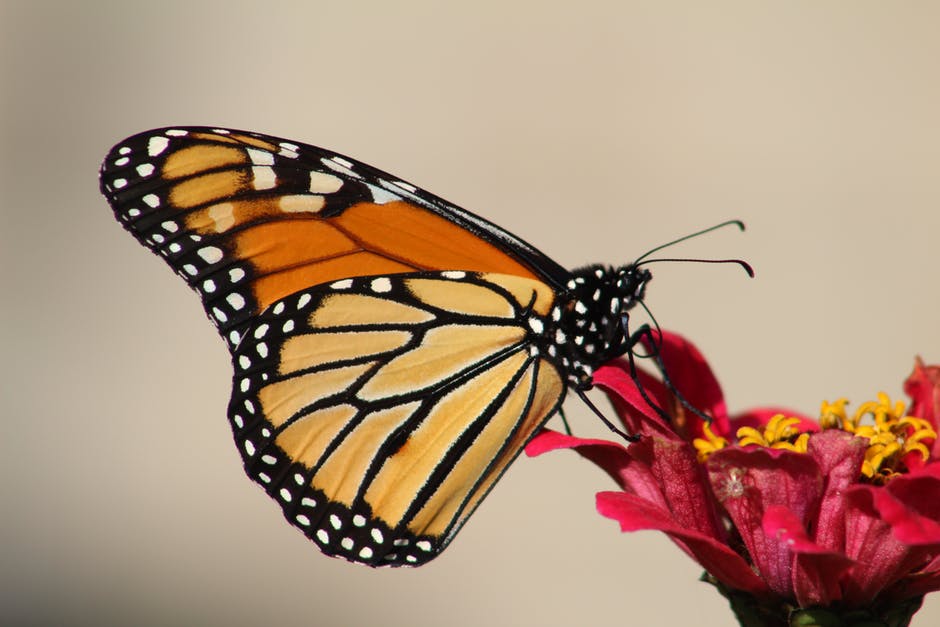
Monarch Butterfly (selected as cover image for FutuREstorative)
FutuREgenerative
In 2016, FutuREstorative sought to set out what a new sustainability could look like, moving thinking in the built environment from the ‘reducing harm’ sustainability business as usual approach to one that is restorative, regenerative with a connected worldview. working with natural systems, healing harm done in the past.
I must admit I shied away from using the word regenerative in the title of the 2016 edition. Within the UK regenerative has had an uncomfortable meaning, associated with ‘building schools for the future’ and other less successful programmes. As a Project Manager for a regeneration programme in East Lancashire, I saw first hand, just how uncomfortable the ‘regeneration’ label sat with local communities and the wider sustainability agendas.
I am delighted that FutuREstorative has been adopted by many practices (it has inspired at least two start-ups that I know of here in the UK), is being translated into Portuguese and has been adopted by academic organisations around the world. It has also provided the backbone for the EU COST RESTORE programme.
However, and thankfully, the world of sustainability has moved on a-pace, much has progressed from 2016, (Paris, SDG’s, IPCC and WWF reports) Increasingly we hear much more, and are seeing more examples of regenerative sustainability and ecologically principled design in relation to our buildings, And this includes regenerative buildings that are designed to heal people and planet. I see this as part of what Daniel Wahl refers to as ‘regeneration rising’ but are far from reaching a tipping point.
So, into 2019, my plans are to …
update FutuREstorative, reframing and possibly re-titling as FutuREgenerative to reflect current regenerative activities globally and pushing our thinking further. Over the coming weeks I will be collating regenerative stories and looking for blog style contributions from those at the sharp end of regenerative sustainability, within the built environment and beyond
further support and enable the communities of practice and discussion groups that have emerged and are growing around FutuREstorative
If you would like to get involved in sharing your stories and experience through FutuREstorative communities of practice then please do reach out.
From my series of Specifi blog posts that pick up on discussions following my presentations there …
At the Cardiff Design event, slides and comments on rethinking and reimagining carbon carbon prompted much conversation over the networking drinks.
If we are to address climate change, avoid climate breakdown, cap global temperature increase to 1.5 and to face up to the IPCC 2018 Report warnings, then only reducing carbon from buildings and construction will not be enough, we need to think different think bigger, think regenerative.
Reimagining Carbon in the Built Environment
And, so, if we are to make sustainability really attractive we have to balance the challenge of reversing global warming and, simultaneously, deliver economic prosperity for our sector and those that use our buildings
We have the tools, thinking and approaches to create buildings that are regenerative, to function as trees, to function as energy generators, and as carbon sequesters. Buildings that are part of the solution not the problem.
Imagine our buildings self-generating heating and cooling, or create it using power from renewable sources that are connected to a smart grid to optimise energy use.
Our buildings themselves are constructed from materials that take carbon dioxide from the air and lock it up for decades, even centuries, (250 years in the case of the Bullitt Center that features in my presentations).
Within this new built environment are living, biodiverse ecosystems, used for food production, recreation, water filtration, temperature control, and importantly our health, which draw carbon from the atmosphere down into the soil, and living eco systems.
Reimagining our sectors Carbon Footprint
Following the specify Cardiff event, I flew out to Vilnius in Lithuania to present a keynote at the Lithuanian Green Build Council Conference. It is extremely encouraging that the same conversations are taking place across Europe with built environment architects, contractors, engineers, facilities managers, product manufacturers and investors
We are starting to rethink sustainability, moving from just ‘sustaining’ to ‘thriving’ and embracing the new normal.
Over recent years the built environment sustainability agenda has shifted away from being primarily concerned with energy and resource efficiency, towards a sustainability that now firmly embraces people and planetary health. This was the core message behind the ‘working towards a new sustainability’ strap line to FutuREstorative.
It isn’t completely surprising then, in breaking news at GreenBuild18 Chicago, BRE and USGBC have announced a partnership to ‘highlight the role that buildings can play in improving environmental, economic and health outcomes and positively impact the quality of life, ultimately leading to a higher standard of living for everyone on the planet’ and to ‘deliver a new industry approach to green building performance, solutions and benchmarking’
It is possible that the combined power of the two leading green building certification programs – LEED and BREEAM – will help power a new way forward, yet the built environment will continue to need the collaboration with other schemes such as LBC, Well, Building with Nature, DNGB etc.
Advocacy as important as Certification
For three decades we have hidden behind a sustainability definition of doing nothing today to compromise tomorrows generation. Had we remained true to that Brundtland vision from 1987, we would not be in the climate breakdown scenarios we now face. And whilst, arguably certification programmes have contributed to advancing built environment sustainability, this is only within a small percentage of the huge number of global buildings. It is the ‘other’ buildings (in what I called the long tail of construction in FutuREstorative) that for many reasons will or can not pursue certification, need to embrace the thinking, principles and approaches of sustainability programmes within the design and construction practice, irrespective of certification.
USGBC / BRE Group Press Release:
USGBC and BRE partnership first of its kind for green building industry
CHICAGO – (Nov. 13, 2018) – The U.S. Green Building Council (USGBC) and the BRE Group (BRE) have announced a partnership that will promote the expertise of both organizations and harness their combined industry insights, to deliver a new industry approach to green building performance, solutions and benchmarking.
USGBC and BRE will highlight the role that buildings can play in improving environmental, economic and health outcomes and positively impact the quality of life, ultimately leading to a higher standard of living for everyone on the planet. Their joint vision is to create a better environment that’s cleaner, more efficient, more sustainable and fully meets the world’s current and future urbanization needs.
“USGBC and BRE have led the green building community for nearly two decades,” said Mahesh Ramanujam, president & CEO, USGBC. “But there is still much work that needs to be done, and the stakes have never been higher. This collaboration allows us to further leverage our tools and resources to scale up reductions in carbon emissions associated with buildings and accelerate on all fronts.”
The objectives that USGBC and BRE will immediately pursue and explore are to:
Increase the level of engagement of existing buildings in the measurement, reporting and improvement of their environmental, social and wellbeing impact.
Embrace a digital strategy that will raise our combined technological capabilities and establish industry-wide common data standards and protocols, to make our platforms simpler, smarter and more intelligent.
Conduct research to identify future transformation opportunities to improve the sustainability credentials of the world’s buildings, communities and cities.
“BRE is the world’s leading building science center,” said Niall Trafford, CEO, BRE Group. “We have been at the forefront of developing knowledge and standards for almost 100 years. We sponsor and conduct research which continually improves productivity, quality, environmental performance, safety and well-being in the built environment. Our mission is to build a better world together and this partnership will enable us to substantially extend our reach and impact around the world. Now is a critical time to act. BRE and USGBC are building the future. What we can do together is truly strong than anything we do alone.”
Today, LEED and BREEAM are the two most widely used green building programs in the world. Collectively they have certified the assessments of over 640,000 buildings across more than 126,000 commercial, residential, infrastructure, community and city projects in 167 countries and territories. To-date there are more than 167,000 projects registered to LEED and BREEAM and collectively both programs help form one of the largest industry networks focused on delivering a better outcome for our built and natural environment.
“As the world’s global green building leaders, USGBC and BRE share not only a common vision, but also a responsibility to keep moving the market forward,” added Ramanujam. “The amount of work we need to mitigate climate change and realize a sustainable future for all cannot be done by any single organization. In order to truly make an impact, we need all hands on deck and the combined power of the two leading green building certification programs – LEED and BREEAM – to help power a new way forward.”
The collaboration will also leverage USGBC and BRE’s combined market knowledge, partnerships and collective tools through LEED, BREEAM and other rating systems to address all sectors: new and existing commercial buildings, new and existing homes, infrastructure, landscape, power, waste and finance.












 Fairsnape