

REthinking Sustainability Towards a Regenerative Economy
After a number of years discussing, bidding, meetings in Italy and skype calls across Europe we finally launch our four year RESTORE* Cost Action CA16114 programme, exploring restorative sustainability, in Brussels this Thursday 9th March.
* REthinking Sustainability TOwards a Regenerative Economy
RESTORE Overview:
Sustainable buildings and facilities are critical to a future that is socially just, ecologically restorative, culturally rich and economically viable within the climate change context.
Despite over a decade of strategies and programmes, progress on built environment sustainability fails to address these key issues. Consequently the built environment sector no longer has the luxury of being incrementally less bad, but, with urgency, needs to adopt net-positive, restorative sustainability thinking to incrementally do ‘more good’.
Within the built environment sustainability agenda a shift is occurring, from a narrow focus on building energy performance, mitigation strategies, and minimisation of environmental impacts to a broader framework that enriches places, people, ecology, culture, and climate at the core of the design task, with a particular emphasis on the salutogenic benefits towards health.
Sustainability in buildings, as understood today, is an inadequate measure for current and future architectural design, for it aims no higher than trying to make buildings “less bad”. Building on current European Standards restorative sustainability approaches can and will raise aspirations and deliver restorative outcomes.
The RESTORE Action will affect a paradigm shift towards restorative sustainability for new and existing buildings across Europe, promoting forward thinking and multidisciplinary knowledge, leading to solutions that celebrate the richness of design creativity while enhancing users’ experience, comfort, health, wellbeing and satisfaction inside and outside buildings, and in harmony with urban and natural ecosystems, reconnecting users to nature.
The COST proposal will advocate, mentor and influence for a restorative built environment sustainability through work groups, training schools (including learning design competitions) and Short Term Scientific Missions (STSMs).
Keywords: restorative sustainability, restorative design processes-methods-tools, climate change, health, wellbeing, sustainable urban development, social, ecology, built environment.
The Working Groups
- Working Group 0: Project Coordination
- Working Group One: Restorative Sustainability
- Working Group Two:Restorative Design Process
- Working Group Three: Restorative Buildings & Operations
- Working Group Four: Rethinking Technology
- Working Group Five: Scale Jumping
The Cost Action will also include:
- RESTORE Training Schools
- RESTORE STSM – Short Term Science Missions
- RESTORE Early Stage Research opportunities
We have an ‘in development’ website with more information here
 Increasingly health is becoming a key aspect and driver for building design and maintenance. (See


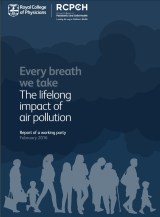 “Each year in the UK, around 40,000 deaths are attributable to exposure to outdoor air pollution, with more linked also to exposure to indoor pollutants”
 My recent talk at Green Vision Circular Economy event held at the Re:Center, University of Bradford, focused on Design for DeConstruction principles and raised a number of questions, for example;
 The
The

 Fairsnape