Tag Archives: Patagonia

On Patagonia

Since the early ’80’s Patagonia has featured in my life, initially in respect of climbing hardware and outdoor clothing and latterly as a real source of CSR, Corporate Social Responsible inspiration. I recall my first purchase, and a still a winter favourite, a Synchilla fleece jacket, produced from recyled plastic bottles, and this in the 80’s,

It is fantastic to see how the influence of Patagonia, Chouinard and contempories has now reached into built environment sustainability, as evidenced at the recent excellent Green Vision Building CSR event in Leeds.

Patagonia stores are still a magnet for me, in the UK, and from Chamonix to Banff. But it has been the Patagonia catalogue, published a few times each year with the seasons, that has in no small part shaped my sustainability thinking, through stunning photographs and excellent narratives from Yvon Chouinard, Rick Ridgway and Patagonia Ambassadors, It is from here I developed a passion for connecting sustainability thinking with nature, linking love of outdoor exploration with business excellence.


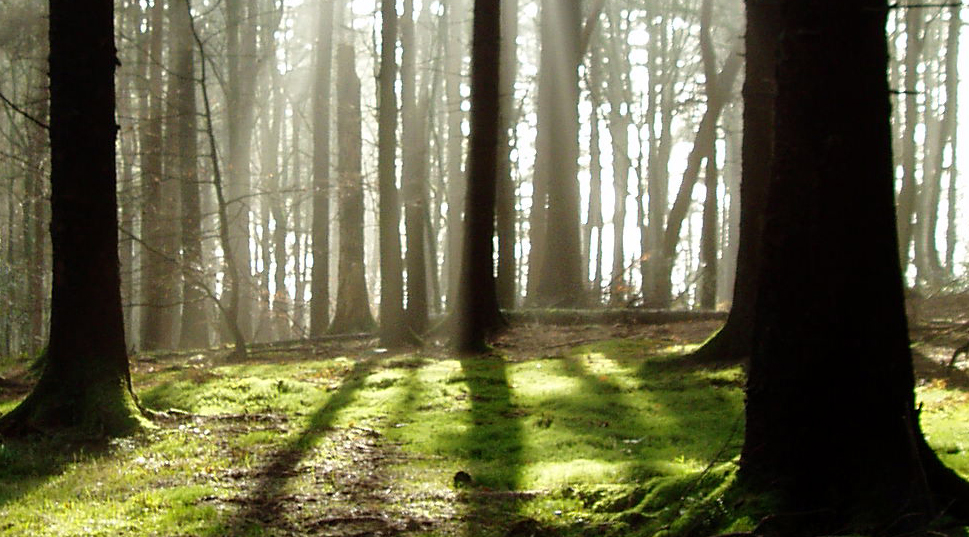
No better is this illustrated than in the Spring/Summer 2012 edition …

“we learned early the need for good quality … and environmental consciousness, because we’re part of the natural world from where we draw our strength”

If ever you see a Patagonia catalogue – pick it up and be inspired by the photographs and narratives.

( the Becoming Wild text in the image above can be found here )

The Responsible Company a great quote on Sustainability from Yvon Chouinard and Vincent Stanley:

“A word about a word we have chosen to use as little as possible: Sustainability.  Its a legitimate term that calls us not to take more from nature than we can give back. But we do take more than we give, we do harm nature more than we help it. We have no business applying the the word sustainable to business activity until we learn to house, feed, clothe and entertain ourselves – and fuel the effort – without interfering with natures capacity to regenerate itself and support a rich variety of life. We are a long long way from doing business … and no human economic activity is yet sustainable”

How is your corporate sustainability or CSR thinking aligned to nature?

Who inspires and influences your thinking?

Posted using BlogPress from my iPad

Heros and Texts for a future Built Environment based on #CSR

“suddenly the air smells much greener now”

Listening to ‘These Streets’, lyrics by Paolo Nutini summed up the brilliant, inspiring Green Vision conference in Leeds – exploring CSR within the built environment.

A mix of talks, presentations, round table discussions and pecha kuchas from Mel Starrs, Eden Brukman, Tamara Bergkamp, Eddie Murphy, Martin Brown, Faye Jenkins, Claire Walker, Rick Hamilton, Mark Warner, Pedro Pablo Cardoso-Castro, Andy Ainsworth, Paula Widdowson and many others showed that there is real emergence and a future for a Built Environment founded on social responsibility principles.

The air smells much greener …

We heard of excellent progress being made by individuals, projects and organisations on the CSR journey, and how behind these are great influential thinkers, often outside of the sector, many, unsurprisingly, related to the ‘outdoor’ sector.

Many of the speakers were enthusiastic in sharing CSR heros and recommended CSR reading. So here, as a summary, or reading list are those mentioned during the day. I wonder how many of these are on the reading list within design, construction and fm education? (Book titles link to Amazon)

Yvon Chouinard

Rock climber, environmentalist and outdoor industry businessman, noted for his contributions to climbing, climbing equipment and the outdoor gear business. His company @Patagonia is widely acclaimed for its environmental and social focus. According to Fortune magazine, Chouinard is arguably the most successful outdoor industry businessman alive today.

The Responsible Company What we have learnt in the first 40 years at Patagonia by Yvon Chouinard and Vincent Stanley (see my blog)

Let My People Go Surfing Yvon Chouinard – Probably the ‘must read book’ to understand CSR in Business

(On my blog: How can construction learn from Patagonia?)

Ray Anderson

Founder of Interface Inc., one of the world’s largest manufacturers of modular carpet for commercial and residential applications and a leading producer of commercial broadloom and commercial fabrics. He was known in environmental circles for his advanced and progressive stance on industrial ecology and sustainability.

Ray was was posthumously awarded an Outstanding Achievement award at this year’s Guardian Sustainable Business Awards in 2012. (There is a related, must watch, video here: John Elkington describing the work and legacy of Ray Anderson)

Confessions of a Radical Industrialist: Profits, People, Purpose: Doing Business by Respecting the Earth (2009) Later released in paperback as Business Lessons from a Radical Industrialist in 2011.

Paul Hawken

An environmentalist, entrepreneur, and author. Ray Anderson of Interface credited The Ecology of Commerce with his environmental awakening. He described reading it as a “spear in the chest experience”, after which Anderson started crisscrossing the country with a near-evangelical fervor, telling fellow executives about the need to reduce waste and carbon emissions.

Hawken’s book, Natural Capitalism: Creating the Next Industrial Revolution (1999) coauthored with Amory Lovins and Hunter Lovins, popularized the now-standard idea of natural capital and direct accounting for ecosystem services, a theme revisited by Rio +20 and likely to become more mainstream across the built environment.

Janine Benyus

Her 1997 book Biomimicry: Innovation Inspired by Nature defines Biomimry as a “new science that studies nature’s models and then imitates or takes inspiration from these designs and processes to solve human problems”. Benyus suggests looking to Nature as a “Model, Measure, and Mentor” and emphasizes sustainability as an objective of biomimicry. Key thinking in the Living Building Challenge principles, as is

E O Wilson

Edward Osborne Wilson an American biologist, researcher, theorist, naturalist and author. In the mid 80’s developed the concept of Biophilia, the connection between humans and nature, which translates into architecture and the built environment as comfort, well being and productivity through exposure to natural light and natural surrondings or imagry.

Anita Roddick

Dame Anita Roddick, human rights activist and environmental campaigner, best known as the founder of The Body Shop, a cosmetics company producing and retailing beauty products that shaped ethical consumerism The company was one of the first to prohibit the use of ingredients tested on animals and one of the first to promote fair trade with third world countries. Roddick was involved in activism and campaigning for environmental and social issues, including involvement with Greenpeace andThe Big Issue.

John Elkington

John Elkington @volansjohn is a world authority on corporate responsibility and sustainable development. He is currently the Founding Partner & Executive Chairman of Volans, a future-focused business working at the intersection of the sustainability, entrepreneurship and innovation movements

His latest book The Zeronauts, Breaking the Sustainability Barrier describes many of todays inspirational leaders : “Just as our species broke the Sound Barrier during the 1940s and 1950s, a new breed of innovator, entrepreneur, and investor is lining up to break the Sustainability Barrier”

Jorgen Randers

2052: What will the world look like in 2052

Jeff Hollender,

Jeffrey Hollender is an American businessperson, entrepreneur, author, and activist. He was well known for his roles as CEO, co-founder, and later Chief Inspired Protagonist and Executive Chairperson of Seventh Generation Inc., the country’s largest distributor of non-toxic, all-natural cleaning, paper and personal care products. www.jeffhollender.com/

Gary Hirshberg,

Gary Hirshberg is chairman and former president and CEO of Stonyfield Farm, an organic yogurt producer, based in Londonderry, New Hampshire. Now part of the Danone group.

Published in January 2008, Stirring It Up: How to Make Money and Save the World is a book about socially minded business that calls on individuals to realize their power to make a difference in the marketplace, while doing business in ways that adhere to a multiple bottom line – one that takes into consideration not only finance, but the environment and health as well.

Jeffrey Swartz,

Jeffrey Swartz is the former president and CEO of The Timberland Company an organization that believes that doing well and doing good are inextricably linked. Timberland’s commitment is to reducing global warming and preserving the outdoor environment.

David and Claire Hieatt,

Founders of Howies a clothing company based in Cardigan Bay, Wales produces eco-friendly T-shirts, jeans and sportswear, and aims to have ethically correct practices. Howies use natural fabrics as alternatives to petrochemical-derived modern fabrics. Examples include organic cotton, Merino wool and recycled cotton. Howies T-shirts often have images or slogans with political or environmental themes

Dee Hock

Dee Ward Hock is the founder and former CEO of VISA , described systems that are both chaotic and ordered, and used for the first time the term “chard” and chaordic,combining the words chaos and order.

More?

Over to you –

Follow the discussion on twitter with the #GVis2012 hashtag.

Who are your CSR Heros and CSR Texts to add to this Built Environment inspirers list?

What additions or comments would you make to the entries above?

A full record (video, blog, tweets, presentations, storify) of the Building CSR Event is being curated on the be2camp event page here.

Construction CSR Makeover: can construction learn from Patagonia?


CSR and Transparency seem to be linked buzz words in the world of sustainability at the moment.

Fuelled perhaps by an increase in CSR generally, a growing awareness of social media ‘whistleblowing’, the potential of the Social Value Act and a desire to improve or differentiate sustainability offering in bids and delivery on contracts.

Our Green Vison tweetchat last night concluded construction is ready for and in need of a CSR make over. But where to start? One of the suggestions was to listen to and learn from other sectors.

As if on cue, this  morning I was aleretd to Patagonia’s Footprint Chronicles update.  A grand example of merging CSR, Supply Chain Management, Transparency, Storytelling and using social media to stitch it all together

For our tenth season we have completly revamped the Footprint Chronicles to show a world map of every factory that makes Patagonia clothing and gear, profiles of the social and environmental of key suppliers and fabric mills and profiles of key  independent partners who vet  social and environmental practices throughout our supply chain

The Footprint Chronicles® examines Patagonia’s life and habits as a company. The goal is to use transparency about our supply chain to help us reduce our adverse social and environmental impacts – and on an industrial scale. We’ve been in business long enough to know that when we can reduce or eliminate a harm, other businesses will be eager to follow suit.

View the map 

A great place to start learning where CSR in Construction can go …

Indications that this is possible are emerging. With similar end game intentions, our own constructco2 which maps construction phase carbon emissions, transport and the project supply chain foorprint and Sourcemap a crowdsourced directory of product supply chains and carbon footprints – see for example CITRIS Builing

Your comments are most welcome, engage in the CSR debates on twitter @fairsnape or get in touch to discuss further.  We are helping many construction organisations measure their carbons and re-evaluate their approach to CSR.

Sustainability: Breaking on through to the other side

“Break on through to the Other Side”  sang Jim Morrison in the Doors way back in the 60s.

Listening again recently started me thinking of how ‘sustainability’ could be ‘breaking through to the other side’ … to a time / place where sustainability and CSR is the norm rather than something we strive for.

This, however, begs a number of tricky questions and answers

Just what does sustainability and social responsibility really look like? When or how will we know we have arrived? What exactly do we have to ‘break through’? What is the tipping point?

What we should find really exciting is that we dont really know, we dont know where the boundary or tipping point is. Where, what or indeed how far we need to push.  Are we nearly there or light years away?  This makes sustainability an adventure and exploration.

And of course many argue, quite rightly, that sustainability is a journey not a destination or a state of business.

A tipping point may well come when organisations move across a rubicon, from trying to do good whilst making a profit, to making a profit from doing good.  (I am reminded here again of Yvon Chouinard at Patagoniaevery time we do the right thing for the environment we make a profit”)

Have we made sustainability and CSR too intellectual? I fear so. Is it now far too embedded in checklists, processes and systems. We have lost connection with the natural world, with planet earth, the very reason we need sustainability, resilience and CSR?

Perhaps the tipping point to breaking through to the other side is re-igniting this connection, where we dont need a tag, or a label, but doing the right thing as an organisation or individual is the norm and ‘feels’ right, rather than something we do because we are encouraged, nudged or told to do.

Through fairsnape, organisations are supported in understanding their Route to Zero, where zero is a target, the route the more important, and supported in breaking through barriers.

If you are interested in learning more, I invite you to join me in the sustainability and CSR conversations on twitter, to subscribe to this blog or to get in touch at fairsnape for more information

And a thought for the built environment in 2012… what do you see as the sustainability boundaries that we need to break through and move beyond?

throwing eco sheep

At the time I heard the Radio 4 news report on Tim O’Reilly, founder and CEO of O’Reilly Media,  that we should use the Web for more important things than throwing sheep, and read the ExtranetEvolution blog, I also read the editorial to the latest Patagonia Catalogue:

We tell (…) stories over our modern campfires – blogs, web sites books and catalogues – in equal parts homage and interest

We are entertained but an astute few may learn and go on to build on these stories creating new stories of their own. Innovation Inspires

Steve House

So this is why we throw eco sheep, to increase awareness, to plant seeds, to tell stories and to inspire others. It may be the Maven in me to share and inspire, which has been my motivation throughout a career of business improvement so that others can move forward.

is ISO 14001 working?

I picked up a copy of the Patagonia outdoor apparel catalogue over the weekend.  In addition to the photos and products, these catalogue are always a good read to see how a leading organisation is approaching and communicating their environmental and ecological ethos.  A link to their website allows you to track the impact of specific Patagonia products from design through delivery, through interactive mini-site Footprint Chronicles™

What caught my eye was a comment on ISO14001, and on how Patagonia, to ensure that our (leather in footwear) leaves the smallest possible footprint, we only use (tanneries) with an ISO14001 registration. This strict set of environmental standards measures how efficiently a company uses natural resources, how its process impact on the environment and how closely it adheres to local and international environmental regulations.

Wow, if only this were the case in the built environment. Although I often make the link between effective ISO14001 application and reducing the carbon and ecological footprint but its not often I have seen others make the link.  Of course this needs much much more than just achieving and maintaining with a tick box mentality.  The concept of ISO 14001 remains good, but from experience of taking organisations through the assessment process it is far too easy to attain with tokenism and without really addressing real change on environmental and ecological issues.

As we are now head long into reducing the impact of the built environment may be its time to tighten up on ISO14001 accreditation and requirements.  What difference would a project with the entire supply chain working to ISO 14001 achieve?   I am aware that customers and clients believe this is what they get when in procurement they insist on ISO 14001 of the main or prime contractor.  In reality it may be just the main contractor who holds the standard, who conducts the impact assessment, who then takes the do-as-little-as-possible-in-the-hope-we-are-not-audited approach.

Or, as the example given for greenwash Sin of Fibbing -being certified ISO 14001 compliant (“ok, its our holding company actually, not our business unit”)

We have seen a number of fast track and 14001 made easy programmes for the sector recently – I question if this no more than a bandaid, get-the-badge to get through tenders approach, or a real contribution to improving environmental performance.  Often these are process based, web based, electronic approaches with pre-written templates that ignore the hearts and mind, people element so crucial to implementing the systemic change in ethos required.

Within the built environment we need, the strict set of environmental standards measures how efficiently a company uses natural resources, how its process impact on the environment and how closely it adheres to local and international environmental regulations. That covers ALL aspects of the sector and is continually improved.

Related isite links:

Responsible Sourcing to BS6000

isite’s Guide to Effective ISO 14001

… on what makes a building green

Build the best product, cause no unnecessary harm, use business to inspire and

implement solutions to the environmental crisis.

Patagonia’s Mission Statement

I have mentioned Patagonia the outdoor clothing organisation a few times before on this blog, and recently searching for a model CSR policy or statement for a Masters course I am in part delivering, went back to their web site and Yvon Chouinard’s Let My People Go Surfing book.

More on Patagonia’s approach to building here and Patagonia’s environmental, CSR, approach here. And if you like environmentalism mixed with the great outdoors, mountains, clothing innovation and quality, along with a sprinkling of built environment comments – then check out the blog from staff, customers and friends at The Clean Line