Category Archives: sustainability

Half of Multinationals to Choose Suppliers Based on CO2 Emissions

Why monitor construction carbons:  Shortly after writing a comment to a linkedin group on the importance of measuring and understanding construction carbons, through tools such as ConstructCO2, indications of increased focus on carbon performance popped up in a tweet (via Julie Urlaub @TaigaCompany ) regarding an Environmental Leader post that referenced Carbon Trust Report: Half of Multinationals to Choose Suppliers Based on CO2 Emissions 

According to the study, a full half of multinational companies plan to select suppliers based on carbon performance, and that 29% of suppliers are likely to lose their places on green supply chains if they do not have adequate performance records on carbon.

In the U.K., 56% of multinationals said that in the future they expect to drop suppliers based upon low carbon performance, with 74% of the U.K. respondents quoting shareholder pressure as a key driver for them in tackling carbon emissions.

And, although the report has a focus on multinationals, it is not irrelevant to the built environment

Next month Marshalls Plc, a supplier of hard landscaping, will be hosting a United Nations Global Compact Supplier event to educate first-tier suppliers on its approach to environmental issues.

As I posted to the Think Zero group on Linkedin, I still have to hear a good reason why we should not be measuring construction carbons.  Are you tracking your carbon performance – do you have the evidence?

Read more: Carbon performance offers major risk or reward

Green Deal Update Sources

Slowly green deal details are emerging.  A number of people and organisations have asked me for good reliable Green Deal update sources.  Across the web the situation still seems very patchy and I guess will remain so until we have further news from the government on the Energy Bill and release of PAS 2030 for consultation for example.

UPDATE: PAS 2030 Issued for Consultation

However, here is my list of sources as a starter for 10.  If you have any to add (that are informative rather than outright service/product/training ‘sell’) please add to comments and I will incorporate.

DECC Green Deal 

DECC Green Deal Advisory Forums

Energy Savings Trust Green Deal 

Green Deal Guide Green Deal Guide

Microgeneration MCS Certificate Scheme

Asset Skills – Green Skills

The Guardian Sustainable Business Built Environment Hub

Social Media (Blogs, Forums and Twitter):

Green Deal Linkedin Forum

Fairsnape (this blog)  eg: CSR – the hard, the soft and the CSR

Great Green Deal (PB Energy Solutions Blog)

Green Deal Twitter List (curated by me @fairsnape)

Green Deal News Weekly (Twitter  based Paper.li) (curated by me @fairsnape)

Green Deal Providers (Blog)

Future Fit Blog 

Construction supply chain footprints

Our construction carbon tool, Constructco2, through its ability to monitor a projects supply footprint is throwing up some interesting issues:

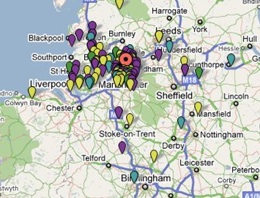
Take a look at a project footprint that has a focus on localism – ie in keeping material, supplier, management and even waste transportation as close as possible to the project:

And then one that doesn’t (which is actually less in construction value):

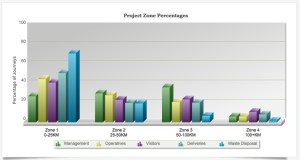
Across the 80 or so projects on the site we can start to see the travel pattern for materials, people and waste, and how close to the project …

All this starts to position Constructco2 as a possible valuable CSR tool and indicator, monitoring impact of projects on local communities, and starting to raise issues of procurement, appropriate sourcing / specification as well as good on site project management housekeeping

These notes are extracted from my recent ConstructCO2 presentation that is available to view on slideshare. 

For more on information please get in touch or visit Constructco2,and follow links.

Great Green Deal Re-Skilling?

Following on from the depressing news that Construction lacks green, key business and foresight skills, in particular 43% of employers dont feel they understand the implications of green issues, or ability to identify the training needs, are we facing a green deal barrier?

Need for New Skills

We read in the Low Carbon Plan from the Government, (“much re-skilling of the construction industry to deliver the planned targets of greenhouse gas reduction by at least 34% by 2020 and 80% by 2050″),  from the IGT Report of the need for green skills, we read that PAS 2030 and Green Deal codes of conduct will access sustainability skills, training and development. The FMB Cut the Carbon programme focuses on the need for new skills.

Will it turn out OK?

Rob Hopkins in his Transition Handbook, (see my blog back in 2008 time for built environment transition?) in a futures scenario talked about the Great Construction Reskilling, the NEF paper, How it all turned out ok celebrates how we recovered our lack of traditional skills, succeeded in addressing the localism issue and turned energy ineffective buildings into models of zero carbon. (again my blog: How it all turned out OK in 2050)

Who is defining …

But do we have an understanding of what green skills mean? Is it just an understanding of good sustainability awareness (eliminating waste, reducing carbon, buying local etc), Is it technical, natural materials (see the Transition Culture archive for reskilling) or is it something more deeper, profound.

Green Re-skilling starts at the board level…

Do we imply the reskilling is just for operatives, or wider to include supervisors, managers and (in my view essential) board directors and senior managers? Maybe this isn’t a training issue to be lodged with the HR team but one of crucial CSR strategy for organisation? (see A Low Carbon Diet For Construction Boards)

A question then …

What are construction boards, contractors, installers, training organisations, industry bodies doing, plan to do, or indeed have done to understand and address sustainability skills.

What is Green Deal: the hard, the soft, the CSR and the terminology.

Just what is Green Deal? Associated with my support for organisations developing strategies and implementation plans for ‘transition’ to eco refit or green deal work, the following documents are proving very useful indeed.

Getting Ready for Green Deal (Fairsnape and PBEnergy)  Is your organisation ready and equipped to work in green deals? Check against our top tips.  Time to green your board. It is absolutely essential that your Green Deal approaches are fully supported and sponsored by a board level director or equivalent. Green Deal has to be a key element of your CSR and Business strategy, not a bolt-on or suck and see approach.

What is the Green Deal and how will it work? (greenenergynet.com) Gives a general overview of what will be involved in Green Deal, who it is aimed at and useful terminology

Behaviour Change and Energy Use (Cabinet Office Behavioural Insights Team). Its not all hard technology and finance as this recent publication demonstrates. Energy reduction alongside Green Deal is one of behaviour change, nudge approaches and good CSR understandings.

This paper draws on evidence from behavioural economics and psychology to outline a new approach to enabling people, at home and at work, to reduce their energy consumption and reduce their bills in the process.

Behaviourally based changes that reduce emissions have major advantages. First, the benefits can be very fast, unlike major infrastructure changes that can take years, or even decades – a 1% gain today is worth more than a 1% gain tomorrow. Second, they can be highly cost-effective. Third, they can provide savings and other benefits directly to citizens

Green skills ‘essential’ to carbon-conscious building industryRecent Guardian Sustainable Business article.

Green Deal Terminology

Improver – The household, business or community that carries out energy saving measures through the Green Deal.

Green Deal Provider – This is the organisation funding the Green Deal. They could be your utility supplier or commercial companies, charities or social landlords.

Accredited Advisor – This is the person who recommends energy saving measures that could be carried out on an improver’s property. The advisor would document the energy saving measures on an Energy Performance Certificate which he would pass on to the Green Deal Provider and Improver.

Accredited Installer – Approved contractor who carries out measures recommended by the accredited advisor. The Green Deal provider could be the Accredited Installer but could also contract this work out. Whoever the Accredited Installer is the contractual agreement is always between the Improver and the Green Deal Provider.

The Green Deal Plan – The Green Deal Provider offers the Improver a Green Deal Plan. This includes arranging an accredited advisor and installer. It also includes the financial and contractual agreement between the Green Deal Provider and Improver.

The Golden Rule – The financial savings derived from the Green Deal energy saving measures recommended by the accredited advisor must be equal to or more than the cost of implementing the energy saving measures and the repayments must not be longer than the expected life span of the measure.

For more on Green Deal awareness of support 

Sustainability in Built Environment dominates Guardian Sustainable Business Awards

Sustainability in the Built Environment dominates Guardian Sustainable Business Award winners:

At British Land – winner of the Guardian Sustainable Business built environment award:

As the relationship with Camden council shows, British Land takes its corporate responsibility seriously and this is reflected in the goals for Regent’s Place. From design to construction, the project team has been expected to apply the highest standards of ISO 14001 certified sustainability brief for developments. As a consequence, all the new office buildings have Breeam “excellent” sustainability ratings.

From fit-out to property maintenance the developer has worked with occupiers and on-site teams to use natural resources efficiently, with a waste guide and sustainability brief for management – leading to 8% less like-for-like energy use since April 2010.

When the masterplan is complete, the Regent’s Place estate will double in size, providing 2m sq ft of office, retail and residential space for 14,000 workers and residents. What an opportunity, then, for a showcase site with sustainability at its core.

At Sainsbury’s – winner of the Guardian Sustainable Business energy award:

Crayford Sainsbury’s biggest UK store … is a breakthrough project – the first time a UK supermarket has used the so-called geo-exchange system to tap natural geo-thermal energy trapped deep under the ground.

At the heart of the system is an advanced ground-source heat pump that is linked to boreholes that capture and store waste heat from the store. This is released, when needed, to provide heat and hot water for the store and on-demand cooling for refrigeration.

Most importantly, it has allowed the supermarket group to increase the size of the store with no increase in either energy use or carbon emissions. The expanded store has exactly the same footprint as the smaller store it replaces.

As such, Crayford provides a blueprint for the UK’s second biggest grocer as it plots its future store development. The system will be used on several new and redeveloped stores now being planned.

At Tescos: winner of the Guardian Sustainable Business carbon award:

An all-timber new look store in Ramsey, Cambridgeshire, is meanwhile creating a zero-carbon template for future store development at home and abroad.

A range of new technologies is being tested, including sun-pipe lighting, renewable combined heat and power (CHP), harvested rainwater to flush toilets and run carwashes, the first ever LED car park lighting system and on-site renewable energy production. Similar stores in the Czech Republic and Thailand will be built in the coming months.

Some 614 UK stores have also been fitted with electronic energy boards showing staff at all levels, and in real time, if their store is operating in an energy efficient way and suggesting ways to improve the results.

The Livingston distribution centre in Scotland will soon be equipped with a six megawatt CHP plant, while the California distribution centre has one of the largest roof-mounted solar installations in North America.

And

at InterfaceFLOR – winner of the Guardian Sustainable Business waste and recycling award:

In 1995 InterfaceFLOR, a carpet tile and commercial flooring company, launched mission zero, a promise to eliminate all of its negative environmental impacts by 2020.

Born from an “epiphany” that founder and chairman Ray Anderson had on reading Paul Hawken’s The Ecology of Commerce, the mission moved the company away from the “take, make, waste” cycle of manufacturing towards a more sustainable business model.

The path to mission zero is made up of seven clear and ambitious goals, ranging from eliminating waste and using wholly renewable energy to maximising recycling and using resource-efficient transport.

For InterfaceFLOR, eliminating waste meant eliminating the concept of waste, not just incrementally reducing it. Recycling is seen as a last resort and only considered in cases where waste cannot be prevented or reused in any way. It’s an approach the judges thought eminently replicable.

At Capgemini – short-listed for the Guardian Sustainable Business built environment award.

Capgemini has established a new approach for building energy efficient data centres. Rather than build from scratch, it has used an existing building ‘shell’ and populated it with prefabricated modules, similar to those used as mobile hospitals by the British army in Afghanistan.

This in itself minimises the environmental impact that would come with a new-build project and cuts development time from 18 months to just 22 weeks.

Merlin aims to achieve a step-change in every aspect – from the smart engineering of the building to the use of many innovative features, such as fresh-air cooling, battery-free uninterruptible power supply (UPS) and use of recyclable or reusable materials.

The key feature is the cooling system, which combines fresh air and pre-evaporative cooling. It is set up to ensure the tightest possible real-time control of temperature, humidity and air-flow at minimum energy cost.

Merlin includes new “flywheel technology” in its UPS system, with kinetic energy replacing high-carbon batteries.

Living lightly on the earth: #LCBPC BREEAM Outstanding and Sustainability event.

Last Wednesday evening (18th May) saw the Lancashire Construction Best Practice Programme (@lcbpc) meet at the recently opened, BREEAM Outstanding Brockholes Visitor Center (@visitBrockholes)for a programme of speakers on a sustainability in the built environment theme.

Martin Brown, (@fairsnape) as chair of the club, welcomed delegates and introduced the speakers, pointing out the evening would touch on the three key elements of sustainability -ie the triple bottom line of environmental, economical and social, or fit for planet, purpose and people. 

Martin posed a challenge to the delegates – who at a senior / director role in your organisation is really driving sustainability and your transition to a low carbon economy? (See Carbon Diet for Boards)

Ian Selby (LWT) opened the first of three short talks from LWT with an overview of the Brockholes Center development, making the interesting comment that the Lancashire Wildlife Trust is now one of the leading environmental developers in the North West. The low impact design and the pursut of BREEAM Outstanding was key, aligned to the Trusts vision of ‘living lightly on the earth’

Clare Kenny (LWT) described the work of the LWT going forward, the need for fund raising, and the LWT Mosslands carbon capture scheme for business (naturalcarboncapture).  David Atherton (LWT) talked in more detail the steps necessary to gain the BREEAM Outstanding standard, suggesting that BREEAM Outsanding has added value but in itself is not value, citing a number of tick box items only necessary to get the standard, including the lit cycle track that when it met the unlit public track in a field plunges cyclists into darkness.

Leadership, committment and buy in are essential for success in sustainability was Joe Moxham (Carefoot) of Carefoot’s message in his overview of their three year road map, focusing on the measurement and reduction targets for construction carbon, water and energy use, through the use of constructco2

David Inman (@DIEMLtd) (Diem Ltd) highlighted the need for effective management of waste, from a legal and business and cost benefit perspective, and following the theme set by Joe, on the reduction of carbon achievable through waste reduction.

Successful sustainability management needs diverse thinking, was the theme for Chrissi McCarthy (@CChrissi)(Constructing Equality) who outlined the construction sectors rather poor performance on diversity issues and the benefits of profits and growth being seen in other sectors that have a higher level of diversity.

Martin summed up, thanking the speakers and returning to the LWT vision of ‘living lightly on the earth’, remarking at the similarlity with other organisations such as Patagonia  ‘do no harm’ (which, like LWT they also apply to their construction activities), wondering how built environment organisations in the UK could embrace and live with such visions. 

The event was video recorded by Dave Severns Jones (@severnsjones) (it was hoped to stream live but connectivity was not available), The recording, along with the slides will be available very soon.

The nest Lancashire Construction Best Practice Club event is on June 23rd with a focus on meet the bidder. 

Sustainable Built Environment Business

The Guardian Sustainable Business web pages are proving a great resource for information, articles, debates and inspiration for sustainability as a strategic rather than just an operational level issue.

To reinforce the importance of the  built environment sector, the way we plan, design, construct and use buildings that is present in most aspects of business sustainability, the site now has a built environment specific ‘hub’ (and a Green ICT and Communications hub)

In addition following on my my article at CSRWire, (a low carb diet for construction boards) there is much the construction sector can learn here in moving sustainability to the board and to a strategic level.

This weeks round up from GSBi includes:

Why carbon reporting makes sense

It helps the environment, adds value to the business and brings long term benefits, says Paul Pritchard We reduced our UK carbon footprint to 31,600 tonnes in 2009 from 43,200 in 2006 – over 25%, and approximately saved over £1m. The savings have been helpful in getting the business to regard sustainability as something that could add value. Procurement is another important area of consideration and our recent contract with Kyocera for print management units is a prime example. Sustainability requirements were incorporated into the tender process from the start (beyond the “do you have an environmental policy” type questions) including quantifying energy and paper savings that formed a fundamental part in awarding the contract More …

Energy efficient buildings are vital to sustainability In the coming decades, our planet will be a very different place. By 2050, there will be an additional 3 billion people on Earth and 70% of the world’s population will be living in cities. While many things about the future remain unclear, one thing is certain: more people in urban areas means an increased demand for new buildings. And unless we change the incredibly inefficient nature of today’s buildings, it means an unprecedented increase in energy use. It’s a ticking time bomb. More …

The business case for valuing natural resources James Griffiths explores how a new ecosystems guide enables companies to make better business decisions Every company values its core business resources: its products, customers, and employees. But until now business has not been able to fully consider the value of a vital aspect for success – natural resources.That is why the World Business Council for Sustainable Development (WBCSD) created the Guide to Corporate Ecosystem Valuation (CEV), an innovative framework designed to enhance understanding of ecosystem services like freshwater, food, fibre and natural hazard protection. More …

Carbon Trust launches green guide for SMEs The Carbon Trust has launched a green guide to help small and medium-sized enterprises (SMEs) take advantage of the green goods and services industry The free ‘Green Your Business for Growth’ guide includes information on how businesses can find opportunities for green growth within their organisation and sector and how to develop a strategy to implement the changes. It also provides advice on how to reduce an SME’s environmental impact, including templates for energy and environment policies and a checklist to assess current sustainability. “We want to help Britain’s small firms to seize the opportunities presented by green growth through cutting costs or developing greener products and services,” said Ian Gibson, Carbon Trust director of delivery programmes. More …


Counting construction carbons with ConstructCO2

This blog has reported on numerous occasions (eg here and here) on the need to measure and improve carbon emissions from construction activities separately from that of the building itself or the facility in use. And the need for an easy, simple to use tool.

As noted many of the available applications for calculating carbons were linked dubiously to carbon offsetting schemes.  Of note for use in construction were the Google Carbon tool (but not construction specific enough) and the Environment Agency tool (but is proving to be too detailed and cumbersome for most projects)

Measuring and improving carbons on site is increasingly important as more and more projects seek higher standards to BREEAM and Code for Sustainable Homes (and soon Non Dom Buildings).  One recent project set ‘damages’ for the contractor not achieving the ‘management points’ (for waste, CO2 and considerate constructor standard) for CSH at £40k per point. (See the CSH Technical Manual for more on this)

Recently at EcoBuild Paul Morrell, Construction Tsar commented  that focus on carbon emissions should be a number one site priority as it is measurable and addresses other areas of ‘waste’ in the industry

And yet the majority of contracts just do not know their project carbon footprint, whether its close to 1tonne or over 100tonne. We do not have a feel for the magnitude of emissions, or indeed what 1kg of CO2 actually looks like.

So it is good news to see the release of ConstructCO2, developed through Evolution-ip, by construction people for construction use.

ConstructCO2 is a simple carbon calculator based on the premise of keeping it simple and easy to use on site. It makes use of existing site approaches for data collection (induction sheets, daily log-ins, plant sheets, utility invoices etc). Carbon emissions through transport are calculated through use of google mapping API .

Construction (people) travel miles are recorded for management, operatives and visitors. (With a dispersed project management team you will be surprised at the carbon footprint of a project site meeting and probably think of alternative arrangements) Material transport miles are derived from delivery notes or goods received sheets.

Where the power of ConstructCO2 lies however is in its reporting. Construction carbons can be measured in terms of co2/£project value, co2/dwelling, c02/m2, co2/bed or other, enabling benchmarking with other projects and generically through KPI’s such as those from Construction Excellence.

But simply knowing the project footprint, the construction company’s total project footprint, and where the biggest areas for carbon emission are enables action for real improvement.

ConstructCO2 is currently being used by a number of different projects in what I guess would be called a beta stage. Current projects include a large new build hotel project, a small industrial refurb project, school extension and an architect’s office.

Currently the use of ConstructCO2 as a tool is free, with a (currently optional) fee based support and training package to help contractors understand carbon issues, carbon standards requirements, measuring, benchmarking and improving carbon footprints.  So it makes sense to take the opportunity now, measure and understand the carbon footprint of one of your projects. At the moment sign up is through request via email contacts on the ConstructCO2 front page

Future developments include the option for live energy feeds from site power meters to ConstructCO2 and live exporting from ConstructCO2 to Google and Pachube for example.

ConstructCO2 is on twitter at @constructco2 and has a ning forum in development for discussion and benchmarking of project carbon issues.

Note: As an associate with Evolution-ip, I have been involved in the ConstructCO2 concept development and testing.  Evolution-IP is a be2camp partner, presenting at and sponsoring be2camp un-conference events.

Time to rethink (not re-tinker with) sustainability #BAD09

Oh what a web we have weaved on our route to sustainability. And while we seek sustainable construction and head towards zero carbon homes, are we not in real danger of creating an industry that is in itself not sustainable or resilient?

We have spent a huge amount on sustainability technology, on green marketing, of time and energy in defining zero this or that, sustainable ‘everything’, and yet carbon emissions from buildings have increased, we do not have a workable definition or solution to existing bldgs, and despite site waste management plans DEFRA recently claimed that one third of solid materials arriving at the site gate are not used for the ordered purpose.

Given the opportunity  to blog for Blogging Action Day (BAD09) on climate change, we need raise the call to rethink construction, rethink facilities management and rethink design. Not in the now overused and redundant ‘rethinking’ as in tinkering with, hiding behind a thin veneer, but as in the Einstein “we can not solve todays problems with the thinking that got us here in the first place.”

25 years ago the Brundtland Commision definition of sustainable development called for actions that would not compromise future generations. Here we are a generation or so on, and I would bet that nearly every sustainable policy or statement echos or repeats the Brundtland definition. And yet we have compromised todays generation and continue in our actions that will compromise future generations.

Many sources have stated that our built environment sector consumes 40% of materials and contributes 40% of carbon emissions and waste. Not a record to be proud of.

Worst: we think we are addressing sustainability because we have greenwashed our products, our services and our actions.

We are on the cusp of needing radical actions to met forecast climate changes, being neutral may no longer be acceptable,. We may look back and regret the investments and industry we set up to manage and recycle waste, rather than investing in eliminating waste. We will regret our inactions on really moving the sustainability agenda forward since Brundtland.

Positive development, not neutral or zero, needs to surface as the new mantra on our sustainability agenda.

And stealing the words from construction excellence blog yesterday.

“If current leaders are not up to the task, they should as a minimum support the next generation who appear to understand the issues”

Links:

Be2camp Manifesto: Towards an open resilient sustainable and collaborative built environment

Positive Development

Understand and Preventing Greenwash