Tag Archives: BIM

Why EXPOC21 is a vital event for the built environment

Time was, to uncover the latest thinking and developments in the world of sustainability meant a lot of travel and time investment. I recall, whilst developing and driving the Mowlem Sustainability Strategy for Prime Contracting at the end of the 90’s, having to trundle to conferences in London, or to Defence Estates in the Midlands, spending a whole day in conference mode, only to pick up a few nuggets of intelligence or inspiration.

Today we can pick up most intelligence via the web and social media. We use webinars and online events to share. Physical events such as Eco Build, now wrapped in social media and web applications, certainly have their place. But mainstream trade fairs haven’t as yet really embraced the potential of the online world, by going completely virtual.

One organisation driving the emerging virtual expo space is HyperFair – and it is their technology, that allows visitors to attend exhibition as an avatar, that the forthcoming Construction21 virtual trade fair will be using.

Construction21EXPO.eu EUROPE - logo

Over two days, 14th and 15th May, EXPOC21, will enable you to visit a number of greenbuild product stands, talk to leading sustainability organisations on their stands, be inspired and talk with a number of leading greenbuild  thoughtleaders, engage in panel debates and network with construction and sustainability professionals across Europe and Globally.  All with a vastly reduce commitment on your time, and on your carbon emission, without leaving the office or your kitchen table!

And, I think there is another important reason visiting EXPOC21 – to experience and interact with others within a virtual environment.  One of the great drivers for todays industry is BIM, information management and modelling, and the associated emergence with 3D environments.

60199455601729109971916966764nfEngaging with others in virtual environments, discussing proposed designs with clients and contractors and end users, whilst moving through the design itself, will become an established aspect of our industry – and a key skill to hone now. Those who have experience of Second Life, Minecraft or even Sims will feel at home, but for others, this is an experience not to be missed, and attendance as a delegate is free.


See you there!

Links for the show:

To register go here

Check out the Thought Leader Presentation series

Green Build Panel Debate hosted by World GBC Europe, covering topics such as Economics of Green Building projects, Scaling up for Retofit, Green Responsibilities and Sustainability performance Directives

Follow the show via Twitter #EXPOC21 #EXPOC21chat and @C21EXPO_EUROPE

Tweetchats and Twitterviews held leading up to the show, with more in show interviews to come.

Construction21EXPO Background and Team (pdf)


Disclosure: I have been supporting and advising the Construction21 team on social media and related sustainability aspects.

Responsible BIM

We are hearing more and more of ‘Responsible Business‘ approaches, generally taken to mean a combination of sustainability and CSR. But what happens when this emergent thinking in Construction meets BIM? Responsible BIM?

Below is the transcript or notes behind my pecha kucha presentation, exploring Responsible BIM, made to the excellent ThinkBIM event on 2 April in Leeds, .

I wanted to inject a balance of current ‘soft issues’ thinking against a prevalent hard technology thinking. I have no  issues with the passion behind the BIM approaches, I am constantly impressed and think it amazing, but sometimes feel BIM technology and language is a runaway train. Unfortunately just about every BIM event I attend I hear at the outset, BIM is about the people not the technology, with the rest of the event focuses on the application of the technology, with very little soft skill content. When was the last time we saw a BIM event focus solely on collaboration without mentioning software? Having said that, its is the balance of views at ThinkBIM events is what sets it apart from other BIM events.

The title ‘Flatland to Wonderland’ comes from a brilliant article and the work of Petra Kuenkel, who we interviewed as part of our Sustainability Leadership Conversation (#sustldrconv) twitter series recently. In short, we need both the flatlands of reality along with the possibilities of the wonderland for a sustainable future

Flatland

3D modelling, and offsite component manufacture with simple on site assembly isn’t new, as illustrated in the Building article that covered the BAA Project Genesis project in 1997. Pre Egan and pre Building Down Barriers we were doing BIM, so why didn’t it take off as the Egan Report did?  (Egan was at BAA and also involved in Project Genesis).  Somehow we lost the 3D collaborative conversation, maybe the Egan agenda itself ,with a focus on KPI’s and customer satisfaction masked some of the brilliant emerging work of that time?

One of the BIM wake up calls for contractors I work with recently has been the inclusion of BIM questions within PQQ’s in particular the PAS 91 BIM options – and the need for bidding contractors to have a BIM Strategy, signed as commitment from the CEO, detailing milestones, training and development, information management and more. “Lets write one quick”

And on the issue of information management – lets start to align to ISO 9000  documentation control requirements. How many BIM users (real and say-they-do’s) have embedded their BIM information and data communication processes into their Quality Systems. I am currently helping a good number of organisations revisit their management systems and inject current information management thinking. Particular so on how and what information is shared with supply chain members. Doing so enables us to audit, and improve information management using the Plan Do Check Act approach

But, yes, we have BIMwash. BIM language is not that difficult to learn, the technology is not that difficult to purchase, and hey presto we are BIM compliant. Not surprising then that contractors sit and wait for a client to insist or require BIM on a project before applying BIM thinking. As a BIM community we need to change the conversation away from BIM being just a design tool or client requirement to a continuous improvement tool with many many benefits.

And on to the wonderland …

If we really want to co-create a sustainable built environment, and isn’t that what BIM is all about?, then we need to have both the harsh reality of the flatlands with the spirituality of the wonderland. This resonates with Lucy Marcus Be2Camp BE2Talks back in 2011 where she described the need for leaders to be both Grounded and Stargazers.

I am impressed with the Collective Leadership approach and model (developed by the Collective Leadership Institute), and the necessity to move beyond collaboration. (How many times have I heard or read a contractor claiming to be collaborative simply because they have a supplier progress meeting once a week)  The Collective Leadership Model provides the scope of elements leadership and collaboration could, should, look like in a modern construction environment. Covering both technicality and people issues of diversity, and mindfulness

Ah mindfulness …

Currently we seem to be struggling with two drivers, on one hand the sustainability agenda of being simple, of realigning with nature. biophilic approaches and natural renewable solutions and on the other the ever increasing complexity of data, be it BIM data or big data and technology.

It is not surprising that one of the most sought after advisors to silicon valley is a Vietnamese Buddhist monk, Thich Nhat Hanh, (Thay), seen by many as the the modern guru for mindfulness.  Such practices are seen to be key for business, enabling focus on real innovation, free from clutter of distractions. We will see much more of this in the construction sector I am sure, as we learn to balance people with technology, simplicity with data, well being with efficiency.

US BIM write Randy Deutsch approaches this thinking in a recent blog article for Design Intelligence Beyond BIM Boundaries – “in order to master BIM, we have to do less BIM, we have to do other things” And if we focus on better communications, people skills, listening, empathy and understanding, then BIM will flourish without effort.

Perhaps BIM is now is seen by many as a big hammer, an approach that if not adopted then we are not doing construction correctly, “if the only tool we have is a hammer then every problem is a nail”  BIM practitioners and advocates need more tools in their conversation and offerings covering both technology and soft skills. As Randy commented ‘ go against common wisdom and fortify your soft skills”

We had a brilliant twitter based conversation with Casey Rutland as part of the #EXPOC21 series this week where the conversation led to whether BIM will simplify or complicate sustainability. Many people re-tweeted the question, but with few answers offered, other than when done correctly, BIM will enhance sustainability, done incorrectly it will harm sustainability. Incorrectly here can mean overloading buildings with technology solutions when natural solutions would work (but harder to model perhaps) or by not taken cognisance of where materials are coming from or their health impacts. Casey introduced the concept of SustainaBIMity – the mash up of sustainability thinking with building information management. A far better description than Green BIM

Aligning BIM thinking to progressive sustainability thinking such as the Living Building Challenge is exciting and has huge potential. In the near future we will see BIM objects cover the attributes of health data, justice in production data, carbon and travel data. (Note the dialogue in the US between Autodesk and the Healthy Products Declaration database for example)

And we know that carbon, embodied and transportation will become a key BIM data element, procuring kitchen pods from China for modular construction on the other side of the globe may be a data and cost solution but it is not a restorative sustainability solution. (cf Modular Construction on Souremap)

In our pursuit of designing and creating buildings that work for people, planet and purpose, we perhaps need to address both the higher Maslow needs as well as focusing on basic shelter needs, and in some way build them into data and modelling,  Biophilia at last is opening up a whole new chapter for design, and BIM, and well for the built environment as a whole. In the UK the term Sick Building Syndrome has dropped out of use, but we need to be aware of the dangers of creating buildings through BIM that don’t model or promote health and well being.

There are examples of this, for example by early involvement mind and health charity experts to view and comment on proposed buildings in a 3D environment, advising on the potential enhancement or damage to end user well being. And only yesterday,(01/04/14)  Rick Fedrizzi, President of USGBC writing in EDC called Health the next frontier of green build performance, and more recently calling on the built environment to use medical data for improved building solutions.

My final slide proposed that every BIM project should have an educational element, to inform and motivate the industry and that this should be embedded into PAS1192 or equivalent documentation. No project or organisation should be allowed to claim BIM compliance unless they openly share their approaches and lessons learnt, covering both the flatland BIM and the wonderful healthy buildings that enable people and organisations to flourish.


Green Revolutionary Engineering

Integral_cover_9x7_FINAL_webIntegral Revolutionary Engineering – a review.

Every now and again you come across a book that is both simple and profound, full of ah ha moments, of innovative ideas and yet seemingly familiar. One such book I have mentioned often on this blog (and gifted to many) is Yvon Chouinard’s “Let my people go surfing”  to which Integral Revolutionary Engineering book published by Ecotone has a similar feel.

I had the opportunity to meet and chat with Kevin Hydes at an Inetgral reception at EcoBuild this week, and picked up a copy of Revolutionary Engineering. Kevin served as the Chair of the USGBC  2005-2006, was a founder and director of CanadaGBC and a former Chair of the WorldGBC and is Founder and CEO of the Integral Group.

Integral are a global network of design professionals collaborating under a single deep green engineering umbrella, providing building system design and energy analysis services, trading as Elementa in the UK

Revolutionary Engineering is a ‘treatise of innovation in deep green building design, featuring stories and ideas from some of the worlds leading engineers and designers’

And it does what it says on the lid, providing a portfolio of the Integral Groups experience of design on deep green buildings, an insight not only into what is possible today but what is highly achievable in the future.

That the forward is written by Jason McLellan (see bio) gives the clue that this a treatise of building services design on Living Building Challenge projects.

And there is a nice affinity here. Leeds, where we founded the UK Collaborative for Living Building Challenge is also Kevin Hydes’ home town.  Now residing in San Francisco, Kevin reminisces in his preface letter on a post industrial Leeds, with belching coal fired power plants and coal from Yorkshire burning in his very home. Times have changed, in Leeds and in sustainable construction since then.

Molly Miller (@miller_mm), author, is Integrals story teller with a background in sustainability writing at Rocky Mountain Institute and Mother Earth News. And what a great title – why doesn’t every company have someone with the story teller title, official or otherwise?.

In conversational tone, Molly includes many Kevin Hydes insights scattered and emphasised throughout, alongside quotes and comments from many other green build thinkers and project team members.

As I read Revolutionary Engineering, I was looking for hints as to how BIM would fit in, yet,  found it refreshing that BIM doesn’t feature. Although I am sure it must have been used to some degree on the large Hospital projects and Empire State Building refurbishment case studies.

… refreshing to read a book with Revolutionary in the title that doesn’t try to sell BIM as the panacea for all things design and construction, even green construction.

Revolutionary Engineering sees other drivers across its fours chapters Imagine, Perform, Sustain and Accelerate. For example, creative leadership and collaboration (there are echoes here of our collective leadership tweetchat from Tuesday evening), innovation and diversity

One of the barriers to innovative thinking and collaboration across the construction sector is acknowledged as lack of diversity – of age and gender. This is indeed something I’ve seen evident in my own work in the sustainability leadership and social media world. Revolutionary Engineering, sees that the processes and policies of an organisation need to be appropriate to women,  consciously arranging hierarchies and teams to be collaborative

The character of innovation relies on different ways of thinking and a homogenous group is just not going to provide that.

Addressing the Cost v Value issue, Revolutionary Engineering reminds me of the 1:5:200 and Be Valuable thinking of a decade ago, brought bang up to date in line with deep green buildings. What must be of interest to every client and contractor seeking sustainable buildings is how Integral brought the Living Building project at Simon Frasier University in on ‘standard budget’

Whilst an reviting read it is also challenging, for eg on the higher cost for going green issue –  to cite cost as an argument against energy efficiency or innovative practices in design is often an excuse to do something the same comfortable way it has always been done”

The book’s case study on the new Clif Bar headquarters is fascinating, illustrating the importance of putting the user first. “The occupant is the star of high performance buildings”  I must say I find Clif Bar an interesting organization for personal reasons, from a CSR and cycling perspective, so this case study added much to my understanding

A small criticism, a lack of page numbers and possibly too many images of one project in particular – the Vancouver VanDusen Botanical Gardens – it is a great Living Building Challenge project that I had the chance to visit in Vancouver a few years back – but perhaps too many images here that you get the feeling of ‘space filling’

In summary we can, as the UK construction industry learn much from the experiences and insights in Revolutionary Engineering as we start to embrace deep green and Living Building Challenge thinking it should be on the reading list of all sustainability professionals, services engineers and a text for construction and building services students … to further the ‘collaborative commitment to relentless momentum’

Integral are participating (exhibiting and talking) at the Construction21 Green Build Virtual Expo in May, prior to then, I will be in conversation with Integral as part of our EXPOC21chat tweetchat series.

BIM: Gaming Down Barriers

I had the opportunity to experience the gamers device, the Oculus Rift, at a recent Lancashire Construction Best Practice Club event on BIM, courtesy of Vin Sumners from Clicks and Links, taking a virtual tour through the Manchester Town Hall linked to the BIM model for that project.

Interesting to see then that Second Life friend, Jon Brouchoud at Arch Virtual is pushing commercial boundaries of BIM and Oculus Rift in his article BIM Goes Virtual: Oculus Rift and virtual reality are taking architectural visualization to the next level 

“The first thing people do when they put on the Rift is to reach out trying to touch the walls or furniture they see in the virtual model, even it doesn’t really exist,” said Jon Brouchoud, “It’s an almost involuntary reaction, which I think that says a lot about how immersed they are. They really do feel as if they’re occupying a completely different place.”

Rift-side-by-1024x306

(Jon presented live from the USA / Second Life at the first Be2Camp event way back in 2008, there is a link to Jon’s Be2camp presentation on slideshare here)

At the time I tried the Oculus Rift I commented that we can add much more data, augmented reality, into the virtual experience, for example when touching walls, if we could see for example the sustainability data of components, health data, manufacturing data, time to replacement and cost data.

But more importantly such gaming devices can make construction and BIM exciting for all generations, fostering greater collaboration across disciplines in both a virtual and real environment – Gaming Down Barriers.

Gaming Down Barriers is the title of a Innovation Voucher funded report produced by Martin Brown and Paul Wilkinson for Clicks and Links which should be publicly available in the near future. The report makes the argument that BIM through gaming could break down collaborative working barriers as did the original Building Down Barriers programme.

Are you pedalling on Square Wheels?

Have we wasted a good crisis?

In an earlier blog post I used the expression of pedalling squares to illustrate how progress and development in sustainability is often a clunky and inefficient activity.

Within construction we have some great new round wheels available to us that will improve our business, our services to clients and image, for eg BIM, Social Media, Circular Economy and Restorative Sustainability to name a few. These nice new shiny round wheels are necessary in a construction organisations baggage – we need to use them in PQQ, PR and interviews to demonstrate a sense of being tuned into current industry improvement programmes

Many organisations have started to do a wheel change – some encouraged through the never waste a good crisis thinking – seeing the lean times as time for investment in the future, some through Innovation Vouchers or other funded support.

Think about starting 2014 with a more efficient approach by understanding how organisations – often your competitors – are implementing new wheels.  Find out more.

Related:

Sustainability: in equilibrium … or pedalling squares?

A TQM for the social media, digital age?

Do we really need ‘Green BIM’?

My understanding of BIM is that it is another important step on the built environments journey of improvement, integrated approaches and increased collaborative working. I find it rather disappointing then to see concepts of Green BIM or Sustainable BIM emerging.

If we are serious about holistic improvement then we should see sustainability and green issues baked in to BIM – not as a bolt on. BIM changes everything commented John Lorimer in our PPP event and Collaborative Working document earlier in the year. It must also change our thinking on sustainability as a core improvement issue.

BIM could force direction and set the pace on  wider sustainability and circular economy issues – so for example when selecting materials from BIM libraries into a model procurement decisions can be made on:  Transparency of product composition detailing the chemicals and ingredients, the ability to filter red list compliant materials, check the responsible sourcing issues relating to the product/manufacturer (think BES 6001 or JUST)

BIM, as an industry improvement tool, will fail if it permits the design of buildings that incorporate toxic materials (either in production, construction handling or in use) or socially unjust practices in manufacture or construction. Think Qatar World Cup football stadium design and construction.  Although BIM designed we are now, as an afterthought applying a sustainability and responsibility sticking plaster.

PAS1192 Part 3 (BIM in operational phase) is out for consultation at the moment. The proposed standard focuses on hard FM- asset management and not people orientated soft FM. There is the danger we will not address the health issues of occupants within BIM development and particularly through material selection and management. Health only gets one mention in the proposed standard, and associated with Safety – under risk – there because we always use the word health when we use the word safety – without really thinking through the huge consequences. The draft doesn’t mention the word sustainability at all. (Note see The NBS article on the proposed standard here for more detail)

Just this week the USGBC released LEED v4 at GreenBuild 2013 – significant and controversial in that it includes health transparency issues in material and product selection. As this is the direction sustainable and resposnible construction is heading (think Google HQ and the Red List, think Living Building Challenge)  it is only a matter of time before BREEAM addresses the issue.

This blog has been written as background thinking to supporting the Midge Hole UK Living Building Challenge design phase and my BIM Changes everything presentation to the Lancs Best Practice BIM event on 27th Nov, and supporting my Time to Heal the Future thinking.

Untitled

Could Google technology transform BIM and the built environment?

Snapseed (2)Have Google developed the next era of Building Information Modelling (BIM Level 3?) or even an alternative?

Reports via GLOBES News from Google X , the company’s secret development unit, (the unit responsible for driverless cars and Google Glass) provides exciting but tantalising news of a new construction technology, known as Genie. Google X’s construction technology project had a budget of $5 million.

Genie is described as a ‘platform with online-based planning applications to help architects and engineers in the design process, especially for skyscrapers and large buildings. The platform includes planning tools of expert architects and engineers and advance analytics and simulation tools. Genie standardises and automates the design and construction processes with unlimited design options, enabling an architect to preserve the building’s uniqueness in the urban environment’

And, not surprisingly given Googles interest and activity in sustainability and healthy buildings, ‘Genie was presented as a revolutionary technology for the construction of sustainable and environmentally-friendly buildings of a quality never before known’ (Google fund healthy construction product programmes in the US and are reportedly looking to use the Living Building Challenge Red List material approach on the new London project) 

Linking the transparency of construction products into BIM objects, (or Genie objects?) giving more information for selecting healthy, responsible materials seems a likely approach in a left field shake up for construction as  ‘a  technology  that will change the conservative global construction industry through a fundamental and revolutionary change in how buildings are designed, built, and maintained’

And … with big ambitions

Genie could save 30-50% in prevailing construction costs and shorten the time from the start of planning to market by 30-60%.

Not all of Googles projects make it mainstream or survive (think Google Wave) but success Google platforms rapidly gain mass take up (from search to Chrome browser to Google+) and with the global built environment looking for a solution that is perhaps more accessible, more collaborative and at lower cost than BIM, Genie could be a game changer, or even a sector changer.

And where else is there an innovation project with a budget of $5million to address the economic and sustainability failings of the built environment.

One to follow very closely, but it would appear the Genie has been released from a BIM bottle.

The full GLOBES report can be found here

Constructing social media leadership …

OLYMPUS DIGITAL CAMERAOver the last year or so we have seen growth and a big change in attitudes to social media, with perhaps in twitter particular, now an accepted element in today’s communication mix.

Those who a few years back were adamantly against social media have now joined, often with a fanfare of “we’ve arrived, we’re innovative” (look at us!) and with some organisations once totally anti social media now proclaiming expertise in helping others.

Back in 2012 I wrote in the Guardian (Why the construction sector should engage with social media) that one of the barriers to social media take up, and hence by default a barrier to collaborative working communications,  BIM, learning and sharing  and general construction improvement is the reluctance of directors and senior managers to recognise, embrace or enable social media. Of course there are as ever some great exceptions to this,  But all too often directors have tinkered out of curiosity, and empty LinkedIn and twitter accounts set up now tell a different story … of organisations and directors who are poor communicators.

So why are built environment organisation leaders slow to embrace these communication platforms? Maybe its the:

Need to retain control – the beauty of social media is in its open sharing, we can never know who staff will reach, converse with, learn from, share with, collaborate with and how those we converse with will respond.

Lack of understanding Digital communications is expanding rapidly, beyond the understanding of many. Consequently many directors feel vulnerable in engaging with something they don’t understand, so stay away.

Fear of just being a fad. Without a clear vision of how social media will evolve, and how it can be used strategically to benefit an organisation, many directors are reluctant to invest in seemingly unchartered waters.

And all this is sad for a 21st century construction sector, where communications are so often the root cause of most of our problems, where most companies promote a vision of innovative, open, collaborative and where most directors sell themselves as enabling role models for innovation.

Social media presence is increasingly used as a good test of an organisations, and indeed the organisation’s leaders  claims within PQQ’s, Bids and PR material to be innovative, having effective internal and external communications.

Earlier this year we started Sustainability Leadership Conversations, powered by social media, to enable leaders of smaller built environment organisations to engage with the sustainability conversations that take place across across social media. Initially these are  monthly twitter conversations with leading individuals, but will expand to facilitate conversations between organisations, between UK and USA SME organisations. Join us and discuss on the 01 Oct  for our next sustainability leadership conversation by using and following the #SustLdrConv hashtag.

Having a strategy for social media in your organisation is essential, as it is with other initiatives, and should be the starting point for adopting social media approaches. To discuss support for getting your strategy underway, get in touch (Martin in UK, Andrea in USA)

If you are UK based, we can help you apply for Innovation Voucher funding to ensure your social media, digital communication and BIM journey sets off on the right footing. (Next application closes in October)

Amory Lovins, Restorative Sustainability, System Thinking … and BIM

I recently came across this great quote from Amory Lovins at the Rocky Mountain Institute (and used in a recent BIM Beyond Barriers report)

“As we shape our buildings and then our buildings shape our lives, we can choose to create abundance by design, not scarcity through inattention.

We can design radically efficient buildings that take nothing, waste nothing, do no harm, and create delight when entered, tranquility when occupied, and regret when departed—yet cost the same or less to build, cost almost nothing to run, and make people happier, healthier, and more productive.

 The key is integrative design that optimizes the building as a whole system, for multiple benefits, rather than its disjoint components for single benefits. Many similar benefits are available in existing buildings, as RMI’s RetroFit initiative aims to spread.

 And Building Information Modelling (BIM) is a powerful tool for spreading these results worldwide

Amory B. Lovins
Chairman and Chief Scientist
Rocky Mountain Institute

RetroFit-Challenge_logoRGB

EMPOWERING THE LARGER COMMERCIAL BUILDING INDUSTRY

Seventy-five percent of global electricity goes to buildings, and at least half of that is wasted. We want to reduce building energy use by 50 percent by 2050. We believe that building owners can lead the way to meeting this goal and significantly reducing global carbon emissions while improving their bottom line. During the Challenge, RMI is testing a number of approaches for accelerating building energy efficiency to result in more effective, and more implementable, portfolio energy strategies. Our portfolio partners will help lead other building owners in changing the way we all use energy. Lessons gleaned from the Challenge will inform RMI’s own publications and educational outreach, providing a foundation for larger scale implementation projects that demonstrate the vision of Reinventing Fire.

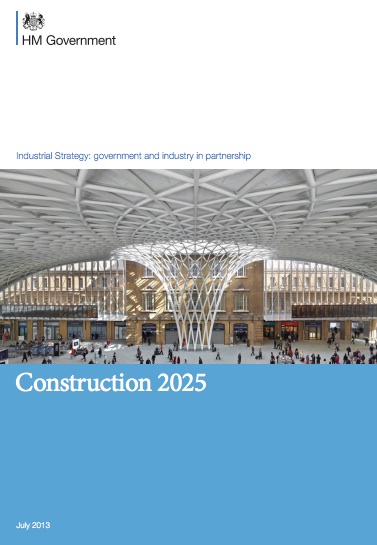
Construction 2025 Industrial Strategy

Reading the published edition of the Government Industry Strategy, Construction 2025, released yesterday I had two metaphors in mind, Snakes & Ladders and Babies in the River. Metaphors at first annoyingly contradictory, but on reflection pleasingly complementary.

UntitledThe Construction 2025 Industrial Strategy vision contains ambitions to cut costs, deliver projects faster, reduce carbon emissions, improve image and exports, through working digitally,  sustainably, and yes more efficiently.

Snakes and Ladders: illustrates the myriad strands and issues we are trying to deal with in the industry. Indeed the strategy includes a number of ladders with the excellent intention to move the industry forward, but also a number of slippery snakes to prevent meaningful progress for industry players and the industry as a whole. And, no doubt there will be plenty of commentaries on what issues are ladders (BIM and Carbon perhaps?) and which are snakes (image, diversity, SME relevance perhaps?)

However,

Babies in the River:  illustrates why only dealing with these strands and issues will not move us forward, and we will continue with energy sapping improvements, incremental changes and pockets of best practice. (You need to read  Annie Leonard, Story of Stuff excellent article)

Continue reading