Monthly Archives: July 2012

Building Down Green Deal Barriers

Themes covered in the Cumbria Green Deal workshop yesterday, both within round table groups and in general discussions were strikingly familiar, being the age old improvement issues that the construction and built environment sector has been trying to address for the last few decades.

It is encouraging that Green Deal is raising these themes with a new audience, and reinforces the point that Green Deal is another important improvement step on route to construction excellence. However, it is also a reminder that Green Deal may be doomed to failure it its just another sticking plaster applied over our industry core problems

So, forgetting for a moment the mechanics of Green Deal, what are the underlying themes …

Collaborative Working – the need to work together, across supply chains and in consortia is emerging as a pre-requisite for Green Deal.  The six principles of Collaboartive Working, (Compete on Value, Relationships, Integrated Working, Collaborative Cost Management, Continuous Improvement and People Development), first developed under the Building Down Barriers are very appropriate to Green Deal today.

Added Value and Lean Construction – the need to reduce costs whilst improving value. The need to be lean across the Green Deal process. The first Lean Management principle of identifying and stripping waste out is key to effective Green Deal delivery

Open and Transparent Costing – essential to get back to real costs, adopting new and radical approaches to pricing and dealing with risks, and the need to eradicate competition by profit / lowest cost.

Communications – across Green Deal players, with customers and consumers to the way in which we market and promote ourselves.

With the main root of construction problems being related to communication issues, effective approaches to Green Deal communication is vital

Sustainability and CSR – from technical sustainability of how to improve performance of hard to treat properties, to green skill development, to procuring local and appropriate resourcing all get a good outing in Green Deal discussions

Value Management – the need to evaluate between differing Green Deal Plan options, products and quotes across a differing range of criteria (cost, life cycle, replacement, appearance, performance etc) will benefit from robust value management approaches.

Quality Management – our industry SME resistance to adopting processes and certification that applied correctly will improve quality and consistency, reduce errors, reworking and costs, but importantly offer confidence to clients now shifts from ISO 9001 to PAS 2030.

Automation – will automating processes without loosing face to face relationships usher in a world of iPads, social media and improved streamlining of routine / back of house processes?

What will Green Deal do for your organisation?

Related:

On this blog:  Where Greendeal will succeed …

See Su Butcher’s Just Practising blog and comments to What will the Green Deal do for us?

Building Down Barriers Supply Chain Handbook 

FMB to offer Green Deal Installer Certification from Sept 2012.

The Federation of Master Builders (FMB) is launching FMB Certification, a ‘complete solution’ registration and certification service to companies committed to delivering the highest standards of customer service and workmanship in the building industry. The FMB is pleased to be able to offer these services through a new agreement with NAPIT Group Limited, a UKAS accredited certification body for Green Deal, microgeneration and Competent Person Schemes.

FMB Certification will offer Green Deal Installer Certification for companies that want to be part of the growing energy saving refurbishment market. The Green Deal will allow the owners of homes and businesses to upgrade the energy efficiency of their properties at no upfront cost, and will be supported by a new Energy Company Obligation to help deliver energy efficiency and heating measures across Great Britain, where they are most needed. In total, the Green Deal and ECO are expected to drive significant levels of spending on energy efficiency over the next decade creating new work for companies in the building industry.

Brian Berry, FMB Chief Executive, said:

“The Green Deal is an exciting prospect for the building industry and will create new business opportunities for a wide variety of trades, but companies must be approved to carry out work under the Green Deal scheme and that’s where FMB Certification comes in. As the Green Deal takes off we expect Green Deal certification to become a recognised mark of high quality service and workmanship among homeowners and other clients. The FMB has been providing information and training to its members to ensure they have the skills and knowledge required for Green Deal work and now they can prove it by becoming an approved installer with FMB Certification.”

Berry continued:

“FMB Certification will also offer Competent Person Scheme Registration and Microgeneration Certification Scheme (MCS) Installer Certification. This means we can provide a complete solution certification service to companies seeking new opportunities across a range of disciplines and building types. It is important to remember that there are plenty of excellent builders in the UK but proving it isn’t always easy. Our aim is to help smaller companies to do just this by managing all of their certification needs.”

FMB Certification will start to process applications from September 2012. Interested businesses can register their interest now to receive a priority application pack without any obligation by visiting www.fmb.org.uk/certification, emailing certification@fmb.org.uk or calling 020 7092 3881.

Mel Starrs: sustainability champion, maven and friend

I was deeply saddened to hear early yesterday morning of the tragic passing away of Mel Starrs, a brilliant and inspiring friend across social media, at real life events and tweetups.

The built environment has lost an important sustainability champion, maven and friend. We have lost an anchor.

Mel was an associate director at PRP and a staunch support of be2camp since our first event back in 2008.

It was a good number of years before that when I started reading Mel’s Elemental blog.  It was at that time a brilliant travelog of her world tour, mixed with excellent views on construction, building codes, the built environment and sustainability. Mel refered to herself a self proclaimed ‘maven’, and shared so much not only on built environment matters, but literature, music and food.

Although I had been blogging for a while it was Mel’s blog and her passion that inspired and converted me to a committed and avid blogger.

Thank you Mel

Mel will be a huge loss to the green built environment and sorely missed. We talked only a week or so ago, at the Green Vision CSR event in Leeds, of plans and excitement on raising awareness of the deep green Living Building Challenge into the UK as a real alternative to BREEAM and other award schemes.

Although it wasnt on her blog, her recent Living Building comment to Building magazine sums up Mel’s brilliance in writing and her approach to deep thinking and research. I could simply include a link to that post but its behind a pay/registration wall and needs wider communication and reading by all who are promoting a green built enviromnent, so have reproduced below.

My thoughts are with Mark and Mel’s family.  Mark has written a truly heartfelt post to Mel’s blog:

In memory of Mel Starrs – 6 September 1973 to 14 July 2012

Mel’s Post to Building:

mel Starrs

Last week I attended Green Vision Building CSR event in Leeds organised by the Centre for Knowledge Exchange. One of the sessions I was most looking forward to was the live webcast from Eden Brukman, a highly infectious advocate of the Living Building Challenge.

For those who might not have come across the Living Building Challenge yet, it is a deep, deep green target based certification scheme. The ‘challenge’ is described as ‘the most advanced measure of sustainability in the built environment possible today and acts to diminish the gap between current limits and ideal solutions’. The International Living Future Institute, who operate the scheme, have approached green building certification from the opposite end than say BREEAM or LEED. Rather than starting with where we are today and adding incremental improvements, they have ‘backcasted’ from their ideal end point.

This idea of ‘backcasting’ is not unique to LBC, and can be found in the thinking behind the ‘Natural Step’, brainchild of Swede Dr Karl-Hendrik Robert. Backcasting can be defined as: “envisioning the end result they want and then mapping out a path to getting there, rather than focusing on making current practices a little less harmful”.

It’s a refreshing change in approach and the scarcity of projects actually certified are testament to the uncompromising nature of the scheme. Even once taking into account the fact the scheme is in its infancy, there is a very low reach. There are only a tiny handful of projects fully certified to date and none even registered in the UK.

Seven ‘petals’ are assessed: Site, Water, Energy, Health, Materials, Equity and Beauty. Most of these are instantly familiar to anyone with experience of LEED or BREEAM, until you get to the end of the list. Beauty has more resonance with the architectural notions of ‘delight’ than the rather more engineer-led, process and target framed LEED and BREEAM.

Don’t let this ‘softer’ side fool you though – despite all the talk of petals, equity and beauty, the targets within site (NO greenfield AT ALL), water (net zero), energy (net zero) and materials (the red list overlap with say the BRE’s Green Guide is fairly minimal) are the highest conceivable. The Living Building Challenge requires that every project meet each of its 20 strict requirements to achieve the certification. This ‘ceiling’ is where far fewer than 1% of building assessed under BREEAM would fall and in excess of ‘Outstanding’ rating.

So how useful is such a tool? I’m a fan of stretch targets and believe more can be gained from trying but failing to meet a just out of reach target, than everyone being mandated to say meet a BREEAM ‘Very Good’ rating through the planning process. Mandating green building certification dilutes the value of the scheme in question, and can fail to adequately reward those projects which are true pioneers (possibly one reason why BREEAM ‘Outstanding’ rating was introduced – similar to GCSE A*).

The Living Building Challenge is an opportunity to grab back that top end of the market and demonstrate deep green, uncompromising credentials.

Having a vibrant deep green scheme such as Living Building Challenge established in the UK would be a fitting tribute to Mel’s passion and expertise in Building Code, BREEAM and LEED.

Misleading #greendealwash or have #greendeal installers started gaining accreditation for GD measures?

Gdwash

Powering the Green Deal

How social media can help drive the Green Deal programme.

Great to see our interview article in latest issue of GreenBuildNews. (Page 16, special report)

The original interview with Stephen Kennet can be found on 2DegreesNetwork

The Be2 Social Media Guide to Green Deal (wiki) can be found here

– Posted using BlogPress from my iPad

BIM and FM who needs to educate whom?

Another resounding success for the CKE ThinkBIM series today that explored Building Information Management and Facilities Management and raised acutely pertinent issues and questions for future debate.


There certainly was much learning and sharing, from Deborah Rowland’s keynote, (Cabinet Office and Soft Landings) on the round table discussions, from Marty Chobot (FM Systems) on a live feed from North Carolina, proving FM can manage buildings from a BIM model, and of course from the numerous and entertaining pecha kucha style presentations.

Until today I saw a missing link in really moving BIM forward across the built environment being the lack of awareness / knowledge of BIM from the Facilities Management sector.

However I am once again reminded of the lack of understanding from design, construction and indeed the BIM fraternity of what exactly Facilities Management is really all about, and how they need, and indeed will benefit from access to BIM.

The conference discussions also pulled up memories from the late nineties and early noughties on Design and Construction Integration with FM, on the need for FM to be a process broker for new build, and the role of FM to both feedback lessons into construction whilst feedingforward improvements into the business – feedbackfeedforward

And perhaps, just perhaps, as suggested by a few attendees, BIM has started from the wrong end of the process, and should start from the business and FM side, feeding back into construction. And in the context of 1:5:200 thinking, you would start where most value is generated – the 200 business end, not the 0.5 design or 1 construction end of the process.

It’s probably too late to resurrect the FIM not BIM argument. But we need to be acutely aware that we do not just deliver buildings but collectively we provide facilities to clients, and that usability is far more important to FM than light bulb maintenance. Or should be.

The thinkBIM question take away must now be – who needs to educate whom

– Posted using BlogPress from my iPad

When our Green Deal and BIM worlds collide

Rushing from a Green Deal event in Lancashire to the ThinkBIM BIM event in Yorkshire has me thinking of when and how these two seemingly separate worlds and agenda will collide.

Green Deal, if successful will drive mass refurbishment of domestic, non domestic and commercial existing properties with an objective of reducing energy costs / use and carbon.

Not dissimilar to Building Information Modelling (BIM) objectives of reducing waste, energy, costs and carbons in a truly collaborative manner.

Within Green Deal there will be the need to model energy efficiency options and solutions, to really collaborate across green deal players, and importantly capture all building improvements within CoBie style BIM’s for future improved approaches and solutions.

Perhaps if we were to adopt the Americanism of ‘Re-Modelling’ rather than ‘Refurbishment’ the synergies may be more transparent.

Please share your thoughts and examples of GreenDeal meeting BIM

– Posted using BlogPress from my iPad

On Patagonia

Since the early ’80’s Patagonia has featured in my life, initially in respect of climbing hardware and outdoor clothing and latterly as a real source of CSR, Corporate Social Responsible inspiration. I recall my first purchase, and a still a winter favourite, a Synchilla fleece jacket, produced from recyled plastic bottles, and this in the 80’s,

It is fantastic to see how the influence of Patagonia, Chouinard and contempories has now reached into built environment sustainability, as evidenced at the recent excellent Green Vision Building CSR event in Leeds.

Patagonia stores are still a magnet for me, in the UK, and from Chamonix to Banff. But it has been the Patagonia catalogue, published a few times each year with the seasons, that has in no small part shaped my sustainability thinking, through stunning photographs and excellent narratives from Yvon Chouinard, Rick Ridgway and Patagonia Ambassadors, It is from here I developed a passion for connecting sustainability thinking with nature, linking love of outdoor exploration with business excellence.


No better is this illustrated than in the Spring/Summer 2012 edition …

“we learned early the need for good quality … and environmental consciousness, because we’re part of the natural world from where we draw our strength”

If ever you see a Patagonia catalogue – pick it up and be inspired by the photographs and narratives.

( the Becoming Wild text in the image above can be found here )

The Responsible Company a great quote on Sustainability from Yvon Chouinard and Vincent Stanley:
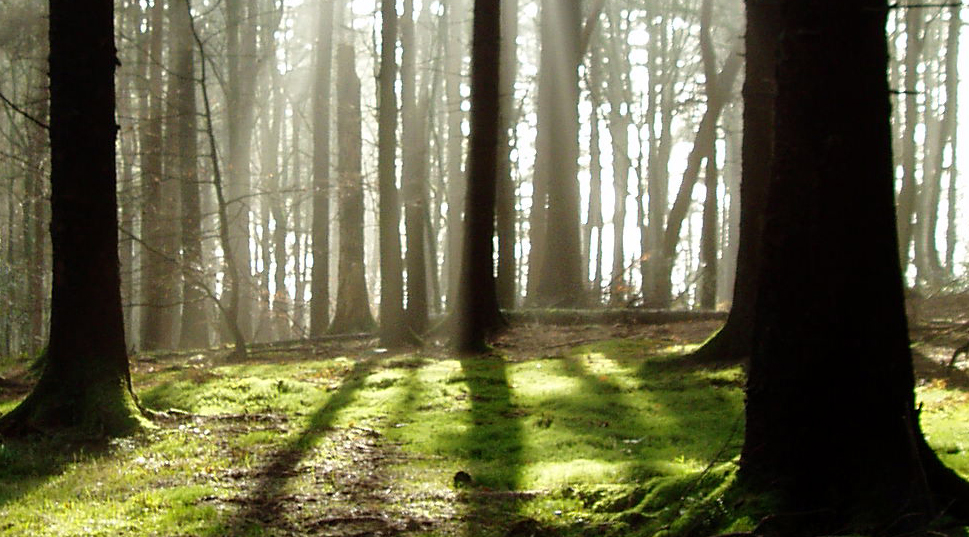

“A word about a word we have chosen to use as little as possible: Sustainability.  Its a legitimate term that calls us not to take more from nature than we can give back. But we do take more than we give, we do harm nature more than we help it. We have no business applying the the word sustainable to business activity until we learn to house, feed, clothe and entertain ourselves – and fuel the effort – without interfering with natures capacity to regenerate itself and support a rich variety of life. We are a long long way from doing business … and no human economic activity is yet sustainable”

How is your corporate sustainability or CSR thinking aligned to nature?

Who inspires and influences your thinking?

Posted using BlogPress from my iPad

Heros and Texts for a future Built Environment based on #CSR

“suddenly the air smells much greener now”

Listening to ‘These Streets’, lyrics by Paolo Nutini summed up the brilliant, inspiring Green Vision conference in Leeds – exploring CSR within the built environment.

A mix of talks, presentations, round table discussions and pecha kuchas from Mel Starrs, Eden Brukman, Tamara Bergkamp, Eddie Murphy, Martin Brown, Faye Jenkins, Claire Walker, Rick Hamilton, Mark Warner, Pedro Pablo Cardoso-Castro, Andy Ainsworth, Paula Widdowson and many others showed that there is real emergence and a future for a Built Environment founded on social responsibility principles.

The air smells much greener …

We heard of excellent progress being made by individuals, projects and organisations on the CSR journey, and how behind these are great influential thinkers, often outside of the sector, many, unsurprisingly, related to the ‘outdoor’ sector.

Many of the speakers were enthusiastic in sharing CSR heros and recommended CSR reading. So here, as a summary, or reading list are those mentioned during the day. I wonder how many of these are on the reading list within design, construction and fm education? (Book titles link to Amazon)

Yvon Chouinard

Rock climber, environmentalist and outdoor industry businessman, noted for his contributions to climbing, climbing equipment and the outdoor gear business. His company @Patagonia is widely acclaimed for its environmental and social focus. According to Fortune magazine, Chouinard is arguably the most successful outdoor industry businessman alive today.

The Responsible Company What we have learnt in the first 40 years at Patagonia by Yvon Chouinard and Vincent Stanley (see my blog)

Let My People Go Surfing Yvon Chouinard – Probably the ‘must read book’ to understand CSR in Business

(On my blog: How can construction learn from Patagonia?)

Ray Anderson

Founder of Interface Inc., one of the world’s largest manufacturers of modular carpet for commercial and residential applications and a leading producer of commercial broadloom and commercial fabrics. He was known in environmental circles for his advanced and progressive stance on industrial ecology and sustainability.

Ray was was posthumously awarded an Outstanding Achievement award at this year’s Guardian Sustainable Business Awards in 2012. (There is a related, must watch, video here: John Elkington describing the work and legacy of Ray Anderson)

Confessions of a Radical Industrialist: Profits, People, Purpose: Doing Business by Respecting the Earth (2009) Later released in paperback as Business Lessons from a Radical Industrialist in 2011.

Paul Hawken

An environmentalist, entrepreneur, and author. Ray Anderson of Interface credited The Ecology of Commerce with his environmental awakening. He described reading it as a “spear in the chest experience”, after which Anderson started crisscrossing the country with a near-evangelical fervor, telling fellow executives about the need to reduce waste and carbon emissions.

Hawken’s book, Natural Capitalism: Creating the Next Industrial Revolution (1999) coauthored with Amory Lovins and Hunter Lovins, popularized the now-standard idea of natural capital and direct accounting for ecosystem services, a theme revisited by Rio +20 and likely to become more mainstream across the built environment.

Janine Benyus

Her 1997 book Biomimicry: Innovation Inspired by Nature defines Biomimry as a “new science that studies nature’s models and then imitates or takes inspiration from these designs and processes to solve human problems”. Benyus suggests looking to Nature as a “Model, Measure, and Mentor” and emphasizes sustainability as an objective of biomimicry. Key thinking in the Living Building Challenge principles, as is

E O Wilson

Edward Osborne Wilson an American biologist, researcher, theorist, naturalist and author. In the mid 80’s developed the concept of Biophilia, the connection between humans and nature, which translates into architecture and the built environment as comfort, well being and productivity through exposure to natural light and natural surrondings or imagry.

Anita Roddick

Dame Anita Roddick, human rights activist and environmental campaigner, best known as the founder of The Body Shop, a cosmetics company producing and retailing beauty products that shaped ethical consumerism The company was one of the first to prohibit the use of ingredients tested on animals and one of the first to promote fair trade with third world countries. Roddick was involved in activism and campaigning for environmental and social issues, including involvement with Greenpeace andThe Big Issue.

John Elkington

John Elkington @volansjohn is a world authority on corporate responsibility and sustainable development. He is currently the Founding Partner & Executive Chairman of Volans, a future-focused business working at the intersection of the sustainability, entrepreneurship and innovation movements

His latest book The Zeronauts, Breaking the Sustainability Barrier describes many of todays inspirational leaders : “Just as our species broke the Sound Barrier during the 1940s and 1950s, a new breed of innovator, entrepreneur, and investor is lining up to break the Sustainability Barrier”

Jorgen Randers

2052: What will the world look like in 2052

Jeff Hollender,

Jeffrey Hollender is an American businessperson, entrepreneur, author, and activist. He was well known for his roles as CEO, co-founder, and later Chief Inspired Protagonist and Executive Chairperson of Seventh Generation Inc., the country’s largest distributor of non-toxic, all-natural cleaning, paper and personal care products. www.jeffhollender.com/

Gary Hirshberg,

Gary Hirshberg is chairman and former president and CEO of Stonyfield Farm, an organic yogurt producer, based in Londonderry, New Hampshire. Now part of the Danone group.

Published in January 2008, Stirring It Up: How to Make Money and Save the World is a book about socially minded business that calls on individuals to realize their power to make a difference in the marketplace, while doing business in ways that adhere to a multiple bottom line – one that takes into consideration not only finance, but the environment and health as well.

Jeffrey Swartz,

Jeffrey Swartz is the former president and CEO of The Timberland Company an organization that believes that doing well and doing good are inextricably linked. Timberland’s commitment is to reducing global warming and preserving the outdoor environment.

David and Claire Hieatt,

Founders of Howies a clothing company based in Cardigan Bay, Wales produces eco-friendly T-shirts, jeans and sportswear, and aims to have ethically correct practices. Howies use natural fabrics as alternatives to petrochemical-derived modern fabrics. Examples include organic cotton, Merino wool and recycled cotton. Howies T-shirts often have images or slogans with political or environmental themes

Dee Hock

Dee Ward Hock is the founder and former CEO of VISA , described systems that are both chaotic and ordered, and used for the first time the term “chard” and chaordic,combining the words chaos and order.

More?

Over to you –

Follow the discussion on twitter with the #GVis2012 hashtag.

Who are your CSR Heros and CSR Texts to add to this Built Environment inspirers list?

What additions or comments would you make to the entries above?

A full record (video, blog, tweets, presentations, storify) of the Building CSR Event is being curated on the be2camp event page here.

‘Green Deal Conduit’ for SMEs

The interesting and innovation Green Deal Conduit approach from Parity Projects, giving better involvement with and access to Green Deal for SME’s  is gathering pace, as the recent press release from Parity Projects indicates.

New Organisation Announced – ‘Green Deal Conduit’ for Smaller Construction Practioners to put SMEs in charge of their own destiny

The final touches are being made to the business plan for a new organisation that will allow smaller organisations to take a significant slice of the Green Deal (GD) work on their own terms. It will stem the threat to their existing workload that is presented by the larger organisations that are, at this time, the only organisation linked to the Green Deal and enable those involved in the assessment and refurbishment of buildings to be in charge of their own destiny.
The ‘Green Deal Conduit’ is the current working name for a new organisation that will build a large network of small and medium sized organisations involved in the assessment and refurbishment of buildings across the UK and the aim is for it to be owned by its members. Backing this initiative is a wide range of professional institutions and trade associations working hard to ensure their members have control over the delivery of their products, not just ending up as the tail end of the supply chain.

Read the full press release here

Keep informed by following @ParityProjects on twitter

More information on the Green Deal Conduit here