Category Archives: comment

Signage – Why I became dis-enchanted with facilities management

Why I became dis-enchanted with facilities management a decade ago was brought back to me this morning. On the doors to the public toilets at Kendal Hospital was a sign, in bold on a yellow background, warning users that ‘air fresheners used in these toilets may cause discomfort to asthma sufferers’ ( I didn’t have a camera or phone with me at the time unfortunately)

So why continue to use? Even more so why continue to use in a hospital? So where do sufferers go?

I used to joke that a facilities management gut response was to put up a sign, I recall a presentation of mine way back, in 2004, titled “FM- Now Wash Your Hands” (Must find it!)

Surely if there is any hint that a material or product is harmful or cause discomfort,  it should not be used it, full stop – ie the precautionary principle, core to for example the Living Building Challenge Materials red list.

The world of corporate social responsibility is moving on from do no harm, to positively do more good to improve health. Wouldn’t it be great it that sign read  ‘air fresheners used in these toilets will enhance your health’. Instead the FM team know it may irritate asthma suffers, so do nothing, other than put up a sign and wash hands of responsibility?

Embedding BIM into the fabric of sustainability.

calgary treesBIM has a far deeper application than just a design modelling, construction or facilities management tool. This fact has been highlighted recently through a number of events and conversations, for example;
A couple of weeks back, I interviewed Denis Hayes as part of our Sustainability Leadership Conversation (#sustldrconv) series. Denis was founder of earth day way back in 1974, and is now CEO of the Bullitt Centre in Seattle, obviously no newcomer to environmental issues or deep green sustainability, but I was interested in Denis’ views on the role of BIM and ‘Big Data’ in todays sustainability agenda. here is an extract from a soon to be published article based on that interview

MB Denis, how do you see the role of BIM and Big Data in deep green sustainability?

DH Analysis of big data is key, living buildings need cerebral cortex and Central Nervous System to function, big data helps see patterns, offers vast potential, but right now there is too much noise and not enough signal and analysis.   

Also in May, during the Construction21 Virtual Expo, I was inspired by the conversation with Delta Development CEO Coert Zachariasse. Delta have applied Cradle to Cradle thinking to their business and projects, For example, they don’t own the materials in their buildings in the traditional sense, but view buildings as material banks, with every building having a residual value at the end of its life through the value of its materials. (A value that is recognised, included on the budget sheet and reduces the project costs, the alternative, more common thinking is that demolition and waste adds costs to the project)

Whilst this is inspiring, the fact that BIM provides the engine behind this approach is very interesting – using BIM to track and maximise residual value, providing the data to create material passports and undertake the value decisions.

As I tweeted from that conversation:

“BIM meets #CradletoCradle – Delta Development use #BIM to develop Material Passports thru supply chain,  Coert Zachariasse CEO at #EXPOC21”

Later in the day at EXPOC21, during the panel debate on the need for a European Building Performance Directive, Frank Hovorka – President- Sustainable Building Alliance commented that BIM is the essential core for any Building Performance Directive

But of course built environment sustainability is ‘just’ not about energy or building performance, it is also, or more so about health and social dimensions as well. The data needed to make informed decisions for sustainability needs to encompass stories, context and knowledge. However with knowledge reduced to a status of information in todays digital universe, we need the skills to unpack information from BIM and Big data

Embedding BIM data into the fabric of sustainability is key, and to borrow the brilliant expression from Casey Rutland and Vicky Lockhart at ARUP – its all about SustainaBIMity.

Regarding BIM through this lens, we in the built environment need to move quickly, to clean the data we have from noise, provide better analysis, and make informed regenerative sustainable decisions. In an age of disrupt or be disrupted – if we don’t do so from within the sector, someone from outside will.

Living Building Challenge 3.0 Released

International Living Future Institute refines and upgrades the building certification program to raise the bar even higher for restorative design. 

PORTLAND, Ore. — May 22, 2014 —The International Living Future Institute™ today
released the next iteration of the Living Building Challenge.

Widely considered the built environment’s most rigorous performance standard,
Living Building Challenge, the 3.0 version represents an important step forward in the
program’s evolution, with several new innovative elements as well as important
refinements.

“These changes reflect the many discussions and compelling feedback provided by
Living Building Challenge project teams pursuing certification,” says Amanda
Sturgeon, the International Living Future Institute’s Vice President in charge of the
Living Building Challenge. “We believe the 3.0 version of the program helps advance
our goal to rapidly diminish the gap between current limits and the end-game positive
solutions we seek in the built environment and beyond.”

On initial reading, I am (perhaps not surprisingly) impressed with the more headline improvements, reinforcing that there is more to built environment sustainability than just the building.

  • The Site Petal renamed the Place Petal, reflecting deeply held belief in viewing each project location as a place with unique and important  characteristics.
  • A more clearly defined Equity Petal, which integrates with JUST™. This is encouraging, not only reflecting the current interest in Equity issues as a key component of sustainability, but embedding within the standard.
  • The Car Free Living imperative becomes Human Powered Living, including “Advocacy in the community to facilitate the uptake of human powered transportation”
  • Water and Energy is simplified, for water ‘net zero water’ redefining water as a precious resource’ and for energy ‘net zero energy’. One hundred and five percent of the project’s energy needs must be supplied by on-site renewable energy on a net annual basis, without the use of on-site combustion. Profoundly simple, profoundly challenging.
  • Happiness is added to the Health imperative, this is a great move, taking the sector responsibility beyond just healthy buildings. A built environment salutogenesis – focus on what makes people happy and healthy – rather than the causes of ill health or sick building syndrome.
  • Appropriate Sourcing strengthened to Living Economy Sourcing in respect of location for materials and services.
  • I am not so sure about renaming of Conservation and Reuse as Net Zero Waste.  A strength of the 2.0 imperative was that is was not called Waste, moving the focus upstream to deal with causes of waste.  The strengthening of circular economy, cradle to cradle thinking is to be to welcomed with the requirement to find ways to integrate waste back into either an industrial loop or natural nutrient loop.
  • Imperative 18 is a big focus on the JUST programme, requiring at least one  project team members must have a JUST Label for their organisation. But why is the contractor not one of those required to do so is surprising. It is more likely that the contractor will have the least just practices, thinking for example of diversity within construction organisations and unacceptable labour practices on football stadium in Qatar. An opportunity missed?
  • Another opportunity missed may be in the education imperative. One of the most powerful means of communicating and sharing sustainability lessons and advances is through social media. It’s great that every project should have an educational website, but also real-time sharing through blogs and (eg) twitter could be a very powerful advocacy platform.

More observations and insights to follow, but once again the Living Building Challenge raises the bar, but there is more to come …

In response to the growing need for sustainability solutions that move across industries and scales and better address the social and environmental crises humanity now faces, the International Living Future Institute™ has created the Living Future Challenge ™.

Based on the elegant and profound architecture of the Living Building Challenge, utilising nature as the ultimate end-game metric for success, the Living Future Challenge will extend to all aspects of society as various programs are launched over the next few years: Living Buildings, Living Communities, Living Products, Living Food, Living Enterprises, Living Lifestyles. 

Living Building Challenge 3.0 can be found here.

Further Reading and Blogs

Living Future “unConference” Sets New Model of Shared Resources by @PaladinoandCo

What You Need to Know About the Living Building Challenge 3.0 by @KatieWeeks

Sustainability made Cool? Day one at #EXPOC21

Well, day one of the Virtual Green Build EXPO was fun – and a success.  From chats within the show, comments across twitter and elsewhere the comments from visitors have been very positive indeed.

BnmBaoYIAAEl1RDAnd importantly I sensed green build and sustainable construction had been made cool.

The EXPO hosted by Construction21 on the HyperFair platform has attracted just under 200 exhibitors from all corners of Europe and hopes to attract up to 20,000 visits to the show. Steve Borncamp, driving force behind the show commented  “it was exciting to see people interact in this new medium from so many countries & consBnltphoIEAAvTn2truction disciplines”

As soon as the doors opened at 7.30 this morning, visitors were taking snaps of their avatars and booths and sharing on twitter, claiming firsts and the virtual-selfie was born. (There is a photo comp with prizes being coordinated by our friends at Green Vision)

Observing the avatar arrivals to the EXPO,  there was a period where they customised appearance, read any notices and instruction notes and then zipped off into the Reception area, or vanished, teleporting to the stands or auditorium.

Visiting the stands was actually easier and more enjoyable than a real show, being able to chat and pick up brochures, watch videos and read posters with ease. I had numerous business card exchanges and agreements to get in touch after the show to discuss possible collaboration on Living Building Challenge, sustainability, green schools and social media, including a future discussion to be had on possible funding. I would have considered it a very good day at any real life show.

BnloKNQIMAIxn7oAside from the stands there was a brilliant programme of debates and expert videos running throughout the day. I watched a couple, impressed with the “Time for a sustainable buildings performance directive?” panel debate and learnt from  Coert Zachariasse CEO at Delta Developments who combined Cradle to Cradle with BIM and commented that “Buildings are just material banks” Brilliant Stuff!  WorldGBCEurope who coordinated the panel debate series observed We had some great debates as part of the first day. Speakers from industry, policy-makers and NGOs. Now looking forward to day two”

During the day I held a few in-show twitter chats which illustrated the enthusiasm of those attending This kind of event is definitely the future! Exhibitions are tiring & have not questioned their concept for ages” commented Philippa Rogers at InterfaceUK, adding ” I’ve immediately adopted this virtual concept as I have to admit I’m not a big fan of traditional exhibitions”

And that experience was shared by others as Elrond Burrell explains Attending the virtual expo was a novel experience. I visited virtual stands, browsed exhibitors brochures & exchanged virtual business cards & chatted with other attendees via the web interface. It’s a bit clunky to navigate but also kind of fun. I quickly resorted to teleporting rather than virtually walking around though! I think it is an interesting step to have a virtual expo but is still aiming to be a virtual representation of a real expo, rather than completely embracing web tech and rethinking what an expo actually is, if it takes place virtually”

And the show has a nice innovative sustainability touch beyond the virtual – Steve Borncamp again we want our virtual event to have a physical legacy in the form of a building project that will offset the c02 of this event and inspire a much higher level of ambition for our buildings and communities in Europe and for the world” (exhibitors have been able to offset the carbons they would have emitted in travelling to real shows).

Day Two opens at 7:30am UK time with sign up and log in here. And who knows, could  a post event virtual tweet up be on the cards?


When a wall is looking this good you’ve got to love it!

Amidst grand sustainability strategies, the upcoming virtual green build expo and the recent corporate green build events, its sometimes easy to overlook the core basics of good green sustainable construction. I was reminded of this just this week by the nice people at Greenstone in Todmodoren, with an email and invite for their straw bale and cob building and courses this summer.

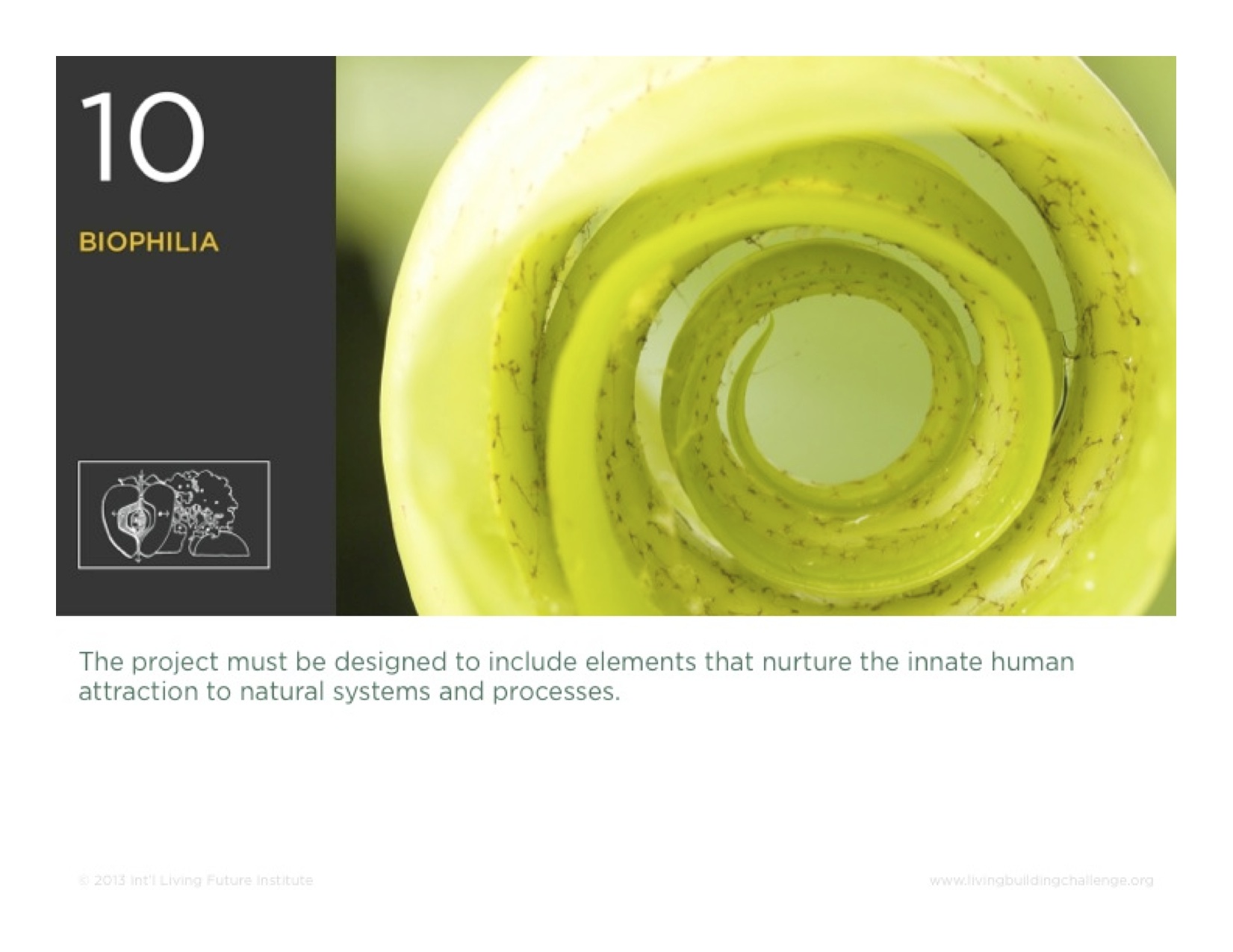
When introducing Living Building Challenge (as I did this week at the Lancs Construction Best Practice Clubs Earthday event and at GreenBuild EXPO) I love introducing concepts of biophilia to people, as often it’s new, an area not on most construction people’s sustainability radar at the moment. It’s a point in the presentations where people always come alive, ask questions and jot down the references to E.O.Wilson or Last Child in the Woods.

However, in addition to biophilic aspects in design that create better, healthier buildings to live or work in, and indeed in addition to applying biophilic considerations for temporary site accommodation, we need to understand better and promote biophilia in construction, working with natural materials that not only have no health hazards, possibly have health benefits, give real joy and satisfaction in construction as well as all the good local and community benefits.


Greenstone are running a series of self-contained green building courses, led by the wonderful Emma Appleton, with a focus on Straw Bale and Cob Building as part of building a new straw bale classroom at a local school in Todmorden. Courses are running in July and August, for more information contact info@greenstone-design.co.uk or check out the twitter accounts for GreenStone and Emma

Now I need to find the space in my diary and try to get to one of these courses!

Co-collaboration

So what is co-collaboration?images (1)

In a recent publication, Towards New Innovative Collaborations, on recent blog posts, and I dare say in workshops and presentations,  I have used the term co-collaboration. It’s a clumsy term I know, one I have been taken to task on and one that needs clarification, but in my mind, describes the emerging collaboration brought about by increased used of social media and networks

It is now widely excepted that collaboration on a project is a key success factor, its no longer a nice to have skill, but a capability must have.  Its more often than not a high scoring topic in bids and PQQ’s.  (But, incidentally, poorly measured and monitored throughout the project, unless that is things go wrong and relationships revert to un-collaborative type)

Learning and sharing within a collaborative team is an essential, but our industry is moving towards the point where this is not enough. There is a growing expectation to share experiences, share lessons learnt, often within the context of ‘stories’, beyond the project team, beyond company barriers, for the good of the not only our built environment sector but also our clients sector. And it is in this exciting area where I find myself working more and more.

Communities of practice are growing, freely sharing and co-creating  to advance understanding and development. For example in the BIM arena with UKBIMCrew, in social media with BE2Camp, the networks associated to twitter tweetchats on CSR (#CSRChat) the Bathroom and Kitchens tribe (#kbtribechat) and our own sustainability leadership conversations (#sustldrconv) and many other social / un-conference groups

As individuals, we are increasingly are contributing to and sharing more on industry wikis such as designing buildings wiki and through industry, organisation and company blogs.

And it is this emergence I refer to as co-collaboration, a mashup or co-creating + collaborating

“We must harness the collective power of unconventional partnerships to dramatically redefine the way we thrive in the future” Hannah Jones, Nike

Yet recognition of the importance of this co-collaboration is slow, with leaders seemingly reluctant to move from keeping best practice in house or wrapped as PR when communicated. It may well be a future success factor for leading organisations  who embrace the ‘value of what we know is in sharing it” ethos.

Related:

Collaboration makes construction lean  In this excellent article by Karen Wilhelm which mashes up collaborative working, lean, BIM, 3D and 4D design, collaborative contracts, value chains ….

Sustainable futures require collective power of unconventional partnerships Early today I came across this excellent quote* from Hannah Jones, Nike’s global head of sustainability and innovation …

Towards New Innovative Collaborations  November 1 2013 Our recent publication “Towards New Innovative Collaborations” exploring PPP Public Private Partnerships and Collaborative Working within a changing built environment is now available through Amazon …

Team Building in the Age of BIM May 1, 2014 http://www.architectmagazine.com/ Building Information Modeling (BIM) by itself does not cultivate meaningful engagement. Collaboration skills and processes are essential, and they transcend technology and tools. I would underscore the point that it is the less tangible elements of collaboration—a nuanced and subtle skill set—that provide the magic that transforms the most challenging projects into great works of architecture.


Be2Camp at Green Build Expo

Social Media meets Sustainability – From Mindfulness to Oculus Rift 

logoBe2camp returns to Green Build Expo in Manchester this May – this time on the main arena stage with probably the best yet line up of social media meets sustainability shorts. Below is our exciting agenda for the afternoon, but as with all things be2camp a degree of flexibility and ‘unconference’ is to be expected!

Join us from 13.30 on the 7th May and be sure to Register with Green Build Expo here

gbe13.30 Welcome, Introduction and Be2Camp Sustainability Manifesto. Martin Brown, Fairsnape @fairsnape

13.40 Your brain as your best renewable building material. Anne Parker @BrainyToolBox

13.50 Social Sharing in a Circular Economy Alex Whitcroft, &Share @alexwhitcroft

5 Min Break

14.05 Sustainability Event sharing across social media, Claire Bowles, Green Vision @lsigreenvision

14:15 Construction Carbons Vassos Chrysostomou, ConstructCO2 @constructco2

14:25 Social Studio, Collaborative Learning for Sustainable Futures, Jenni Barrett UCLAN @cloud_meme

14.35 Scissors, Tweets, Stone: social media the new paper? Claire Thirlwall, Thirwall Associates @thirlwallassoc

5 min Break

14:50 A census of sensors – Internet of things, Mike King Innovys

15:00 Immersive Environments – The Social Building Model, David Burden, DADEN @davidburden

15:10 Immersive BIM – Through the Looking Glass, Vin Sumner Clicks & Links @vinsumner

15:20 BE2 and the Be2Awards 2014 Martin Brown, Be2Camp @be2camp

You can follow and engage with us during the session on twitter using the #be2campgbe hashtag. And as usual a live stream feed live on the be2camp pages.

Other, related,  Green Build Expo sessions of note on the 7th May

10.45 I will be Introducing the Living Building Challenge with Claire Bowles at Green Vision in the Yellow Seminar.

13.00 Claire is in the Blue Seminar Room talking Healthy Buildings with Skanska.

Its going to be a great day, so do join us.

13

Why EXPOC21 is a vital event for the built environment

Time was, to uncover the latest thinking and developments in the world of sustainability meant a lot of travel and time investment. I recall, whilst developing and driving the Mowlem Sustainability Strategy for Prime Contracting at the end of the 90’s, having to trundle to conferences in London, or to Defence Estates in the Midlands, spending a whole day in conference mode, only to pick up a few nuggets of intelligence or inspiration.

Today we can pick up most intelligence via the web and social media. We use webinars and online events to share. Physical events such as Eco Build, now wrapped in social media and web applications, certainly have their place. But mainstream trade fairs haven’t as yet really embraced the potential of the online world, by going completely virtual.

One organisation driving the emerging virtual expo space is HyperFair – and it is their technology, that allows visitors to attend exhibition as an avatar, that the forthcoming Construction21 virtual trade fair will be using.

Construction21EXPO.eu EUROPE - logo

Over two days, 14th and 15th May, EXPOC21, will enable you to visit a number of greenbuild product stands, talk to leading sustainability organisations on their stands, be inspired and talk with a number of leading greenbuild  thoughtleaders, engage in panel debates and network with construction and sustainability professionals across Europe and Globally.  All with a vastly reduce commitment on your time, and on your carbon emission, without leaving the office or your kitchen table!

And, I think there is another important reason visiting EXPOC21 – to experience and interact with others within a virtual environment.  One of the great drivers for todays industry is BIM, information management and modelling, and the associated emergence with 3D environments.

60199455601729109971916966764nfEngaging with others in virtual environments, discussing proposed designs with clients and contractors and end users, whilst moving through the design itself, will become an established aspect of our industry – and a key skill to hone now. Those who have experience of Second Life, Minecraft or even Sims will feel at home, but for others, this is an experience not to be missed, and attendance as a delegate is free.
See you there!

Links for the show:

To register go here

Check out the Thought Leader Presentation series

Green Build Panel Debate hosted by World GBC Europe, covering topics such as Economics of Green Building projects, Scaling up for Retofit, Green Responsibilities and Sustainability performance Directives

Follow the show via Twitter #EXPOC21 #EXPOC21chat and @C21EXPO_EUROPE

Tweetchats and Twitterviews held leading up to the show, with more in show interviews to come.

Construction21EXPO Background and Team (pdf)


Disclosure: I have been supporting and advising the Construction21 team on social media and related sustainability aspects.

Responsible BIM

We are hearing more and more of ‘Responsible Business‘ approaches, generally taken to mean a combination of sustainability and CSR. But what happens when this emergent thinking in Construction meets BIM? Responsible BIM?

Below is the transcript or notes behind my pecha kucha presentation, exploring Responsible BIM, made to the excellent ThinkBIM event on 2 April in Leeds, .

I wanted to inject a balance of current ‘soft issues’ thinking against a prevalent hard technology thinking. I have no  issues with the passion behind the BIM approaches, I am constantly impressed and think it amazing, but sometimes feel BIM technology and language is a runaway train. Unfortunately just about every BIM event I attend I hear at the outset, BIM is about the people not the technology, with the rest of the event focuses on the application of the technology, with very little soft skill content. When was the last time we saw a BIM event focus solely on collaboration without mentioning software? Having said that, its is the balance of views at ThinkBIM events is what sets it apart from other BIM events.

The title ‘Flatland to Wonderland’ comes from a brilliant article and the work of Petra Kuenkel, who we interviewed as part of our Sustainability Leadership Conversation (#sustldrconv) twitter series recently. In short, we need both the flatlands of reality along with the possibilities of the wonderland for a sustainable future

Flatland

3D modelling, and offsite component manufacture with simple on site assembly isn’t new, as illustrated in the Building article that covered the BAA Project Genesis project in 1997. Pre Egan and pre Building Down Barriers we were doing BIM, so why didn’t it take off as the Egan Report did?  (Egan was at BAA and also involved in Project Genesis).  Somehow we lost the 3D collaborative conversation, maybe the Egan agenda itself ,with a focus on KPI’s and customer satisfaction masked some of the brilliant emerging work of that time?

One of the BIM wake up calls for contractors I work with recently has been the inclusion of BIM questions within PQQ’s in particular the PAS 91 BIM options – and the need for bidding contractors to have a BIM Strategy, signed as commitment from the CEO, detailing milestones, training and development, information management and more. “Lets write one quick”

And on the issue of information management – lets start to align to ISO 9000  documentation control requirements. How many BIM users (real and say-they-do’s) have embedded their BIM information and data communication processes into their Quality Systems. I am currently helping a good number of organisations revisit their management systems and inject current information management thinking. Particular so on how and what information is shared with supply chain members. Doing so enables us to audit, and improve information management using the Plan Do Check Act approach

But, yes, we have BIMwash. BIM language is not that difficult to learn, the technology is not that difficult to purchase, and hey presto we are BIM compliant. Not surprising then that contractors sit and wait for a client to insist or require BIM on a project before applying BIM thinking. As a BIM community we need to change the conversation away from BIM being just a design tool or client requirement to a continuous improvement tool with many many benefits.

And on to the wonderland …

If we really want to co-create a sustainable built environment, and isn’t that what BIM is all about?, then we need to have both the harsh reality of the flatlands with the spirituality of the wonderland. This resonates with Lucy Marcus Be2Camp BE2Talks back in 2011 where she described the need for leaders to be both Grounded and Stargazers.

I am impressed with the Collective Leadership approach and model (developed by the Collective Leadership Institute), and the necessity to move beyond collaboration. (How many times have I heard or read a contractor claiming to be collaborative simply because they have a supplier progress meeting once a week)  The Collective Leadership Model provides the scope of elements leadership and collaboration could, should, look like in a modern construction environment. Covering both technicality and people issues of diversity, and mindfulness

Ah mindfulness …

Currently we seem to be struggling with two drivers, on one hand the sustainability agenda of being simple, of realigning with nature. biophilic approaches and natural renewable solutions and on the other the ever increasing complexity of data, be it BIM data or big data and technology.

It is not surprising that one of the most sought after advisors to silicon valley is a Vietnamese Buddhist monk, Thich Nhat Hanh, (Thay), seen by many as the the modern guru for mindfulness.  Such practices are seen to be key for business, enabling focus on real innovation, free from clutter of distractions. We will see much more of this in the construction sector I am sure, as we learn to balance people with technology, simplicity with data, well being with efficiency.

US BIM write Randy Deutsch approaches this thinking in a recent blog article for Design Intelligence Beyond BIM Boundaries – “in order to master BIM, we have to do less BIM, we have to do other things” And if we focus on better communications, people skills, listening, empathy and understanding, then BIM will flourish without effort.

Perhaps BIM is now is seen by many as a big hammer, an approach that if not adopted then we are not doing construction correctly, “if the only tool we have is a hammer then every problem is a nail”  BIM practitioners and advocates need more tools in their conversation and offerings covering both technology and soft skills. As Randy commented ‘ go against common wisdom and fortify your soft skills”

We had a brilliant twitter based conversation with Casey Rutland as part of the #EXPOC21 series this week where the conversation led to whether BIM will simplify or complicate sustainability. Many people re-tweeted the question, but with few answers offered, other than when done correctly, BIM will enhance sustainability, done incorrectly it will harm sustainability. Incorrectly here can mean overloading buildings with technology solutions when natural solutions would work (but harder to model perhaps) or by not taken cognisance of where materials are coming from or their health impacts. Casey introduced the concept of SustainaBIMity – the mash up of sustainability thinking with building information management. A far better description than Green BIM

Aligning BIM thinking to progressive sustainability thinking such as the Living Building Challenge is exciting and has huge potential. In the near future we will see BIM objects cover the attributes of health data, justice in production data, carbon and travel data. (Note the dialogue in the US between Autodesk and the Healthy Products Declaration database for example)

And we know that carbon, embodied and transportation will become a key BIM data element, procuring kitchen pods from China for modular construction on the other side of the globe may be a data and cost solution but it is not a restorative sustainability solution. (cf Modular Construction on Souremap)

In our pursuit of designing and creating buildings that work for people, planet and purpose, we perhaps need to address both the higher Maslow needs as well as focusing on basic shelter needs, and in some way build them into data and modelling,  Biophilia at last is opening up a whole new chapter for design, and BIM, and well for the built environment as a whole. In the UK the term Sick Building Syndrome has dropped out of use, but we need to be aware of the dangers of creating buildings through BIM that don’t model or promote health and well being.

There are examples of this, for example by early involvement mind and health charity experts to view and comment on proposed buildings in a 3D environment, advising on the potential enhancement or damage to end user well being. And only yesterday,(01/04/14)  Rick Fedrizzi, President of USGBC writing in EDC called Health the next frontier of green build performance, and more recently calling on the built environment to use medical data for improved building solutions.

My final slide proposed that every BIM project should have an educational element, to inform and motivate the industry and that this should be embedded into PAS1192 or equivalent documentation. No project or organisation should be allowed to claim BIM compliance unless they openly share their approaches and lessons learnt, covering both the flatland BIM and the wonderful healthy buildings that enable people and organisations to flourish.


Greening the construction site cabin environment for health and wellbeing

Cutting my teeth on construction sites as a green horn QS back in the 70’s was an introduction to the frozen feet, sweating head, un-insulated site cabins, with their austere, bleak and unwelcoming work environment.

Fast forward and today, yes we have insulated cabins with PIR sensors, and occasionally you come across plants in the site cabin, windows providing decent daylight or sparks of innovation, like the free fresh fruit for site personal provided daily, but generally the internal working environment hasn’t changed much since the 70;s. Even co-location spaces on large projects are often tucked away in the bowels of a building with no daylight.  We tend to think of these offices as temporary, but temporary can be anything up to a few years, and many site personnel spend careers in temporary, accommodation

In a word, grey, not green.

Encouraging then to read  Australia’s first green construction site, a partnership with 202020 Vision, a programme seeking to increase urban green space, and bringing the greening concept into the site office.

“Incorporating green space into our site offices is part of our broader plan to create high performance workspaces. International research shows developing green space within office environments not only significantly boosts the health and wellbeing of staff, but also increases productivity,” says Lauren Haas, Brookfield’s Australian sustainability manager, and 202020 Vision advocate.

“Through introducing a Plant Plan, we envisage seeing the same or better improvements in our own staff that is integral to delivering high performance buildings for our clients as well as being an employer of choice.”

The 202020Vision programme is also conducting pre and post occupancy tests on the site team to see if their ‘green environment’ improves health and wellbeing.

We know from (eg the latest World Green Building Council’s Business Case for Green Building report) that biophilia, greenery, views to nature through windows, can improve worker well-being by reducing stress levels, less frustration, increased patience and improved overall satisfaction. The Living Building Challenge, Health Imperative, founded on biophilia principles requires daylight to all working spaces … And all this should apply to construction offices not just the buildings we design and construct.

Hopefully as contractors develop in line with Sustainability, CSR and HR best practice we will see more attention to biophilic thinking, creating green healthy inspiring places to work, enabling construction of green buildings. And, coupled with the rise in interest of mindfulness thinking for site staff, are we heading into a new era of contracting?

lbc biophillia

Healthy building concepts should apply to construction site offices as well as buildings we construct.


Related:

Biometrics and Biophilia – the new sustainable construction?

Have we picked the low hanging fruit of Sustainable Construction?