Tag Archives: biophilia

2016 Built Environment Challenges

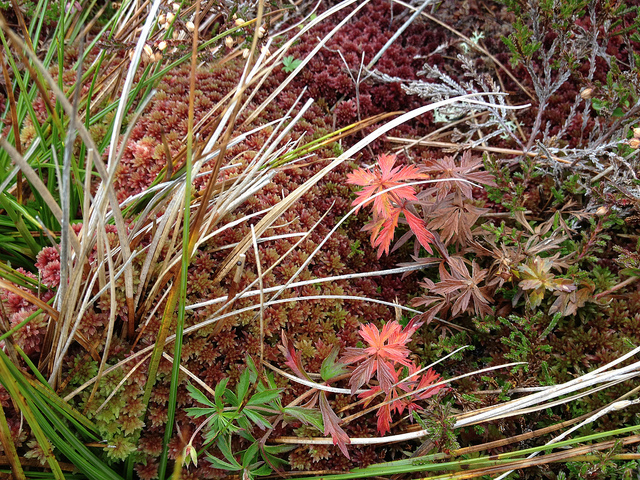
KONICA MINOLTA DIGITAL CAMERA

One: 2016 is the year Building Information Management in the UK becomes mandated for public sector projects. Our ongoing challenge is increasing the scope and application, across all the built environment sectors and organisations, moving us towards a digital and data driven industry.

Two: The 2015 Paris Agreement sets ambitious intent to cap global warming to 1.5deg C. Current built environment sustainability strategies and approaches are based around a 2deg cap, with targets too low or too slow. Our challenge is to enable the built environment to play it part, for which we will need all the restorative sustainability tools we have at our disposal. We need to flip our 40% negative impact, but can no longer seek to be near zero or net positive but need to push towards being demonstrably ‘very positive’.

ThreeHealth is the new GreenBuild. We have seen a big increase in health and wellbeing awareness with biophilia now firmly within the sector’s lexicon. Our challenge is to ensure health and wellbeing is a key driver in design, in materials, in the construction process and within building operations.

Four: our biggest opportunity is to now create the conditions that allow for leadership in integrated and collaborative thinking, combining the innovative approaches and development from the BIM, Restorative Sustainability and Healthy Buildings agendas.

FR_Visuals_FINAL


These challenges are explored in depth in forthcoming RIBA Book:
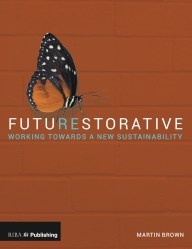
FutuREstorative

It is time to move on from theTriple Bottom Line …

It is time to move on from theTriple Bottom Line …

We have become very familiar with the Triple Bottom Line approach for Sustainability and Corporate Social Responsibility, ie Environment, Society and Economic. It forms the basis of many environmental and sustainability visions, policy statements, and development initiatives.

In the business arena, this is the acknowledged responsible ‘bottom line’ of meeting economic goals (usually profit) whilst also meeting environmental (impact) and social (community) goals in carrying out business activities. The triple bottom line approach provides a practical framework for the development of policies and strategies to drive institutional change.

roots coyo triple bottom line

Triple Bottom Line as drawn by COYO students

And of course we are now familiar with the well used triple bottom line venn diagram. If like me you loved Venn Diagrams at school, then its a real pleasure to see such vital and complex issues such s sustainability expressed as three interwoven circles. The Triple Bottom Line has also been represented as a three legged stool or as three columns.

As mentioned previously on this blog, this triple bottom line thinking can be traced back to Patrick Geddes who, now recognised as the Grandfather of Town and Country Planning coined the triptych Place, Folk and Work. Its current concept however is credited to John Elkington in his 1998 book Cannibals with Forks:Triple Bottom Line of 21st Century Business.

Whilst we can easily identify Geddes’ Place as being the Environment circle, (note, interestingly the Living Building Challenge renamed its Site Petal as Place for version 3), the Work aspect is readily identified as the Economy circle, there is an uneasy fit with people or folk within the Society circle. Are staff part of society, and where do the governance arrangements of a business (including vital for sustainability ISO 9001 related quality and organisational arrangements / controls) fit into the sustainability three circles?

Quad Bottom Line

Quadruple Bottom Line introduces Governance as the fourth ‘Petal’

The Quadruple Bottom Line introduces Governance as the fourth bottom line, or perhaps better, as Culture

Governance, or Culture is defined here as including both the formal business, administrative and ‘control’ processes of an organisation, as well as the informal networks, traditions and cultural and behavioural norms which act as enablers or disablers of sustainable development.

Sustainability governance therefore could include those organisational items that are increasingly seen as the vital enablers for sustainable development – many of which are embedded within the modern sustainability building programmes such as the Living Building Challenge, JUST, or Well Building Standard, including:
Diversity
Equity
Fairpay
Education
Collaborative Working
Working Places
Biophilia
Health and Wellbeing
Happiness
Communications and social media

This new, fourth leaf on the sustainability venn diagram, raises both important questions and huge opportunities for advancing sustainability development, and could usher in a new generation of sustainability thinking.

For example, what are the ‘governance’ issues of construction site facilities, welfare and administration that enable sustainable construction … more

Extract from forthcoming FutuREstotative

Wildwood, A Journey Through Trees

Roger Deakin’s article in this weeks Guardian Review starts off with one of the best illustrations of biophilia and connection with nature I have read in a while …

I wonder if the swallows that nest in the chimney of my Suffolk farmhouse have the faintest idea how profoundly they affect my emotions. When they first arrive from the south in spring, and I hear the thrumming of their wingbeats amplified to a boom by the hollow brickwork, my heart leaps. They seem to bless the house with the spirit of the south; the promise of summer. Swallows have such a strong homing instinct that it is quite possible this same family of birds, by now an ancient dynasty, has been returning here to nest for the 450 summers since the chimney was built.

When the household swallows fly away to Africa, I get restless. I suppose I envy them. I certainly miss standing by the fireplace at night, eavesdropping on their dormitory conversations in the mud nests above. Swallows never fail to stir the nomad in me, too.

Do read the rest of the article Follow the swallows: Roger Deakin’s days hitchhiking to the sun, it is a great read, a rights of passage of schoolboy french, heading south, hitchhiking delights of the 2CV or Citroen DS, the goddess of the French road. It rekindles in me my my own memories of hitch hiking down through France, sleeping on Corsican beaches, grape picking and climbing around the Mediterranean.

1344371Roger Deakin is one of our great nature writers (and ‘an icon’ of the environmentalist movement) and I would certainly recommend Wildwood, A Journey through Trees, not least for the description of a living building – his home at Walnut Tree Farm, … “evolved rather than designed … riding the earths constant movement … The proportions of each room and of the house as a whole were predicated on the natural proportions of the trees available”

RegenerativeBIM … moving the GreenBIM debate

green bimBuilding Information Management offers huge benefits to Sustainability and to GreenBuild, but needs to move from GreenBIM to RestorativeBIM

Bringing together the two most important themes of todays built environment, Sustainability and BIM, the ThinkBIM and Green Vision programmes at Leeds Beckett are setting the agenda for GreenBIM.

However we need to guard against GreenBIM falling into a trap of being Sustainability and BIM as usual, but to move GreenBIM into the visionary, Regenerative Sustainability arena, as adopted by Green Vision through their association with the Living Building Challenge.

Rethinking BIM for the Ecological Age

It does seems a waste that all the creative and innovative thinking and energy being put into BIM should only incrementally improve built environment sustainability, and that we will be a little less bad next year, a bit more less bad by 2018

Aligning the innovation of BIM and the forward thinking of Regenerative Sustainability provides an immense opportunity that could and should powerfully push the overall built environment agenda forward. And, through the intelligence of a RegenerativeBIM, ensure that each element, not just the building, contributes in a net-positive manner, doing more good, not just doing incrementally less bad.

Where GreenBIM is today and where Green BIM needs to be, RegenerativeBIM.

Where GreenBIM is today and where Green BIM needs to be, RegenerativeBIM.

Imagine then if every building, indeed every ‘facility’ was designed, constructed and operated through a RegenerativeBIM, that;

> is designed and constructed specifically in relation to its ‘place’, positively impacting and benefiting its immediate environment.

> becomes a provider of water, cleaning all that falls on the building and providing clean water to adjacent facilities.

> generates more energy than required and contributes the net positive difference to nearby homes, community buildings.

> contains no harmful materials. There should be no place in a GreenBIM for materials on Red Lists. An intelligent RestorativeBIM could not allow materials or products such as PVC, formaldehyde, or SPF’s. Every Product Data Sheet would include the elements of the Living Product Challenge, with every product having a net-positive Handprint

>  are based on biophilic and biomimic principles. RegenerativeBIM would constantly ask the question, How would nature approach this?

> focus on a positive, salutogenetic health principle – on making people healthy, not as present on the negative stopping people getting less ill. (Big difference!)

> cleans the air, emitting better quality than intaking.

> delights and encourages creativity …

> intelligently and digitally inspires and educate the next …. BIM.

Such an approach is not only possible but arguably the responsible approach we must take. An approach that in a short time could be the accepted way of designing, constructing and maintaining buildings.

OLYMPUS DIGITAL CAMERA

These ideas will be explored further in upcoming ‘GreenBIM’ events hosted through Green Vision, ThinkBIM and CE Yorkshire.

Watch this space.

Ecological Handprints: Construction materials that do more good not just less harm

One of the more interesting and potentially industry game changing announcements coming out from the ILFI 2015 conference in Seattle last week was the launch of The Living Product Challenge (LPC).

Initially introduced at the LF 2014 conference with more detail released this year along with more on the concept of the “Ecological Handprint” (not a new concept, but one that is set to gain more parlance now adopted by the ILFI)

The LPC challenges manufacturing organisations to make products with a positive “handprint” i.e. encouraging products that are net-positive and transparent throughout the entire life cycle. (Ecological Handprints will measure the positive impact that a product causes across its life cycle, such as harvesting more water and generating more energy than was required to make the product)

There could be reservations with a requirement for LPC accredited organisations to hold  other ILFI standards such as Just and Declare, seeming a little incestuous perhaps. However sticking to the LBC approach of philosophy first, advocacy second and accreditation third, lets focus on the philosophy and advocacy to improve the sector, and address certification issues later. Living Product Challenge is looking to operate in an increasingly crowded healthy material transparency and green directory arena, yet the absolute-ness of the criteria, (you do or you don’t) will undoubtedly differentiate.

Buildings that consists solely of products and technologies that themselves do more good than harm, across environmental, social and economic spectrums, in manufacture, construction and in use is a very powerful statement for a regenerative future.

And its an approach of course that responsible organisations within the built environment should be adopting. And here are a whole new set of questions to ask; before designers specify materials; when contractors procure products and as facilities management upgrade/replace products.

The philsophy:

Re-imagine the design and construction of products to function as elegantly and efficiently as anything found in the natural world.

Products are informed by biomimicry and biophilia; manufactured by processes powered only by renewable energy and within the water balance of the places they are made.

Products improve our quality of life and bring joy through their beauty and functionality.

Imagine a Living Product whose very existence builds soil; creates habitat; nourishes the human spirit; and provides inspiration for personal, political and economic change.

Like the Living Building Challenge (LBC), the LPC consists of 20 specific “Imperatives” under seven “Petal” categories. All 20 requirements are needed for full LPC certification, or Imperative and Petal certification options . Many of the imperatives will be familiar to those already au fait with the Living Building Challenge, with a few new additions and definations, for example:

Positive Handprint: The manufacturer must demonstrate that the product gives more than it takes over its entire life cycle,

Net-Positive Waste: Water use and release from manufacturing the product must work in harmony with the natural water flows of the site and its surroundings.

Net Positive Material Health: The product must be safe for human exposure during manufacturing, use and end-of-use.

Human Thriving: The product must contribute to an active, healthy lifestyle and be designed to nurture the innate human/nature connection.

Product Fit to Use: Durability, warranty, and useful lifespan must have a direct relationship to environmental impact and embodied energy.

Equitable Product Access: Products sold to consumers must be affordable to the people who manufacture them, and products used in buildings must not unduly impair the affordability of those buildings.

The Living Product Challenge ‘brochure’ pdf can be downloaded from here. The UK LBC Collaborative will be getting to grips with the LPC over the coming weeks, with a view to providing more information and introduction sessions later in the year.

Sources #LF15 Tweets,  https://living-future.org

Biomimicry: the tool to facilitate our transition to the ecological age

unnamedHaving just finished reading Michael Palwyn’s Biomimicry in Architecture as background reading  for upcoming book, Healing the Future, I am looking forward to the Green Vision session on Biomimicry and Biophilia with Richard James MacCowan (Director and Co-Founder,Biomimicry UK ), Yaniv Peer (Associate – Exploration) along with others TBC.  (This GreenVision event is key for anyone in the built environment with an interest in sustainability and looking to improve knowledge and awareness of biomimicry and biophilic developments, Registration and more detail here)

Richard James MacCowan, Re-thinking Nature The world that we live in faces enormous challenges such as climate change, food security, biosphere integrity and freshwater use. Nature can play a strong role to tackle some of the most pressing challenges of our time. Solutions are at our fingertips, they are cost effective and we know how to implement them. Richard’s talk will focus on developments, research, case studies and future opportunities that this vital strand of sustainability can offer our industry.

Yaniv Peer (Associate – Exploration): Radical Nature  At a time when architecture and society urgently need to reconsider their relationship to the natural world there are few more exciting and innovative ways to find solutions to our current and future challenges than the discipline known as Biomimicry. This field uses nature as a mentor, learning from its ingenious adaptations that have undergone 3.8 billion years of research and development to produce exceptionally well evolved solutions. This talk will explore three projects of the London based Exploration Architecture Ltd and how it is that they use biomimicry in their work to offer new solutions to some of the biggest challenges we face today. 

And it’s not just material innovation that can benefit here. We can learn from nature for construction process and improvement. Indeed nature works with small and continuous feedback loops, always learning, adopting and evolving to its changing environment. Through learning and applying such feedback loops to design, to construction and to management of facilities we will be able to achieve far better sustainable processes, buildings and facilities.

I was struck by a review comment from Peter Head @PeterHeadCBE (Chair, Global Consulting Planning at Arup) on the cover of Michael Palwyn’s book:

“Between now and 2050 I think Biomimicry is going to be one of the main tools that will facilitate the transition from the industrial age to the ecological age” 

Agree!

Untitled

Wellness and Happiness: The Next Built Environment / CSR Frontier

Update 30/11/16  BREEAM and WELL Alignment review – more good or less bad?

Update 27/10/14:  The International WELL Building Institute launched the WELL Building Standard Version 1.0, as a publicly available standard which focuses on enhancing people’s health and well-being through the built environment, at the inaugural WELL Building Symposium in New Orleans. The WELL Building Standard v1.0 can be applied to new construction and major renovations of commercial and institutional buildings, tenant improvements, and core and shell developments.

Original post …

Salutogenesis – a term we should become familiar with.

It describes an approach that focuses on factors that promote human health and wellness, rather than on factors that prevent disease and ill health (I am indebted to my partner Prof. Soo Downe for introducing me to this concept from the world of childbirth and health, but that has profound implications for built environment sustainability)

And whilst wellness and health is a relatively new emergent for CSR – the built environment is now right at the center. Designing and constructing sustainable buildings isn’t rocket science, we have the methodology and technology, but designing and constructing buildings that improve wellness and health, not just reduce the negative impact on health, is the next frontier for the built environment sector.

It is one that requires different design thinking, requires collaboration with others in the health sector, and it appears to be rising rapidly on the CSR agenda. For example,

  • “Companies that ignore the environmental and social impacts of their buildings could risk miserable workers and low productivity,” Russ Blinch wrote in Guardian Sustainable Business
  • Scandinavian firm Sustainia has based its Guide to Co-Creating Health report on the correlation between what’s good for the planet is what’s good for you — and that healthy people are the single most important resource within the transition to a sustainable future.
  • Increasing the safety of buildings; promoting safe, careful use and management of toxic substances at home and in the workplace; and better water resource management are three of WHO’s 10 facts on preventing disease through healthy environments.
  • Nonprofit BSR argues in A New CSR Frontier: Business and Population Health that companies have yet to realise the full potential of extending health and sustainability initiatives across their entire value chains to include suppliers, local communities and the general public

The Built Environment Sector

And there is encouraging and inspiring approaches emerging from within the built environment sector itself, for example:

  • The WELL Building Standard is the first protocol of its kind to focus on “improving human wellness within the built environment by identifying specific conditions that, when holistically integrated into building interiors, enhance the health and wellbeing of the occupants.” The WELL Building Standard is a performance-focused system for measuring, certifying and monitoring features of the built environment that impact human health and wellbeing including air, water, nourishment, light, fitness, comfort and importantly mind.
  • Workplace Productivity and Health from the World Green Build Council reports on the emerging body of evidence suggesting that the physical characteristics of buildings and indoor environments can influence worker productivity and occupant health and well-being, making a robust business case for health, wellbeing and productivity improvements in green buildings.

While these are welcome signs, we need to be cautious of building approaches that focus solely on energy performance without considering occupant long term health.

Setting it apart from the more established building certification schemes, the Living Building Challenge from the International Living Futures Institute, a regenerative sustainability approach that falls in line with my definition of salutogenesis – focusing on doing more good, not ‘just’ less bad – majors on health across its petals and imperatives.

For example, the Red List of Materials, (within the LBC) takes a precautionary principle approach, (if there is any doubt a material or design may have any negative impact on health we should not be using it), It encourages biophilia thinking in design, (ie the health benefits arising from association with nature), along with air quality, natural daylight and more

Greening the Construction Office

And it’s not just a design issue for the built environment, but one that construction organisations are in need of addressing. For example temporary office and working accommodation for construction projects can benefit greatly from a health and wellness approach. Recently U.K. Building Editor Sarah Richardson discussed the problems of stress and ill health in construction workplaces, not a new issue as The Health and Safety Executive found in 2007. With 88 percent of those working in U.K. construction experiencing some kind of work-related stress, perhaps it’s not surprising considering the often-dire site office accommodations.

In fact, when was the last time we saw any thought given to health issues, effective daylight and fresh air or greenery within the office?

Martin, through Fairsnape is a built environment consultant, strategist and advocate for sustainability, CSR, social media and collaboration. He provides commentary on the sector at http://www.fairnsape.com.

This article was originally written for CSRWire

When a wall is looking this good you’ve got to love it!

Amidst grand sustainability strategies, the upcoming virtual green build expo and the recent corporate green build events, its sometimes easy to overlook the core basics of good green sustainable construction. I was reminded of this just this week by the nice people at Greenstone in Todmodoren, with an email and invite for their straw bale and cob building and courses this summer.

When introducing Living Building Challenge (as I did this week at the Lancs Construction Best Practice Clubs Earthday event and at GreenBuild EXPO) I love introducing concepts of biophilia to people, as often it’s new, an area not on most construction people’s sustainability radar at the moment. It’s a point in the presentations where people always come alive, ask questions and jot down the references to E.O.Wilson or Last Child in the Woods.

However, in addition to biophilic aspects in design that create better, healthier buildings to live or work in, and indeed in addition to applying biophilic considerations for temporary site accommodation, we need to understand better and promote biophilia in construction, working with natural materials that not only have no health hazards, possibly have health benefits, give real joy and satisfaction in construction as well as all the good local and community benefits.


Greenstone are running a series of self-contained green building courses, led by the wonderful Emma Appleton, with a focus on Straw Bale and Cob Building as part of building a new straw bale classroom at a local school in Todmorden. Courses are running in July and August, for more information contact info@greenstone-design.co.uk or check out the twitter accounts for GreenStone and Emma

Now I need to find the space in my diary and try to get to one of these courses!

Responsible BIM

We are hearing more and more of ‘Responsible Business‘ approaches, generally taken to mean a combination of sustainability and CSR. But what happens when this emergent thinking in Construction meets BIM? Responsible BIM?

Below is the transcript or notes behind my pecha kucha presentation, exploring Responsible BIM, made to the excellent ThinkBIM event on 2 April in Leeds, .

I wanted to inject a balance of current ‘soft issues’ thinking against a prevalent hard technology thinking. I have no  issues with the passion behind the BIM approaches, I am constantly impressed and think it amazing, but sometimes feel BIM technology and language is a runaway train. Unfortunately just about every BIM event I attend I hear at the outset, BIM is about the people not the technology, with the rest of the event focuses on the application of the technology, with very little soft skill content. When was the last time we saw a BIM event focus solely on collaboration without mentioning software? Having said that, its is the balance of views at ThinkBIM events is what sets it apart from other BIM events.

The title ‘Flatland to Wonderland’ comes from a brilliant article and the work of Petra Kuenkel, who we interviewed as part of our Sustainability Leadership Conversation (#sustldrconv) twitter series recently. In short, we need both the flatlands of reality along with the possibilities of the wonderland for a sustainable future

Flatland

3D modelling, and offsite component manufacture with simple on site assembly isn’t new, as illustrated in the Building article that covered the BAA Project Genesis project in 1997. Pre Egan and pre Building Down Barriers we were doing BIM, so why didn’t it take off as the Egan Report did?  (Egan was at BAA and also involved in Project Genesis).  Somehow we lost the 3D collaborative conversation, maybe the Egan agenda itself ,with a focus on KPI’s and customer satisfaction masked some of the brilliant emerging work of that time?

One of the BIM wake up calls for contractors I work with recently has been the inclusion of BIM questions within PQQ’s in particular the PAS 91 BIM options – and the need for bidding contractors to have a BIM Strategy, signed as commitment from the CEO, detailing milestones, training and development, information management and more. “Lets write one quick”

And on the issue of information management – lets start to align to ISO 9000  documentation control requirements. How many BIM users (real and say-they-do’s) have embedded their BIM information and data communication processes into their Quality Systems. I am currently helping a good number of organisations revisit their management systems and inject current information management thinking. Particular so on how and what information is shared with supply chain members. Doing so enables us to audit, and improve information management using the Plan Do Check Act approach

But, yes, we have BIMwash. BIM language is not that difficult to learn, the technology is not that difficult to purchase, and hey presto we are BIM compliant. Not surprising then that contractors sit and wait for a client to insist or require BIM on a project before applying BIM thinking. As a BIM community we need to change the conversation away from BIM being just a design tool or client requirement to a continuous improvement tool with many many benefits.

And on to the wonderland …

If we really want to co-create a sustainable built environment, and isn’t that what BIM is all about?, then we need to have both the harsh reality of the flatlands with the spirituality of the wonderland. This resonates with Lucy Marcus Be2Camp BE2Talks back in 2011 where she described the need for leaders to be both Grounded and Stargazers.

I am impressed with the Collective Leadership approach and model (developed by the Collective Leadership Institute), and the necessity to move beyond collaboration. (How many times have I heard or read a contractor claiming to be collaborative simply because they have a supplier progress meeting once a week)  The Collective Leadership Model provides the scope of elements leadership and collaboration could, should, look like in a modern construction environment. Covering both technicality and people issues of diversity, and mindfulness

Ah mindfulness …

Currently we seem to be struggling with two drivers, on one hand the sustainability agenda of being simple, of realigning with nature. biophilic approaches and natural renewable solutions and on the other the ever increasing complexity of data, be it BIM data or big data and technology.

It is not surprising that one of the most sought after advisors to silicon valley is a Vietnamese Buddhist monk, Thich Nhat Hanh, (Thay), seen by many as the the modern guru for mindfulness.  Such practices are seen to be key for business, enabling focus on real innovation, free from clutter of distractions. We will see much more of this in the construction sector I am sure, as we learn to balance people with technology, simplicity with data, well being with efficiency.

US BIM write Randy Deutsch approaches this thinking in a recent blog article for Design Intelligence Beyond BIM Boundaries – “in order to master BIM, we have to do less BIM, we have to do other things” And if we focus on better communications, people skills, listening, empathy and understanding, then BIM will flourish without effort.

Perhaps BIM is now is seen by many as a big hammer, an approach that if not adopted then we are not doing construction correctly, “if the only tool we have is a hammer then every problem is a nail”  BIM practitioners and advocates need more tools in their conversation and offerings covering both technology and soft skills. As Randy commented ‘ go against common wisdom and fortify your soft skills”

We had a brilliant twitter based conversation with Casey Rutland as part of the #EXPOC21 series this week where the conversation led to whether BIM will simplify or complicate sustainability. Many people re-tweeted the question, but with few answers offered, other than when done correctly, BIM will enhance sustainability, done incorrectly it will harm sustainability. Incorrectly here can mean overloading buildings with technology solutions when natural solutions would work (but harder to model perhaps) or by not taken cognisance of where materials are coming from or their health impacts. Casey introduced the concept of SustainaBIMity – the mash up of sustainability thinking with building information management. A far better description than Green BIM

Aligning BIM thinking to progressive sustainability thinking such as the Living Building Challenge is exciting and has huge potential. In the near future we will see BIM objects cover the attributes of health data, justice in production data, carbon and travel data. (Note the dialogue in the US between Autodesk and the Healthy Products Declaration database for example)

And we know that carbon, embodied and transportation will become a key BIM data element, procuring kitchen pods from China for modular construction on the other side of the globe may be a data and cost solution but it is not a restorative sustainability solution. (cf Modular Construction on Souremap)

In our pursuit of designing and creating buildings that work for people, planet and purpose, we perhaps need to address both the higher Maslow needs as well as focusing on basic shelter needs, and in some way build them into data and modelling,  Biophilia at last is opening up a whole new chapter for design, and BIM, and well for the built environment as a whole. In the UK the term Sick Building Syndrome has dropped out of use, but we need to be aware of the dangers of creating buildings through BIM that don’t model or promote health and well being.

There are examples of this, for example by early involvement mind and health charity experts to view and comment on proposed buildings in a 3D environment, advising on the potential enhancement or damage to end user well being. And only yesterday,(01/04/14)  Rick Fedrizzi, President of USGBC writing in EDC called Health the next frontier of green build performance, and more recently calling on the built environment to use medical data for improved building solutions.

My final slide proposed that every BIM project should have an educational element, to inform and motivate the industry and that this should be embedded into PAS1192 or equivalent documentation. No project or organisation should be allowed to claim BIM compliance unless they openly share their approaches and lessons learnt, covering both the flatland BIM and the wonderful healthy buildings that enable people and organisations to flourish.


Greening the construction site cabin environment for health and wellbeing

Cutting my teeth on construction sites as a green horn QS back in the 70’s was an introduction to the frozen feet, sweating head, un-insulated site cabins, with their austere, bleak and unwelcoming work environment.

Fast forward and today, yes we have insulated cabins with PIR sensors, and occasionally you come across plants in the site cabin, windows providing decent daylight or sparks of innovation, like the free fresh fruit for site personal provided daily, but generally the internal working environment hasn’t changed much since the 70;s. Even co-location spaces on large projects are often tucked away in the bowels of a building with no daylight.  We tend to think of these offices as temporary, but temporary can be anything up to a few years, and many site personnel spend careers in temporary, accommodation

In a word, grey, not green.

Encouraging then to read  Australia’s first green construction site, a partnership with 202020 Vision, a programme seeking to increase urban green space, and bringing the greening concept into the site office.

“Incorporating green space into our site offices is part of our broader plan to create high performance workspaces. International research shows developing green space within office environments not only significantly boosts the health and wellbeing of staff, but also increases productivity,” says Lauren Haas, Brookfield’s Australian sustainability manager, and 202020 Vision advocate.

“Through introducing a Plant Plan, we envisage seeing the same or better improvements in our own staff that is integral to delivering high performance buildings for our clients as well as being an employer of choice.”

The 202020Vision programme is also conducting pre and post occupancy tests on the site team to see if their ‘green environment’ improves health and wellbeing.

We know from (eg the latest World Green Building Council’s Business Case for Green Building report) that biophilia, greenery, views to nature through windows, can improve worker well-being by reducing stress levels, less frustration, increased patience and improved overall satisfaction. The Living Building Challenge, Health Imperative, founded on biophilia principles requires daylight to all working spaces … And all this should apply to construction offices not just the buildings we design and construct.

Hopefully as contractors develop in line with Sustainability, CSR and HR best practice we will see more attention to biophilic thinking, creating green healthy inspiring places to work, enabling construction of green buildings. And, coupled with the rise in interest of mindfulness thinking for site staff, are we heading into a new era of contracting?

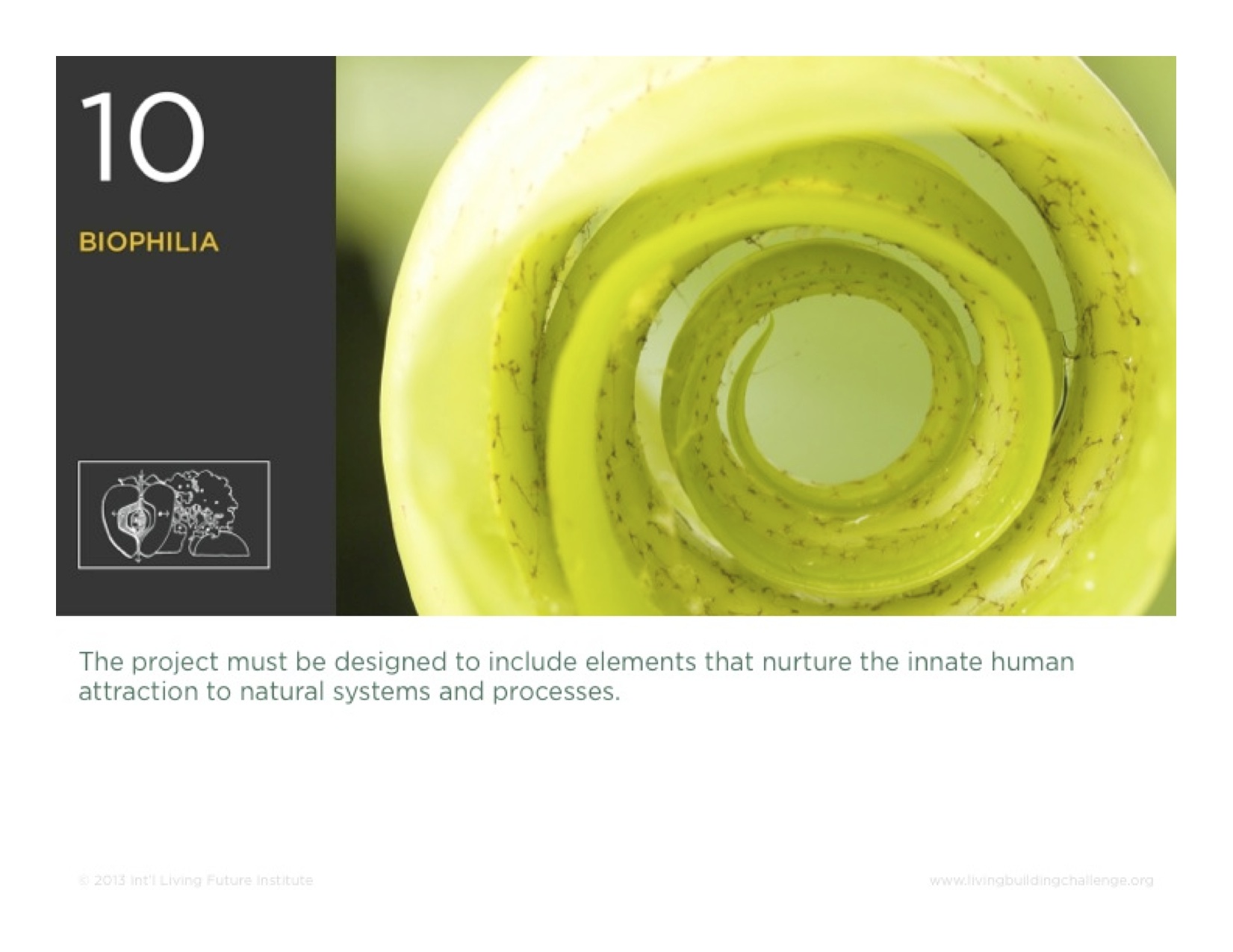
lbc biophillia

Healthy building concepts should apply to construction site offices as well as buildings we construct.


Related:

Biometrics and Biophilia – the new sustainable construction?

Have we picked the low hanging fruit of Sustainable Construction?