Tag Archives: Living Building Challenge

Sustainability made Cool? Day one at #EXPOC21

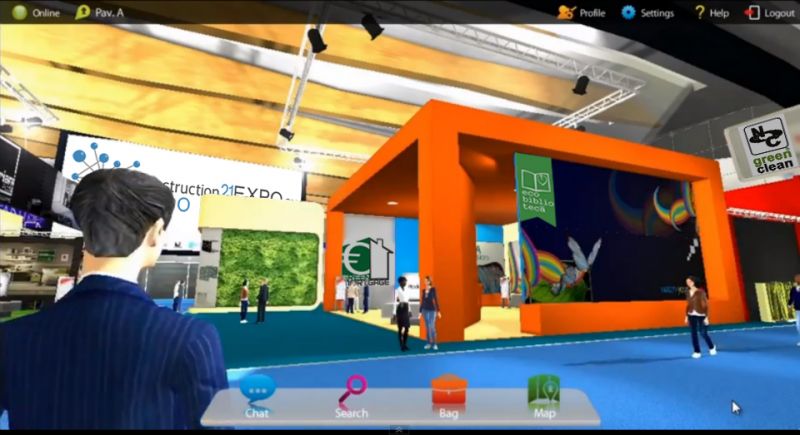
Well, day one of the Virtual Green Build EXPO was fun – and a success.  From chats within the show, comments across twitter and elsewhere the comments from visitors have been very positive indeed.

BnmBaoYIAAEl1RDAnd importantly I sensed green build and sustainable construction had been made cool.
The EXPO hosted by Construction21 on the HyperFair platform has attracted just under 200 exhibitors from all corners of Europe and hopes to attract up to 20,000 visits to the show. Steve Borncamp, driving force behind the show commented  “it was exciting to see people interact in this new medium from so many countries & consBnltphoIEAAvTn2truction disciplines”

As soon as the doors opened at 7.30 this morning, visitors were taking snaps of their avatars and booths and sharing on twitter, claiming firsts and the virtual-selfie was born. (There is a photo comp with prizes being coordinated by our friends at Green Vision)

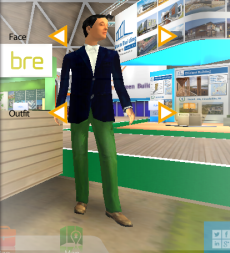
Observing the avatar arrivals to the EXPO,  there was a period where they customised appearance, read any notices and instruction notes and then zipped off into the Reception area, or vanished, teleporting to the stands or auditorium.

Visiting the stands was actually easier and more enjoyable than a real show, being able to chat and pick up brochures, watch videos and read posters with ease. I had numerous business card exchanges and agreements to get in touch after the show to discuss possible collaboration on Living Building Challenge, sustainability, green schools and social media, including a future discussion to be had on possible funding. I would have considered it a very good day at any real life show.

BnloKNQIMAIxn7oAside from the stands there was a brilliant programme of debates and expert videos running throughout the day. I watched a couple, impressed with the “Time for a sustainable buildings performance directive?” panel debate and learnt from  Coert Zachariasse CEO at Delta Developments who combined Cradle to Cradle with BIM and commented that “Buildings are just material banks” Brilliant Stuff!  WorldGBCEurope who coordinated the panel debate series observed We had some great debates as part of the first day. Speakers from industry, policy-makers and NGOs. Now looking forward to day two”

During the day I held a few in-show twitter chats which illustrated the enthusiasm of those attending This kind of event is definitely the future! Exhibitions are tiring & have not questioned their concept for ages” commented Philippa Rogers at InterfaceUK, adding ” I’ve immediately adopted this virtual concept as I have to admit I’m not a big fan of traditional exhibitions”

And that experience was shared by others as Elrond Burrell explains Attending the virtual expo was a novel experience. I visited virtual stands, browsed exhibitors brochures & exchanged virtual business cards & chatted with other attendees via the web interface. It’s a bit clunky to navigate but also kind of fun. I quickly resorted to teleporting rather than virtually walking around though! I think it is an interesting step to have a virtual expo but is still aiming to be a virtual representation of a real expo, rather than completely embracing web tech and rethinking what an expo actually is, if it takes place virtually”

And the show has a nice innovative sustainability touch beyond the virtual – Steve Borncamp again we want our virtual event to have a physical legacy in the form of a building project that will offset the c02 of this event and inspire a much higher level of ambition for our buildings and communities in Europe and for the world” (exhibitors have been able to offset the carbons they would have emitted in travelling to real shows).

Day Two opens at 7:30am UK time with sign up and log in here. And who knows, could  a post event virtual tweet up be on the cards?


When a wall is looking this good you’ve got to love it!

Amidst grand sustainability strategies, the upcoming virtual green build expo and the recent corporate green build events, its sometimes easy to overlook the core basics of good green sustainable construction. I was reminded of this just this week by the nice people at Greenstone in Todmodoren, with an email and invite for their straw bale and cob building and courses this summer.

When introducing Living Building Challenge (as I did this week at the Lancs Construction Best Practice Clubs Earthday event and at GreenBuild EXPO) I love introducing concepts of biophilia to people, as often it’s new, an area not on most construction people’s sustainability radar at the moment. It’s a point in the presentations where people always come alive, ask questions and jot down the references to E.O.Wilson or Last Child in the Woods.

However, in addition to biophilic aspects in design that create better, healthier buildings to live or work in, and indeed in addition to applying biophilic considerations for temporary site accommodation, we need to understand better and promote biophilia in construction, working with natural materials that not only have no health hazards, possibly have health benefits, give real joy and satisfaction in construction as well as all the good local and community benefits.


Greenstone are running a series of self-contained green building courses, led by the wonderful Emma Appleton, with a focus on Straw Bale and Cob Building as part of building a new straw bale classroom at a local school in Todmorden. Courses are running in July and August, for more information contact info@greenstone-design.co.uk or check out the twitter accounts for GreenStone and Emma

Now I need to find the space in my diary and try to get to one of these courses!

Responsible BIM

We are hearing more and more of ‘Responsible Business‘ approaches, generally taken to mean a combination of sustainability and CSR. But what happens when this emergent thinking in Construction meets BIM? Responsible BIM?

Below is the transcript or notes behind my pecha kucha presentation, exploring Responsible BIM, made to the excellent ThinkBIM event on 2 April in Leeds, .

I wanted to inject a balance of current ‘soft issues’ thinking against a prevalent hard technology thinking. I have no  issues with the passion behind the BIM approaches, I am constantly impressed and think it amazing, but sometimes feel BIM technology and language is a runaway train. Unfortunately just about every BIM event I attend I hear at the outset, BIM is about the people not the technology, with the rest of the event focuses on the application of the technology, with very little soft skill content. When was the last time we saw a BIM event focus solely on collaboration without mentioning software? Having said that, its is the balance of views at ThinkBIM events is what sets it apart from other BIM events.

The title ‘Flatland to Wonderland’ comes from a brilliant article and the work of Petra Kuenkel, who we interviewed as part of our Sustainability Leadership Conversation (#sustldrconv) twitter series recently. In short, we need both the flatlands of reality along with the possibilities of the wonderland for a sustainable future

Flatland

3D modelling, and offsite component manufacture with simple on site assembly isn’t new, as illustrated in the Building article that covered the BAA Project Genesis project in 1997. Pre Egan and pre Building Down Barriers we were doing BIM, so why didn’t it take off as the Egan Report did?  (Egan was at BAA and also involved in Project Genesis).  Somehow we lost the 3D collaborative conversation, maybe the Egan agenda itself ,with a focus on KPI’s and customer satisfaction masked some of the brilliant emerging work of that time?

One of the BIM wake up calls for contractors I work with recently has been the inclusion of BIM questions within PQQ’s in particular the PAS 91 BIM options – and the need for bidding contractors to have a BIM Strategy, signed as commitment from the CEO, detailing milestones, training and development, information management and more. “Lets write one quick”

And on the issue of information management – lets start to align to ISO 9000  documentation control requirements. How many BIM users (real and say-they-do’s) have embedded their BIM information and data communication processes into their Quality Systems. I am currently helping a good number of organisations revisit their management systems and inject current information management thinking. Particular so on how and what information is shared with supply chain members. Doing so enables us to audit, and improve information management using the Plan Do Check Act approach

But, yes, we have BIMwash. BIM language is not that difficult to learn, the technology is not that difficult to purchase, and hey presto we are BIM compliant. Not surprising then that contractors sit and wait for a client to insist or require BIM on a project before applying BIM thinking. As a BIM community we need to change the conversation away from BIM being just a design tool or client requirement to a continuous improvement tool with many many benefits.

And on to the wonderland …

If we really want to co-create a sustainable built environment, and isn’t that what BIM is all about?, then we need to have both the harsh reality of the flatlands with the spirituality of the wonderland. This resonates with Lucy Marcus Be2Camp BE2Talks back in 2011 where she described the need for leaders to be both Grounded and Stargazers.

I am impressed with the Collective Leadership approach and model (developed by the Collective Leadership Institute), and the necessity to move beyond collaboration. (How many times have I heard or read a contractor claiming to be collaborative simply because they have a supplier progress meeting once a week)  The Collective Leadership Model provides the scope of elements leadership and collaboration could, should, look like in a modern construction environment. Covering both technicality and people issues of diversity, and mindfulness

Ah mindfulness …

Currently we seem to be struggling with two drivers, on one hand the sustainability agenda of being simple, of realigning with nature. biophilic approaches and natural renewable solutions and on the other the ever increasing complexity of data, be it BIM data or big data and technology.

It is not surprising that one of the most sought after advisors to silicon valley is a Vietnamese Buddhist monk, Thich Nhat Hanh, (Thay), seen by many as the the modern guru for mindfulness.  Such practices are seen to be key for business, enabling focus on real innovation, free from clutter of distractions. We will see much more of this in the construction sector I am sure, as we learn to balance people with technology, simplicity with data, well being with efficiency.

US BIM write Randy Deutsch approaches this thinking in a recent blog article for Design Intelligence Beyond BIM Boundaries – “in order to master BIM, we have to do less BIM, we have to do other things” And if we focus on better communications, people skills, listening, empathy and understanding, then BIM will flourish without effort.

Perhaps BIM is now is seen by many as a big hammer, an approach that if not adopted then we are not doing construction correctly, “if the only tool we have is a hammer then every problem is a nail”  BIM practitioners and advocates need more tools in their conversation and offerings covering both technology and soft skills. As Randy commented ‘ go against common wisdom and fortify your soft skills”

We had a brilliant twitter based conversation with Casey Rutland as part of the #EXPOC21 series this week where the conversation led to whether BIM will simplify or complicate sustainability. Many people re-tweeted the question, but with few answers offered, other than when done correctly, BIM will enhance sustainability, done incorrectly it will harm sustainability. Incorrectly here can mean overloading buildings with technology solutions when natural solutions would work (but harder to model perhaps) or by not taken cognisance of where materials are coming from or their health impacts. Casey introduced the concept of SustainaBIMity – the mash up of sustainability thinking with building information management. A far better description than Green BIM

Aligning BIM thinking to progressive sustainability thinking such as the Living Building Challenge is exciting and has huge potential. In the near future we will see BIM objects cover the attributes of health data, justice in production data, carbon and travel data. (Note the dialogue in the US between Autodesk and the Healthy Products Declaration database for example)

And we know that carbon, embodied and transportation will become a key BIM data element, procuring kitchen pods from China for modular construction on the other side of the globe may be a data and cost solution but it is not a restorative sustainability solution. (cf Modular Construction on Souremap)

In our pursuit of designing and creating buildings that work for people, planet and purpose, we perhaps need to address both the higher Maslow needs as well as focusing on basic shelter needs, and in some way build them into data and modelling,  Biophilia at last is opening up a whole new chapter for design, and BIM, and well for the built environment as a whole. In the UK the term Sick Building Syndrome has dropped out of use, but we need to be aware of the dangers of creating buildings through BIM that don’t model or promote health and well being.

There are examples of this, for example by early involvement mind and health charity experts to view and comment on proposed buildings in a 3D environment, advising on the potential enhancement or damage to end user well being. And only yesterday,(01/04/14)  Rick Fedrizzi, President of USGBC writing in EDC called Health the next frontier of green build performance, and more recently calling on the built environment to use medical data for improved building solutions.

My final slide proposed that every BIM project should have an educational element, to inform and motivate the industry and that this should be embedded into PAS1192 or equivalent documentation. No project or organisation should be allowed to claim BIM compliance unless they openly share their approaches and lessons learnt, covering both the flatland BIM and the wonderful healthy buildings that enable people and organisations to flourish.


Biomimetics and Biophilia – the new sustainable construction?

There is a new language and lexicon emerging within the world of built environment sustainability, from circular economy to biophilia,  indicating a maturing of construction’s approach, moving from better waste management to circular economy thinking, from biodiversity management to biophilia.

I participated in a brilliant tweetchat yesterday evening, under the hashtag of #CityofLife, hosted by Melissa Sterry (http://melissasterry.com) and others with some very knowledgeable contributors from Northern Europe and elsewhere, exploring the concepts of Biomimetics in buildings and cities. There will be a transcript soon and more debates, so watch this #CityofLife space.

It did strike me though, whilst being comfortable with these new terms in sustainability, many readers and subscribers to this blog may not be, so here is a quick primer.

Biomimetics –  learning from nature as models for building design and construction. See Building a Bionic City (Intriguingly George Mokhtar (@GeorgeMokhtar) tweeted  yesterday before the chat “biomimetics, basically the reason I started using 3D models” proving, maybe, a foundation link with BIM?)

Biomimcry, imitation of nature for the purpose of solving complex problems. Perhaps the best source of information can be found at Biomimicry38  and the Janine Benyus  Biomimicry TED talk

Biophillia, exploring the intrinsic bond between humans and nature, most commonly from a health and well being perspective of building users and occupants.

lbc biophillia

Biophllic thinking is core philosophy for the Living Building Challenge  and suggests the adoption of Richard Kellert’s Six Biophilic Design Elements, (roughly 70 design attributes,  from egg-shaped buildings a historical connection to place)

Suggested reading:

E.O. Wilson, Biophilia 1984 (There is a very useful primer on Ecology, based around E.O Wilson work, within the iBooks (ipad) series from the Open University, with texts, videos and workbooks)

Last Child in the Woods: Richard Louv

Building for Life: Richard Kellert

Case Study Cities: Melissa Sterry, Sustain Magazine

Suggested people to follow on twitter

@melissasterry @thefuturemakers @StefanoSerafi11

@amandasturgeon  @livingbuilding @livingbldgUK

@JanineBenyus @RichLouv @biomimicry_uk @AskNatureTweets

Other Links:

Bios – Flipboard Magazine 

Biophilia in the Real World

Biophilic Design Solutions and Effect

Sustain – my flipboard magazine 

Green Revolutionary Engineering

Integral_cover_9x7_FINAL_webIntegral Revolutionary Engineering – a review.

Every now and again you come across a book that is both simple and profound, full of ah ha moments, of innovative ideas and yet seemingly familiar. One such book I have mentioned often on this blog (and gifted to many) is Yvon Chouinard’s “Let my people go surfing”  to which Integral Revolutionary Engineering book published by Ecotone has a similar feel.

I had the opportunity to meet and chat with Kevin Hydes at an Inetgral reception at EcoBuild this week, and picked up a copy of Revolutionary Engineering. Kevin served as the Chair of the USGBC  2005-2006, was a founder and director of CanadaGBC and a former Chair of the WorldGBC and is Founder and CEO of the Integral Group.

Integral are a global network of design professionals collaborating under a single deep green engineering umbrella, providing building system design and energy analysis services, trading as Elementa in the UK

Revolutionary Engineering is a ‘treatise of innovation in deep green building design, featuring stories and ideas from some of the worlds leading engineers and designers’

And it does what it says on the lid, providing a portfolio of the Integral Groups experience of design on deep green buildings, an insight not only into what is possible today but what is highly achievable in the future.

That the forward is written by Jason McLellan (see bio) gives the clue that this a treatise of building services design on Living Building Challenge projects.

And there is a nice affinity here. Leeds, where we founded the UK Collaborative for Living Building Challenge is also Kevin Hydes’ home town.  Now residing in San Francisco, Kevin reminisces in his preface letter on a post industrial Leeds, with belching coal fired power plants and coal from Yorkshire burning in his very home. Times have changed, in Leeds and in sustainable construction since then.

Molly Miller (@miller_mm), author, is Integrals story teller with a background in sustainability writing at Rocky Mountain Institute and Mother Earth News. And what a great title – why doesn’t every company have someone with the story teller title, official or otherwise?.

In conversational tone, Molly includes many Kevin Hydes insights scattered and emphasised throughout, alongside quotes and comments from many other green build thinkers and project team members.

As I read Revolutionary Engineering, I was looking for hints as to how BIM would fit in, yet,  found it refreshing that BIM doesn’t feature. Although I am sure it must have been used to some degree on the large Hospital projects and Empire State Building refurbishment case studies.

… refreshing to read a book with Revolutionary in the title that doesn’t try to sell BIM as the panacea for all things design and construction, even green construction.

Revolutionary Engineering sees other drivers across its fours chapters Imagine, Perform, Sustain and Accelerate. For example, creative leadership and collaboration (there are echoes here of our collective leadership tweetchat from Tuesday evening), innovation and diversity

One of the barriers to innovative thinking and collaboration across the construction sector is acknowledged as lack of diversity – of age and gender. This is indeed something I’ve seen evident in my own work in the sustainability leadership and social media world. Revolutionary Engineering, sees that the processes and policies of an organisation need to be appropriate to women,  consciously arranging hierarchies and teams to be collaborative

The character of innovation relies on different ways of thinking and a homogenous group is just not going to provide that.

Addressing the Cost v Value issue, Revolutionary Engineering reminds me of the 1:5:200 and Be Valuable thinking of a decade ago, brought bang up to date in line with deep green buildings. What must be of interest to every client and contractor seeking sustainable buildings is how Integral brought the Living Building project at Simon Frasier University in on ‘standard budget’

Whilst an reviting read it is also challenging, for eg on the higher cost for going green issue –  to cite cost as an argument against energy efficiency or innovative practices in design is often an excuse to do something the same comfortable way it has always been done”

The book’s case study on the new Clif Bar headquarters is fascinating, illustrating the importance of putting the user first. “The occupant is the star of high performance buildings”  I must say I find Clif Bar an interesting organization for personal reasons, from a CSR and cycling perspective, so this case study added much to my understanding

A small criticism, a lack of page numbers and possibly too many images of one project in particular – the Vancouver VanDusen Botanical Gardens – it is a great Living Building Challenge project that I had the chance to visit in Vancouver a few years back – but perhaps too many images here that you get the feeling of ‘space filling’

In summary we can, as the UK construction industry learn much from the experiences and insights in Revolutionary Engineering as we start to embrace deep green and Living Building Challenge thinking it should be on the reading list of all sustainability professionals, services engineers and a text for construction and building services students … to further the ‘collaborative commitment to relentless momentum’

Integral are participating (exhibiting and talking) at the Construction21 Green Build Virtual Expo in May, prior to then, I will be in conversation with Integral as part of our EXPOC21chat tweetchat series.

Tweetchat Week: w/c 4th Feb 2014

images (1)Next week is shaping up to be a brilliant week of tweetchats and twitter based conversations.

Checkout:

European Green Build

First up on Tuesday 4th Feb I will be interviewing  Building the Future (based in Catalonia, Romania and Brazil) with @C21EXPO_Europe as part of the Construction21 Euro Green Build virtual Expo tweetchat series. We will be discussing sustainability communities in the built environment.

>>> Join this conversation on this chat at 11am UK, 12 CET using the hashtag #ExpoC21Chat

Sustainability Stakeholder Engagement

Later the same day at 7 pmUK (11am PT and 2pm ET)  I am delighted to be in conversation with Peggy Ward, sustainability officer at Kimberley Clark. Peggy, based in Appleton WI, USA will be explaining how Kimberly Clark engage with and learn from their stakeholder groups. This conversation is part of the monthly Sustainable Leadership Conversations series created by Andrea Learned and Martin Brown (see our Google+ community pages)

>>> Join with this conversation on the 4th Feb at 11am PST, 2pm ET and 7pm UK using the #sustldrconv hashtag

Living Building Challenge with the UKGBC PinPoint

And then, on the 6th February, as part of the UKGBC’s Pinpoint programme taking place 3-7 Feb to increase awareness of The Living Building Challenge in the UK with UKGBC members, we will be hosting, with @UKGBC Pinpoint, a conversation with Amanda Sturgeon, VP of the Living Building Challenge at the International Living Futures Institute in Seattle.

>>> Join this conversation at 11am PST, 2pm ET and 7pm UK using the #GVischat hashtag.

All of the above tweetchats will run for 60mins and provide ample opportunity to post questions to guests, share your experiences and comment on the subject matter.

We look forward to seeing you there, and if you would like to discuss how tweetchats can promote your organisation or sustainability initiatives please do get in touch.

Also of note next week is the #CSRChat with Susan McPherson on 6th Feb at 5pm UK

iSite Links:

Records of tweetchats and conversations

Are Tweetchats: the new digital benchmarking?

#tweetchats … observations + how to

Understanding the Living Building Challenge

UK_collaborative_logoDiscover why we think that the restorative sustainability thinking of the Living Building Challenge, as a philosophy, advocacy platform and a certification tool is vital to the UK sustainable construction.

This spring we are holding two Understanding the Living Building Challenge workshops that provide a 6-hour in-depth introduction, in Leeds on the 5th Feb and in London on the 28th Feb 2014

The first, held in Leeds generated lots of debate on the principles and application of Living Building Challenge within the UK. Feedback from the course included:  ” great overview of LBC” – “clarified the US language” – “A comprehensive presentation with highly informed discussion with participants” and  “informative and educational”

Our next course is in London on 28th Feb: at the UKGBC Offices in the Building Centre (Registration details here)

See A Living Building Challenge Conversation (with @UKBC and @AmandaSturgeon @LivingBuilding)

The Living Building Challenge™ is the built environment’s most rigorous performance standard. It calls for the creation of building projects at all scales that operate as cleanly, beautifully and efficiently as nature’s architecture. To be certified under the Challenge, projects must meet a series of ambitious performance requirements, including net zero energy, waste and water, over a minimum of 12 months of continuous occupancy.

A Full Day Course: Understanding the Living Building Challenge provides a 6-hour in-depth introduction to the Living Building Challenge. Attendees are green building leaders in their community: design professionals, contractors, developers, owners, government officials and employees of public agencies. In short, anyone and everyone who can impact the development of the built environment. This course will be in English without translation available. Participants who successfully complete the course will receive a certificate of course completion.

Living Building Challenge related post here on iSite

With the demise of SWMP’s – now is the time to rethink waste

This week DECC confirmed arrangements for the demise of SWMP’s

You will no longer be required by law to prepare a site waste management plan (SWMP) from 1 December 2013. However, SWMPs may still be required by BREEAM, the planning permission or by the main contractor or client. Even if you don’t need to produce one, completing a SWMP will help you to handle your materials and waste correctly, helping you reduce and save money in the process. 

We should see this as an opportunity to rethink our relationship with waste, and focus upstream, not on waste, but on solutions through appropriate material management. And one solution lies within the Living Building Challenge, a restorative sustainability philosophy, advocacy and accreditation programme for the built environment.

conservation

It is heartening to note that the Living Building Challenge Material Petal, does not refer to waste (as BREEAM and LEED do) but on Conservation and Re-Use, requiring each project team to create a Material Conservation Management Plan that explains how the project optimises materials in:

Design,  including consideration of appropriate durability in product specification

Construction, including product optimization and collection of wasted materials

Operation, including a collection plan for consumables and durables

End of Life, including a plan for Adaptable Reuse and Deconstruction

Through ISO 14001, Environmental Management, and Living Building Challenge support for projects and organisations we are slowly moving SWasteMP’s thinking towards MConservationMP’s and to Adaptable Reuse and Deconstruction Plans.

If you would like more information to seize this opportunity to move your organisation forward please do get in touch. (Innovation Vouchers can help offset costs!)

Links:

Introducing the Living Building Challenge in the UK

Living Building Challenge Infographic

Changes to SWMP regulation (DECC)

Your waste responsibilities (DECC)

Not a good day for Green Building

Not a good day for Green Building in the USA.

Lloyd Alter on TreeHugger reports that the Green Building Initiative, which runs the Green Globes building certification system has been recognised as a LEED alternative by the federal General Services Administration

I feel sad for friends, colleagues, advocates in the US who are passionate in defending real green building and real building product transparency that will restore the damage done by the built environment.

Lloyd writes: The lobby organization formed last year to kill LEED and counting among its members just about every toxic chemical manufacturer in the USA, is ecstatic, but pushing for more …

The US Green Building Council that runs the LEED program put on a brave face in a press release, saying “At this point, it is unassailable, LEED works. It has played a significant role in GSA’s achievement of its energy and sustainability goals.”

Dream on. Green Globes is now recognized as legit and will eat your lunch; it’s cheaper, it lets builders use all that plastic, and doesn’t give points for FSC certified lumber. In state after state, the politicians paid for by the plastics industry will insist upon it.

Unfortunately I see this as a discussion, then argument and battle waiting to happen here in the UK and Europe. As we push for deeper green standards such as the Living Building Challenge, for deeper product transparency, as Google and other clients will undoubtedly push for non toxic red list materials in their buildings, we will see the push from the power of the petro-chemical, plastics  and big lumber organisations, resisting change for healthy products.

And unfortunately I see our UK Greenest Government Ever likely to side with these giants, removing as they already are in numerous areas, environmental protection so as not to damage industry and growth, headed by an Environmental Minister who is taking  green policy back to the 70s

The UK green build fraternity, advocates, green build councils and accreditation organisations needs to hold strong in the coming years.

cropped-pc210049flip.jpg

Construction virtual trade show for Europe

60199455601729109971916966764nfSave money!  Reduce CO2 emissions!  and visit leading innovative sustainable construction solutions and projects from across the European continent.

UPDATE: Construction21 Chapters and Green Building Councils from France, Spain, Italy, Poland, Croatia, Romania, Serbia, Ireland, Lithuania, Latvia and Montenegro have joined Construction21EXPO, with many more to be announced shortly.

Construction21EXPO EUROPE be held the 18th & 19th of February 2014 and will bring together 500 exhibitors and 20,000 participants including architects, engineers, project managers, investors, and other essential stakeholders.

Exhibitors will be able to reach the most active green building professionals across Europe with a very small investment. Exhibitors can gather high quality sales leads from EXPO visitors from both existing and new markets for sustainable construction solutions.

Booth setup is very simple but will create very attractive exhibits with your desired branding. Review the website and watch the video at Construction21EXPO.eu to see the conversational features and rich interactive experience our virtual tradefair will provide.  Fees are explained in the Exhibitor section of the EXPO website.

Potential exhibitors will also want to visit the Construction21EXPO EUROPE Community to download theIntroduction document highlighting more details on the event plan.

Related on isite: Living Building Challenge UK is UK Partner for EXPO