Tag Archives: sustainability

Restorative Sustainability Research Visit Opportunities

RESTORE STSMs

Restore Logo

APPLY for a RESTORE Short Term Scientific Mission !

Interested in bringing Restorative Sustainability expertise to your country? Then apply for STSM within a Specific Areas of Interest.

Short Term Scientific Missions in RESTORE

STSMs are research visits to a host institution where the applicant will perform research activities that advance the objectives of RESTORE. STSMs must be between 5 and 90 days (although, they may exceed that duration in specific instances for Early Career Investigators). STSMs are financially supported by the Action with a fixed contribution of up to 2500 EUR.

  • Propose a related STSM area of interest related to the RESTORE Cost Action
  • Select a Host Institution that has the knowledge you seek to receive
  • Make your innovative proposal to study what you cannot in your country
  • Make your case, why is your study important, how will you use it to expand understanding in your country and abroad and GO!
    • Applications Open 01 June 2017
    • Applications Close 30th June 2017
    • STSM can begin in July 2017
    • STSM and reporting must be completed by February 28, 2018

** Download the Application Details and Form from here **


STSM Areas of Interest

You may apply for an STSM related to the following areas of interest, or alternatively for an STSM related to the working group descriptions and key themes.

  1. Historical evolution and changing paradigms of “Sustainability” since 1987 / Brundtland (mapping and evaluating objectives, key themes and topics in WG1, see Appendix A)
  2. Challenges and Opportunities identified by a) existing and b) emerging built environment sustainability standards, and c) the Sustainable Development Goals
  3. Influencing factors & frameworks for Restorative Sustainability
  4. Outdoor Space Comfort Performances Design. New Processes and Emerging Tools to Adapt to Climate Change.
  5. Processes and Tools for Building Up-cycling Design and Circular Economy.

Short Term Scientific Mission (STSM) committee lead:  

Michael Burnard: michael.burnard@iam.upr.si.

A Green Built Environment supports the Sustainable Development Goals (SDG’s)

This blog has referenced the Sustainable Development Goals on many occasions, indeed within FutuREstorative I make the case for the SDG’s to replace the Brundtland definition.

It is now three decades since the Brundtland Commission defined Sustainable Development as ‘doing nothing today that compromises future generations’. It was and remains the definitive ‘strapline’ that has been built into countless sustainability strategies definitions, statements and policies. We have chosen the ‘do nothing’ option, and are compromising future generations, and without radical, positive change we will continue to compromise the next generation.

Understanding and addressing the huge influence of the built environment is essential. This (influence and responsibility) must be included as an organisational governance issue to enable a culture of restorative approaches and delivery.   FutuREstorative

In 2015 the UN published its Sustainability Development Goals 2030. The SDGs define the intention to change the Brundtland definition of sustainability to a new purpose that is proactive and net-positive, and one that improves the social, environment and financial wellbeing of people and the planet by 2030. Just as we embraced the Brundtland definition, so we must now embrace the SDGs as a foundation for our sustainability visions and strategies.

The World Green Building Council recently released a handful of great infographics illustrating how the built environment can support SDG’s,

While many might look at a building and see only an inanimate structure, we look at buildings and see both the physicality and the process by which they are created – an opportunity to not only save energy, water and carbon emissions but to educate, create jobs, strengthen communities, improve health and wellbeing, and much, much more. Green building is a true catalyst for addressing some of the world’s most pressing issues. World Green Building Council 

The SDG’s give new purpose to  built environment Corporate Social Responsibility (CSR):

Content pages cityscape SDGs new

Giving purpose to green facilities management, that can, through promotion of green offices, address several SDG’s:

C7nSguzXwAEB3gQ

And how our homes can be the building blocks in support of the sustainability goals:

C7mKrNbVwAIPRdw


A case for reconstructing the world of sustainable building standards.


pexels-photo-129743

The sustainability media platform Green Biz recently carried an extract fromFutuREstorative Chapter Six, the New Sustainability Standards. Here is an abridged version …

… (The following is an excerpt from “FutuREstorative, Working Towards a New Sustainability,”authored by Martin Brown and published by RIBA Publishing. The selection was edited for clarity and length)

Sustainable building certification standards are immense influencers on not only the built environment sector but also commercial, industrial and domestic green lifestyles. With that influence comes a real responsibility in establishing the current direction of travel for the industry against a backdrop of climate, economic and social change.

Get it right, and we move closer to addressing major climate change issues, attaining carbon reduction targets and achieving ecologically, economically and socially just goals. Get it wrong and the negative impact ripples far beyond the built environment sector.

However, it is the purpose of certification schemes not only to set best practices for design, construction and operation but to go beyond current best practices and establish a vision for sustainable buildings based on what is required — with required practice then measured against that vision.

We need to stop regarding green buildings as a benefit to be proud of. They should be seen as the norm; the way we build. Indeed, as a sector we should feel guilty about not using our skills and expertise to create green buildings for us and future generations. That we remain content to commission, design, build and operate buildings below this sustainability threshold reinforces the argument that the built environment sector is one of low aspiration.

Green Biz article

FutuREstorative is now available in a digital format

More | Better. An alternative approach to housing.

more-better-coverDelighted to have participated in the excellent More | Better – an evaluation of the potential of alternative approaches to inform housing delivery in Wales report by Ed Green and others at Cardiff University.

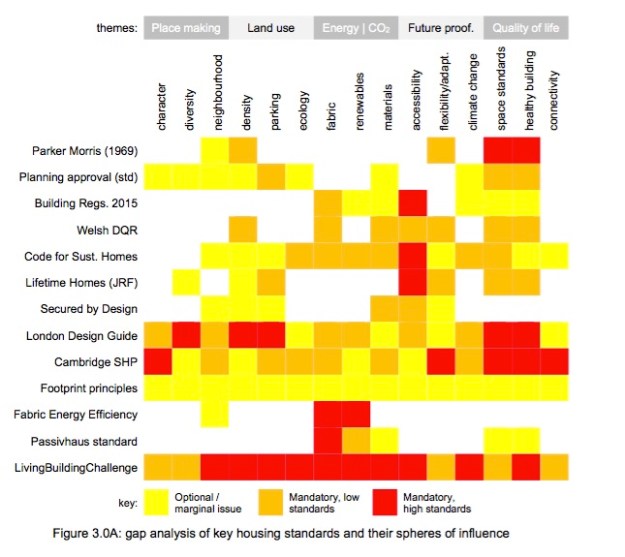
The compelling More | Better report, consisting of a spectrum of case studies and commentaries from expert contributors, concludes that there is no single housing ‘silver bullet’, but that there is potential for more, better housing through a combination of innovative delivery pathways and construction techniques. And the innovative delivery pathways considered include Passivhaus, the Fabric Energy Efficiency Standard, and the Living Building Challenge.

“Affordable housing is uniquely placed to benefit from the philosophy and application of the Living Building Challenge and aligns well with and will assist with adherence to the Welsh Well-being of Future Generations Act (2015)”

more-better-standards

In the absence of a Welsh, national mandate for zero carbon, more onerous standards including CfSH Level 6, Passivhaus and the Living Building Challenge all provide optional pathways to 43 higher standards of environmental performance. 


The report concludes:

Wales should lead the way by placing affordable housing and affordable warmth at the centre of national policy, with homes and places that meet our needs, now and in the future. We must stop thinking purely in terms of capital costs. Construction that drains resources should be replaced with buildings that generate resources – that are energy positive and carbon negative. This fundamental perspective shift is in line with the Wales Future Generations Act 2015.

  • By employing alternative approaches, we could be constructing new homes and neighbourhoods in a more contextually appropriate way, with greater long term value.
  • Alternative approaches have the potential to deliver affordable homes in parallel with more established methods, so long as knowledge is shared with commissioners and constructors.
  • Different delivery pathways and construction techniques could lead to more diverse housing that is better quality, more fit-for-purpose, more affordable and more sustainable.
  • Further benefits could include the growth of employment in Wales, a national supply chain, greater long term resilience, and renewable energy infrastructure as a source of income.
  • The creation and maintenance of sustainable communities could provide a new focus for post-industrial Wales, facilitating joined-up development that works at a local level.

The More | Better report should become a touch-stone housing reference for change. And as such should be on must-read lists, not only for those in the Welsh housing sector, but for anyone interested and engaged in the future of built environment sustainability standards and alternative ‘innovative pathways’

Download the More | Better full document and executive summary here

Lancashire Construction is Blooming

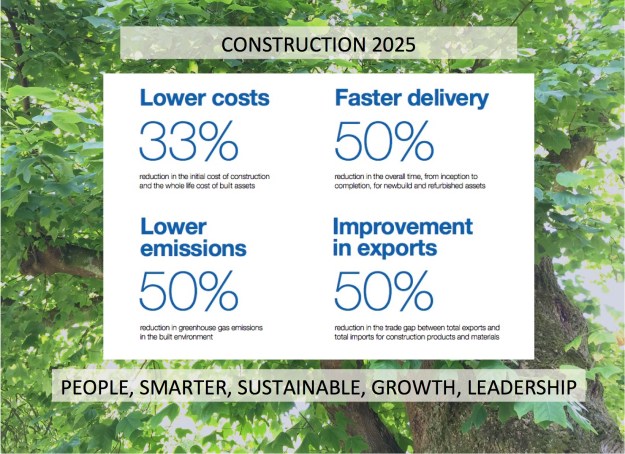
With the regions transformational City Deal now getting into swing there will be ‘blooming’ opportunities for those in the Lancashire built environment sector over the coming months and years. And Constructing Excellence, through its Lancashire and Regional Clubs is well placed to assist in the development and transfer of best practice knowledge and skills. These cover the core ingredients of successful built environment organisations – Productivity, BIM & Digital Construction, Sustainability and Continuous Improvement –  all geared to meeting the Construction 2025 Vision

construction-2025-headlines

Whilst you are here: Supporting the Lancashire Club: We are looking for new steering group members to steer and drive the club over the coming years, a period that will be a busy, challenging but rewarding one for built environment organisations within the region. if you are interested please get in touch with our Chair, Martin Brown, our Sec, Andrea Atherton or Regional Club Coordinator Zoe Brooke 

Our … speak to us at our next event on 23rd Feb in Lancaster 

We Are Lancashire – The Place For Growth

Lancashire, Preston and South Ribble’s transformational City Deal pitched to over 100 developers, agents and investors at half-day Place North West business conference last week.

Entitled “We Are Lancashire – The Place For Growth”, the event was organised by the City Deal Partnership (including Lancashire County Council, Preston City Council, South Ribble Council and the Homes & Communities Agency), Marketing Lancashire and the Lancashire LEP. It was run in partnership with leading property news and investment website Place North West, and hosted at the Preston headquarters of accountants RSM.

At the heart of the discussions was the impact and opportunities offered by the £434m City Deal programme. The City Deal is a key initiative of the Lancashire Enterprise Partnership’s strategic plan to create 50,000 new jobs over the next 10 years across the county.  The City Deal will help to create more than 20,000 new private sector jobs and see over 17,000 new homes built across Preston and South Ribble, as well as new school places, open green spaces and new health provision to cater for the growing population

  • Key themes which emerged throughout the sessions included how all of the Lancashire local authorities, both county and district, involved in City Deal were working closely together to ensure private investment can flourish. This included their pragmatic, joined-up approach to the planning process, and the substantial public sector support on offer to help private sector schemes get started, and completed, with a minimum of barriers.
  • Another important debate centred around the need to create a diverse mix of housing, and have different types of tenure, throughout Central Lancashire. This was to ensure families, young people, the elderly, students and recent graduates could all get access to affordable and desirable accommodation which suited their needs.
  • As well as providing suitable homes to encourage graduates to stay in the area, many of the speakers also touched on the need to retain graduate talent through a combination of suitable jobs in the region, and the creation of an attractive environment to live in. This included a need for an improved for an improved evening economy as well as strengthening its position as a visitor destination.
  • This led to a focus on the strengths and benefits of Central Lancashire’s existing regeneration and development schemes, and highlighted some of the major City Deal investments which have recently been announced.
  • These included Preston city-centre developments such as the new Harris Quarter cinema and leisure scheme, the potential for the re-development of an ‘HS2 ready’ Preston train station, the £200m UCLan masterplan, the regeneration of Winckley Square and the proposed Altus Grade A office project.
  • The major investment opportunities based around the Samlesbury Enterprise Zone site, which has now been designated as a specialist aerospace and advanced manufacturing hub as part of The Lancashire Advanced Manufacturing and Energy Cluster programme were discussed, including reference to the recently green-lighted Advanced Manufacturing Research Centre which will be based at Samlesbury.
  • The major mixed use logistics, retail and residential scheme at Cuerden, anchored by a new IKEA, was also held up as an example of how the City Deal is helping to unlock a series of complementary developments which are set to have a genuinely transformational effect on the Central Lancashire economy.

Threats and challenges to Lancashire’s growth were also debated, with issues like skill shortages, Brexit and Lancashire’s historic reputation for being a divided county all coming under discussion.

However, the general consensus from both private and public sector speakers was that Lancashire has made incredible progress over the last few years to speak with one voice showcasing its growing ambition and confidence, is looking to tackle the issue of vocational skills through a series of effective education and employer strategies, and is set to play a key role at the heart of the Northern Powerhouse initiative through a private-public partnership approach to stimulating economic growth.

More

Talking, Sharing, Launching

OLYMPUS DIGITAL CAMERA

My 2017 diary is shaping up with some great and exciting presentations & talks, sharing insights from FutuREstorative, introducing the Living Building Challenge, launching more collaboratives in the UK and launching RESTORE, our European COST restorative sustainability research programme. And more…

Jan 11th Preston
Sharing insights from FutuREstorative, Living Building Challenge along with healthy buildings topics such as biophilia and salutogenesis with the UCLan Healthy University Group in relation to the University Master Plan Development

Jan 25th Manchester
Book Talk. Sharing insights from FutuREstorative at Constructing Excellence Manchester, Breakfast Meeting
Archive

Jan 31st London
Sharing insights from FutuREstorative at Constructing Excellence Sustainability Working Group event: Healthy Buildings and Wellness
Archive

Feb 6th London
Intro to Living Building Challenge Talk and the Launch of a Living Building Challenge Collaborative for London in association with Mott MacDonald
Archive

Feb 23rd Lancaster
Lancashire Green Drinks
Book Talk. Green Build and Green Coffee. Sharing insights from FutuREstorative. With Ian Steel, Atkinsons Coffee at the Hall, Lancaster
Details and Registration

Feb 24th  Glasgow
Intro to Living Building Challenge Talk and the Launch of a Living Building Challenge Collaborative for Scotland in association with The Scottish Ecological Design Association (SEDA)
Details and Registration

March 9th Brussels
Kick Off Meeting: After 2 years writing submissions and developing the EU COST Action with EU colleagues Carlo Battisti and Emanuele Naboni, we finally kick off RESTORE, our EU COST Research Programme

March (tbc)
Sharing insights from FutuREstorative and Construction Carbon (with Carbon Trust) at Constructing Excellence Lancashire

April (tbc)
Sharing insights from FutuREstorative and Construction Carbon (with Carbon Trust) at Constructing Excellence Liverpool

April 26th  Trento, Italy
Supporting Regeneration Edition 3 Living Building Challenge Competition. Applications still open
Details and Registration

May, London Be2camp style book event with FutuREstorative contributors.

November 10th Leeds
Talking, a little way of yet but delighted to be a guest speaker for the CIBSE Yorkshire Awards Dinner in Leeds

More soon …

22 Must Read Sustainability Books

FR_Visuals_FINALOne of my aims in writing FutuREstorative was to explore and encourage new thinking for sustainability in the built environment. In turn, inspiration for the book has, in part, come from a number of classic writers and books over the last half century or so, woven into FutuREstorative and into built environment sustainability potentials.

In addition to these books being powerful in shaping my thinking towards sustainability, they  often articulate alignment between nature, the outdoors, wildness and business sustainability.

The Bibliography in FutuREstorative gives a complete listing, but below are a sample 21 of the best, all worthy of making a great sustainable reading or gifts to inspire, as indeed would FutuREstorative!.  (Note the wonderful Icelandic tradition of giving books on Christmas Eve, simply as an additional gift to inspire)
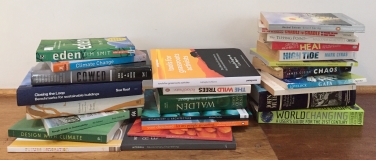
Image 8.1a Book Shelf

Let my People go Surfing – Chouinard, Y.
Three books in one here, a biography, a mountain & surf adventure and a business sustainability philosophy. This is a must read for reluctant business CSR people.

Sand County Almanac – Leopold, A.
Recognised as the godfather of ecology, Sand County is the classic land ecology book. Classic quotes form Sand County include Thinking like a mountain and We reached the old wolf in time to watch a fierce green fire dying in her eyes. I realized then, and have known ever since, that there was something new to me in those eyes – something known only to her and to the mountain.

Silent Spring – Carson, R.
First published in three serializsed excerpts in the New Yorker in June of 1962,this is the book that in many ways triggered the 1960s environmental protest movement. Still as valid today as we deal with persistent chemicals within the built environment materials

Cradle to Cradle – Remaking the Way We Make Things – Braggart, M. and W. McDonough Groundbreaking for the circular economy thinking, challenging the way we make and dispose of things.

Ecology of Commerce – Hawken, P
An important text that aligned ecology and environmental concerns with mainstream business. “if you look at the science about what is happening on earth and aren’t pessimistic, you don’t understand data. But if you meet the people who are working to restore this earth and the lives of the poor and you aren’t optimistic, you haven’t got a pulse.”

Biophilia – Wilson, E.O
Part autobiographical and personal, Wilson’s introduction to the love and relationship with nature, that introduced us to the concept of biophilia. “Nature holds the key to our aesthetic, intellectual, cognitive and even wellbeing. …”

Transition Handbook – Hopkins, R.
The original handbook for the now-global Transition movement, addressing actions required in transitioning to a post peak-oil economy. “… by unleashing collective genius of those around us to creatively and proactively design our energy descent, we can build ways of living that are more connected, more enriching and that recognize the biological limits of our planet.”

Wildwood – A Journey through Trees – Deakin, R.
Living with trees, an autobiography from one of the UK’s foremost environmentalist writers. “To enter a wood is to pass into a different world in which we ourselves are transformed

Revolutionary Engineering – Miller, M.
How the international engineering firm Intergral approach restorative sustainability. Included are case studies from their Living Building Challenge projects. Intégral: Revolutionary Engineering is for trailblazers who care about advancing the building and construction industry toward greater occupant health and happiness, and stronger resilience and regenerative systems.

Design with Climate: BioClimatic Architecture 2015 update – Olgyay, V.
Reprint of a classic 1960s text that inspired and promoted architectural design based on biology and climate. I was not fully aware of this important work until researching for a commissioned review

Biomimicry in Architecture, 2nd Edition – Palwyn, M.,
Insights into the amazing world and future potentials of biomimicry within the built environment

Feral – Rewilding the Land, the Sea and Human Life. Monbiot, G.
Inspiration for restorative and regenerative environmentalism and conservatism through  Monbiot’s experience and passion on rewilding themes.

Tools for Grass Roots Activists. Gallagher, N. and L. Myers, P Brilliant collection of essays and tools from over two decades of the Patagonia invite-only Tools Conferences

Walden – Thoreau, H.D.
Recognised by many as being the classic work on environmental and conservation thinking. “We need the tonic of wildness…At the same time that we are earnest to explore and learn all things, we require that all things be mysterious and unexplorable, that land and sea be indefinitely wild, unsurveyed and unfathomed by us because unfathomable. We can never have enough of nature.”

Last Child in the Woods: Saving our Children from Nature-Deficit Disorder – Louv, R. 
Why we need biophilia in our and in our children’s everyday lives. “We have such a brief opportunity to pass on to our children our love for this Earth, and to tell our stories”

Confessions of a Radical Industrialist: How My Company and I Transformed Our Purpose, Sparked Innovation, and Grew Profits – By Respecting the Earth – Anderson, R.C. and R. White,
The guide that shaped and continues to inspire the values and ethos of Interface Inc. to take nothing from the earth that can’t be replaced by the earth

Landmarks – Macfarlane, R.
Why language and words are important to understanding our relationship with nature and landscapes. Certain books, like certain landscapes, stay with us even when we left them, changing not just our weathers but our climates.”

This Changes Everything: Capitalism vs. the Climate – Klein, N.
How capitalism and our economic structures are at the root cause of climate change.“So we are left with a stark choice: allow climate disruption to change everything about our world, or change pretty much everything about our economy to avoid that fate. But we need to be very clear: because of our decades of collective denial, no gradual, incremental options are now available to us.”

Responsible Business – Chouinard, Y. and V. Stanley
Background to the responsible business values and approaches at Patagonia. “At Patagonia, making a profit is not the goal because the Zen master would say profits happen ‘when you do everything else right.’”

Reinventing Fire – Lovins, A.
A route to a non fossil fuel future in four industries that includes the built environment. Reinventing Fire will require tapping, in particular, the two biggest motherlodes of energy, efficiency and the Sun.

Eden – Smit, T.
Background to the development and principles of the Eden Project in Cornwall, UK. “…. construction is a culture that depends on warfare and fault finding that is not compatible with collaborative partnerships …”

&

FutuREstorative: Working Towards a New Sustainability Brown, M.
Focuses on the emergence of a net positive and restorative sustainability, as a more rounded social, wellness, health and healthy buildings debate “We can and must reignite sustainability, set the sustainability soul on fire, make sustainability fun and exciting, and inspire a new generation – not only for a vision of sustainability that is regenerative but a vision that also acknowledges the damage of the past and makes amends, healing the future

 FutuREstorative : is available via RIBA Bookshops and other online book services!

WELL & BREEAM announce alignment for credits: more good or less bad?

UPDATE 01 Feb 2017

Credit Crosswalks: BRE and IWBI have released guidance to streamline joint certification of BREEAM and WELL

….

As mentioned and illustrated in FutuREstorative, we will see an alignment in building sustainability and performance standards over coming months and years. In the US we have seen an alignment between LEED and the Living Building Challenge on materials (Red List) and recently on energy and water.

On Monday 28th  Nov, we saw an announcement from The International WELL Building Institute and BRE for an agreement to pursue alignment between WELL and BREEAM will making it easier for projects pursuing both standards.

In practice this will mean documentation submitted for certain credits will be recognised by both WELL and BREEAM, saving project teams time and cost.

This will be a very interesting journey and further recognises the importance of health within building design, construction and use. WELL, like the Living Building Challenge is an excellent, robust but tough standard and one that cannot be attained without a different mind-set approach to buildings.

Key to that mindset is recognition of the impact of materials on health on construction workers and building users. An alignment or agreement between BREEAM and the LBC’s Red List would make great sense here.

It will be interesting to see how the differing philosophies between WELL (do more good) and BREEAM (do less bad) work together. Hopefully this further opens the door to a salutogenic approach to design – not just reducing ill-health but using buildings to improve health, for example, using light as medicine, as explored in FutuREstorative

salutogenesis-slide

Health – the next performance gap.

I will also be watching with interest if this agreement extends to the construction process, (ie. the BREEAM MAN credits) to improve the wellness and health of those involved in and affected by construction works. This is a health and wellness area that BREEAM, LEED, WELL and the Living Building Challenge do not readily address. Yet for those whose career is spent on construction sites, it is a key health and sustainability area, and one that benefits from biophilic design considerations, for example greenery in accommodation and living walls as project hoardings.

living-walls-construction-hoarding

Cities setting biophilic commitments.

Pittsburgh has become the latest city to be inducted into the Biophilic City network, setting ambitions and commitments to eliminate the use of all pesticides, fungicides and herbicides, to increase the city’s tree canopy from 42 percent to 60 percent by 2030, to pursue  the daylighting of streams in stormwater management efforts and to develop more greenways.

pexels-photo-94616-1

To qualify as a Biophilic City, cities work within a number of guidelines and monitoring indicators:

Guidelines:

  • Biophilic cities are cities of abundant nature in close proximity to large numbers of urbanites; biophilic cities are biodiverse cities, that value, protect and actively restore this biodiversity; biophilic cities are green and growing cities, organic and natureful;
  • In biophilic cities, residents feel a deep affinity with the unique flora, fauna and fungi found there, and with the climate, topography, and other special qualities of place and environment that serve to define the urban home; in biophilic cities citizens can easily recognise common species of trees, flowers, insects and birds (and in turn care deeply about them);
  • Biophilic cities are cities that provide abundant opportunities to be outside and to enjoy nature through strolling, hiking, bicycling, exploring; biophilic cities nudge us to spend more time amongst the trees, birds and sunlight.
  • Biophilic cities are rich multi-sensory environments, where the sounds of nature (and other sensory experiences) are appreciated as much as the visual or ocular experience; biophilic cities celebrate natural forms, shapes, and materials;
  • Biophilic cities place importance on education about nature and biodiversity, and on providing many and varied opportunities to learn about and directly experience nature; in biophilic cities there are many opportunities to join with others in learning about, enjoying, deeply connecting with, and helping to steward nature, whether though a nature club, organised hikes, camping in city parks, or volunteering for nature restoration projects;
  • Biophilic cities invest in the social and physical infrastructure that helps to bring urbanites to closer connection and understanding of nature, whether through natural history museums, wildlife centres, school-based nature initiatives, or parks and recreation programs and projects, among many others;
  • Biophilic cities are globally responsible cities that recognise the importance of actions to limit the impact of resource use on nature and biodiversity beyond their urban borders; biophilic cities take steps to actively support the conservation of global nature.

Indicators

  • Natural Conditions (eg % of forest or tree canopy cover, % working/living within 300m of green space, area of green roofs, living walls)
  • Biophilic Engagement ( eg daily visits to green spaces, flora and fauna eco-literacy, outdoor activity membership)
  • Biophilic Institutions, planning and governance, (eg city budget allocated to nature conservation, restoration education)
  • Human Health and Wellbeing (% spending 30 mins + in urban nature, in outdoor activities, equitable and just access to nature)

Other aspects of a biophilic city include bird friendly, water friendly (blue urbanism) and dark sky preservation.

Other Biophilic Cities include Wellington, NZ; Birmingham, UK; Victoria Gasteiz ; Spain; Portland, USA and Singapore.

The Biophilic City website has a wealth of information, stories and resources.

Sustainability, Sharing and Success

Below is my keynote presentation given to the UCLan Teaching and Learning conference recently, where the theme of the conference was Sustainability, Sharing and Success.

My keynote covered development of sustainability thinking, from the throwaway dreams and society  of the 1950’s to the circular economy, from the ubiquitous Brundtland definition to the UN Sustainable Development Goals, from sustainable buildings to healthy, biophilic and salutogenic buildings that heal. The keynote explored sharing through social media, and successful, ‘just’ sustainability leadership.

All themes covered  in detail within FutuREstorative published end of August 2016.