Category Archives: sustainability

Gaining a deeper understanding of sustainability.

RESTORE TS LogoA reminder that there only a few days remaining to apply for our funded RESTORE Training School to be held in November.

Restorative sustainability will move us beyond the intersection of ‘old’ and ‘new’ sustainability, and attending this training school will equip you with knowledge and greater understanding for the new emerging sustainability era..

Aldo Leopold quote

In addition to learning from leading experts in areas such as Biophilia, Sustainable Education & Restorative Sustainability, visit inspiring sustainability projects, you will also gain an understanding of the forward thinking work from the RESTORE working groups.

Applications received to date indicate a wonderful range of backgrounds and experience from across Europe that will enable you to learn, to share and to form working collaborations with other training school delegates.

We encourage you to get your application (or expression of interest) to us now, and to share this opportunity with your colleagues and friends.  The application details are at www.eurestore.eu/ts. but should you have any questions please do not hesitate to ask Dorin Beu (dorin.beu@rogbc.org) or myself.

The Training School is fully funded by COST RESTORE (subject to the COST rules outlined in the application) and hence represents great, unmissable value.

I look forward to welcoming you to Lancaster and the Training School in November …

training school images

Regenerative Disruption: Construction Materials, from Linear to Circular.

This is not Sustainable.

Echoing themes from Cradle to Cradle and FutuREstorative on impact of construction waste and materials … namely

An industry that demands over half of humanities resources

Contributes to a third of global waste

The single largest source of waste in the UK, generating over 100 million tonnes of waste every year

32% of all waste, 13% of which is new or unused.

… the YouTube promotion from Enviromate below, calling for Circular Economy approaches to material management contains powerful messages and makes an important contribution to progressing a circular economy in construction.

the enviromate mission

Designed with one core mission; to disrupt and revolutionise construction and DIY through enabling and accelerating the reuse of surplus and leftover building materials. Helping build a future where we share, upcycle and reuse surplus, reducing the impact the industry has on our environment and building toward a more resourceful, circular economy.

Exploring Restorative Sustainability with COST RESTORE

The work and progress of the COST RESTORE Working Group One is nicely summarised in this Infographic. You can find out more on the RESTORE website, and there is still time to apply for the (free, funded) Training School In Lancaster in November

new-piktochart_24326637_6f4620fbecf6cb4d94bd7d842e05e0d9b8d671a7


London Environment Strategy and the Built Environment

On 11 August Mayor of London, Sadiq Khan, published his draft London Environment Strategy for public consultation (open until 17th November) The Mayor is taking a range of  actions to ‘improve the environment now, setting London on the path to create a greenercleaner future’

LES Aims

Construction, buildings and the built environment feature large in this strategy to bring together approaches to every aspect of London’s environment, including

•    Air quality:  Construction contributes to air quality as a major sources of local PM pollution with high volumes of dust and emissions from transport, the strategy looks to reducing construction traffic by five per cent by 2020, and reducing the number of freight trips during the morning peak by ten per cent by 2026. And that monitoring on construction sites to inform operators when additional measures are required must be improved.

“Non-road mobile machinery used in the construction and infrastructure building sectors currently accounts for approximately seven per cent of NOx and eight per cent of PM10 emissions in London.”

•    Green infrastructure

London will be a National Park City where more than half of its area is green; where the natural environment is protected and the network of green infrastructure is managed to benefit all Londoners.

•    Climate change mitigation and energy

To minimise carbon dioxide emissions from construction and future operation of the building and to achieve the Mayor’s zero carbon development target, the energy hierarchy wording will be updated to:

  1. be lean: use less energy and manage demand during construction and operation
  2. be clean: exploit local energy resources (such as secondary heat) and supply energy efficiently and cleanly
  3. be green: generate, store and use renewable energy on site

Ninety per cent of construction industry professionals responded to a survey stating that they would benefit from better embodied carbon guidance and support.

•    Waste

Aim : London will be a zero waste city. By 2026 no biodegradable or recyclable waste will be sent to landfill. – “waste” refers to any substance or object which the holder discards, intends to discard or is required to discard

•    Adapting to climate change

LES Water

Download the London Environment Strategy from here

Consultation is open until Nov 17th  for individuals –Talk London surveys and discussions and organisations to respond to  survey with evidence and ideas

Taking a Living and Well Building Crosswalk

pexels-photo-305833Compliance is not a Vision – Ray Anderson

FutuREstorative explored  the case for moving towards building sustainability standards that are in their nature restorative and regenerative. That is they generate more benefit to the environment, society, community, building users and owners than simply reducing any negative impact. The four standards chosen for exploration were One Planet Living, The Natural Step, the WELL Building Standard and the Living Building Challenge.

Writing in FutuREstorative, Claire Bowles commented:

Imagine if all of the green building standards complemented each other and worked together to accelerate an overall improvement in the standard of our building stock and the quality of life for its inhabitants.

Since FutuREstorative we have seen movement in the two establishment standards (BREEAM and LEED) in seeking and agreeing alignment with elements of WELL (in the case of LEED and BREEAM) and the Living Building Challenge (with LEED)

It is encouraging to see then the recent publication of Living Building Challenge and the WELL Building Standard – Approaches for projects seeking a dual rating. The publication cross-maps each WELL feature and LBC imperative, identifying where the mapping is complete, partial or not addressed.

Download: WELL – LBC Crosswalk Document

IWBI and ILFI recognise the complementary nature of addressing holistic environmental and social impacts within the built-environment while specifically addressing health and well-being at the organisational and occupant level. Both organisations understand the value of multiple certifications for projects addressing broad sustainability issues and strive to support those efforts.

The International Living Future Institute (ILFI) and the International WELL Building Institute (IWBI), have agreed to work collaboratively to promote the design, construction and operations of healthy and restorative buildings. The two organisations will work together to identify opportunities to align the two rating systems, coordinate events and education offerings, and promote building practices that significantly raise the standard of what buildings should be.

phippsFew projects have achieved both Living Building Challenge and the WELL Building Standard. One project that has done so is the Phipps Conservatory, Center for Sustainable Landscapes. This project also has attained LEED Platinum and SITES 4 Star recognition, giving good right to call itself one the greenest buildings in the world. The projects website and LBC case study made for essential reading to further the important interface between the built and natural environments, further demonstrating that human and environmental health are inextricably connected.

About the Living Building Challenge

The Living Building Challenge is the built environment’s most ambitious holistic performance standard. The program was launched in 2006 and is administered by the International Living Future Institute, a non-profit organisation offering green building and infrastructure solutions at every scale— from small renovations to whole cities. The mission of the Institute is to lead and support the transformation toward communities that are socially just, culturally rich and ecologically restorative.

About the WELL Building Standard 

The WELL Building StandardTM (WELL) is the first building standard to focus exclusively on the health and wellness of the people in buildings. WELL is a performance-based system for measuring and certifying features of buildings that impact human health and well-being through seven concepts: air, water, nourishment, light, fitness, comfort and mind. It marries best practices in design and construction with evidence-based medical and scientific research – harnessing buildings and communities as vehicles to support human health and well-being.

FutuREstorative Extract in GreenBiz The Case for ReConstructing the world of Sustainable Building Standards

New standard and guide for the circular economy: BS 8001:2017

Following consultant the BSI has launched a new standard for the circular economy, BS 8001:2017: Framework for implementing the principles of the circular economy in organisations, the world’s first for implementing circular economy principles.

circular economy image

I have covered the circular economy within the built environment over recent years, eg within blog posts here, through numerous presentations and workshops and of course within FutuREstorative. It is good therefore to see that BS8001 standard for circular economy guidance is now available.

The new standard is designed to be applicable to businesses of all sizes as they seek to move to a more circular model.

BSI 8001 aims to aid the navigation of the tricky transition period for businesses towards a circular model, outlining what the circular economy is and providing guidelines for the implementation of more sustainable practices.

BS 8001 is built on six principles of the circular economy – innovation, stewardship, collaboration, value optimisations, transparency and ‘systems thinking’ – with the concept that components, products and materials should be kept at their highest utility and value at all times, placing emphasis on the importance of an economy that is restorative and regenerative.

Guidance included in the standard revolves around specific issues that may hamper the transition to the circular economy, such as measurements, liability and insurance, logistical concerns and materials, and also guides on associated business models such as leasing, the sharing economy, and remanufacturing.

The principles and guidelines within the standard are not meant to be prescriptive, but are intended to be used flexibly by businesses and organisations, no matter their size or stage of transition to the circular economy, to reduce costs and supply chain risks while contributing to a low-carbon and resource efficient economy

A free download short executive briefing document has also been produced which is aimed at senior level decision makers.

Related:

Restorative Sustainability Research Visit Opportunities

RESTORE STSMs

Restore Logo

APPLY for a RESTORE Short Term Scientific Mission !

Interested in bringing Restorative Sustainability expertise to your country? Then apply for STSM within a Specific Areas of Interest.

Short Term Scientific Missions in RESTORE

STSMs are research visits to a host institution where the applicant will perform research activities that advance the objectives of RESTORE. STSMs must be between 5 and 90 days (although, they may exceed that duration in specific instances for Early Career Investigators). STSMs are financially supported by the Action with a fixed contribution of up to 2500 EUR.

  • Propose a related STSM area of interest related to the RESTORE Cost Action
  • Select a Host Institution that has the knowledge you seek to receive
  • Make your innovative proposal to study what you cannot in your country
  • Make your case, why is your study important, how will you use it to expand understanding in your country and abroad and GO!
    • Applications Open 01 June 2017
    • Applications Close 30th June 2017
    • STSM can begin in July 2017
    • STSM and reporting must be completed by February 28, 2018

** Download the Application Details and Form from here **


STSM Areas of Interest

You may apply for an STSM related to the following areas of interest, or alternatively for an STSM related to the working group descriptions and key themes.

  1. Historical evolution and changing paradigms of “Sustainability” since 1987 / Brundtland (mapping and evaluating objectives, key themes and topics in WG1, see Appendix A)
  2. Challenges and Opportunities identified by a) existing and b) emerging built environment sustainability standards, and c) the Sustainable Development Goals
  3. Influencing factors & frameworks for Restorative Sustainability
  4. Outdoor Space Comfort Performances Design. New Processes and Emerging Tools to Adapt to Climate Change.
  5. Processes and Tools for Building Up-cycling Design and Circular Economy.

Short Term Scientific Mission (STSM) committee lead:  

Michael Burnard: michael.burnard@iam.upr.si.

What hurts, what helps, what heals: the Built Environment and mental health.

With respect to  Mental Health Awareness Week,  Erin Newton’s excellent article in UD/MH (Urban Design / Mental Health) caught my attention. Erin notes that the built environment can create and maintain risk factors for mental illness by stripping away protective factors for good mental health, for example through:

Reducing access to nature
Reducing opportunities for physical activity
Overloading the senses
Eroding privacy and quiet time
Interrupting sleep
Reducing safety (from crime to traffic to way finding)
Separating people from their social networks

buildings

The Built Environment can strip away protective factors for good mental health

As noted in my last blog post, this can lead to an increased state of distress, a solastalgia and yearning for natural environments we recall from the past, further impacting on mental health.

Yet, with  with biophilic design and salutogenic approaches, by focusing on what improves mental health, rather than only just reducing the negative impacts, Erin suggests that as built environment professionals designers, contractors and facilities managers we need to be knowledgeable about what hurts, what helps, what heals and to;

Recognise environment affects the mind, the body and perception.
Boost cognitive health by creating visually and aesthetically pleasing buildings & cities.
Advocate for buildings, spaces, cities and communities that have plenty of fresh air, good light and green spaces, while reducing noise and visual pollution through good design.
Create buildings and places for refuge, escape and outlet.
Design places that facilitate people talking to each other in positive, natural social interactions.
Improve mental health by creating safe, walkable communities.

And mental health issues are not only limited to building design and buildings in use, but also the construction process. . I am reminded of Anne Parkers astute contribution to FutuREstorative where she comments ‘I see your wonderful Sustainable buildings shining bright, then I look at your Project Managers and project team and I see the light not so bright and dimming’

Erin Newton is a UD/MH Fellow and part of NK Architects Healthcare Group in Morristown, New Jersey, USA

FutuREstorative is available in hard copy and electronic format from RIBA Bookshops

They Paved Paradise: (How) Can Buildings Heal? … Regeneration Edition3

IMG_4265

The third edition of the Regeneration Design Competition concluded with its conference in the wonderful setting of the Riva Del Garda Museum.

“The biggest barrier to sustainable and living building is ourselves” Amanda Sturgeon 

Following presentations from the three Regeneration Teams, attendees from across the EU heard talks from Amanda Sturgeon (CEO International Living Futures Institute) Emanuelle Naboni (KADH, Copenhagen) Emmanuel Pauwels (Green Living, Spain) and myself.

It was a real delight to work with the three teams over the course of the design competition, sharing sustainability and experience of the Living Building Challenge. Congratulations to all the teams, and to the Yellow (Coltsfoot) Team for their winning presentation.

Based on the passion and integrity of the Regeneration students, the future of restorative design, construction and operation of buildings to the Living Building Challenge standard is in very good hands indeed.

‘They Paved Paradise: (How) Can Buildings Heal?’

My Riva Del Garda presentation introduced a number of themes, sharing insights from FutuREstorative and current research work on biophilia in relation to birth centers.

taking carbon out

Carbon reduction and its impact on health is now recognised as a major health imperative, and with the built environment responsible for 40% of carbon emissions measures to address zero carbon buildings and construction must be on all sustainability agendas

A green Built Environment supports the Sustainable Development Goals. The SDG’s are emerging as the vision for Built Environment sustainability, addressing the positive impact the sector can have, replacing the ‘doing nothing today’ Brundtland definition that hasn’t moved the sustainability needle fast enough.

solastalgia

Solastalgia – With the reduction of nature, access to nature, reduction of natural light within buildings and absence of dark skies we are starting to feel distress and nostalgic for the ‘natural’ environment we recall from our youth, or the innate relationship with nature that is part of our human psyche:

Biophilia, the secret sauce for sustainability

The rise of interest in biophilia and connectivity with nature is encouraging. Biophilia can offer so much more than just better healthier places to work and live. It is the secret sauce for sustainable behaviour, improving the way we respect and look after our environment, our buildings and our planet.

And a big thanks and congratulations to the students, teams, fellow tutors, organisers and trade presenters for a wonderfully inspiring Regeneration!

18157100_10211699811278360_7955463820218056924_n

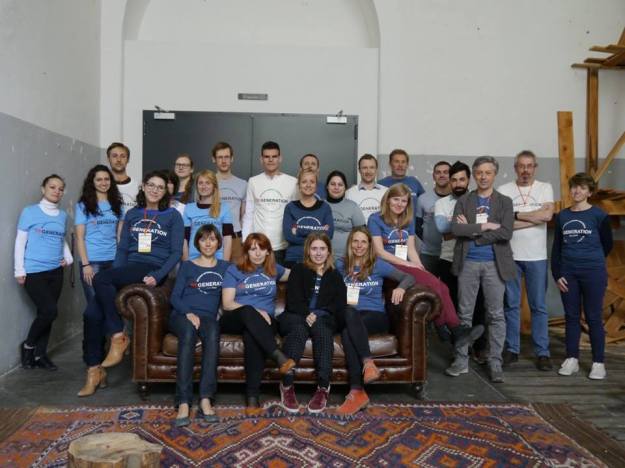
Regeneration 2017 Ed3 … Students, Tutors and Organisers …

M2020 – The Carbon Tipping Point

The ambitious but achievable carbon M2020 initiative, launched by Christiana Figueres in London this week, sets out carbon emission reduction ‘pathways’ to meet the temperature goals agreed in Paris back in 2015

Bending the curve of emissions by 2020 is the only way to limit global warming and ensure that the Sustainable Development Goals remain within our reach. It will also pave the way to delivering a just transition to net zero emissions by 2050.

The year 2020 is seen as a critical turning point in expediting the least expensive transition to a safer fossil-free economy by 2050.

M2020

M2020 sets out 6 milestones for 2020, to meet the Sustainable Development Goals by 2030 and to be Net Zero by 2050. With regards to the built environment, Milestone 2 for Infrastructure is clear:

(By 2020) … Cities and states have established plans and are implementing policies and regulations with the aim to fully decarbonise infrastructure by 2050. 

Whilst this aligns with our UK Construction 2025 Vision for 50% lower emissions  by 2025, the other milestones (Energy, Transport, Industry, Land Use and Finance) would have profound impacts on the design, construction and operation of our buildings and cities:


M2020 2

With carbon reduction now being recognised as one of todays most important public health interventions, it is now an imperative for built environment organisations to include carbon reduction commitments and ‘pathways’ within their sustainability, responsibility and health strategies. Indeed, as John Elkington wrote in a recent article, carbon management and carbon ‘productivity’ must become, and is becoming the centre of our sustainability world, but that we don’t have the time to delay waiting for a carbon mindset shift.

And, as we have discussed in recent sustainability workshops – its time to collaboratively rethink the construction process .. planning for construction without fossil fuels.