Tag Archives: carbon

Entering the The Guardian Sustainable Business Awards could be good for you
SustainBus_460x276Business is evolving, organisations big and small are taking new approaches to embedding sustainability and seeing results. The Guardian Sustainable Business Awards celebrates innovation and impact in corporate sustainability and the people who are making business better.
Categories include the Built Environment but also the current themes important to innovation and impact of the built environment sustainability agenda, and regularly covered by blogs such as this: collaboration, communication, net positive, restorative sustainability, natural capital, social impact, supply chain, waste, carbon and energy and more.

Why you should enter the awards

How to enter  Entries close on 7 February 2014

The Categories …

Communicating sustainability Inspiring action on sustainability issues is key. We’re looking for stand-out examples of campaigns that have engaged and entertained. Eliciting action and leading to tangible shifts in behaviour

Net positive It is no longer enough to do less bad. Progressive businesses are seeking ways to be regenerative in their activity, this award is for those businesses that are taking tangible steps towards making a net positive contribution to communities, society and the environment.

Work Is your organisation a great place to work? Creating healthy, happy working environments is part of being a sustainable business. This award will go to an organisation that seeks to foster a culture of health and happiness for all employees.

Natural capital  From water to healthy soil, pollinators to forests, nature underpins 100% of economic activity. This is an award for an organisation that is trailblazing a strategy to appropriately account for the value nature provides it with.

Social impact Business’ has huge potential to contribute positively to society. This award is for a project or initiative that seeks to solve a challenging social issue whilst simultaneously creating shared value for the business.

Collaboration An award for a project or initiative that breaks down traditional barriers. We are looking for examples of several partners working together in non-traditional ways towards a goal that delivers truly sustainable outcomes.

Supply chain – sponsored by WRAP Global supply chains are vast and complex. This award is for initiatives that embed a respect for human, economic and environmental rights across a business or product’s supply chain.

Carbon & energy management Reducing business’ scope 1, 2 and 3 emissions is key to meeting the UK’s carbon reduction targets. This is an award for initiatives that take a holistic approach to measuring, managing and reducing emissions.

Waste From circular principles applied to design to projects achieving zero waste and re-manufacturing initiatives, rethinking waste is vital and this award is for projects or products that are at the leading-edge of that rethinking.

Built Environment – sponsored by Aecom An award for innovative re-developments or new-build projects that are at the leading-edge of approaches to reducing the built environment’s negative environmental impacts and raising its positive social impact.

Fairsnape is a media partner for The Guardian Sustainable Business Awards 
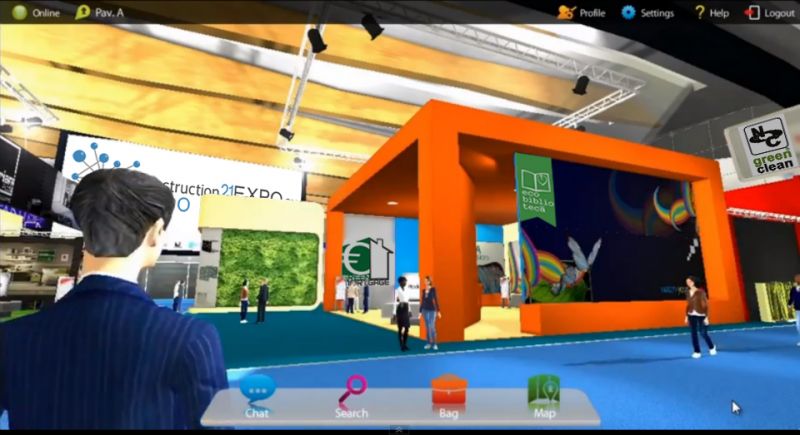
Construction virtual trade show for Europe

60199455601729109971916966764nfSave money!  Reduce CO2 emissions!  and visit leading innovative sustainable construction solutions and projects from across the European continent.

UPDATE: Construction21 Chapters and Green Building Councils from France, Spain, Italy, Poland, Croatia, Romania, Serbia, Ireland, Lithuania, Latvia and Montenegro have joined Construction21EXPO, with many more to be announced shortly.

Construction21EXPO EUROPE be held the 18th & 19th of February 2014 and will bring together 500 exhibitors and 20,000 participants including architects, engineers, project managers, investors, and other essential stakeholders.

Exhibitors will be able to reach the most active green building professionals across Europe with a very small investment. Exhibitors can gather high quality sales leads from EXPO visitors from both existing and new markets for sustainable construction solutions.

Booth setup is very simple but will create very attractive exhibits with your desired branding. Review the website and watch the video at Construction21EXPO.eu to see the conversational features and rich interactive experience our virtual tradefair will provide.  Fees are explained in the Exhibitor section of the EXPO website.

Potential exhibitors will also want to visit the Construction21EXPO EUROPE Community to download theIntroduction document highlighting more details on the event plan.

Related on isite: Living Building Challenge UK is UK Partner for EXPO

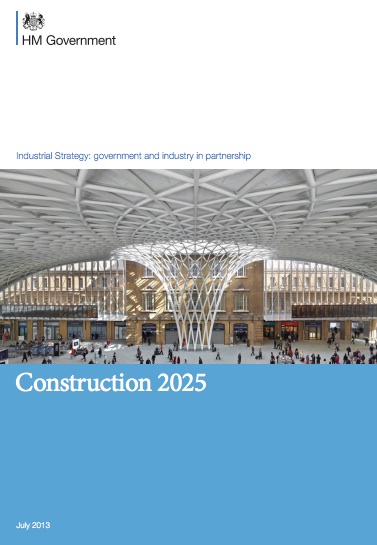
Construction 2025 Industrial Strategy

Reading the published edition of the Government Industry Strategy, Construction 2025, released yesterday I had two metaphors in mind, Snakes & Ladders and Babies in the River. Metaphors at first annoyingly contradictory, but on reflection pleasingly complementary.

UntitledThe Construction 2025 Industrial Strategy vision contains ambitions to cut costs, deliver projects faster, reduce carbon emissions, improve image and exports, through working digitally,  sustainably, and yes more efficiently.

Snakes and Ladders: illustrates the myriad strands and issues we are trying to deal with in the industry. Indeed the strategy includes a number of ladders with the excellent intention to move the industry forward, but also a number of slippery snakes to prevent meaningful progress for industry players and the industry as a whole. And, no doubt there will be plenty of commentaries on what issues are ladders (BIM and Carbon perhaps?) and which are snakes (image, diversity, SME relevance perhaps?)

However,

Babies in the River:  illustrates why only dealing with these strands and issues will not move us forward, and we will continue with energy sapping improvements, incremental changes and pockets of best practice. (You need to read  Annie Leonard, Story of Stuff excellent article)

Continue reading

Innovation and inspiration in sustainability

This free ebook from Guardian Sustainability Business contains excellent, innovative and inspiring case studies that should be read by directors, senior and Untitledsustainability managers across construction.

“At a time when multiple social, environmental and economic challenges face the world, instances of true leadership and innovation can be game changing and offer a much-needed light in the dark.

However, ensuring these examples of excellence are shared, embraced and learnt from can often be a tricky feat when the business landscape is so innately complex”

Built Environment related case studies include:

  • BAM Nuttall: peer-led training unlock wealth of hidden talents
  • British Land: chain reaction in building design
  • Skanska: working with rivals for the greater good
  • Interface: net gains for poor coastal communities
  • M&S: proud to be the biggest – and the greenest
  • URS: how to build a big building with a small footprint
  • The Co-operative: landmark HQ designed with environment in mind
  • Kebony: hardwood alternative that’s soft on the environment
  • Royal Mail: LED lights the way to energy savings
  • Hastoe Group: lays the blueprint for sustainable communities

However …

“If a company wants to see a future then 80% of what it will have to learn will be from outside its own industry.” (Gary Hamel)

… real inspiration and innovation for those of us in construction and the built environment will come from learning from those outside of the sector, on themes of communications, carbon, employee engagement, biodiversity and more.

fairsnape: innovating and improving

A low carbon diet for construction boards

benchmark

Question for you:who on your board is really championing sustainability and the low carbon agenda?

Board members, as Lucy Marcus reminded us at construcTALKs, need to balance continuity with change, to embrace the changes in technology.

From my experience in (small-medium) construction organizations, boards are too focused on looking back at performance, rather than forward; and when looking forward, tend to do so with the risk-eye of past problems. And sustainability is often only discussed when necessary, as part of an ISO 14001 project or incident issue. Too often, as 14001 sits with Health and Safety, sustainability takes a back seat. Rarely do construction boards view sustainability as a critical strategic, opportunity issue, rather than simply one to be dealt with at project level.

Yet the world is moving forward, and increasingly so towards a low carbon environment and economy. Only those with proven performance and attitude of low carbon approaches may well survive—all the more reason to have board members champion change. Non-execs tend to provide the independent financial and governance role, but increasingly they should drive the organization towards change.

Perhaps it’s because construction boards are slow to embrace the communication power social media can bring that they remain out of touch. I do wonder whether we had the same issue when other, now well-established, means of communication emerged; did we resist telephones, faxes, conference calls and emails as we seem to be doing with social media?

If construction boards were more diverse and embraced a wider range of views and outlooks, through board composition and social media awareness, the transition to a low carbon construction economy would be more successful.

Construction boards really do need to embrace social media potential, not just as a tool for others in the organization, but for the board itself, tuning into discussions and commentaries on emerging standards and legislation and sharing what is working or not. The likes of Twitter, Linkedin groups, blogs, forums and news aggregators are abundantly rich with low carbon and sustainable construction information.

This is all vital client, competitor and industry intelligence that enables boards to move their organization forward – and, through embracing social media in this manner, become role models for its mature use.

To quote from Lucy, boards need to be both Grounded and Stargazers.Are construction boards so grounded they go underground? Or do they at least from time to time stand on a hill and gaze the stars to wonder, then to understand what is out there?

This post originally appeared on CSRWire in April 2011 and savedhere from now defunct Posterous blog 

From Greendeal to Mindfulness in Sustainability

My More than Just a Green Deal keynote to the Merseyside Construction Conference March 13th 2013, making the case to see Green Deal as part of the Green Build and Sustainability agenda, and the need for doing the right green thing every time.

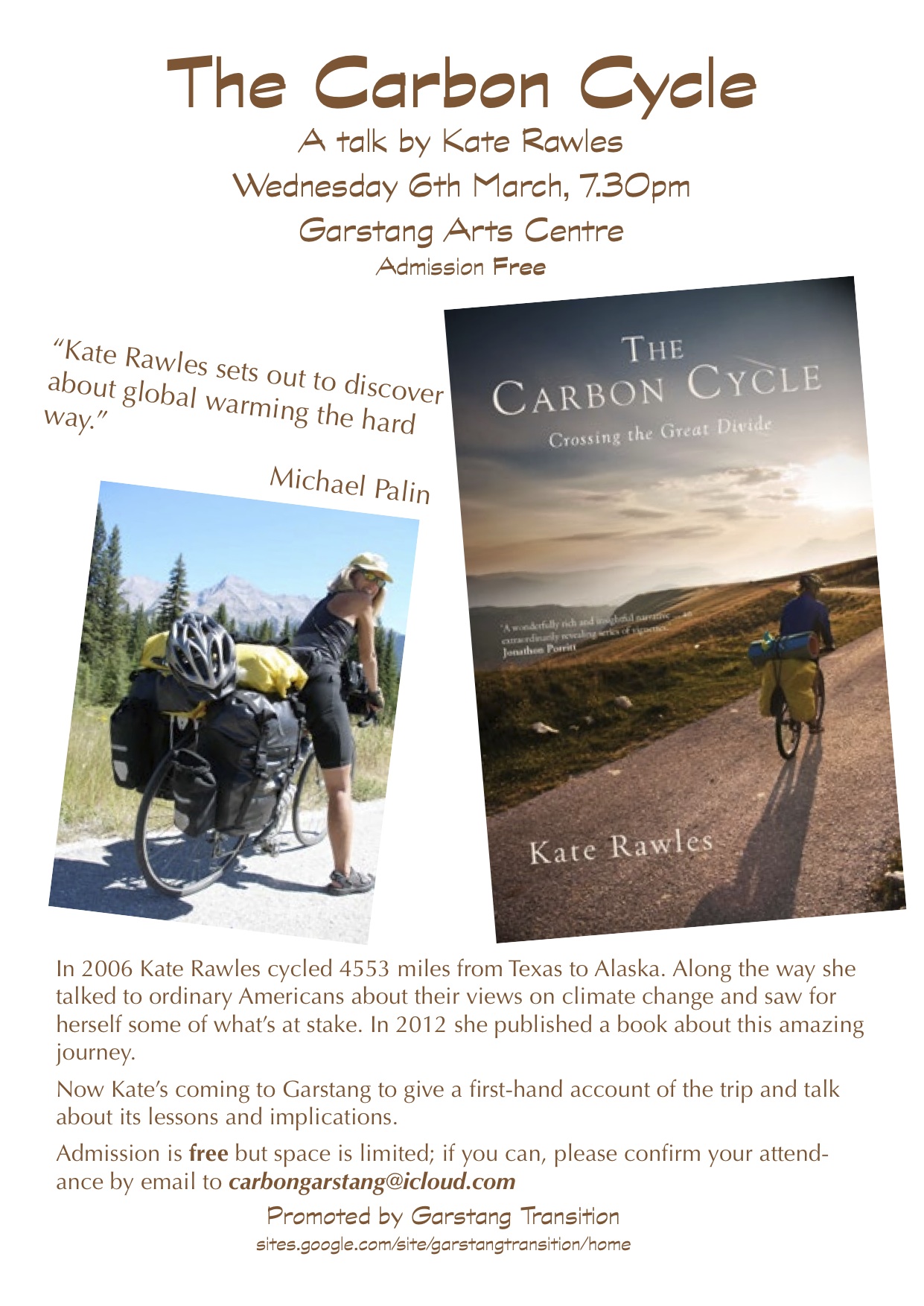
The Carbon Cycle: Transition Event

In 2006 Kate Rawles cycled 4553 miles from Texas to Alaska. Along the way she talked to ordinary Americans about their views on climate change and saw for herself some of what’s at stake.

In 2012 she published a book about her amazing journey. The Carbon Cycle

Now Kate’s coming to Garstang to give a first-hand account of the trip and talk about its lessons and implications. Admission is free but space is limited; if you can, please confirm your attendance by email to carbongarstang@icloud.com

Carbon Cycle Poster Web

Construction Carbon Cost and Risk Management

Having effective scenario planning in place within a construction business is essential to developing effective forward looking strategies that protect the business into the future and provide resilience against change.

One of our current uncertainties is related to the price of carbon, and how once the price of carbon has been fixed, how that will impact your business and project costs. It is now only a matter of time before carbon costing becomes established as an indicator and ‘repayment’ cost for your environmental impact

As with the increase cost of waste management over the last decade or so, cost of carbon will, most likely be a supply risk and cost.

The concept of shadow pricing is not new, (based on the lifetime damage costs associated with greenhouse gas emissions)  Applying a shadow cost to your carbon emissions now will enable you to action plan and reduce carbons, reducing exposure to future costs  hitting your business.

A good place to start is through measuring and understanding your project construction carbons with Constructco2 and then applying a carbon cost of £10 per tonne.  If you haven’t measured your construction carbons as yet (why not?) then use the ConstructCO2 benchmark of 96.7 Kg/£K project spend.

How would that cost affect your business? How would you manage projects with this additional cost, and importantly what actions would you take to reduce your project emissions?

Perhaps we should be asking the question will you start?

Many of the contractors, clients and subcontractors we support through constructco2 are seeing cost and bidding benefits. (More)

Useful Background Reading:

Based on recent Huffington Post article  The Benefits of Carbon Shadow Pricing Tyler Elm and Jim Harris

DECC: Carbon Valuation

Integrating Management Systems under Construction Social Responsibility umbrella

Interesting discussion yesterday with forward thinking construction professionals at Stobbarts (on the British Energy Coast in Cumbria) who really understood the importance of wrapping management systems, procedures and processes under a Corporate Social Responsibility umbrella.

The exercise in question was part of the PAS 2030 preparation, bringing together existing standards that meet an impressive range of standards (9001, 14001, 18001, 50001, 27001, Carbon Action Standard and more)

Construction organisations do not operate in a vacuum. Our relationships to society and environment in which we operate is increasingly an important element of construction activities. It is also increasingly being used as a measure of overall construction performance.

Clients and customers of the construction industry not only want a good product and good service in delivering that product, but a good social product as well.  Increasingly a key PQQ issue from clients, but, CSR cannot remain in the marketing or bidding departments but has to be reflected through the organisation.

No surprise then as more and more organisations are looking to integrate their systems which have grown independent to meet the requirements of ISO 9001, 14001 and 18001 standards, it makes sense to consider the social aspect of each, and frame within an organisations CSR statement.

(And to keep within the ISO thinking ISO 26000 provides good guidance to Social Responsibility)

Five questions to drive sustainable construction

Whilst being a great advocate for learning from others, sharing and benchmarking best practice, often it is essential to ask questions of our approaches to topics such as sustainable construction, before comparing.

In this mornings twitter fed reading stream was an article describing the five questions that Interface ask of themselves.  Interface are world leaders in design, production and sales of environmentally responsible modular carpets “Design is a mindset and sustainability is the journey of a lifetime”

Now whilst Interface’s responses in the article are inspiring, it struck me these are the questions we should all be asking of ourselves. Asking across the built environment, in design and specification, in product manufacture, in construction procurement and supply chains. Asking within project sustainability meetings, within company sustainability development and review sessions, at board level and even in ISO14001 audits.

Asking until we have answers and approaches we can live with.

1. How can we increase use of recycled and bio-based materials? 

2. How can we prevent our materials from ending up in landfill?

3. How can we reduce carbon and GHG emissions and at the same time increase our use of renewable energies?

4. How can we reduce water consumption?

5. How can our clients and customers make decisions about materials based upon trustworthy environmental facts? 

Once you have answers to these questions, you will want to take a look at Five Questions Businesses Must Answer to Advance Toward Sustainability According to Interface, Inc.

Join the discussion on these questions, share your responses and learn from others through twitter with @fairsnape and others, through leaving comments below or getting in touch.